Cistanche Deserticola in The Treatment Of Cerebral Ischemia-reperfusion Injury
Oct 12, 2024
Cistanche deserticola Y.C.Ma, a traditional Chinese medicine for tonifying the kidney, is recorded in the 2015 edition of the Chinese Pharmacopoeia. It is a succulent stem of the genus Cistanche in Lewandaceae, mainly distributed in Inner Mongolia, Ningxia, Gansu, Qinghai, and Xinjiang. Cistanche deserticola and Tubular Cistanche deserticola have extremely high medicinal value. They enter the kidney and large intestine meridians. The Compendium of Materia Medica records that Cistanche deserticola "is a nourishing but not severe substance, so it is called Cistanche deserticola" and "it is warm but can moisten, replenish but not dry, smooth but not diarrhea".
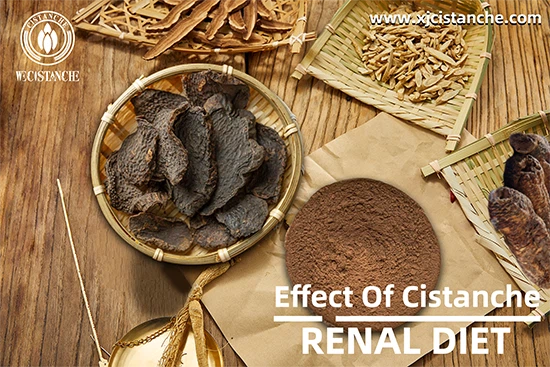
It has the effects of tonifying kidney yang, benefiting essence and blood, moistening the intestines, and defecating. Traditionally, it is used for kidney yang deficiency, deficiency of essence and blood, impotence, infertility, soreness of the waist and knees, weakness of muscles and bones, and constipation due to intestinal dryness, It is the most frequently used tonifying kidney yang medicine in history. Modern pharmacological research shows that Cistanche deserticola has many effects such as improving sexual function, anti-aging, learning and memory ability, anti-Alzheimer's disease, excretion, etc. It is widely used in clinical prescriptions of Chinese medicine, traditional Chinese patent medicines, and simple preparations and health care products.

Cistanche deserticola slices
The main chemical components of Cistanche deserticola are phenylethanoid glycosides, iridoids, and their glycosides, lignans, and polysaccharides. Modern pharmacological studies have shown that phenylethanoid glycosides are the most important active substances in Cistanche deserticola, and have obvious anti-Alzheimer's disease, Parkinson's disease, myocardial ischemia, and other effects.
In recent years, its mysterious veil has gradually been unveiled in modern medical research.
It is not only recorded in ancient medical books as a good medicine for "tonifying kidney and nourishing essence", but its potential for treating cerebral ischemia-reperfusion injury (CIRI) is gradually being revealed under the microscope of modern science.

Cistanche deserticola efficacy-Tonifying kidney
Cerebral ischemia-reperfusion injury is a phenomenon in which stroke patients, after experiencing a period of interruption in cerebral blood flow, may experience or exacerbate tissue damage once blood flow supply is restored. This type of injury not only worsens the patient's condition but also poses a major challenge in clinical treatment. The emergence of Cistanche deserticola provides a glimmer of hope for this difficult problem.
Before delving into the therapeutic mechanism of Cistanche deserticola, let's first understand its main active ingredients. Cistanche deserticola is rich in compounds such as phenylethanoid glycosides, polysaccharides, and iridoids, which have shown various biological activities in modern pharmacological research. They can not only eliminate free radicals and reduce oxidative stress but also inhibit the activation of inflammatory cells and reduce the release of inflammatory mediators, thereby protecting brain tissue from further damage at the cellular level.

Benefits of cistanche tubulosa-Anti Alzheimer's disease
In terms of antioxidant properties, the active ingredients in Cistanche deserticola are like a group of brave warriors fighting fiercely against free radicals. They can effectively neutralize harmful reactive oxygen species (ROS) and reactive nitrogen species (RNS), which are produced in large quantities during cerebral ischemia-reperfusion, causing damage to cell membranes, proteins, and DNA, leading to cell death. The antioxidant effect of Cistanche deserticola is like providing a strong shield for nerve cells, protecting them from oxidative damage.
In terms of anti-inflammatory effects, Cistanche deserticola also performs well. After cerebral ischemia-reperfusion, inflammatory response is one of the important factors leading to tissue damage. The active ingredients in Cistanche deserticola can inhibit the activation of inflammatory cells and the release of inflammatory mediators, thereby reducing inflammatory reactions and protecting brain tissue. It's like in a sea of inflammation, the ingredients of Cistanche deserticola can effectively reduce the fire and protect brain tissue from being engulfed by flames.

cistanche-prevent Alzheimer's disease
The anti-apoptotic effect is another important mechanism of Cistanche deserticola in treating CIRI. Apoptosis is a programmed cell death mode after injury, and in cerebral ischemia-reperfusion injury, neuronal apoptosis is a key factor leading to brain tissue damage and functional impairment. The active ingredients in Cistanche deserticola can inhibit cell apoptosis and protect neurons through various signaling pathways. This is like a wise person who can perceive the life and death laws of cells, intervene promptly, and prevent cells from heading toward self-destruction.

cistanche-prevent Alzheimer's disease
Click here to view Cistanche Improving Memory and Prevent Alzheimer's Disease products
【Ask for more】 Email:cindy.xue@wecistanche.com / Whats App: 0086 18599088692 / Wechat: 18599088692
Finally, the neuroprotective effect of Cistanche deserticola cannot be ignored. It can promote the expression of neurotrophic factors, enhance the survival ability of nerve cells, improve cerebral blood flow, and promote the repair and regeneration of damaged brain tissue. This seems to provide a special nutrient for injured nerve cells, helping them regain vitality, rebuild connections, and repair damaged neural networks.
Although Cistanche deserticola has shown potential therapeutic effects in treating cerebral ischemia-reperfusion injury, current research is still in its early stages. More clinical trials and basic research are needed in the future to verify its efficacy and safety, as well as to explore its mechanism of action in depth, providing a more solid scientific basis for the application of Cistanche deserticola in the treatment of cerebral ischemia-reperfusion injury. Only in this way can we better understand the magical power of Cistanche deserticola and transform it into an effective means of treating cerebral ischemia-reperfusion injury, bringing hope and the possibility of recovery to patients.