Cistanche Tubulosa Extract: The Gut–Brain Peacemaker From The Desert — Far More Than Just A Tonic
Oct 30, 2026
In traditional Chinese medicine, Cistanche tubulosa-often called "desert ginseng"-is usually filed under "tonify kidney yang, replenish essence, moisten the intestines." But recent pharmacology is repositioning it: not merely as a warming tonic, but as a systemic mediator that works indirectly-starting in the gut to renegotiate a broken conversation between the gut and the brain.

Desert ginseng
1. What it actually is: low bioavailability, high systemic leverage
Key active fractions of Cistanche tubulosa extract:
Phenylethanoid glycosides (PhGs): echinacoside, acteoside (verbascoside), isoacteoside
Iridoid glycosides: 8-epiloganic acid, geniposidic acid
Polysaccharides
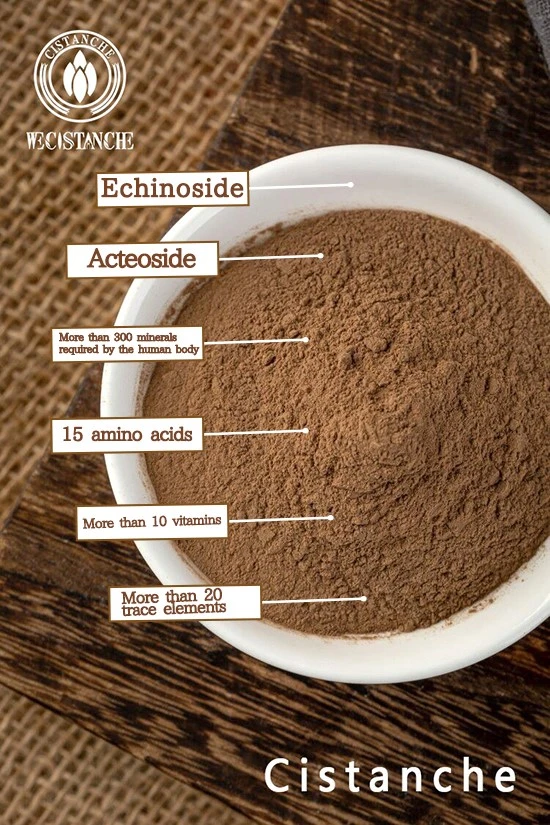
Main Chemical Constituents of Cistanche tubulosa
Counterintuitive fact: echinacoside and acteoside have very low oral bioavailability (often <1%). They do not easily enter the blood or the brain.
That is exactly why they matter as gut substrates. After oral intake, gut microbes convert part of them into smaller phenolic metabolites (e.g., hydroxytyrosol, caffeic acid derivatives). These metabolites-together with surviving parent compounds-then act on the intestinal epithelium, enteric nerves, immunity, and neuroinflammation.
So Cistanche tubulosa does not follow a "active ingredient hits the target directly" logic. It follows a "low absorption, high fermentation, distal effect" logic.
2. The gut–brain axis: mediating a triangular loop
The gut–brain axis is not a single wire. It is three layers:
Microbiota → metabolites (SCFAs, ketones, tryptophan products)
Intestinal barrier → endotoxin leakage (LPS) → systemic inflammation
Vagus nerve + immune signaling → hippocampus, amygdala, prefrontal cortex
Cistanche tubulosa extract mediates all three.
2.1 Remodeling the microbiota

Effects of cistanche-treated constipation
In Alzheimer's models (APP/PS1 mice), total glycosides of Cistanche tubulosa (GCT):
rapidly enrich Akkermansia muciniphila
suppress overgrowth of certain Firmicutes
increase beneficial taxa such as Bacteroidetes, Actinobacteria, and Lactobacillales
Akkermansia matters because it feeds on mucus, reinforces the mucosal layer, and reduces "leaky gut"-essentially repairing the border wall.
2.2 Rewriting the metabolite profile
After microbial remodeling, serum and brain metabolites shift:
↑ β-hydroxybutyrate (BHB): a ketone body that crosses the BBB, calms microglia, and reduces Aβ burden
↑ short-chain fatty acids (acetate, propionate, butyrate): anti-inflammatory via GPCR, Treg, HDAC pathways
↓ pro-inflammatory long-chain fatty acids (e.g., palmitic acid)
In plain terms: Cistanche tubulosa does not directly "clean the brain." It makes the gut produce cleaners and fire extinguishers, then ships them to the brain.
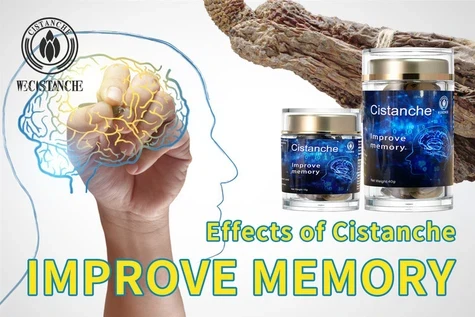
cistanche-Improve memory
2.3 Repairing the barrier: stopping the fire from leaking out of the gut
In chronic-stress depression models, Cistanche tubulosa glycosides:
suppress intestinal epithelial ferroptosis
normalize ACSL4↓ and GPX4↑
restore tight-junction proteins ZO-1, occludin, and MUC2
improve colonic transit and lower low-grade inflammation
This is critical: many mood and cognitive problems do not start from "not enough happy neurotransmitters in the brain," but from "the gut is leaking and the hippocampus is under constant inflammatory fire."
2.4 Feeding signals back to the brain
Animal studies show the extract can:
raise hippocampal 5-HT and BDNF
dampen HPA-axis hyperactivity
redirect tryptophan away from the kynurenine pathway back toward serotonin synthesis
Behaviorally: better Morris water-maze performance, less immobility in forced swim tests, restored sucrose preference.
3. What it mediates is not a single disease
|
Context |
Likely pathway |
Evidence stage |
|
Cognitive decline / AD models |
microbiota → BHB → microglia cooling → Aβ↓ |
animal + multi-omics |
|
Depression/anxiety models |
barrier + ferroptosis + HPA + 5-HT/BDNF |
animal + early clinical signals |
|
Elderly deficient-type constipation |
repair interstitial cells of Cajal, moisten gut, adjust microbiota |
traditional use + animal mechanisms |
|
Hypoxic brain injury |
antioxidant, PI3K/Akt/mTOR-HIF-1α rebalancing |
animal studies |
|
IBD / gut dysbiosis models |
anti-inflammation, antioxidant, microbiota rebuilding |
animal studies |
Important: the solid evidence is mostly preclinical. This is not yet a drug-replacement claim.
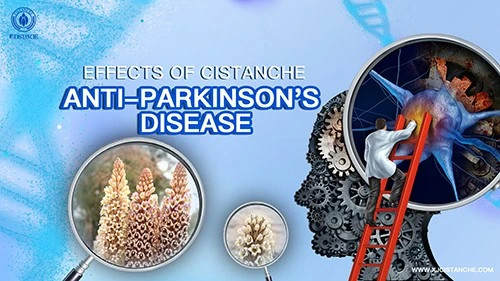
Benefits of Cistanche tubulosa- Treatment of Parkinson's disease
Click here to view the products of Cistanche for preventing Parkinson's disease
【Ask for more】 Email:cindy.xue@wecistanche.com / WhatsApp: 0086 18599088692 / WeChat: 18599088692
4. Why it is "more than a tonic"
The old tonic narrative: you are deficient → I supplement you.The modern Cistanche tubulosa narrative: the system is decoupled → I rewire it.
It does three mediator jobs:
It does not blindly kill pathogens; it changes the microbial niche.
It does not force entry into the brain; it uses metabolites as messengers.
It does not spike one neurotransmitter; it concurrently lowers oxidation, inflammation, ferroptosis, and barrier failure.
That is also why isolated echinacoside or acteoside alone often underperforms compared with total glycosides or whole extract-this is formulation-level biology, not single-molecule heroics.