Knee Pain Slowing You Down? How Cistanche Tubulosa Supports Healthy Joints And Cartilage
Jul 10, 2026
The stairs you used to take two at a time now require a hand on the railing. Morning brings a stiffness that takes thirty minutes to loosen. The ache in your knees or hips is a constant background hum, flaring after activity and dampening your desire to move. Osteoarthritis (OA), the "wear and tear" arthritis, affects over 500 million people worldwide. It was long viewed as simple mechanical erosion, but modern medicine now understands it as a disease of the entire joint, driven by chronic inflammation and oxidative stress. While painkillers and injections offer temporary relief, they don't address the underlying degradation of cartilage. A desert herb, Cistanche tubulosa, is being studied for its ability to target the cellular drivers of joint breakdown, offering a natural approach to protecting the cartilage you still have.
The Inflammation That Eats Your Cartilage
Articular cartilage is the smooth, slippery tissue that caps the ends of bones, allowing them to glide without friction. It has no blood supply and no nerves, but it is very much alive, populated by cells called chondrocytes. In a healthy joint, chondrocytes maintain a balance between building new cartilage matrix-primarily type II collagen and aggrecan-and breaking down old tissue. In osteoarthritis, this balance shatters.
Two families of enzymes are primarily responsible for the destruction: matrix metalloproteinases (MMPs), particularly MMP-13, which degrades the collagen framework, and ADAMTS-5, which chews up aggrecan. These enzymes are produced by chondrocytes themselves when they are stimulated by pro-inflammatory cytokines like interleukin-1 beta (IL-1β) and tumor necrosis factor-alpha (TNF-α). The inflammatory signal activates the NF-κB pathway inside chondrocytes, turning them from builders into destroyers. At the same time, oxidative stress from aging, obesity, or joint injury generates reactive oxygen species (ROS) that directly damage chondrocytes and accelerate the inflammatory cascade.
The result is a vicious cycle: inflammation drives cartilage loss, the debris from lost cartilage triggers more inflammation, and the joint space narrows. Pain comes not from the cartilage itself but from the underlying bone, the synovial lining, and the surrounding muscles that tense to protect the joint. An effective, disease-modifying natural agent would need to do what NSAIDs cannot: suppress the NF-κB-driven production of catabolic enzymes, protect chondrocytes from oxidative death, and ideally, give the remaining cartilage cells the support they need to rebuild matrix. This is where Cistanche tubulosa enters the picture.

How Cistanche Tubulosa Protects Joints at the Molecular Level
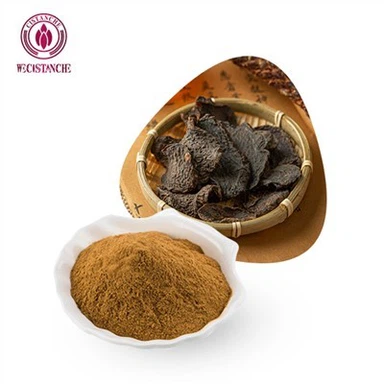
Cistanche tubulosa extract is rich in acteoside and echinacoside, two phenylethanoid glycosides with powerful anti-inflammatory and antioxidant properties. In cartilage biology, acteoside has emerged as a compound of significant interest. In vitro studies on human chondrocytes have demonstrated that acteoside can powerfully suppress the expression of MMP-13 and ADAMTS-5 following stimulation with IL-1β. It does this by inhibiting the NF-κB signaling pathway-preventing the inflammatory command that tells chondrocytes to break down their own matrix.
Simultaneously, acteoside has been shown to promote the synthesis of type II collagen and aggrecan, the very building blocks of cartilage. This suggests a dual action: not just stopping destruction, but potentially supporting repair. An animal study on a surgical model of osteoarthritis found that intra-articular injection of acteoside significantly reduced cartilage erosion, preserved proteoglycan content, and lowered inflammatory markers in synovial fluid compared to untreated controls. While supplementation is not an injection, systemic delivery through a standardized extract allows the compounds to reach the joint via the synovial vasculature.
The antioxidant dimension is equally critical. Chondrocytes rely on mitochondrial function, and oxidative damage to mitochondria is a key driver of their dysfunction in OA. Echinacoside, through its activation of the Nrf2 pathway, boosts the chondrocyte's own antioxidant enzymes-superoxide dismutase (SOD) and heme oxygenase-1 (HO-1)-helping them survive in the inflamed, hypoxic environment of the osteoarthritic joint. A comprehensive 2022 review in Frontiers in Pharmacology highlights the anti-inflammatory, antioxidant, and tissue-protective properties of Cistanche tubulosa, supporting its potential utility in conditions driven by chronic inflammation and matrix degradation.
Traditional Wisdom of Strengthening the Sinews
In classical Chinese medicine, chronic joint pain in the lower back, knees, and hips-especially when accompanied by weakness and cold sensation-is often diagnosed as "Kidney Yang deficiency with Liver-Kidney depletion." The Kidneys, in this framework, govern the bones and marrow, while the Liver governs the sinews (tendons and ligaments). As Kidney essence wanes with age, the bones lose their nourishment and the sinews stiffen. Cistanche has been a mainstay herb for this pattern for over two millennia. It was prescribed to "warm the Kidneys, strengthen the sinews and bones," and was considered essential for maintaining mobility into old age. The ancient clinical observation-that this herb eases stiff, aching joints-is now finding its molecular explanation in the suppression of MMPs, protection of chondrocytes, and dampening of synovial inflammation.

How to Integrate Cistanche for Joint Health
Joint protection is a marathon, not a sprint. Cartilage turns over very slowly, and meaningful preservation requires consistent, long-term support. A daily dose of 400–600 mg of a standardized Cistanche tubulosa extract, providing verified levels of acteoside and echinacoside, is a sensible evidence-informed range. It can be taken with a meal containing some healthy fats, as the phenylethanoid glycosides are better absorbed with dietary lipids.
Cistanche pairs well with other joint-supportive nutrients: glucosamine sulfate and chondroitin provide raw substrate for cartilage synthesis; curcumin is a powerful anti-inflammatory; and omega-3 fatty acids help resolve synovial inflammation. Unlike NSAIDs, which carry risks of gastric ulcers, kidney damage, and cardiovascular events with chronic use, Cistanche is gentle on the stomach and works through a fundamentally different mechanism-not simply blocking pain signals, but reducing the inflammatory signals that drive tissue loss.
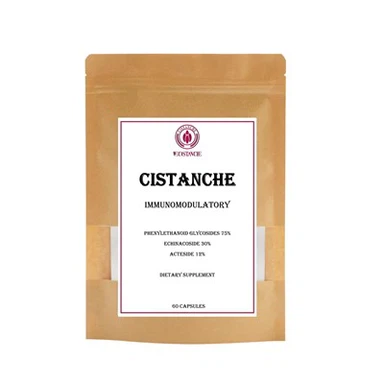
Our JointFlex Cistanche Extract is manufactured from authentic Cistanche tubulosa and standardized to deliver a consistent, research-backed concentration of the phenylethanoid glycosides that protect cartilage and calm joint inflammation. Each batch is third-party tested for purity.

Safety and Expectations
Cistanche tubulosa is well tolerated and safe for long-term daily use. It does not cause the gastrointestinal, renal, or cardiovascular side effects of chronic NSAID use. However, joint pain can sometimes signal autoimmune forms of arthritis, such as rheumatoid arthritis, which require specific medical management. If pain is severe, accompanied by significant swelling, redness, or warmth, or is affecting multiple joints symmetrically, consult a rheumatologist. For the millions whose knees and hips creak with age, this desert root offers a gentle, long-term strategy to protect the cartilage that allows us to move freely.
Supportive Service Of Wecistanche-For more details about cooperation
Business contact: goujinsong@wecistanche.com