Echinoside Inhibitory Activity Improves Memory Deficits.
Mar 23, 2023
Abstract
Many biological activities of echinoside have been reported. In this study, echinoside's memory-enhancing activity. The essential oil was intended to be evaluated in laboratory rats treated with scopolamine. Oil composition was identified by GC-MS/GC-FID system. Memory ability of rats was tested by Y-shaped maze and radial arm maze. The enzyme activity and molecular docking analysis of acetylcholinesterase were also performed. A total of 44 different compounds have been identified in echinoside. Echinoside improved the animals' performance of spontaneous alternation in the Y-maze test. In addition, echinoside significantly improved working memory and reference memory in scopolamine rats in the radial arm maze test. It also shows in vitro acetylcholinesterase inhibitory activity. At the same time, molecular docking methods revealed that some compounds in oil could theoretically interact with acetylcholinesterase. Echinoside improved scopolamine - induced spatial memory in rats. The neuroprotective effect of echinoside may be related to anticholinesterase activity. Echinoside could therefore be used as a complementary therapy to improve memory in Alzheimer's disease and related disorders. Among them, cistanche contains a lot of echinoside.
Key words:Cistanche; Memory; Echinoside; Scopolamine.
1. Introduction
Alzheimer's disease (AD), the most common type of dementia, is characterized by severe cognitive impairment caused by neuronal brain damage. The number of people with Alzheimer's is expected to reach 135 million worldwide by 2050, leading to frustration because it is a disease with no cure. The main pathological feature of this disease is the accumulation of amyloid plaques in the brain and the formation of neurofibrillary tangles. Many other conditions, such as oxidative stress and inflammation, have also been noted in patients with AD. The main causes of the disease are unknown. However, Alzheimer's disease is clearly an unsustainable disease; Therefore, the death of the patient is inevitable. To date, many therapeutic strategies have been developed to treat AD; However, the progression of the disease cannot be stopped. In addition, AD is a disease that has a huge impact on family members who may also experience mental problems.
Cognitive impairment, including memory loss, is a prominent clinical symptom of the disease. On the other hand, behavioral symptoms of AD are observed in approximately 75-90% of patients with AD. Therefore, non-cognitive symptoms should also be seriously considered. Apathy, abnormal motor activity, anxiety, depression, and anxiety are the most common symptoms of AD patients.
Scopolamine is an antagonist of muscarinic receptors. Scopolamine has been shown to cause cognitive problems, including memory loss, in animals and humans. Therefore, scopolamine mediated animal models of dementia have been used to screen for drugs that may have neuroprotective properties.

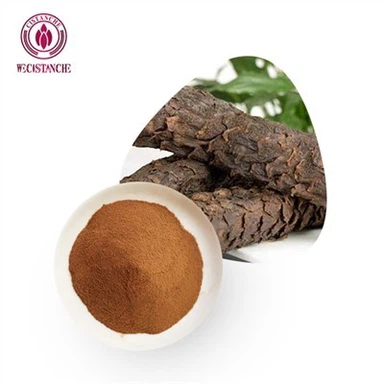
Pic: Cistanche Extract
Currently, available anti-AD drugs have a variety of side effects. There is therefore an urgent need for new types of drugs based on natural substances or products that have neuroprotective properties and do not have obvious side effects. Among them, a biologist in Japan began to study the therapeutic effect of cistanche on AD in the last century.
Acetylcholine (ACh) is a typical neurotransmitter. Acetylcholinesterase (AChE), on the other hand, disrupts the function of ACHE in cholinergic neurotransmission. Antiacetylcholinesterase drugs have been used to treat AD. The AChE inhibitory activities of many compounds have been screened. To save time and money, molecular docking studies are widely incorporated into the drug discovery process. Docking studies are used to assess whether two molecules interact and form a stable complex. In this case, molecular docking can also be used to predict the correct orientation of the molecules in the complex.
Cistanche is also a medicinal plant due to its many biological activities, including anti-fatigue, anti-tumor, smooth bowel movement, kidney tonifying, liver protection and sedative properties. Locally in Turkey, some varieties are also used as herbal teas to treat kidney disease.
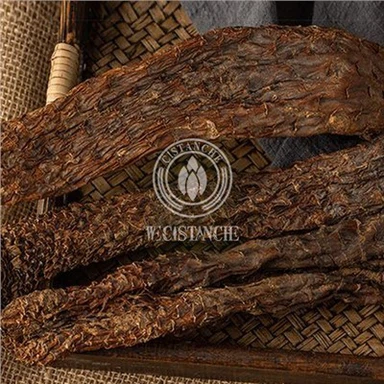
Pic: Cistanches Benefits
2. Materials and methods
2.1. Distillation of plant raw materials and extracts
The plant species used in this study was cistanche tubulosa. The plant material was harvested in Hotan, Xinjiang. The effective extract of echinoside was obtained by a series of physicochemical extraction.
2.2. Gas chromatography (GC-FID) analysis
Echinoside was characterized by GC-FID/GC-MS system. HP's Agilent 5973N GC-MS system and 6890 GC were used for GC-FID analysis. The system is equipped with a flame ionization detector (FID). The system conditions are as follows: the carrier gas used in the system is helium; The chromatography was performed on HP-5 MS column with 30 m×0.25 mm id and membrane thickness of 0.25 μm. The oil is diluted 100 times 2in n-hexane; 1.0 μL oil was injected in a non-splitting manner. The injector temperature was 250℃ and the flow rate was 1.3 mL/ min. The analysis process was as follows: the oven temperature of GC was maintained at 70℃ for 2 minutes and then gradually increased to 150℃ at a rate of 10℃/min. After that, the temperature remained constant at 150°C for 15 minutes before rising again to 240°C at 5°C/min. The composition percentage of volatile oil is obtained from the GC-FID peak with no correction factor.
2.3. Gas chromatography (GC-MS) analysis
The same column was used for GC-MS analysis. The conditions are the same for GC-FID and GC-MS. The retention index (RI) is based on n-alkanes (C8-40). MS is 70 eV with a mass range of 35-425. The compounds were identified by comparing RIs and mass spectrometry from two libraries (Wiley 7 and Nist 98).
2.4. Animals and experimental groups
In this study, 28 female Wistar rats (250-300 g) were used. Water and food are provided free of charge to all animals in a facility that controls temperature and light (22°C, 12-hour cycle). The animals were treated with gentleness and respect for the principles of animal welfare. Firat University's local ethics committee approved the study. The experimental animals were divided into 4 groups with 7 animals in each group. The control group was injected with 0.9% normal saline. 2. Echinoside treated animals alone received 1.5 mg/kg Sco in 0.9% normal saline as a negative control. 3. Echinoside treated animals were injected with 1% N. nuda ssp. 4. Echinoside treated animals received 3% N. nuda ssp. Kernel essential oil (Sco+NPT3%).
2.5. Inhalers and medications
Treat with N. nuda ssp. Inhalation is performed in a plexiglass chamber (50 x 40 x 28 cm). First dilute the volatile oil with Tween 20(1%) and expose it to rats (200μl). Ectoside extracts were administered using an electronic carburetor (Oregon Scientific WS113). Experimental animals were exposed to echinoside vapor for 21 days (15 minutes/day) per day. At the end of a set of experiments, wash the room appropriately with ethanol (10%). Scopolamine hydrobromide was dissolved in 0.9% NaCl and echinoside (1.5 mg/kg) was intraperitoneally injected. Behavioral tests were performed on the rats 30 minutes after injection.
2.6. Y-maze test
In this study, the y maze test was used to evaluate short-term memory. The Y-shaped maze has three arms and a central area. We named the arms A, B and C(35cm long and 10cm wide) and set the maze to 25cm high. At the beginning of the experiment, each rat was placed in the central area facing arm A, so that each rat was oriented the same way. Rats can move freely through the maze for eight minutes. At the same time, the arm the rat entered was carefully recorded. It wouldn't be an entrance if it didn't have four mouse claws in its arms. After 8 minutes, the rats were treated, removed from the maze, cleaned with ethanol (10%) and prepared for the next animal. When the rat moves all three arms in a row (ABC or ACB or CAB, etc.), this is seen as correct alternations. The percentage of spontaneous alternation is calculated as :(number of correct alternations/total entries minus 2)x100.

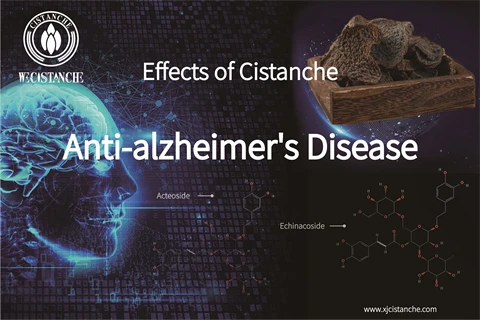
Pic:Effects of Cistanche treat Alzheimer‘s disease
3. Results
3.1. Chemical composition of echinoside
GC-ms/GC-FID system was used for detection. Analysis showed that 44 compounds accounted for 90.1% of total echinoside. Analysis showed that most of the oil was composed of 4a-α, 7a-α and 7a-β-Neginolactone (50.0%).
3.2. Alternating behavior in y maze task
N. Function of nuda ssp. In this task, the percentage of spontaneous alternation showed a significant difference between the groups. In the Y-maze task, echoladin application reduced the percentage of spontaneous alternations compared to the control group as expected (p< 0.005). Sco vs Sco+NPT 1% (p< 0.05) and Sco vs. Sco+NPT 3% (p< 0.05) was obtained by Tukey postmortem test. Management of two doses of N. nuda SSPS. Echinoside significantly increased the anisodamine-induced spontaneous alternation rate in rats.
4. Discussion
Plants provide a wide range of sources for the production of new drugs to treat a variety of diseases. Echinoside is a complex secondary metabolite synthesized by plants in plant products. Echinoside has a variety of biological activities, including antioxidant and anticholinesterase effects. However, the unique chemicals in cistanche are easily affected by environmental or other factors; Therefore, this situation may limit the verification of experimental results.
Echinoside inhalation also reduced AChE activity in scopolamine treated hippocampi. In addition, molecular docking analysis showed that the compounds in Cistanche had good docking distribution. The interaction of compounds such as perhydrofarnicyl acetone and trans-cis-eolactone with the AChE enzyme was shown. Therefore, the memory-enhancing effect of echinoside may be related to cholinesterase inhibitory properties.

Click here to boost your memory
5. Conclusion
In this study, echinoside improved memory performance in scopolamine treated rats. Echinoside also has an inhibitory effect on acetylcholinesterase. Therefore, cistanche has memory-enhancing activity. Echinoside may be related to anticholinesterase activity. Echinoside can be used to treat neurological disorders such as Alzheimer's disease.
References
1.Arshad, M.; Ullah, M.I.; Afzal, M.; Khalid, S.; Raza, A.B.M. (2019). Evaluation of plant extracts for the management of citrus leafminer, Phyllocnistis citrella (Lepidoptera : Gracillariidae). Kuwait Journal of Science, 46
(1): 58–67.
2.Baranauskienė, R.; Bendžiuvienė, V.; Ragažinskienė, O.; Rimantas, P. (2019). Essential oil composition of five Nepeta species cultivated in Lithuania and evaluation of their bioactivities, toxicity and antioxidant potential of hydrodistillation residues. Food and Chemical Toxicology, 129: 269–280.
3.Berman, H.M.; Westbrook, J.; Feng, Z.; Gilliland, G.; Bhat, T.N. et al. (2000). The Protein Data Bank. Nucleic Acids Research, 28 (1): 235–242.
4.Bolton, E.E.; Wang, Y.; Thiessen, P.A.; Bryant, S.H. (2008). PubChem: Integrated Platform of Small Molecules and Biological Activities. Annual Reports in Computational Chemistry, 4: 217–241.
5.Chan, H.L.; Li, H.; Lui, L.M. (2016). Quasi-conformal statistical shape analysis of hippocampal surfaces for Alzheimer׳s disease analysis. Neurocomputing, 175: 177–187.
6.Cheung, J.; Gary, E.N.; Shiomi, K.; Rosenberry, T.L. (2013). Structures of Human Acetylcholinesterase Bound to Dihydrotanshinone I and Territrem B Show Peripheral Site Flexibility. ACS Medicinal Chemistry Letters, 4 (11): 1091–1096.
7.Formisano, C.; Rigano, D.; Senatore, F. (2011). Chemical Constituents and Biological Activities of Nepeta Species. Chemistry & Biodiversity, 8 (10): 1783– 1818.
8.Ghumatkar, P.J.; Patil, S.P.; Jain, P.D.; Tambe, R.M.; Sathaye, S. (2015). Nootropic, neuroprotective and neurotrophic effects of phloretin in scopolamine-induced amnesia in mice. Pharmacology, biochemistry, and behavior, 135: 182–91.
9.Gormez, A.; Bozari, S.; Yanmis, D.; Gulluce, M.; Agar, G. et al. (2013) Antibacterial activity and chemical composition of essential oil obtained from Nepeta nuda against phytopathogenic bacteria. Journal of Essential Oil Research, 25 (2): 149–153.
10.Gradinariu, V.; Cioanca, O.; Hritcu, L.; Gille, E.; Trifan, A. et al. (2014). Comparative efficacy of Ocimum sanctum and Ocimum basilicum volatile oils against amyloid-beta (1-42)-induced anxiety and depression in laboratory rats. Phytochem Rev, 14: 567–575.
11.Güler, B.; Manav, E.; Uğurlu, E. (2015). Medicinal plants used by traditional healers in Bozüyük (Bilecik-Turkey). Journal of ethnopharmacology, 173: 39–47.
12.Guo, C.; Shen, J.; Meng, Z.; Yang, X.; Li, F. (2016). Neuroprotective effects of polygalacic acid on scopolamine-induced memory deficits in mice. Phytomedicine : international journal of phytotherapy and phytopharmacology, 23 (2): 149–55.