Renowned TCM Doctor’s Formula (Issue #177): An Experience-Based Prescription For Benign Prostatic Hyperplasia (BPH)
Apr 17, 2026
Source / authority note: This formula is published as part of a Chinese Traditional Chinese Medicine (TCM) Association–released "Famous Doctor, Famous Formula" series ("名医名方"), which is intended to disseminate clinically used, experience-based prescriptions from recognized senior practitioners. For Western readers and product developers, you can treat this as an authoritative, profession-facing formula record (i.e., a documented expert protocol), while still understanding it is not the same as an FDA/EMA-approved drug monograph.
Clinician: Wang Jinsong (王劲松) - a recognized senior TCM physician in Xuzhou, Jiangsu Province, China.
1) Formula Composition (with Cistanche added to the core formula)
Original core ingredients (as published)
Cistanche tubulosa (肉苁蓉)-10-15g
Scolopendra (Centipede), Wu Gong (蜈蚣) - 3 g
Panax notoginseng powder, San Qi Fen (三七粉) - 3 g (taken as a stirred-in powder / "mixed in and swallowed," not boiled)
Sparganium rhizome, San Leng (三棱) - 10 g
Curcuma rhizome, E Zhu (莪术) - 10 g
Achyranthes root, Chuan Niu Xi (川牛膝) - 10 g
Pinellia (processed), Zhi Ban Xia (制半夏) - 10 g
Poria, Fu Ling (茯苓) - 10 g
Alisma rhizome, Ze Xie (泽泻) - 10 g
Plantago seed, Che Qian Zi (车前子) - 10 g (wrapped in a decoction bag / "bag‑boiled")
Bupleurum, Chai Hu (柴胡) - 10 g
Angelica sinensis, Dang Gui (当归) - 10 g
Salvia miltiorrhiza, Dan Shen (丹参) - 15 g
Morinda officinalis, Ba Ji Tian (巴戟天) - 15 g
Cornus fruit, Shan Zhu Yu (山茱萸) - 20 g
Astragalus, Huang Qi (黄芪) - 30 g
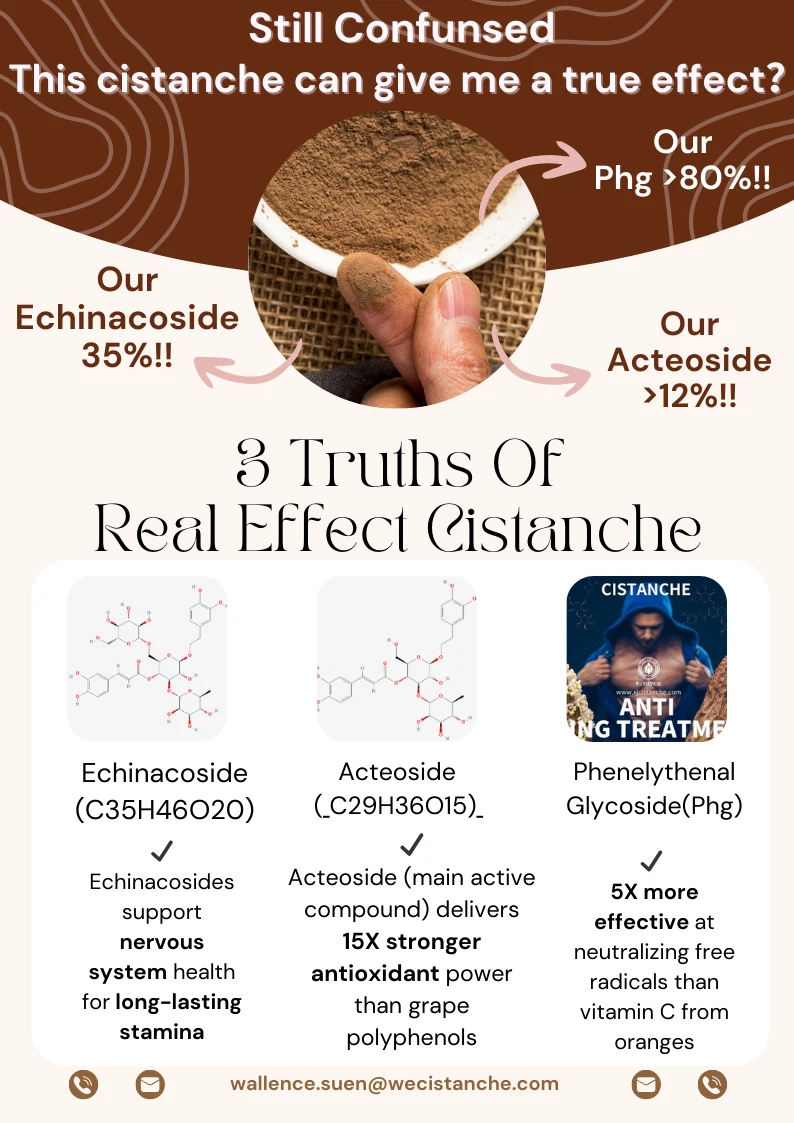
Added herb (requested): Cistanche tubulosa (肉苁蓉)
To integrate Cistanche in a way that fits the original formula logic ("support Kidney qi/yang, nourish essence, improve vitality, support urinary function"), a commonly used practitioner range is:
Cistanche tubulosa (Rou Cong Rong, 肉苁蓉) - 10–15 g
Suggested default for development/standardization: 12 g (decocted with the main herbs).
Developer note (for Western formulation teams): Cistanche is widely positioned in modern herbal practice for "Kidney yang/essence support," vitality and reproductive function support. In TCM pattern terms, it matches the published indication of deficiency of yin-essence and yang-qi with obstruction by dampness/phlegm/blood stasis.
Expanded reading / purchase-oriented educational link (as requested):
Cistanche Functions On Prostate Tonic

2) Preparation & Administration (Traditional Decoction Method)
Decoction: Simmer the herbs in water as a traditional decoction.
Frequency: 1 dose per day, divided into two warm servings (morning and evening).
Special instructions:
San Qi powder (3 g) is typically added after straining (or taken separately), not boiled.
Che Qian Zi should be placed in a decoction bag to prevent seeds from dispersing into the liquid.

3) Traditional Actions (TCM Therapeutic Functions)
Traditional functions (translated):
Tonifies Spleen and Lung, supports upright qi
Assists Kidney qi (and, in practical terms, supports the body's "qi transformation" for urination)
Transforms damp turbidity, resolves phlegm
Invigorates blood and dispels stasis, unblocks the network vessels
Promotes opening of the urinary passages ("unblocks the orifices / passages")
4) Indications (BPH) - Pattern-Based Description for Western Readers
Primary indication: Benign Prostatic Hyperplasia (BPH) (前列腺增生症)
TCM pattern(s) described:
Insufficiency of yin essence and yang qi, with
Internal obstruction by damp turbidity, phlegm, and blood stasis, or
Dysfunction of the body's "qi transformation" (organ-channel regulation), leading to impaired urinary passage flow.
Typical symptom cluster (clinical-facing, non-diagnostic):
Difficult urination, weak stream, incomplete emptying
Increased frequency/urgency, especially at night
Pelvic/perineal discomfort or heaviness
Fatigue / low vitality in deficiency-dominant patients
5) Interpretation / Rationale (How the Formula Is Structured)
In the published explanation, BPH is framed under TCM categories such as "Long Bi" (urinary retention/obstruction) and "Lin syndrome" (strangury-type urinary disorders). While the location is described around the "essence chamber," urethra, and bladder, the root is said to involve systemic imbalance of zang-fu organ functions, channels, qi/blood, yin/yang-particularly in aging men.
Core strategy: "Unblock" while supporting vitality
The text emphasizes that treatment should focus on "tong (通)"-unblocking:
Address the local obstructive mass concept (stasis/phlegm/damp accumulation)
Without neglecting systemic regulation (tonification so the body can tolerate dispersing/transforming herbs)
Key groups of herbs (developer-friendly breakdown)
Blood‑invigorating / stasis‑breaking / mass‑softening (the "unblocking core")
Wu Gong (centipede) + San Qi (notoginseng) are positioned as principal agents to move blood, open channels, disperse nodules, and "reach" obstructed sites.
San Leng, E Zhu, Chuan Niu Xi, Dan Shen further break stasis/accumulation, promote circulation, and guide actions downward toward the pelvic region.
Dampness / phlegm transformation + urinary passage support
Zhi Ban Xia, Fu Ling, Ze Xie, Che Qian Zi, Chai Hu are used to strengthen the Spleen function, transform phlegm, drain dampness, and improve urinary flow dynamics (in TCM terms, "raise the clear, descend the turbid, free the strangury").
Tonification / support (reduce intolerance to dispersing herbs; "support the host")
Huang Qi, Dang Gui, Shan Zhu Yu, Ba Ji Tian support qi and blood and tonify Liver–Kidney aspects (essence/qi).
Added Cistanche (Rou Cong Rong) strengthens this pillar by supporting Kidney yang/essence and vitality-a common development goal for men's health formulas targeting urinary + energy + reproductive domains.
Overall logic: "Tonify deficiency while eliminating excess; unblock while supporting." The published text calls this a root-and-branch (ben-biao) combined approach.
6) Modifications (Traditional Add/Subtract Guidance)
The original record includes pattern-based adjustments:
Damp-heat pouring downward: remove Dang Gui, Shan Zhu Yu; add Yi Mu Cao 20 g, Dong Kui Zi 10 g
Excess Lung-heat congestion: remove San Leng, E Zhu, Dang Gui; add Jie Geng 10 g, Ting Li Zi 10 g
Qi stagnation + blood stasis: remove Huang Qi, Shan Zhu Yu; add Xiang Fu 10 g, Wang Bu Liu Xing 10 g
Middle qi deficiency: remove San Leng, E Zhu, Chuan Niu Xi; add Bai Zhu 10 g, Yi Yi Ren 20 g, Sheng Ma 10 g
Yin deficiency with flaring fire: remove Zhi Ban Xia, San Leng, E Zhu; add Sheng Di 10 g, Shu Di 10 g, Wu Wei Zi 5 g
Decline of "Mingmen fire" (Kidney yang weakness): remove Zhi Ban Xia; add prepared Fu Zi 5 g (pre‑decoct), Rou Gui 3 g
7) Practical Notes for Western Product Developers (R&D / Compliance)
This is a practitioner formula record: excellent for concept and structure (pattern logic + herb roles), but it should be followed by:
quality specifications (identity, contaminants, active markers)
safety review (especially for animal-derived ingredients like centipede, and for anticoagulant interactions with San Qi/Dan Shen)
regulatory positioning (dietary supplement vs. traditional medicine; allowable claims vary by market)
If you want a Western-friendly product direction, a common pathway is:
keep the "unblocking + tonifying" architecture,
decide whether animal materia medica (centipede) is acceptable in your target market,
standardize Cistanche (often via echinacoside/acteoside markers) and define a coherent daily serving.
Cistanche link (education + sourcing context):
https://www.xjcistanche.com/news/say-goodbye-to-prostate-problems-with-cistanch-83534746.html