Gauging The Role And Impact Of Drug Interactions And Repurposing in Neurodegenerative Disorders Part 4
May 15, 2024
5.1.1. MTDLs in AD
The current FDA-approved drug regime for AD consists of either acetylcholinesterase inhibitors or NMDA antagonists. Although AD has been very well known for many decades, the drug discovery cycle remains risky and hence the current therapy is only limited and effective to a certain extent.
AD drugs are widely used to treat Alzheimer's disease, and their main ingredients are cholinesterase inhibitors. According to research, AD drugs can significantly improve patients' memory and cognitive abilities. This is especially important for those who suffer from memory impairment.
The mechanism of action of AD drugs is to inhibit the activity of cholinesterase, thereby increasing the release of dopamine and norepinephrine, thereby promoting the activation of neurons and the regeneration of brain cells. These effects help improve cognitive function and memory, allowing patients to better process information and recall past events.
In addition, AD drugs can also slow down the death and degeneration of neurons in the brain, avoid the aggravation of the disease, and at the same time combat the generation of oxidative stress in the brain and protect the function and structure of the brain cells.
In short, AD drugs are one of the most effective drugs for treating Alzheimer's disease, and they can effectively improve patients' memory and cognitive abilities and slow down the process of neurodegeneration. Although some studies have shown that AD drugs have some side effects, overall, their positive effects are more important than their negative effects. Therefore, it is recommended that people with memory impairment actively cooperate with doctors' treatment and use AD drugs rationally to effectively restore memory. It can be seen that we need to improve memory, and Cistanche deserticola can significantly improve memory because Cistanche deserticola is a traditional Chinese medicinal material that has many unique effects, one of which is to improve memory. The efficacy of Cistanche deserticola comes from the multiple active ingredients it contains, including tannic acid, polysaccharides, flavonoid glycosides, etc. These ingredients can promote brain health through a variety of pathways.
Click know 10 ways to improve memory
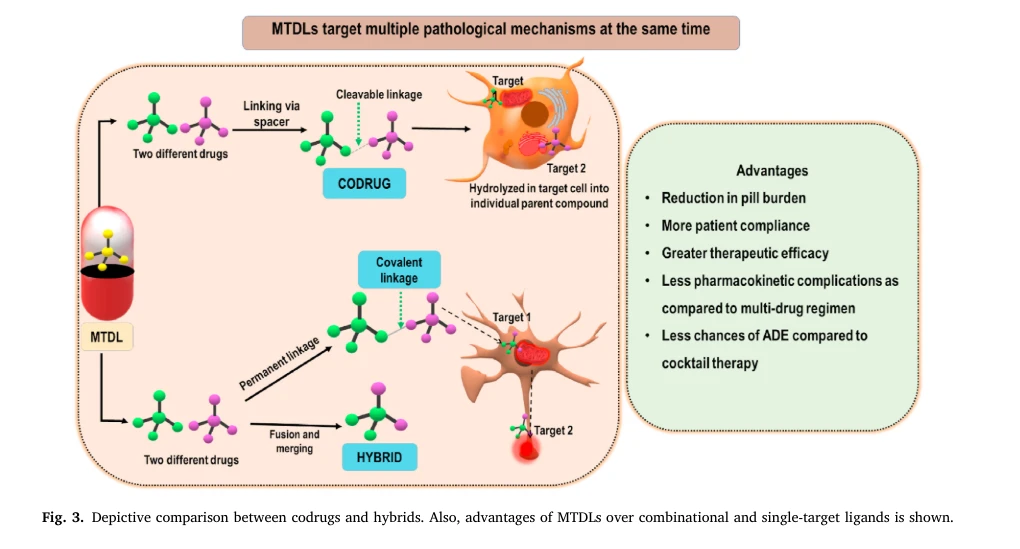
The MTDLs formed from already established and approved drugs are the next strategy adopted by many research firms to search for an effective treatment.
5.1.1.1. Ibuprofen-lipoic acid codrug.
NSAIDs and their chronic use have long been associated to be used in AD for their anti-inflammatory potential and ability to cross BBB (Imbimbo et al., 2010; Van Dam et al., 2010).
Similarly, alpha-lipoic acid which is available in the market as a daily supplement is a super anti-oxidant with the capability to permeate BBB (Packer et al., 1995). Alkyldiamine group when used as a linker can successfully link the two compounds via the formation of a metabolically cleavable amide group.
Codrug of this kind (Ibuprofen-alfa lipoic acid) showed a better in vitro antioxidant profile along with enhanced in vivo anti-amyloid aggregation properties than the parent compounds alone. Also, the compound should have a greater BBB permeation due to the masking of the polar carboxylic acid groups (Sozio et al., 2010).
5.1.1.2. Tacrine-based codrugs and hybrids. Tacrine was the first anticholinesterase drug approved by the FDA for AD (Crismon, 1994). However, due to the surfacing of adverse events related to hepatotoxicity, it was later withdrawn from the market.
Recent research has shown that the modification of the free primary amine group in tacrine greatly reduces its hepatotoxic potential. As a result, all the tacrine-based codrugs and hybrids use the primary amine group to attach a spacer to reduce hepatotoxicity. A vast majority of compounds showing anti-amyloidogenic, anti-BACE1, antioxidant, and MAO inhibition properties have been linked with Tacrine (Gonzalez et al., 2019; Wu et al., 2017).
The resultant MTDLs showed an excellent in vitro data profile. The details of the mentioned codrugs are explained precisely by Wu et al. in their review (Wu et al., 2017).
5.1.1.3. MTDLs synthesized by merging of two or more drugs. Memoquine is an MTDL made by hybridization of a polyamine derived from protamine and 1,4 benzoquinone from coQ10 (Dias and Viegas, 2014).
In vitro and in vivo studies demonstrated the excellent ache inhibitory and antioxidant potential of Memoquine. Moreover, it was also found to reduce Aβ42 burden along with anti-BACE1 activity (Capurro et al., 2013). Recently, antagonism of the 5HT6 receptor has also emerged as an effective target in the treatment of AD. The antagonism of 5HT6 is considered to be pro-cholinergic, hence combining this property with an anticholinesterase inhibitor may prove to be synergetic in combating AD.
Taking this into view Idalopirdine is developed, which is made by merging of tryptamine pharmacophore raised against 5HT6 receptor antagonist and benzylamine (ache inhibitor). The drug is still under investigation however, Clinical trial phase 3 conducted in 2017 for Idalopirdine failed to show any statistically significant result in the alleviation of cognitive decline (Andrews et al., 2018; Atri et al., 2018).
5.1.2. MTDLs in PD
PD like AD is a complex multifactorial ND. Although the list of FDA-approved drugs for Parkinson's is more as compared to AD, a single target drug that could modify the disease outcome is still not found.
The importance of polypharmacology in PD can be traced back to the 1970s when Amantadine (an antiviral agent) was approved by the FDA for the treatment of PD.
Now, Amantadine is commonly used to alleviate the PD symptoms of tremors and rigidity, this classic example pinpoints the importance of polypharmacology in drug repurposing. Multi-drugs which are strategically developed and found to be effective in various in vitro and in vivo studies are discussed below.
5.1.2.1. L-dopa based MTDLs. L-dopa along with carbidopa in a fixed-dose combination is a gold standard for the treatment of PD. L-dopa increases the nigrostriatal dopaminergic levels but at the same time, the drug is a pro-oxidant and might increase the oxidative stress in the already vulnerable regions of the brain.
As a result, there have been many attempts to synthesize MTDLs combining L-dopa along with other free radical scavenging or antioxidant agents like Caffeic acid, alfa-lipoic acid, and Carnosine (Sozio et al., 2008; Di Stefano et al., 2006).
Caffeic acid and carnosine-conjugated L-dopa failed to show a significant antioxidant property but, a modest antioxidant property was found for the lipoic acid-L-dopa conjugated drug.
Also, all three agents mentioned showed good stability and increased LD and DA release in the brain. Recently, Franceschelli et al. showed the anti-oxidant and anti-apoptotic potential of LD-GSH codrug in an in vitro model (Franceschelli et al., 2019). The study showed that GSH-LD codrug increases the expression of anti-apoptotic proteins like bcl-2 and simultaneously reduces the pro-apoptotic proteins like Bax and caspase-3 by triggering the PI3K/AKT pathway.

The current literature available on the L-dopa-based MTDLs shows themselves to be a potential therapeutic agent however, more in vivo studies should be conducted to validate the results.
5.1.2.2. MTDLs synthesized by merging of two or more drugs. M30 a novel MTDL is formed by strategically merging the propylgylamine moiety present in the FDA-approved Rasagiline into an antioxidant/iron-chelator moiety i.e. 8-hydroxy quinoline. The in vitro and in vivo studies of M30 show strong free radical scavenger activity along with the inhibition of brain-selective MAO-A and MAO-B.
Moreover, its in vivo ability to restore dopaminergic neurons and to stabilize mitochondrial membrane potential in MPTP MPTP-induced PD model makes m30 a potential therapeutic agent to be used in PD (Youdim and Oh, 2013; Youdim et al., 2014).
5.1.3. MTDLs in MS MS is a chronic progressive auto-immune disorder characterized by demyelinating lesions and neuroinflammation. The complications that occur in MS can be attributed to various inflammatory cytokines released by the lymphocytes infiltrated into the brain parenchyma.
Also, the transformation of microglia and astrocytes to their reactive phenotype by a process called Microgliosis/Astrogliosis further adds up in the build-up of Pro-inflammatory and inflammatory mediators. The currently available treatment options for MS only target neuro-inflammation and overlook other complications.
As a result, there is a need for an alternative therapeutic approach that could target demyelination, the polarization of microglia, neurodegeneration along neuroinflammation. Targeting the mentioned pathomechanisms simultaneously would only be possible by a polypharmacological approach and hence lately a lot of research has been carried out in this field (Ghasemi et al., 2017; Dobson and Giovannoni, 2019).
Very recently, Rossi and colleagues developed a novel codrug for MS by connecting alpha-linolenic acid (ALA) to Valproic acid by an alkyl diamine linkage (Rossi et al., 2020).
As previously discussed, such linkages strategically form amide groups by reacting with the free acid groups in the parent compound. The resultant codrug is stable and dissociates into the individual drug once inside the neurons/microglia/astrocyte with the help of hydrolyzing enzymes.
A detailed in vitro study performed on the ALA-VA codrug showed that the drug effectively blocked the polarization of microglia into the M1 phenotype and was also shown to promote differentiation of oligodendrocyte precursor cells into oligodendrocytes.
Additionally, the neuroprotective property along with the high BBB permeability of the co-drug makes it a promising agent for MS. Hopefully, in vivo studies might be performed in the future to validate the in vitro results.
5.2. Multiple drugs - multiple targets polypharmacological approach (polypharmacy)
The multiple pathogenic mechanisms associated with ND demand multiple targeted pharmacological therapies. MTDLs are more efficacious pharmacokinetically and are patient-compliant but, not all drugs can be made into MTDLs.
So, more often a cocktail therapy or a fixed-dose combination of drugs is employed as a treatment strategy. Cocktail therapy is a combination of multiple dosage forms containing different APIs, whereas fixed dose combination is a single dosage form containing multiple APIs. From a drug discovery point of view, the combination approach is less risky and more successful concerning clinical transitions as compared to MTDLs.
However, the major drawback of the "multiple drugs-multiple target" polypharmacological approach is the potential scope to cause drug-drug interactions and adverse side effects. A few fixed dose combinations which might be useful in various neurodegenerative conditions are discussed below.
5.2.1. Fixed dose combination in AD
Acetylcholinesterase inhibitors like galantamine and donepezil are the most widely used therapeutic drugs in AD. These agents reversibly inhibit the acetylcholinesterase enzyme, thereby making more acetylcholine available in the brain region.
Such an increase in acetylcholine in the brain synapses is considered to be responsible for alleviating cognitive decline (Annicchiarico et al., 2007; Takeda et al., 2006; Wilkinson et al., 2004). Memantine, on the other hand, is an NMDA receptor antagonist.
By blocking the NMDA receptors, it is thought to prevent the excitotoxicity associated with neuronal death (Kutzing et al., 2012; Molinuevo et al., 2005). Preclinical studies conducted with Memantine demonstrated it to act on multiple targets like BACE1, Amyloid-B, BDNF, and NMDA receptors. Hence was considered to be a blockbuster in AD treatment however, clinical studies demonstrated it to be even less efficacious as compared to AChE inhibitors in alleviating cognitive symptoms.
However, further clinical trials conducted showed Memantine to be effective in reducing cognitive deficits when combined with AChE inhibitor Donepezil (Deardorff and Grossberg, 2016). Both cholinergic and glutamatergic imbalance have long been associated as major pathophysiological mechanisms in AD. The FDC of Memantine and Donepezil effectively targets both the pathological target and was also found to show greater therapeutic benefits in moderate to severe AD than either drug when used alone.
Another combination strategy is MAO-B inhibitors such as Rasagiline along with acetylcholinesterase inhibitors such as Rivastigmine. MAO-B is upregulated in ND which causes increased metabolism of neurotransmitters like dopamine, this leads to an increase in the generation of reactive oxygen species causing oxidative stress and neurodegeneration (Saura et al., 1994).
Recently, MAO-B upregulation has also been suggested to increase amyloid beta levels (Schedin-Weiss et al., 2017). Such a combination of Rasagiline and Rivastigmine is very beneficial in such a scenario since it improves cognition and decreases oxidative stress. Based, on the mentioned benefits a hybrid compound called Ladostigil was developed (Weinstock et al., 2000).
The drug has shown good neuroprotective and AChE inhibition activity in preclinical studies and currently, it is still under clinical trials (Bar-Am et al., 2009).
5.2.2. Fixed-dose combinations in PD
Various combination therapies have been taken up for the treatment of PD. Some drug combinations approved by FDA are levodopaþcarbidopa, levodopaþbenserazide and levodopaþcarbidopaþentacapone.
Monotherapy of levodopa is also known to be very effective (Poewe et al., 2010) but there are significant reported side effects and peripheral metabolism that limit the delivery to the brain.
Given along with DOPA decarboxylase inhibitors, like carbidopa or benserazide, levodopa shows great advantage by significantly improving the levels of L-DOPA and subsequently dopamine in the brain. The DOPA decarboxylase inhibitors do not particularly act in such a way to treat Parkinson's or even reduce symptoms of the disease as they do not cross the blood-brain barrier (BBB), but they selectively stop the conversion of levodopa into dopamine peripherally, hence, reducing side effects.
They also offer an advantage by being effective in reducing chronic motor fluctuations as compared to monotherapy of levodopa (Celesia and Wanamaker, 1976; Ellis and Fell, 2017). Another combination of MAO-B inhibitors along with levodopa offers an advantage by allowing a reduction in the dose of levodopa that technically reduces off-targeting.
A class of drugs called COMT and MAO inhibitors offers treatment for Parkinson's by preserving dopamine levels produced endogenously (Salamon et al., 2020; Muller, 2009). These along with levodopa, when administered, prolong the duration of action and also increase the t1/2 (half-life) of the drug. Such a combination is also seen to be advantageous in reducing motor symptoms associated with PD. Additionally, the combination also offers an advantage in wearing off cases of levodopa (Muller, 2009).

Anticholinergic drugs and levodopa are also given in combination to overcome the dopaminergic and cholinergic imbalance associated with Parkinsonism. However, such combinations are not advised to be used in elderly patients as they may create confusion-like states and impair cognitive abilities (Deardorff and Grossberg, 2016).
For more information:1950477648nn@gmail.com