Exploring The Mechanism Of Cistanche-Based Xian Fang Huo Ming Drink in Regulating The PI3K/Akt/NF-κB Signaling Pathway in The Treatment Of Chronic Prostatitis/Chronic Pelvic Pain Syndrome Based On Network Pharmacology And Animal Experiments
Oct 27, 2025
Abstract
Objective: To explore the mechanism of action of a Cistanche-based Xian Fang Huo Ming Drink (XFHY) in treating Chronic Prostatitis/Chronic Pelvic Pain Syndrome (CP/CPPS) through network pharmacology, molecular docking, and experimental validation in animal models.
Methods: Active ingredients and corresponding targets of XFHY were obtained from the TCMSP and SwissTargetPrediction databases. Targets related to CP/CPPS were collected from OMIM, GeneCards, and DisGeNET. Core therapeutic targets were identified via PPI network construction and topological analysis. DAVID database was used for GO and KEGG enrichment analysis. Molecular docking was performed using AutoDock, and visualizations generated via GraphPad Prism 8. In vivo, prostate injury and inflammatory infiltration in CP/CPPS rats induced by 3% λ-carrageenan were evaluated using hematoxylin-eosin (HE) staining. ELISA was used to detect TNF-α, IL-1β, and COX-2 expression. Real-time PCR and Western blotting were used to assess PI3K, Akt, and NF-κB p65 mRNA and protein expression in prostate tissue.
Results: HE staining showed no significant inflammation in the sham group, while the model group exhibited inflammatory cell infiltration. ELISA results indicated significantly elevated TNF-α, IL-1β, and COX-2 in the model group (P<0.01), confirming successful modeling. XFHY significantly reduced these markers in a dose-dependent manner. PCR showed that low, medium, and high doses of XFHY downregulated PI3K, Akt, and NF-κB p65 mRNA expression. Western blot confirmed that XFHY inhibited phosphorylation of PI3K, Akt (Ser473 and Thr308), and NF-κB p65.
Conclusion: XFHY may alleviate CP/CPPS by inhibiting the PI3K/Akt/NF-κB pathway and reducing inflammation. NF-κB activation may be associated with Akt phosphorylation at Ser473 and Thr308.
Keywords: Network Pharmacology; Molecular Docking; Cistanche; Xian Fang Huo Ming Drink; Chronic Prostatitis/Chronic Pelvic Pain Syndrome; PI3K/Akt/NF-κB

TCM Cistanche extract supplement for treating Chronic Prostatitis
1. Introduction
Prostatitis is one of the most common conditions in urology. According to NIH classification, it is divided into four types: type I (acute bacterial prostatitis), type II (chronic bacterial prostatitis), type III (chronic prostatitis/chronic pelvic pain syndrome, CP/CPPS), and type IV (asymptomatic prostatitis). Among them, type III is the most prevalent, characterized by pelvic and perineal pain, lower urinary tract symptoms, psychological disturbances, and sexual dysfunction, severely affecting male health and quality of life.

Tcm Cistanche Extract Supplement Benefits
The etiology and pathogenesis of CP/CPPS remain unclear and may involve inflammation, immune dysfunction, and neuroendocrine disorders. Among these, inflammation is considered the core factor in disease progression. Current treatments focus on symptomatic relief using α-blockers, NSAIDs, antidepressants, and anxiolytics. However, due to the complexity and chronicity of symptoms, Western medicine alone often fails to provide satisfactory outcomes.
Recent expert consensus suggests that Traditional Chinese Medicine (TCM) has unique advantages in treating CP/CPPS, especially where Western medicine falls short. Although ancient TCM texts do not explicitly mention CP/CPPS, it is commonly classified under terms like "jing zhuo," "lao lin," and "yin pain," with pathogenic mechanisms involving damp-heat, toxin stagnation, and blood stasis. Accordingly, treatment focuses on clearing heat, draining dampness, promoting blood circulation, and relaxing meridians.
Xian Fang Huo Ming Drink (XFHY) originates from "Corrected Treatise on Prescriptions for Women", hailed as a classic remedy for abscesses and inflammations. It clears heat and toxins, invigorates blood, and dissolves nodules. In the modified formula used here, Cistanche replaces other traditional monarch herbs, acting to tonify kidney yang, improve circulation, and reduce inflammation. The formula also includes Angelica tail, Red Peony Root, Frankincense, Myrrh, Tangerine Peel, and other herbs with synergistic effects for heat-clearing, swelling reduction, and pus drainage.
Professor Chen Shenghui, based on years of clinical practice, has applied XFHY to treat CP/CPPS characterized by damp-heat and blood stasis. Clinical results show that XFHY can relieve pain and urinary symptoms while increasing anti-inflammatory cytokine IL-10 in prostatic fluid, thereby reducing inflammation.
This study aims to further investigate the mechanisms of XFHY against CP/CPPS using network pharmacology and animal experiments, providing a theoretical basis for its clinical application.

Tcm Cistanche Extract Supplement
2. Materials
2.1 Animals
A total of 70 specific pathogen-free (SPF) male Sprague-Dawley (SD) rats (6 weeks old, 200–220g) were purchased from Jiangxi Qianchong Scientific Instruments Co., Ltd. (License No. SCXK(Zhe)2024-0001). Rats were housed at the Laboratory Animal Technology Center of Jiangxi University of Traditional Chinese Medicine under controlled conditions (12h light/dark cycle, humidity 60%±5%, temperature 23±1°C) with free access to food and water. After one week of acclimatization, experiments were initiated. Ethical approval was granted by the Ethics Committee of Jiangxi University of Traditional Chinese Medicine (Approval No. JZLLSC20241201).
2.2 Medicines
Cistanche-based XFHY composition (per dose):
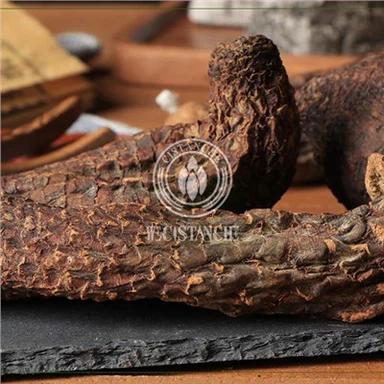
Cistanche 9 g
Fritillaria 6 g
Saposhnikovia 6 g
Tangerine Peel 9 g
Processed Pangolin Scales 6 g
Frankincense 6 g
Myrrh 6 g
Red Peony Root 6 g
Trichosanthes Root 6 g
Licorice Root 6 g
Angelica Tail 6 g
Gleditsia Thorn 6 g
Angelica Dahurica 3 g
All herbs were decocted and concentrated to a stock solution equivalent to 0.729 g/mL of raw herbs, then diluted to 0.3645 g/mL and 1.458 g/mL for low and high doses, stored at 4°C.
All herbs were sourced from certified TCM suppliers in Jiangxi Province and authenticated by Director Xiong Haoran from the Pharmacy of Affiliated Reproductive Hospital, Jiangxi University of Traditional Chinese Medicine.
Control drug:
Tamsulosin Hydrochloride Sustained Release Capsules (Jiangsu Hengrui Pharmaceuticals, 0.2mg/capsule, H20050392).
Topical drug:
Mupirocin Ointment (Sino-American Tianjin Smith Kline, 15g, H10930064).

Tcm Cistanche Extract Supplement
2.3 Reagents and Antibodies
λ-Carrageenan (MedChemExpress, batch HY-125474)
ELISA kits for TNF-α, IL-1β, COX-2 (Wuhan Beinlai Biotechnology, batch RA20035, RA20020, RA2008)
Antibodies: PI3K, Akt, p-Akt (Ser473), NF-κB, and p-NF-κB (Cell Signaling Technology, USA)
p-PI3K antibody (Abmart, Shanghai, batch PC6417S)
p-Akt (Thr308) (Qinke Bio, Jiangsu)
HRP-conjugated secondary antibodies (Three Eagles Bio, Wuhan)
qPCR and RNA kits (ComWin Biotech, Jiangsu)
ECL reagents (Meilunbio®, Dalian)
PVDF membranes (Millipore, Germany)
2.4 Instruments
Centrifuge, PCR cyclers, qPCR machines, electrophoresis systems, Western blot apparatus, ELISA readers, and microscopy equipment were sourced from leading scientific equipment manufacturers including Leica, Perkin Elmer, Bio-Rad, and others (see full list in original materials section).