Mechanism Of Qizhi Tongqiao Capsule in Treating Benign Prostatic Hyperplasia And Erectile Dysfunction Based On Network Pharmacology And Molecular Docking Ⅱ
Mar 04, 2025
2 Results
2.1 Screening of Active Components and Targets of QTC
Using the aforementioned methods, the active components of QTC were screened from the database. A total of 19 active components were identified for Astragalus, 9 for Lindera, 4 for Alpinia oxyphylla, 13 for Hirudo, 10 for Cuscuta, 17 for Cinnamon, and 4 for Cyathula. After removing duplicates, 70 active components of QTC were obtained (see Table 1). Target prediction and deduplication resulted in a total of 879 targets.

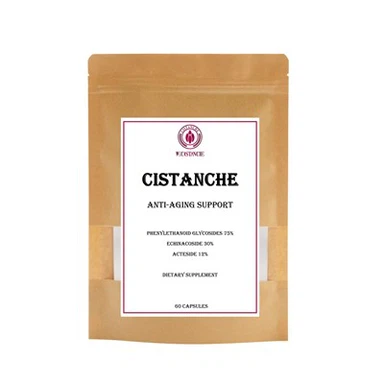
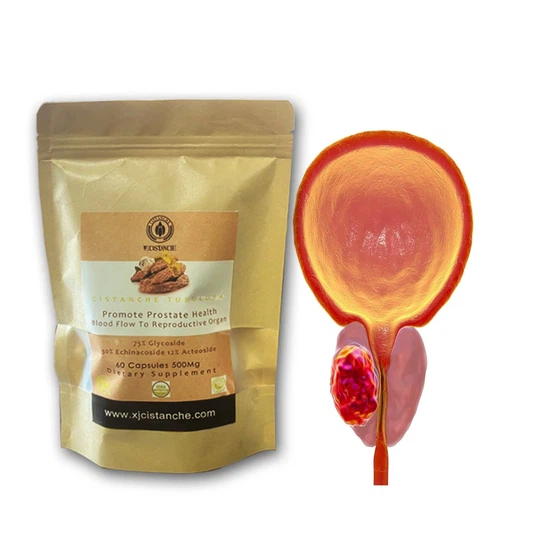
Herbal Cistanche Supplements For BPH
2.2 Screening of BPH and ED-Related Targets and Identification of Drug-Disease Intersection Targets
As described in the methods, disease-related targets were retrieved and screened from the database. A total of 987 targets related to BPH (Benign Prostatic Hyperplasia) and 1,162 targets related to ED (Erectile Dysfunction) were obtained. Subsequently, the intersection of QTC targets and disease targets was taken, resulting in 146 intersecting targets (see Figure 1).

1 QTC "different diseases, same treatment" intersection target Venn diagram of BPH and ED
2.3 Construction and Analysis of the "Drug-Component-Target-Disease" Network
As described in the methods, the "drug-disease" intersection targets were input into Cytoscape 3.10.0 software to construct the "drug-component-target-disease" network diagram (Figure 2). After calculations, the top 10 active components were selected based on their rankings (see Table 2).
| Rank | Active Component | Degree | Source |
|---|---|---|---|
| HQ12 | (3R)-3-(2-hydroxy-3,4-dimethoxyphenyl)-chroman-7-ol | 41 | Astragalus |
| HQ6 | (6aR,11R)-6,10-dimethoxy-6,11-dihydro-6H-benzo[f]uro[3,2-c][2]-chromen-3-ol | 37 | Astragalus |
| SZ9 | CROCETIN | 35 | Gardenia |
| WY6 | Boldine | 33 | Lindera |
| HQ13 | Iso-dihydroisomethyllissolin | 33 | Astragalus |
| HQ7 | 3,5,6-triol-o-methylflavone | 31 | Astragalus |
| GY2 | Crocetin | 29 | Gardenia, Alpinia oxyphylla |
| GY3 | Crocin | 29 | Gardenia, Alpinia oxyphylla |
| R3 | Melilotocarpan A | 28 | Hirudo |

Figure 2 "Drug-ingredient-target-disease" network diagram
2.4 PPI network construction and core target analysis
According to the method, the PPI network diagram was constructed, as shown in Figure 3. The top 10 gene targets were screened according to the degree value, as shown in Figure 4A; in addition, 10 hub genes were calculated by the cytoHubba plug-in MCC, as shown in Figure 4B. The core gene targets obtained after the intersection are: AKT1, IL6, ESR1, STAT3, TNF, JUN, BCL2, CASP3.


3 QTC treats different diseases with the same treatment Potential targets for BPH and ED PPI network

2.5 GO Function and KEGG Pathway Enrichment Analysis
GO enrichment analysis identified a total of 2,103 biological process (BP) terms, including response to hormones, positive regulation of cell migration, and positive regulation of phosphorylation processes. A total of 106 cellular component (CC) terms were identified, including receptor complexes, membrane rafts, and focal adhesions. Furthermore, 174 molecular function (MF) terms were identified, including protein kinase activity, transcription factor binding, and protein homodimerization activity. The top 20 terms from each category are presented as examples in Figure 5.
KEGG enrichment analysis identified 193 signaling pathways, including cancer-related pathways, prostate cancer-related pathways, NF-kappa B signaling pathway, and calcium signaling pathway, with the top 20 pathways presented as examples in Figure 6.

2.6 Molecular Docking Results
In this study, quercetin, a common active compound found in multiple traditional Chinese medicines in QTC, was selected for molecular docking analysis. The binding energy values between quercetin and core target proteins are shown in Table 3. Except for AKT1 and TNF, the binding energy values for the remaining proteins were all less than -5, indicating a relatively stable docking interaction. The docking results with binding energy values less than -5 are presented in 3D visualizations as examples in Figure 7.

5 GO functional enrichment analysis BP, CC, MF three-in-one graph
3 Discussion
Both benign prostatic hyperplasia (BPH) and erectile dysfunction (ED) are common urological conditions that significantly affect the quality of life of middle-aged and elderly men. Lower urinary tract symptoms (LUTs) caused by BPH can considerably impact daily life, while comorbid ED further harms both physical and mental health. Studies have shown that various pathophysiological processes, including reduced NO-cGMP signaling, activation of the RhoA/ROCK signaling pathway, increased sympathetic nervous system activity, and atherosclerosis, contribute to the co-occurrence of BPH and ED [19].
In Western medicine, treatments for BPH and ED comorbidity primarily involve the use of phosphodiesterase type 5 inhibitors (such as sildenafil and tadalafil) alone or in combination with α-receptor blockers (such as tamsulosin) [20-21]. However, these treatments generally target a single signaling pathway or molecular target, whereas the development of these diseases involves multiple mechanisms, multiple targets, and complex signaling pathways. As a result, modern medical treatments have certain limitations.
Traditional Chinese medicine (TCM) offers unique advantages as it exerts therapeutic effects through multi-target and multi-pathway mechanisms. Clinical observations and validations suggest that the TCM approach of "tonifying Qi and promoting blood circulation, nourishing the kidney, and unblocking meridians" can achieve the "treatment of different diseases with the same method" for some patients with BPH and ED comorbidity. Studies have reported [22-23] that TCM herbs classified as "Qi-tonifying and blood-activating" can regulate the expression of pro-apoptotic and anti-apoptotic proteins, thereby promoting apoptosis and inhibiting BPH. Additionally, these herbs may exert therapeutic effects by regulating the TFF/Wnt signaling pathway and downregulating the expression of TFF2, Wnt4, and Wnt6.
Our research team previously proposed that "harmonized Qi and blood" is essential for normal erectile function, while "disharmonized Qi and blood" is a key pathological mechanism of ED. Consequently, tonifying Qi and promoting blood circulation is a fundamental strategy for treating ED [24]. Clinical studies have shown that combining TCM herbs with tadalafil for the treatment of mild to moderate ED can effectively reduce the required dosage of tadalafil, lower the incidence of adverse effects, and enhance long-term therapeutic efficacy [25].
Currently, our research team has clinically and experimentally demonstrated that QTC can significantly improve International Prostate Symptom Score (IPSS), quality of life (QoL) score, and maximum urinary flow rate (Qmax) in BPH patients [12]. Furthermore, QTC significantly inhibits exogenous testosterone-induced prostatic hyperplasia in rats, improves prostate histopathological changes, and suppresses prostate epithelial thickening. The underlying mechanisms may involve inhibition of Bcl-2, PCNA, HIF-1α, and VEGF protein expression, as well as an increase in the Bax/Bcl-2 ratio [26].
In summary, theoretical, clinical, and experimental evidence suggests that QTC has the potential to treat both BPH and ED simultaneously. In this study, we employed network pharmacology and molecular docking methods to preliminarily explore the material basis and potential mechanisms of QTC's "one therapy for different diseases" effect on BPH and ED, aiming to uncover part of its scientific rationale.
By applying specific selection criteria, we identified core active compounds in QTC for BPH and ED treatment, including crocin, lycium alcohol, 3,9-di-O-methyl-nissolin, quercetin, and kaempferol, among which quercetin is a common component in multiple TCM herbs. Fu et al. [27] found that quercetin can inhibit BPH by suppressing oxidative stress and activating the Nrf2 signaling pathway. Additionally, Olabiyi et al. [28] investigated the mechanism by which quercetin improves erectile function in ED model rats and found that quercetin enhances erectile function by increasing nitric oxide (NO) levels.
GO and KEGG enrichment analyses of the overlapping targets between active compounds and diseases revealed that QTC's therapeutic mechanisms for BPH and ED involve multiple biological processes (BP) and signaling pathways, indicating a complex regulatory process.
(1) NF-κB Signaling Pathway (Pathway 16)
NF-κB is a pleiotropic transcription factor that regulates the transcriptional activity of promoters associated with inflammatory cytokines. Ko et al. [29] found that NF-κB activation is closely related to the progression of BPH, with patients exhibiting activated NF-κB showing significantly larger prostate stromal volumes than those without activation. Similarly, Li et al. [30] discovered that Pseudomonas aeruginosa lipopolysaccharide (LPS) can activate the NF-κB pathway, leading to inflammation, proliferation, and epithelial-mesenchymal transition (EMT) while inhibiting apoptosis of prostate cells, thus promoting BPH progression.
Additionally, Akintunde et al. [31] studied mantis egg extract in an inflammatory ED rat model and found that it downregulated NF-κB, improved endothelial function, and restored erectile function. Sun et al. [32] treated diabetic ED rats with paeonol, showing that it may improve ED by inhibiting the HMGB1/RAGE/NF-κB pathway and regulating inflammation, endothelial dysfunction, fibrosis, and apoptosis. These findings indicate that the NF-κB signaling pathway plays a crucial role in the pathogenesis of both BPH and ED.
Quercetin, one of the core active compounds in QTC, is widely found in multiple traditional Chinese medicines. Studies have shown that quercetin can regulate the NOX2/ROS/NF-κB pathway in lung epithelial cells, thereby inhibiting LPS-induced oxidative stress and inflammatory responses [33]. Considering previous studies on the effects of quercetin in BPH and ED, we hypothesize that NF-κB signaling plays a key role in QTC's therapeutic mechanism for these conditions.
(2) Diabetes-Related Pathways (Pathways 2, 13, and 20)
Multiple signaling pathways identified in the analysis are related to diabetes, highlighting the importance of diabetes-related pathways in the pathogenesis of BPH and ED. Diabetes mellitus (DM) is a metabolic disorder characterized by hyperglycemia, and with aging and prolonged disease duration, it can lead to a series of complications.
ED is one of the most common complications of diabetes, with a global prevalence of 65.8% among diabetic patients, significantly affecting their physical and mental well-being [34]. The pathogenesis of diabetic ED is complex, involving oxidative stress, atherosclerosis, apoptosis, corpus cavernosum fibrosis, and psychological factors [35].
A meta-analysis found that BPH patients with diabetes had significantly higher International Prostate Symptom Score (IPSS) values and prostate volumes compared to those without diabetes, suggesting that diabetes may exacerbate LUTs caused by BPH [36]. Additionally, Wei et al. [37] found that high glucose levels promote BPH by downregulating pyruvate dehydrogenase kinase 4 (PDK4) expression. The close relationship between BPH, ED, and diabetes suggests that the development of these conditions may be linked to diabetes itself and its associated complications.
Dhanya et al. [38] found that quercetin can act on multiple diabetes-related targets, regulate key signaling pathways, and improve symptoms and complications of type 2 diabetes. Therefore, QTC and its active compounds may exert their therapeutic effects on BPH and ED through diabetes-related pathways, supporting the concept of "one therapy for different diseases."
(3) Ca²⁺ Signaling Pathway (Pathway 5)
The Ca²⁺ signaling pathway is a critical component of systemic signal transduction [39]. The processes of penile erection and detumescence are also regulated by Ca²⁺ signaling pathways. During sexual stimulation, neurons and vascular endothelial cells in the corpus cavernosum release nitric oxide (NO), which activates guanylate cyclase in smooth muscle cells, converting guanosine triphosphate (GTP) into cyclic guanosine monophosphate (cGMP). cGMP then activates protein kinase G (PKG), reducing intracellular Ca²⁺ levels, leading to relaxation of smooth muscle in the corpus cavernosum, increased blood flow, and erection. Conversely, phosphodiesterase type 5 (PDE5) degrades cGMP into inactive GMP, increasing intracellular Ca²⁺ levels, causing smooth muscle contraction and penile detumescence [40].
Wu et al. [41] studied the pathophysiology of BPH and found that intracellular Ca²⁺ regulation is involved in BPH progression. These findings indicate that the Ca²⁺ signaling pathway plays a vital role in both BPH and ED.
Currently, no studies have reported that QTC or its active compounds exert therapeutic effects by modulating the Ca²⁺ signaling pathway, but this warrants further investigation.
Additional Insights: HIF-1α in QTC's "One Therapy for Different Diseases" Approach
Based on PPI network analysis and core target identification, we found that hypoxia-inducible factor 1-alpha (HIF-1α) may play a crucial role in QTC's therapeutic effects on BPH and ED.
Studies have shown that hypoxia can activate HIF-1α, inducing growth factor secretion in human prostate stromal cells, which triggers prostate growth and contributes to BPH development [42]. QTC has been shown to inhibit HIF-1α expression in BPH rat prostate tissues, thereby suppressing prostatic hyperplasia, improving histopathological changes, and preventing epithelial thickening [26].
Hypoxia and HIF signaling also play a key role in ED pathogenesis. Our research team investigated corpus cavernosum smooth muscle phenotype transformation in ED rats and found that exposing corpus cavernosum smooth muscle cells to hypoxia for 24 hours significantly increased HIF-1α expression [43].
However, it is important to note that network pharmacology analyses provide predictive and complex results, serving only as a reference. Further experimental validation is necessary to elucidate the precise mechanisms by which QTC exerts its "one therapy for different diseases" effects on BPH and ED.
Additionally, this study utilized molecular docking technology to verify the binding ability of quercetin, one of QTC's active compounds, with key target proteins. The docking results showed that quercetin exhibited good binding affinity with most target proteins, except for AKT1 and TNF. However, AKT1 and TNF may still interact well with other active compounds. Therefore, the pharmacological mechanisms and therapeutic potential of quercetin in BPH and ED warrant further investigation and evaluation.
Conclusion and Study Limitations
In summary, this study employed network pharmacology and molecular docking techniques to predict the mechanisms by which QTC exerts its "one therapy for different diseases" effects on BPH and ED. The results highlight the complexity and diversity of QTC's mechanisms, indicating that its therapeutic effects involve multiple targets and multiple pathways.
However, while the findings provide valuable insights, the study has certain limitations:
Potential bias in result analysis – The interpretation of network pharmacology results may be influenced by the researcher's academic background, leading to possible biases in data analysis.
Outdated database information – Since the data in this study were sourced from online databases, there is a risk of outdated information due to delayed database updates.
Therefore, while network pharmacology and molecular docking provide useful predictions, further multi-disciplinary analyses and experimental validation are necessary to comprehensively elucidate the mechanisms underlying QTC's therapeutic effects on BPH and ED.