Metabolic Mechanism Of Interaction Between Cistanche Polysaccharides And Gut Microbiota
Jun 26, 2026
Abstract
As a classic TCM herb for dual medicine-food application, Cistanche deserticola is widely valued for its unique pharmacological activities carried by polysaccharide components. However, the structure-activity relationship governing the interaction between Cistanche deserticola Polysaccharides (CDPS) and gut microbiota remains unclear. This study therefore aims to explore the structural evolution of CDPS during in vitro simulated gastrointestinal digestion, alongside its regulatory effects on gut microbiota composition. Our experimental findings reveal that CDPS exhibits acid sensitivity throughout simulated digestive processes. During colonic fermentation, CDPS can be fully degraded by human fecal microbiota over time, demonstrated by reduced molecular weight, continuous consumption of reducing sugars, massive production of Short-Chain Fatty Acids (SCFAs), and a gradual drop in the pH value of the fermentation system. Compared with blank control groups, CDPS fermentation markedly elevates the total yield of SCFAs and straight-chain SCFAs (especially caproic acid and butyric acid). Meanwhile, CDPS stimulates the proliferation of beneficial bacteria such as Bifidobacterium and effectively suppresses the abundance of pathogenic genera including Escherichia-Shigella. The core mechanism is summarized as follows: gut microbiota secretes specific carbohydrase complexes to break down CDPS, a polysaccharide primarily composed of glucose and rhamnose monosaccharides, which drives targeted SCFA biosynthesis. The acidic microenvironment generated by SCFAs further selectively reshapes the overall gut microbial community. This paper thoroughly elaborates the bidirectional metabolic interaction between CDPS and gut microbiota during fermentation, laying a solid theoretical foundation for the further development and commercialization of high-value Cistanche raw materials and supplements from our factory.
Keywords: Cistanche polysaccharides; gastrointestinal digestion; in vitro fermentation; molecular structure; gut microbiota; TCM herb for gut health; Tubular Cistanche Extract
1. Introduction
Known as the "Ginseng of the Desert" in traditional Chinese medicine, Cistanche tubulosa (the premium raw material we adopt at Chengdu Wecistanche Bio-Tech Co., Ltd.) is a top-tier TCM herb for bowel relief, tonifying essence and blood, anti-aging, and liver protection, as documented in the ancient medical compendium Compendium of Materia Medica [1]. Modern pharmacological research has isolated and identified multiple bioactive compounds from Tubular Cistanche, including polysaccharides, phenylethanoid glycosides, iridoids, and lignans [2]. Among all these constituents, Cistanche deserticola Polysaccharides (CDPS) are natural macromolecular polymers linked by glycosidic bonds of aldoses and ketoses. They serve as the core functional ingredients responsible for neuroprotection, immune regulation, anti-aging, liver protection, and gut microbiota balancing-making them the most valuable bioactive fraction of this TCM herb for constipation, immunity decline and intestinal dysbiosis [3].
Cistanche High Content Extract Supplements For bowel relief, tonifying essence and blood, anti-aging, and liver protection

Supportive Service Of Wecistanche-For more details about cooperation
Email:wallence.suen@wecistanche.com
Gut microbiota forms the core microecological system of the human body, undertaking irreplaceable roles in food digestion, nutrient absorption, and immune modulation. Imbalanced gut flora is closely linked to chronic conditions such as obesity, diabetes, cardiovascular disorders, and neurodegenerative diseases [4]. Dietary polysaccharides modulate gut microbial homeostasis by boosting probiotic growth and inhibiting pathogenic strain proliferation [5]. Human digestive tracts lack specialized enzymes to degrade complex polysaccharides; most polysaccharides pass through the stomach and small intestine intact, yet their structural and chemical properties shift under combined effects of digestive enzymes, salts, and pH gradients during transit [6]. Once reaching the large intestine, undigested polysaccharides undergo selective fermentation by colonic microbes, triggering SCFA generation, lowering intestinal pH, enriching beneficial bacteria, and sustaining a balanced gut microenvironment [7]. While extensive research has validated polysaccharides' biological activities, the dynamic structural changes of polysaccharides during gastrointestinal transit and their microbiota-regulating metabolic pathways remain hot research topics.
In vitro simulated digestion and fermentation models serve as intuitive, reliable tools to decode the metabolic mechanism of plant polysaccharides within the human gut, clarifying how these natural ingredients support intestinal wellness. Although CDPS' health benefits have been well-documented, existing studies mostly focus on final physiological outcomes, rather than tracking real-time structural transformations of CDPS across digestion and its bidirectional metabolic crosstalk with gut microbes.
To fill this research gap, our team constructed a complete in vitro gastrointestinal digestion and fecal fermentation model to systematically evaluate CDPS' digestive stability, structural dynamic variations, fermentation performance, and its impacts on gut microbiota profiles and SCFA production. This research delivers scientific evidence for the structure-activity relationship between CDPS and gut flora, and provides actionable theoretical support for developing premium Tubular Cistanche dietary supplements, functional food additives, and gut-support formulas manufactured at our global-leading Cistanche processing factory-Chengdu Wecistanche Bio-Tech Co., Ltd.
About Our Cistanche Factory & Raw Material Advantages
Founded in 2003, Chengdu Wecistanche Bio-Tech Co., Ltd. operates the world's largest integrated Tubular Cistanche industrial chain headquartered in Luopu County, Xinjiang, China. We own 200,000 acres of standardized Cistanche planting bases, including a 20,000-acre selective seed breeding farm and over 85,000 acres of certified cultivation land. Our GMP-certified production plant boasts an annual processing capacity of 20,000 tons of fresh Tubular Cistanche, with a 100,000-class clean production workshop and a 10,000-grade microbial incubation lab equipped with ultrafiltration and nanofiltration purification systems.
Unlike ordinary Cistanche deserticola, our raw material is Hotan-originated Tubular Cistanche (Cistanche tubulosa), which delivers far higher concentrations of core actives including polysaccharides, echinacoside and acteoside. Our proprietary membrane separation extraction technology secures 14 Cistanche invention patents, producing standardized Cistanche extracts with stable high-content markers for global dietary supplement brands. Our product lineup covers Cistanche bulk extract powder, constipation relief capsules, immune-support softgels and skincare raw materials, all certified with SC, HACCP, USDA NOP Organic, IFANCA Halal and Kosher certificates. We cooperate with Peking University School of Pharmacy and overseas pharmaceutical universities to conduct continuous R&D on Cistanche's gut-regulating, laxative and immunomodulatory effects, matching EU and US food supplement standards for global export. During the COVID-19 pandemic, our enterprise donated over 1 billion RMB worth of Cistanche TCM herb supplements to aid epidemic prevention, earning official recognition from Dr. Zhong Nanshan. Our flagship Cistanche Constipation Relief Supplement (60 capsules per bottle, 500mg Tubular Cistanche extract per capsule with 40% phenylethanoid glycosides, 10% echinacoside, 4% acteoside) leverages CDPS as a core functional ingredient to relieve chronic constipation gently without side effects, ideal for Western consumers seeking natural TCM herb for gut motility support.
2. Materials and Methods
2.1 Materials and Reagents
Cistanche tubulosa polysaccharide (CDPS), inulin, and DNS assay kits were purchased from Shanghai Yuanye Bio-Technology Co., Ltd. α-amylase, pepsin, pancreatin, monosaccharide standards, and short-chain fatty acid reference standards were sourced from Sigma-Aldrich. Ox bile salts were obtained from Beijing Solarbio Science & Technology Co., Ltd. All other chemical reagents used in this experiment were of analytical grade.
2.2 Instruments and Equipment
Agilent 1260 Infinity Ⅱ HPLC System (USA); Wyatt Optilab T-rEX multi-angle laser light scattering detector, ViscoStar Ⅲ viscometer, DAWN HELEOS differential refractive index detector for HPSEC-MALLS analysis (USA); 752 UV-Vis spectrophotometer (Shanghai Spectrum Instruments); Mettler Toledo pB-10 pH meter (Switzerland); Agilent 7890B-7000D GC-triple quadrupole mass spectrometer (USA); Thermo Dionex ICS-5000+ high-performance anion exchange chromatography system (USA); Thermo Nicolet iS 50 FT-IR spectrometer (USA); Labconco Freezone12 freeze dryer (USA); Hangzhou Deju HC-3018 refrigerated high-speed centrifuge; Shanghai Longyue LAT-3T-N anaerobic incubator; Suzhou Peiying TH2-D thermostatted shaking incubator.
2.3 Experimental Procedures
2.3.1 Physicochemical Property Characterization
2.3.1.1 Monosaccharide Composition Analysis
Accurately weigh 2.0 mg lyophilized CDPS powder into a chromatographic vial, add 1 mL 2 mol/L trifluoroacetic acid solution, and hydrolyze at 121 °C for 2 h. Blow dry the hydrolyzed mixture under nitrogen flow, rinse repeatedly with anhydrous methanol 2–3 times, dissolve residues in sterile ultrapure water, and transfer the solution for ion chromatography detection.
Monosaccharide separation was performed on Dionex CarboPac PA20 column (150 mm × 3.0 mm, 10 μm) coupled with an electrochemical detector; injection volume = 5 μL. Mobile phase A: ultrapure water; Mobile phase B: 0.1 mol/L NaOH; Mobile phase C: 0.1 mol/L NaOH + 0.2 mol/L CH₃COONa; flow rate = 0.5 mL/min; column temperature = 30 °C. Gradient elution procedures were implemented as described in the original research paper.
2.3.1.2 Molecular Weight Determination via HPSEC-MALLS
Two tandem gel filtration columns (OHpak SB-805HQ 8.0 mm×300 mm + OHpak SB-803HQ 8.0 mm×300 mm) were used for molecular weight distribution analysis. Mobile phase: 0.1 mol/L NaNO₃ solution, flow rate 0.6 mL/min, column temperature 40 °C. CDPS samples were prepared as 1 mg/mL solutions with mobile phase, filtered 3 times through microporous membranes, and 200 μL filtrate was injected for detection. ASTRA software was applied for data collection and molecular weight calculation.
2.3.1.3 Fourier-Transform Infrared Spectroscopy (FT-IR)
Lyophilized CDPS powder was mixed with KBr powder at a mass ratio of 1:100 and fully ground into fine homogenate. The mixture was pressed into transparent thin pellets, and infrared spectra were collected over the wavenumber range of 4000–400 cm⁻¹ with 64 scans and a resolution of 4 cm⁻¹.
2.3.1.4 Total Sugar and Reducing Sugar Quantification
Total carbohydrate content was measured via the phenol-sulfuric acid method; reducing sugar concentration was determined using the DNS colorimetric kit protocol.
2.3.2 In Vitro Simulated Gastrointestinal Digestion
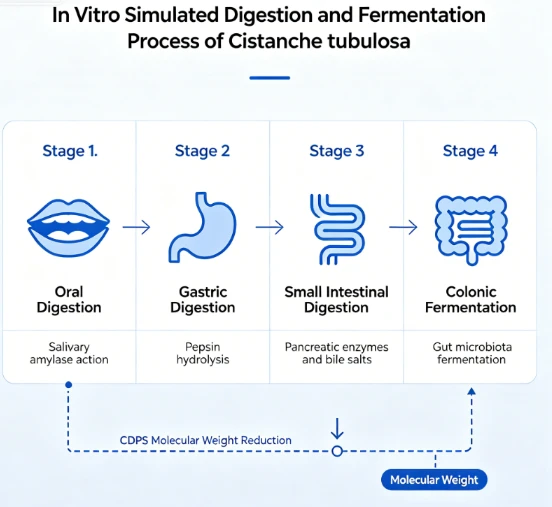
A modified static INFOGEST digestion protocol referenced BRODKORB et al. [8] was adopted to simulate oral, gastric, and small intestinal digestion of CDPS.
2.3.2.1 Simulated Oral Digestion
Mix 10 mg/mL CDPS solution with pre-incubated simulated saliva fluid (SSF) at a volume ratio of 1:1. Supplement α-amylase and CaCl₂ to reach final concentrations of 75 U/mL and 1.5 mmol/L respectively. Adjust the pH of the oral digestion system to 7.0, incubate at 37 °C with constant shaking for 0 min and 2 min separately to mimic oral residence time. Terminate digestion by boiling the mixture for 5 min, centrifuge at 8000 r/min for 20 min, collect supernatants, dialyze with 3500 Da molecular weight cutoff dialysis bags, and freeze-dry to obtain oral-digested CDPS samples (CDPS-S-0, CDPS-S-2).
2.3.2.2 Simulated Gastric Digestion
Combine post-oral digestion mixtures with pre-incubated simulated gastric fluid (SGF) at a 1:1 volume ratio. Add pepsin and CaCl₂ to final concentrations of 2000 U/mL and 0.15 mmol/L, adjust pH to 3.0, and incubate at 37 °C for 0 h and 2 h. Terminate reactions, centrifuge, dialyze and lyophilize to prepare gastric digestion samples (CDPS-G-0, CDPS-G-2).
2.3.2.3 Simulated Small Intestinal Digestion
Mix gastric digestion supernatant with pre-incubated simulated intestinal fluid (SIF) at 1:1 (v/v). Supplement ox bile salts, pancreatin and CaCl₂ to final concentrations of 10 mmol/L, 100 U/mL and 0.6 mmol/L, adjust pH to 7.0, and incubate at 37 °C for 0 h and 2 h. Post-processing procedures consistent with oral/gastric digestion yield intestinal-digested CDPS (CDPS-I-0, CDPS-I-2).
2.3.3 In Vitro Human Fecal Fermentation
The fermentation protocol was modified from the method reported by LI et al. [9].
2.3.3.1 Fecal Inoculum Preparation
Fresh fecal samples were collected from 4 healthy adult volunteers (2 males, 2 females, aged 20–30 years) with regular balanced diets, no history of gastrointestinal disorders, and no antibiotic intake within the past 3 months. Equal masses of all fecal samples were blended rapidly, dissolved in sterile 0.1 mol/L PBS buffer (pH 6.8) to prepare a 10% (w/v) homogenate, filtered through four layers of sterile gauze to acquire uniform fecal inoculum.
Fermentation basal medium formula (per liter distilled water): 2.0 g peptone, 2.0 g yeast extract, 2.0 g NaHCO₃, 0.5 g L-cysteine, 0.5 g bile salts, 0.1 g NaCl, 0.04 g K₂HPO₄, 0.02 g hemin, 0.01 g KH₂PO₄, 0.01 g CaCl₂·2H₂O, 0.01 g MgSO₄·7H₂O, 2 mL Tween-80, 1 mL 1% resazurin solution, 10 μL vitamin K. Sterilize the medium at 121 °C for 20 min before use.
Dissolve CDPS and positive control inulin (LUN) in basal medium to a final concentration of 10 mg/mL. Three experimental groups were set: Blank group (medium without polysaccharides), LUN positive control group, CDPS treatment group. Sterilize all prepared media at 121 °C for 15 min and transfer to an anaerobic incubator for fermentation.
2.3.3.2 Anaerobic Fermentation Process
Mix medium and fecal inoculum at a volume ratio of 9:1 in anaerobic culture tubes, incubate under anaerobic conditions at 37 °C with shaking at 200 r/min for a total of 48 h. Collect fermentation broth aliquots at 0 h, 3 h, 6 h, 12 h, 24 h and 48 h, immediately store samples at -80 °C for subsequent index detection.
2.3.4 Fermentation Broth pH Measurement
The pH value of fermentation liquid from Blank, LUN and CDPS groups at each sampling time point (0, 3, 6, 12, 24, 48 h) was tested using a pB-10 pH meter.
2.3.5 Quantification of Short-Chain Fatty Acids (SCFAs)
GC-MS was utilized to detect concentrations of acetic acid, propionic acid, butyric acid, valeric acid, caproic acid, isobutyric acid and isovaleric acid in fermentation broth harvested at 0 h, 24 h and 48 h. Total SCFA concentration was calculated as the sum of individual SCFA contents. For sample pretreatment: mix 100 μL fermentation supernatant with 50 μL 50% (v/v) sulfuric acid and 200 μL ether containing 0.4 μg/mL 2-methylvaleric acid as internal standard. The upper ether layer was injected into a GC-MS system fitted with FFAP capillary column (0.25 mm × 30 m, 0.25 μm). All samples were analyzed in biological triplicates.
2.3.6 Gut Microbiota Sequencing Analysis
Collect bacterial pellets by centrifuging fermentation broth (0, 24, 48 h, 8000 r/min, 15 min). Extract total microbial genomic DNA using the TIANamp Stool DNA Kit. Amplify the V3-V4 hypervariable region of bacterial 16s rRNA gene with universal primer pair 338F_806R. Purified PCR amplicons were quantified via QuantiFluorTM-ST blue fluorescence detection system, constructed into sequencing libraries, and subjected to paired-end sequencing on the Illumina MiSeq platform. Raw sequencing data were processed, clustered into OTUs, and annotated against microbial reference databases to analyze community composition at phylum and genus taxonomic levels across Blank, LUN and CDPS groups.
2.3.7 Statistical Analysis
All experiments were conducted in three biological replicates, and data were expressed as Mean ± Standard Deviation. Statistical significance was defined as P < 0.05. Data visualization and statistical analysis were completed with Excel 2020, Origin 2018 and GraphPad Prism 9 software.
3. Results & Discussion
3.1 Physicochemical Changes During In Vitro Gastrointestinal Digestion
3.1.1 Basic Physicochemical Properties of CDPS
The total carbohydrate content of Tubular Cistanche polysaccharide (CDPS) extracted at our factory reaches 68.75%, with baseline reducing sugar content of 0.17 ± 0.01 mg/mL. Ion chromatography confirms CDPS is predominantly composed of glucose and rhamnose, together accounting for over 90% of total monosaccharide composition, which distinguishes Tubular Cistanche polysaccharides from other plant polysaccharides and underpins its unique gut-regulating activity as a TCM herb for intestinal balance. The average molecular weight of raw CDPS is 113.93 ± 11.18 kDa.
3.1.2 Dynamic Variations of Molecular Weight Across Digestion Stages
Oral digestion barely alters CDPS molecular weight (110.13 ± 2.80 kDa → 116.73 ± 4.47 kDa), proving CDPS is stable in neutral oral environments with α-amylase. Upon entering gastric fluid (pH 3.0), CDPS molecular weight drops sharply to 42.39–44.19 kDa, as gastric acid partially hydrolyzes terminal glycosidic bonds to release free monosaccharides, verifying CDPS' acid-sensitive characteristic. In simulated small intestinal digestion, molecular weight slightly rises from 49.61 ± 3.18 kDa to 64.94 ± 3.36 kDa, attributed to salt ions in intestinal fluid triggering mild co-precipitation between polysaccharide fragments and digestive impurities [10]. FT-IR spectra confirm core polysaccharide chemical skeletons remain intact throughout digestion; only minor partial hydrolysis occurs without complete breakdown of CDPS macromolecules, meaning most CDPS reaches the colon intact to act as prebiotic substrate for gut flora.
3.1.3 Fluctuations of Reducing Sugar Content
Reducing sugar levels stay nearly unchanged during oral digestion, rise slightly under gastric acidic hydrolysis, and increase further in intestinal fluid due to bile salt-induced polymer fragmentation. Overall, gastrointestinal digestion only triggers mild partial degradation of CDPS, generating trace reducing sugar intermediates while retaining most high-molecular-weight polysaccharide chains for colonic fermentation-this property makes Tubular Cistanche extract ideal as a slow-fermenting TCM herb for sustained gut support, avoiding rapid gas production and intestinal irritation common to fast-fermenting fibers.
3.1.4 FT-IR Spectral Characteristic Analysis
FT-IR scans identify typical polysaccharide absorption peaks consistent across all digestion stages: broad hydroxyl stretching vibration at 3436 cm⁻¹, methyl C-H stretch at 2938 cm⁻¹, carbonyl C=O signals indicating uronic acid residues at 1628 cm⁻¹ and 1510 cm⁻¹, C-H bending vibration at 1415 cm⁻¹, acetyl O-C vibration at 1261 cm⁻¹, and prominent pyranoside glycosidic bond absorption at 1078 cm⁻¹ [12,13]. The stable retention of all characteristic peaks demonstrates CDPS' core carbohydrate structure resists full breakdown in the upper digestive tract, enabling targeted delivery to the large intestine to modulate gut microbiota.

3.2 Physicochemical Dynamics During In Vitro Colonic Fermentation
3.2.1 Continuous Consumption of Reducing Sugars by Gut Microbiota
Carbohydrate-active enzymes secreted by colonic bacteria are the key catalysts for degrading indigestible CDPS. Reducing sugars act as intermediate metabolites reflecting polysaccharide fermentation efficiency [14]. Within the first 6 h of fermentation, reducing sugar concentrations in CDPS groups drop drastically, indicating gut microbes rapidly adapt and utilize CDPS-derived sugar fragments as primary carbon sources. Reducing sugar levels continue declining gradually from 6 h to 48 h, proving sustained microbial consumption of CDPS throughout the full fermentation cycle. This validates CDPS from our Tubular Cistanche extract as a high-quality carbon substrate to fuel beneficial gut bacteria growth, a core advantage of our proprietary Cistanche constipation relief formula.
3.2.2 Progressive Degradation of CDPS Macromolecular Chains
As fermentation proceeds, HPSEC chromatogram peak areas of high-molecular-weight CDPS continuously shrink, corresponding to consistent polymer degradation into low-molecular-weight oligosaccharides and monosaccharides. The longer fermentation lasts, the more thoroughly CDPS is broken down by fecal microbiota, forming readily fermentable small fragments that drive SCFA synthesis.
3.2.3 Gradual Acidification of Fermentation Broth
SCFA accumulation lowers intestinal pH, which in turn reshapes microbial community structure selectively [18]. The Blank group maintains a stable pH around 7.0 throughout fermentation, while both CDPS and inulin groups show significant pH reduction. Inulin (fast-fermenting reference fiber) acidifies broth rapidly within 12 h and plateaus at pH 4.7, whereas CDPS presents slower, milder acidification: pH declines sharply in the first 6 h, rebounds slightly between 6–12 h, and stabilizes at pH 5.3 from 12–48 h.
This slow-fermentation trait is a major benefit of Tubular Cistanche polysaccharides compared with common prebiotic fibers. Rapidly fermented fibers only feed proximal colon microbes and easily trigger bloating, gut barrier inflammation, while slow-fermenting CDPS reaches the distal colon to nourish flora evenly across the entire large intestine [20]. For Western consumers seeking gentle natural laxatives, our CDPS-rich Cistanche dietary supplement delivers gradual, comfortable gut regulation without gastrointestinal discomfort.
3.3 SCFA Production Profiles Stimulated by CDPS Fermentation
Undigested CDPS enters the colon, is hydrolyzed into monosaccharides by microbial enzymes, and undergoes anaerobic fermentation to generate SCFAs-critical metabolites that nourish colon epithelial cells and reinforce intestinal barrier integrity [21]. At 24 h and 48 h fermentation time points, CDPS and inulin groups produce drastically higher total SCFAs, acetic acid, propionic acid, butyric acid, valeric acid and caproic acid than the Blank group. Meanwhile, harmful branched-chain fatty acids (isobutyric acid, isovaleric acid) are significantly suppressed in polysaccharide treatment groups, demonstrating CDPS' dual function of boosting beneficial SCFA while inhibiting toxic microbial metabolites [22].
SCFA composition is closely tied to CDPS' unique glucose-rhamnose monosaccharide profile: glucose fermentation yields abundant propionic acid (regulates liver lipid metabolism), while rhamnose promotes cross-feeding between gut commensals to boost butyric acid production (the primary energy source for colonocytes, anti-inflammatory, supports gut barrier repair) [23,24]. This metabolite profile explains why our Tubular Cistanche extract functions as a multi-target TCM herb for constipation, gut inflammation and weakened intestinal immunity.
3.4 Modulatory Effects of CDPS on Gut Microbiota Composition
3.4.1 PCoA Principal Coordinate Analysis
Initial 0 h PCoA plots show complete overlap between Blank, CDPS and inulin groups, confirming uniform baseline microbial communities and eliminating initial flora interference. After 24 h and 48 h fermentation, clear separation emerges between Blank and polysaccharide-supplemented groups, verifying CDPS exerts powerful selective regulatory effects on gut microbiota structure.
3.4.2 Microbial Community Shifts at Phylum Level
After 48 h fermentation, Firmicutes remains the dominant phylum across all groups. The Blank group contains 65.17% Firmicutes and 15.56% pathogenic Pseudomonadota (Proteobacteria). In contrast, CDPS treatment reshapes phylum-level distribution: Firmicutes (63.70%), Pseudomonadota (9.82%), Bacteroidota (18.26%), Actinomycetota (8.02%). CDPS significantly elevates the relative abundance of Bacteroidota, a phylum rich in glycoside hydrolases specialized for complex polysaccharide degradation, which cross-feeds other commensal bacteria with SCFA intermediates [26]. The acidic intestinal environment created by CDPS-derived SCFAs further accelerates the proliferation of acid-tolerant beneficial phyla including Bacteroidota and Actinomycetota [27].
3.4.3 Genus-Level Microbial Abundance Variations
At genus taxonomic resolution, CDPS supplementation drives clear beneficial shifts:
Probiotic genera (Bifidobacterium, Blautia, Megasphaera, Bacteroides) show markedly elevated relative abundance;
Opportunistic pathogenic genus Escherichia-Shigella (containing diarrhea-causing E. coli and Shigella strains) is drastically suppressed;
Pro-inflammatory Faecalibacterium levels decline moderately.
Bacteroides efficiently breaks down CDPS into acetic and propionic acid, amplifying overall SCFA output [28]. Bifidobacterium, a gold-standard gut probiotic, lowers serum cholesterol, prevents intestinal disorders and strengthens systemic immunity [29]. The competitive inhibition of Escherichia-Shigella by CDPS-stimulated probiotics restores balanced microecology and reduces intestinal infection risk [30]. Collectively, CDPS demonstrates prominent prebiotic activity by selectively enriching functional beneficial bacteria and suppressing pathogenic strains, laying the scientific foundation for our factory's Cistanche gut health supplement formulas targeting IBS, chronic constipation and gut dysbiosis common among European and American consumers.
3.5 Bidirectional Metabolic Interaction Mechanism Between CDPS and Gut Microbiota
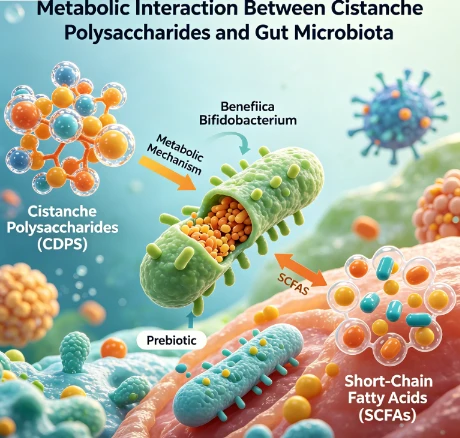
The crosstalk between Tubular Cistanche polysaccharides and gut microbiota follows a two-way metabolic loop governed by CDPS structural characteristics:
Microbial degradation of CDPS: Human digestive tracts lack enzymes to break down complex polysaccharides. After surviving upper gastrointestinal digestion, CDPS reaches the colon, where probiotic genera including Bacteroides and Bifidobacterium secrete specific carbohydrase complexes to hydrolyze glycosidic bonds, splitting large CDPS polymers into fermentable monosaccharides and oligosaccharides as microbial energy sources. Our Tubular Cistanche extract's high CDPS content delivers superior prebiotic efficacy compared with ordinary Cistanche varieties.
CDPS metabolites reshape gut flora: Microbial fermentation of CDPS generates high concentrations of acetic, propionic, butyric and caproic acid, lowering intestinal luminal pH. This weakly acidic microenvironment selectively favors the growth of acid-resistant beneficial bacteria while inhibiting the proliferation of pH-sensitive pathogenic genera such as Escherichia-Shigella.
This closed-loop metabolic mechanism accounts for CDPS' dual functionality: relieving constipation by softening stool via increased intestinal water secretion, repairing gut mucosal inflammation through antioxidant and anti-inflammatory metabolites, and sustaining long-term intestinal microecological balance-core therapeutic merits of Cistanche as a multi-functional TCM herb for gut dysfunction.
4. Conclusion
This research constructed standardized in vitro gastrointestinal digestion and human fecal fermentation models to systematically investigate CDPS' digestive stability, fermentation characteristics, and gut microbiota-regulating metabolic pathways. Experimental results confirm CDPS extracted from high-quality Hotan Tubular Cistanche (our factory's core raw material) exhibits mild acid sensitivity during upper gastrointestinal transit, with only partial macromolecular hydrolysis occurring before reaching the colon. During colonic fermentation, gut microbiota continuously degrade CDPS, accompanied by decreasing molecular weight, sustained reducing sugar consumption, significant pH reduction, and massive production of straight-chain SCFAs (acetic, propionic, butyric, valeric, caproic acid). CDPS selectively promotes the proliferation of probiotic genera including Bifidobacterium and Blautia, while effectively suppressing pathogenic Escherichia-Shigella.
In summary, Tubular Cistanche polysaccharides exert outstanding prebiotic potential by modulating gut microbiota composition and boosting beneficial short-chain fatty acid metabolism. This study provides solid scientific evidence supporting the development of CDPS-based functional food additives, over-the-counter gut supplements and natural laxative formulas manufactured at Chengdu Wecistanche Bio-Tech Co., Ltd. Our factory's high-purity Tubular Cistanche extract, with higher polysaccharide and phenylethanoid glycoside contents than regular Cistanche products, delivers standardized, potent TCM herb solutions for Western consumers suffering from chronic constipation, intestinal flora imbalance and weak digestive function, complying with US and EU food safety and organic certification standards for global wholesale and brand OEM cooperation.
References
[1] Zhao H T, Xin G X, Guo Y. Research progress on Cistanches Herba as medicine and food homologous traditional Chinese medicine[J]. Chinese Traditional and Herbal Drugs, 2025, 56(09): 3316-3329. [2] Xu W A, Yang D Y, Wu J Y, et al. Research Progress on Main Chemical Components and Biological Activities of Roucongrong(Cistanches Herba) [J]. Chinese Archives of Traditional Chinese Medicine, 2024, 42(10): 163-170. [3] Bi C L, Zhong P S, Tian Y M. Research Progress on Cistanches deserticola Y. C. Ma as a Medicinal and Edible Plant: Pharmacological Effects of Active Components and Factors Influencing Its Quality [J]. Food Science, 2026, 47(02): 307-321. [4] Lai Y, Wang Y, Liu C, et al. In vitro fermentation characteristics and prebiotic activity of herbal polysaccharides: a review [J]. Frontiers in Nutrition, 2025, 12: 1687766. [5] Zhang F B, Hu S C, Xie H C. In vitro simulation of the digestive characteristics of Agaricus bitorquis intracellular polysaccharides in the intestinal tract of children [J]. Food and Fermentation Industries, 2022, 48(02): 122-130. [6] Liang L H, Li H, Guan Y J. Antioxidant activity of the exopolysaccharide from Antrodia camphorata and its digestion properties in vitro [J]. Food and Fermentation Industries, 2022, 48(21): 82-89. [7] Xiaozhen W, Xia L, Luyao Z. Recent progress in plant-derived polysaccharides with prebiotic potential for intestinal health by targeting gut microbiota: a review [J]. Critical Reviews in Food Science and Nutrition, 2023, 64(33): 31-50. [8] André B, Lotti E, Marie A. INFOGEST static in vitro simulation of gastrointestinal food digestion [J]. Nature Protocols, 2019, 14(4): 991-1014. [9] Li X, Guo R, Wu X, et al. Dynamic digestion of tamarind seed polysaccharide: Indigestibility in gastrointestinal simulations and gut microbiota changes in vitro [J]. Carbohydrate Polymers, 2020, 239: 116194. [10] Zhao Y, Li J, Li H. In vitro simulated digestion of and microbial characteristics in colonic fermentation of polysaccharides from Lentinus edodes [J]. International Journal of Biological Macromolecules, 2025, 308: 142644. [11] Huang F, Hong R, Yi Y. In vitro digestion and human gut microbiota fermentation of longan pulp polysaccharides as affected by Lactobacillus fermentum fermentation [J]. International Journal of Biological Macromolecules, 2020, 147: 363-368. [12] Wang Y, Zheng D, Ji S. Corrigendum to "Structural characterisation of Cistanche tubulosa polysaccharides and their effects against non-alcoholic steatohepatitis via gut microbiota regulation" [Carbohydrate Polymers 371 (2026) 124495] [J]. Carbohydrate Polymers, 2026, 374: 124726. [13] Luo X J, Liu J Y, Yang J H. Structural Characterization of Cistanche deserticola Polysaccharides and Its Protective Effect on High Glucose-Induced HK-2 Cell Injury [J]. Food Science, 2025, 46(11): 208-216. [14] Xin J, He L, Li Y. Sanguinarine chloride hydrate mitigates colitis symptoms in mice through the regulation of the intestinal microbiome and metabolism of short-chain fatty acids [J]. Biochimica et Biophysica Acta-Molecular Basis of Disease, 2024, 1871(2): 167579. [15] Xueting G, Yujing F, Yunyao J. Simulated digestion and in vitro fermentation of a polysaccharide from lotus (Nelumbo nucifera Gaertn.) root residue by the human gut microbiota [J]. Food Research International, 2022, 155: 111074. [16] Chengxiao Y, Shokouh A, Sihuan S. Structure and fermentation characteristics of five polysaccharides sequentially extracted from sugar beet pulp by different methods [J]. Food Hydrocolloids, 2022, 126. [17] Xia C, Xu X, Zhang R. Effects of molecular weight on simulated digestion and fecal fermentation of polysaccharides from longan pulp in vitro [J]. International Journal of Biological Macromolecules, 2025: 141711. [18] Yang B, Zhang X, Zhu J. Effect of extraction methods of polysaccharides from Tricholoma mongolicum Imai on digestion and fecal fermentation in vitro [J]. Food Chemistry: X, 2024, 24: 101725. [19] Nester K, Plazinski W. Conformational properties of inulin, levan and arabinan studied by molecular dynamics simulations [J]. Carbohydrate Polymers, 2020, 240: 116266. [20] Abdur R, Ahmed K A, Ubaidur R. Recent advances in the therapeutic application of short-chain fatty acids (SCFAs): An updated review [J]. Critical Reviews in Food Science and Nutrition, 2021, 62(22): 21. [21] Ning C, Bu W, Jia L J. Exploring antioxidant, hypoglycemic, and gut microbiota-modulatory effects of chicory polysaccharide fortified probiotic fermented milk using an in vitro digestion-fermentation model [J]. Food and Fermentation Industries, 2026, 52(01): 84-94. [22] Li J, Li S, Cheng L. Digestive and fermentative properties of hawthorn pectic polysaccharides and immunostimulatory effects of fermentation products [J]. Food Chemistry: X, 2025, 31: 103098. [23] Wang L, Li C, Huang Q. In vitro digestibility and prebiotic potential of a novel polysaccharide from Rosa roxburghii Tratt fruit [J]. Journal of Functional Foods, 2019, 52: 408-417. [24] Gao X, Zhao X, Huang J. Comparative Study on the In Vitro Fermentation Characteristics of Three Plant-Derived Polysaccharides with Different Structural Compositions [J]. Foods, 2026, 15(1): 137. [25] Yanan C, Shenglan T, Yi C. Structural characterization and in vitro fermentation properties of polysaccharides from Polygonatum cyrtonema [J]. International Journal of Biological Macromolecules, 2024, 258: 128877. [26] Fang Y, Zhang Q, Yu C. In vitro digestion and fecal fermentation of Tremella fuciformis exopolysaccharides from basidiospore-derived submerged fermentation [J]. Food Research International, 2024, 196: 115019. [27] Sun Z, Zhou Y, Ma X. Dynamic changes in structural features and immunomodulatory activities of Dendrobium officinale polysaccharide during fecal fermentation [J]. Bioactive Carbohydrates and Dietary Fibre, 2026, 35: 100522. [28] Pedro F, M C D, Douwe V S. Cross-feeding interactions between human gut commensals belonging to the Bacteroides and Bifidobacterium genera when grown on dietary glycans [J]. Microbiome Research Reports, 2022, 1(2): 12. [29] Zhang X, Aweya J J, Huang Z-X. In vitro fermentation of Gracilaria lemaneiformis sulfated polysaccharides and its agarooligosaccharides by human fecal inocula and its impact on microbiota [J]. Carbohydrate Polymers, 2020, 234: 115894. [30] Rossum T V, Haiß A, Knoll R L. Bifidobacterium and Lactobacillus Probiotics and Gut Dysbiosis in Preterm Infants: The PRIMAL Randomized Clinical Trial [J]. JAMA Pediatrics, 2024. [31] Qianqian S, Yikun W, Lixing H. Review of the relationships among polysaccharides, gut microbiota, and human health [J]. Food Research International, 2020, 140: 109858.
Marketing Supplementary Copy (For Independent Site Promotion, Separated from Academic Text)
Why Choose Our Tubular Cistanche Extract for Gut Health Supplement Formulations?
As the world's largest integrated Tubular Cistanche manufacturer based in Xinjiang Hotan, Chengdu Wecistanche Bio-Tech delivers premium standardized Cistanche raw materials exclusively sourced from Tubular Cistanche (Cistanche tubulosa)-the superior TCM herb for constipation, gut flora imbalance and low immunity, boasting significantly higher polysaccharide, echinacoside and acteoside content than ordinary desert cistanche varieties.
Our full industrial chain covers seed breeding, organic cultivation, fresh herb storage, GMP extraction and finished capsule production, with independent R&D patents on membrane separation extraction technology to lock maximum CDPS activity. Our flagship Cistanche Constipation Relief Supplement is formulated with high-CDPS Tubular Cistanche extract (40% phenylethanoid glycosides, 10% echinacoside, 4% acteoside), engineered for Western users who prefer mild, drug-free TCM herb gut support.
All raw materials and finished goods hold global authoritative certifications: USDA NOP Organic, IFANCA Halal, Kosher, HACCP and China High-Tech Enterprise qualification, fully compliant with EU and US dietary supplement regulatory standards. We support bulk extract powder wholesale, private label capsule OEM, custom formula development for gut health, anti-fatigue and skincare product lines, with professional technical documentation and research data (this CDPS-gut microbiota metabolic study) to back your brand's science-driven marketing campaigns targeting North American, European and Southeast Asian natural health markets. Visit our official website to view full factory strength and product catalog: Company Profile: https://www.xjcistanche.com/about-us Cistanche Constipation Relief Dietary Supplement: https://www.xjcistanche.com/cistanche-health-products/cistanche-dietary-supplement-constipation.html