Part1: Kidney Injury Molecule-1 Is A Potential Receptor For SARS-CoV-2
May 11, 2022
For more info. contact tina.xiang@wecistanche.com
COVID-19 patients present a high incidence of kidney abnormalities, which are associated with poor prognosis and mortality. The identification of SARS-CoV-2 in the kidney of COVID-19 patients suggests renal tropism of SARS-CoV-2. However, whether there is a specific target of SARS-CoV-2 in the kidney remains unclear. Herein, by using in silico simulation, coimmunoprecipitation, fluorescence resonance energy transfer, fluorescein isothiocyanate labeling, and rational design of antagonist peptides. we demonstrate that kidney injury molecule-1(KIM1), a molecule dramatically upregulated upon kidney injury, binds with the receptor-binding domain (RBD) of SARS-CoV-2 and facilitates its attachment to the cell membrane, with the immunoglobulin variable lg-like (lg V) domain of KIM1 playing a key role in this recognition. The interaction between SARS-CoV-2 RBD and KIM1 is potently blockaded by a rationally designed KIM1-derived polypeptide AP2. In addition, our results also suggest interactions between the KIM1 lg V domain and the RBDs of SARS-CoV and MERS-CoV, pathogens of two severe infectious respiratory diseases. Together, these findings suggest KIM1 as a novel receptor for SARS-CoV-2 and other coronaviruses. We propose that KIM1 may thus mediate and exacerbate the renal infection of SARS-CoV-2 in a 'vicious cycle', and KIM1 could be further explored as a therapeutic target.
Keywords: SARS-CoV-2, COVID-19, kidney diseases, kidney injury molecule-1, coronavirus

Please click here to know cistanche improves kidney function
Introduction
The World Health Organization has announced the coronavi-rus disease 2019(COVID-19) as a pandemic(Guan et al.,2020). Severe acute respiratory syndrome coronavirus 2 (SARS-CoV-2), the pathogen of COVID-19, belongs to the beta-coronavirus genus that also includes SARS-CoV and Middle East respiratory syndrome coronavirus (MERS-CoV)(Shahrajabian et al.,2021). SARS-CoV-2, SARS-CoV, and MERS-CoV mainly target respiratory systems to primarily manifest with respiratory illness (Shahrajabian et al.,2021). Notably, reports about renal involvement among patients infected, as well as identification of viral infection in the kidney suggested that these coronaviruses may directly infect the kidney(Ding et al.,2004; Eckerle et al, 2013; Braun et al., 2020; Su et al.,2020).
Kidney impairment in hospitalized COVID-19 patients is common, and we and others have reported its association with severe inflammation, poor clinical progress, and high in-hospital mortality(Chen et al.,2020; Hirsch et al,2020; Pei et al.,2020; Yang et al.,2020).High incidence of acute kidney injury (AKI(56.9%) among patients with COVID-19 has been observed (Fisher et al.,2020). Importantly, the presence of infective SARS-CoV-2 has been confirmed in the kidney, especially in renal epithelial cells; and a postmortem study suggested the renal tropism of SARS-CoV-2, which was detected in the kidneys of 72% of COVID-19 patients with AKI (Braun et al,2020). Among multiorgan manifestations in COVID-19 patients, apart from the lung, the kidney is highly vulnerable to the virus, and renal dysfunctions are closely asso-ciated with high mortality, with the underlying molecular mechanisms remaining unclear.
SARS-CoV-2 invasion initiates from binding with cellular membrane receptors via its spike protein (Shahrajabian et al,2021). Presently,angiotensin-converting enzyme 2 (ACE2), which is enriched in the kidney and also the target for
SARS-CoV is the only well-recognized receptor for SARS-CoV-2 (Shang et al,2020). Responsible for receptor recognition, SARS-CoV-2 spike protein(SARS-CoV-2-S)consists of subunits S1 and S2(Figure 1A), and the receptor-binding domain (RBD)in S1 binds ACE2 to initiate the fusion of S2 with the cell membrane and subsequent cell entry (Shang et al.,2020). Recently, decreased protein level of ACE2 was observed in SARS-CoV-2 infected lungs and kidneys (Nie et al.,2021); therefore, the renal tropism of SARS-CoV-2 and associated kidney injury seem unlikely associated with the level of ACE2.In addition, we recently reported that the administration of ACE2 inhibitors showed no association with clinical outcomes among COVID-19 patients (Chen et al.,2020). Given that viral cell entry may involve multiple transmembrane receptors (Lan et al.,2020), we speculate that additional receptors may mediate the renal infection of SARS-CoV-2.
Kidney injury molecule-1(KIM1) is primarily expressed in kid-ney and drastically upregulated in injured kidney proximal tubule upon injury and plays crucial roles in inflammation infiltration and immune responses (Rong et al., 2011). Structurally, KIM1 consists of an immunoglobulin variable lg-like (g V) domain, mucin domain, a transmembrane domain, and cytosolic domain. Among them, the lg V domain is required for virus binding and internalization, such as the entry of Ebola and Dengue viruses (Yuan et al.,2015; Dejarnac et al.,2018). Here, we investigated whether KIM1 is a binding target of SARS-CoV-2 that mediates its kidney invasion.

Results
Expression profiles of KIM1 and ACE2 in human tissues
To elucidate KIM1 and ACE2 enrichment in tissues, the transcriptome, and histology-based protein expression data from the Tissue Atlas of Human Protein Atlas were collected. The top 10 issues with mRNA and protein abundance of KIM1 and ACE are listed in Supplementary Figure S1A-F. Notably, KIM1 and ACE2 coexpressed in the kidney, colon, rectum, testis, and gallbladder (Supplementary Figure S1C and F), which are all among the target organs of SARS-CoV-2(Cha et al.,2020), implicating a close correlation of KIM1 with COVID-19 manifestations.
Molecular dockings reveal the interaction between SARS-CoV-2-RBD and KIM1 lg V
The primary sequences of SARS-CoV-RBD and SARS-CoV-2-RBD share high similarity (62.93%), with 9 of 14 ACE2-contacting residues conserved in both RBDs (Figure 1B). In comparison, MERS-CoV-RBD, which recognizes DPP4(Li et al,2020c), shows low similarity with SARS-CoV-RBD and SARS-CoV-2-RBD(17.07%and 14.86%, respectively; Figure 1B).
Kim1 is drastically upregulated in the kidneys of ischemia-reperfusion (I/R)-or cisplatin-injured mice, while only mild changes of Ace2 were observed (Figure 1C). Among four domains of KIM1(Figure 1D and E), lg V domain is responsible for virus binding (Yuan et al,2015; Dejarnac et al,2018), and molecular dynamic docking was thus conducted to investigate its binding with SARS-CoV-2-RBD.

Docking and structural information of SARS-CoV-2-RBD and KIM1 lg V complex are provided in Supplementary Figures S1G-I and S2.Phe338, Val367, Ser371, Phe374, and Trp436of SARS-CoV-2-RBD contact Leu54, Phe55, Gln58, Trp112, and Phe113 of KIM1 lg V(Figure 2A) and lead to a combined binding free energy of -35.64kcal/mol (Table 1; Supplementary Table S1), which is lower than that of SARS CoV-2-RBD and ACE2(-50.60kcal/mol) but comparable to that of SARS-CoV-RBD and ACE2(-38.3kcal/mol)(Li et al.,2020c). Since ACE2 is recognized as a key receptor for SARS-CoV-RBD (Li et al,2020c), a strong interaction between SARS-CoV-2-RBD and KIM1 is suggested (Table 1; Supplementary Table S1). Notably, the different binding regions of SARS-CoV-2-RBD to KIM1 and to ACE2 indicated by our data suggest that KIM1 and ACE2 may synergistically mediate SARS-CoV-2 invasion (Figure 2B).

Clinically, mutations in SARS-CoV-2-S have been identified (Supplementary Figure S3 and Table S2), and COVID-19 cases carrying V367F mutation in SARS-CoV-2-S, which contact KIM1, have been reported, summarized in Supplementary Figures S3B and O (Mercatelli et al.,2020). Molecular mechanics generalized Born surface area(MM-GBSA) analysis suggests that V367F mutation leads to enhanced binding with KIM1(Supplementary Table S1), which may associate with clinical findings that V367F leads to enhanced infectivity of SARS-CoV-2(Li et al.,2020a; Starr et al.,2020); further investigations on these clinical mutations will be important.


SARS-CoV-RBD and SARS-CoV-2-RBD target the same binding pocket in KIM1
Microarray data showed increased Kim1 expression in SARS patients-derived peripheral blood mononuclear cells compared to healthy controls (GSE1739, Supplementary Figure S4A; Raghunathan et al.,2005). Considering the fact that SARS-CoV-RBD and SARS-CoV-2-RBD both invade the kidney (Ding et al.,2004; Braun et al,2020)and share high homology (Figure 1B), we evaluated the binding potential of SARS-CoV-RBD with KIM1 (Supplementary Figures S4 and S5). Sharing the same binding pocket within KIM1 (contacting surface shown in Figure 2C), SARS-CoV-RBD binds to KIM1 lg V at a combined free energy of -21.59kcal/mol (Supplementary Tables S1 and S3), suggesting a relatively lower affinity to KIM1 than that of SARS-CoV-2-RBD(-35.64kcal/mol), whereas an even weak interaction was found between MERS-COV-RBD and lg V (-10.12 kcal/mol, Supplementary Table S1). Therefore, SARS-CoV-2-RBD showed the highest binding affinity to KIM1;more-over, SARS-CoV-RBD and SARS-CoV-2-RBD share the same binding pocket on the lg V domain (Figure 2C.

Intracellular interaction of SARS-CoV-2-RBD and KIM1 Ig V
To confirm the binding between SARS-CoV-2-RBD and KIM1, endogenous and exogenous coimmunoprecipitation (co-IP)assays were performed (Figure 3A-D; Supplementary Figure S6A). The exogenous viral proteins (Flag-tagged SARS-CoV-2-S or SARS-CoV-2-RBD) were immunoprecipitated with KIM1 from cell lysates of human kidney tubular epithelial cells line HK-2 and HEK293T cells that transfected with corresponding plasmids (Figure 3B; Supplementary Figure S6A), indicating direct binding of KIM1 and SARS-CoV-2-RBD. Similar results were also obtained by fluorescence resonance energy transfer (FRED-based assay (Karpova and McNally, 2006)using KIM1-cyan fluorescent protein (CFP) and SARS-CoV-2-RBD-yellow fluorescent protein (YFP)(Figure 3F-). Unconjugated CFP and YFP were cotransfected as the negative control (Figure 3E, F, and ), and the interaction between KIM1-CFP and its ligand TIM4-YFP was also included as a positive control (Figure 3E, G, and ). As detected by fluorescence spectrophotometry and confocal microscopy, cotransfection of KIM1-CFP and SARS-CoV-2-RBD-YFPin HEK293T cells resulted in a robust FRET signal (Figure 3E and H), indicating intracellular inter-action between KIM1 and SARS-CoV-2-RBD.
Since KIM lg V is crucial in mediating viral receptor binding (Yuan et al,2015; Niu et al.,2018), plasmids overexpressing full-length KIM1, the lg V domain of KIM1, or truncated KIM1 without lg V domain(Alg V) were respectively cotransfected with SARS-CoV-2-RBD into a stable KIM1 knockout HK-2 cell line or HEK293T cells (Figure 3C and D; Supplemental Figure S6B and C). Knocking out KIM1 or deletion of lg V domain abolished the binding between KIM1 and SARS-CoV-2-RBD (Figure 3C and D). The interaction between KIM1lg V and SARS-CoV-2-RBD was also verified by FRET-based assays, and no
obvious FRET signal was observed in cells cotransfected with KIM1 △lg V-CFP and SARS-CoV-2-RBD-YFP (Figure 3I and ). These results together suggest that lg V domain is crucial in mediating the interaction between KIM1 and SARS-CoV-2.

KIM1 mediates cell attachment of SARS-CoV-2-RBD
We next used fluorescein isothiocyanate (FITC) labeling to track SARS-CoV-2-RBD in human cells. For each indicated group, at least 100 cells from five fields under a high-power objective lens were included in the assessment. We observed a less binding signal of FITC-SARS-CoV-2-RBD on the surface of human renal cells when KIM1 was knocked out, while a more intense signal when KIM1 was overexpressed (Figure 4A and B). In KIM1 knockout HK-2 cells, restoring full-length KIM1 and overexpressing lg V both res-cued binding signals of SARS-CoV-2-RBD on the cell surface (Figure 4A), demonstrating the importance of KIM1 Ig V in mediating viral attachment. Moreover, knockout of KIM1 attenuated the cytotoxicity induced by SARS-CoV-2-RBD(Supplementary Figure S6D). Together, these results further confirm the crucial role of the lg V domain in mediating SARS-CoV-2 attachment to renal cells.
A KIM1-derived peptide blockades cell attachment of SARS-CoV-2-RBD
To competitively bind with SARS-CoV-2-RBD and inhibit its interaction with KIM1, we rationally designed two antagonist peptides based on SARS-CoV-2-contacting motifs in KIM1(motif 1:Leu54, Phe55, Gln58; motif 2: Trp112, Phe113; Figure 5A). Peptide 1(AP1)mimics motif 1, while peptide 2(AP2) covers both motifs, with three glycines used as a flexible linker (Figure 5A). The binding free energy, which indicates binding between peptides and SARS-CoV-2-RBD, was provided in Supplementary Table S1. Both peptides did not show distinct cytotoxicity, and AP2 reduced SARS-CoV-2-RBD attachment to the cell surface and protected against its cytotoxicity (Figure 5B-D). Moreover, AP2 significantly inhibited the interaction between KIM1 and SARS-CoV-2-RBD, indicated by the abolished FRET signal between KIM1 and SARS-CoV-2-RBD upon AP2 treatment (Figure 5E and F). Enhanced SARS-CoV-2-RBD binding and pro-longed half-life are undergoing by optimizing the sequences or modifications of AP2 with the approaches we recently described (Wang et al,2020). Since KIM1 is protective against AKI (Yang et al.,2015), our strategy is unlikely to interfere with the beneficial effects of KIM1 in vivo.

The coronavirus targets people: people with low immunity
People with poor immunity: gastrointestinal diseases, colds, wind, and cold
Sub-health population: weak constitution, malnutrition, fatigue, loss of appetite, sleep disturbance, etc.
People who overuse antibiotics: lead to immune dysfunction and repeated infections, children, elderly, immunocompromised people, manifestations of weakened immunity
Immunity is the body's own defense mechanism, and it is the body's ability to recognize and eliminate any foreign intrusion (viruses, bacteria, etc.). Modern immunology believes that immunity is the physiological response of the human body to identify and exclude "others". Low immunity is the root cause of most disease invasions.
When the body's immune function is dysfunctional, colds, tonsillitis, asthma, bronchitis, pneumonia, diarrhea, allergies, and other diseases will recur repeatedly, and it is easy to be attacked by various viruses, and may even cause a series of tumors and cancers, so it must not be underestimated. Low immunity.
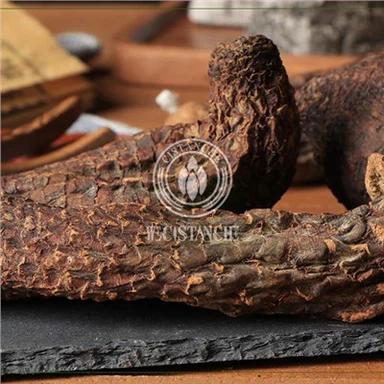
Cistanche is one of the "Nine Great Immortal Herbs in China". It tonifies kidney yang, nourishes essence and blood, nourishes five internal organs, invigorates the middle and nourishes qi, and treats five strains and seven injuries. It is the most frequently used tonic treasure in China. Cistanche belongs to a kind of precious medicinal material that can stimulate the pituitary gland, and adrenal cortex or have a hormone-like effect similar to the adrenal cortex and regulate the immune function of the body. The content of polysaccharides in its extract species is relatively high, and the immune-enhancing effect of polysaccharide components is in the strong and tonic effect of Cistanche deserticola. may play a major role.
The echinacoside and verbascoside in Cistanche deserticola not only have a protective effect on immune organ damage caused by drugs and radiation but also can enhance the body's defense ability. Echinacea and verbascoside can enhance lymphocyte transformation in vivo and in vitro and can enhance the cytotoxic activity of natural killer cells.
Cistanche has many functions such as enhancing immunity, anti-tumor, regulating substance metabolism, and enhancing body adaptability.