Protective Effect And Mechanism Of Glycosides Of Cistanche in A Rat Cerebral Ischemia Reperfusion Injury Model
Dec 19, 2024
Abstract
Objective To investigate the neuroprotective effect and mechanism of glycosides of Cistanche (GCs) on cerebral ischemia reperfusion injury (CIRI) in rats. Methods Forty-eight male Wistar rats were divided randomly into Sham, Model, GC, and nimodipine groups. A rat model of focal CIRI was established by middle cerebral artery occlusion. The sensory and motor abilities of rats in each group were evaluated by sticker removal, balance beam, and open field tests. The area of cerebral infarction was detected by 2,3,5-triphenyltetrazolium chloride staining, Nissl staining was used to observe the morphology of nerve cells, and terminal deoxynucleotidyl transferase dUTP nick end labeling was used to detect apoptosis of nerve cells. Expression levels of the apoptosis-related proteins Bcl-2 associated X (Bax), b-cell lymphoma-2 (Bcl-2), and cysteine aspartic protease-3 (caspase-3) were detected by immunohistochemical staining and western blot. Results Compared with the Sham group, the neurological deficit score was significantly increased (P<0.05) and the times to remove stickers and passing the balance beam were significantly increased (P<0.05), motor ability was decreased, infarct size was increased, the number of neurons was decreased, and the number of apoptotic cells was increased after CIRI. Bax and caspase-3 expression were significantly increased (P<0.05) and Bcl-2/Bax was significantly decreased (P<0.05). Compared with the Model group, GCs improved the behavioral performance of CIRI model rats, reduced the infarct size, inhibited cell apoptosis, downregulated the expression of Bax and caspase-3 (P<0.05), and up-regulated the expression of Bcl-2/Bax (P<0.05). Conclusion GCs have a neuroprotective effect on CIRI, and may play a role in inhibiting cell apoptosis by regulating the expression of the apoptosis-related factors Bax, Bcl-2, and caspase-3. Keywords glycosides of cistanche; cerebral ischemia reperfusion injury; apoptosis; middle cerebral artery occlusion

High-Quality Herbal Cistanche Raw Materials For cerebral ischemia-reperfusion injury
Ischemic stroke accounts for about 80% of all strokes and is one of the major diseases that threaten human health [1-3]. Cerebral ischemia-reperfusion injury (CIRI) is a complication that occurs after reperfusion therapy such as intravenous thrombolysis and arterial thrombectomy for Ischemic stroke [4-5]. CIRI can lead to severe neurological dysfunction and irreversible neuronal death. Therefore, it is crucial to find an effective treatment plan that focuses on neuroprotection.
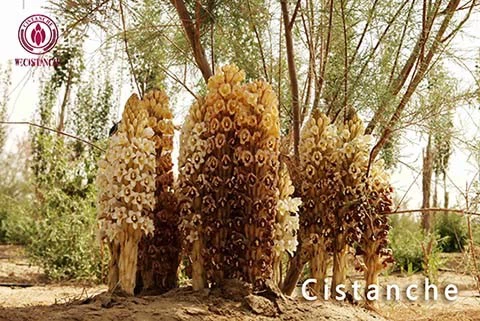
Cistanche deserticola is a precious local medicinal material mainly produced in Inner Mongolia. It has the effects of replenishing qi and blood, nourishing yin and kidney, and regulating intestinal function. Glycosides of cistanche (GCs) are the main extracted components of Cistanche deserticola, which can play an anti-oxidative stress, Ischemic stroke, inhibit cell apoptosis, and Ischemic stroke [6]. Studies have shown that GCs improve learning and cognitive functions of AD by reducing free radical accumulation and inhibiting cell apoptosis[7]; GCs promote angiogenesis and neural remodeling, maintain the integrity of the blood-brain barrier and thus improve CIRI[8]. However, it is still unclear whether GCs can improve CIRI by regulating cell apoptosis to alleviate neurological deficits. Therefore, this study aims to explore whether GCs have a neuroprotective effect on CIRI and whether they can improve CIRI by regulating cell apoptosis, reveal their potential application value in preventing and treating CIRI, and provide a theoretical and experimental basis for the treatment of CIRI with GCs.

1 Materials and methods
1.1 Experimental animals
Sixty SPF male 6-month-old Wistar rats (250-280 g) were purchased from Beijing Sibeifu Biotechnology Co., Ltd. [SCXK (Beijing) 2024-0001]. All experimental animals were kept in the standardized animal room of the Animal Experiment Center of Baotou Medical College of Inner Mongolia University of Science and Technology [SCXK (Mongolia) 2018-0001], with a temperature of 20-24 °C, a humidity of 50%-60%, and a light condition of alternating day and night every 12 h. They had free access to food and water. This experiment complies with the experimental animal ethics standards of Baotou Medical College [Baoyi Lunshen 2022 No. (60)]. The 3R principle was followed during the feeding and experimental process, and humane care was given.
1.2 Main reagents and instruments
The total glycosides of Cistanche deserticola were purchased from Baoji Cosmai Plant Polysaccharide Development Co., Ltd. (production batch number: KM20220609011), with a total glycoside content of ≥85%. GCs can be fully dissolved in distilled water and prepared into a dose of 50 mg/kg, and the administration volume is calculated according to the animal weight. TTC staining solution (G3005), Nissl staining kit (G1434), high-efficiency RIPA lysis solution (R0010), ECL Plus ultra-sensitive luminescent solution (PE0010), 30% gel preparation solution (A1010), electrophoresis buffer (T1070), transfer solution (D1060), PAGE gel accelerator (T8090), rainbow broad-spectrum protein marker (PR1910), protein loading buffer (P1015), etc. were purchased from Solebao; immunohistochemistry kit (PV-9000) and PBS buffer powder (ZLI-9062) were purchased from Beijing Zhongshan Jinqiao; BCA protein detection kit (23227) was purchased from Thermo Scientific; Bax (50599-2-Ig), Bcl-226593-1-AP) antibodies, goat anti-rabbit secondary antibody (SA00001-2) were purchased from Proteintech; Caspase-3 (AF6311) was purchased from Affinity; β-actin (52901) was purchased from SAB.
Thread plug (2636) was purchased from Beijing Xinong Technology Co., Ltd.; slicer (Leica, Germany); optical microscope (Leica, Germany); open field experimental box (Shanghai Xinruan); pipette (Eppendorf, Germany); microscopic imaging system (Leica, Germany); electrophoresis instrument (Beijing Liuyi Biotechnology Co., Ltd.); shaker (Beijing Liuyi Biotechnology Co., Ltd.); protein gel imaging
Analytical system (Tanon Technology, Shanghai); microplate reader (Thermo Fisher, USA).
1.3 Experimental methods
1.3.1 Animal model preparation
The rat middle cerebral artery occlusion (MCAO) model was established by modified Zea-longa suture method [9]. After weighing, the rats were anesthetized by intraperitoneal injection of 2% sodium pentobarbital (50 mg/kg). After the animals were fully anesthetized, they were fixed on the operating table in the supine position. After the neck was shaved, it was disinfected with iodine. A midline incision was made slightly to the left, and the fascia and muscles were bluntly separated layer by layer to avoid damage to the surrounding nerves, blood vessels and muscles. First, find the left common carotid artery, separate the common carotid artery and its vagus nerve, use 4-0 suture to ligate the proximal end of the left common carotid artery, then gently separate the left internal carotid artery and the left external carotid artery along the common carotid artery upward, clamp the external carotid artery and the internal carotid artery with an artery clamp, cut a small incision obliquely on the left common carotid artery to insert the thread plug, and after the thread plug passes through the common carotid artery to the internal carotid artery, gently release the artery clamp to allow the thread plug to pass, and the thread plug goes along the internal carotid artery and then reaches the middle cerebral artery, and fix the thread plug with suture, and pull out the thread plug after 2 hours to achieve reperfusion, and finally suture the incision and disinfect with iodine.
1.3.2 Experimental Animal Grouping
A total of 59 rats were selected for this study, of which 12 were randomly selected as the sham operation group, and the remaining 47 were used to prepare the MCAO model. After the model preparation, 7 rats died and 4 rats failed to prepare the model. The remaining 36 rats were randomly divided into the model group and the drug administration group, that is, the rats were randomly divided into the following 4 groups (12 rats/group), sham operation group, model group, total glycosides of Cistanche deserticola (GCs, 50 mg/kg) group and nimodipine (Nim, 20 mg/kg) group. The sham group underwent the same surgical operation as the model group, but without vascular ligation and thread plug insertion; the model group and each drug administration group established the cerebral ischemia-reperfusion model, and continuous intragastric administration began 24 hours after surgery for 14 days. A preliminary experiment was conducted in the early stage to explore the dose-effect of GCs, which were 25 mg/kg, 50 mg/kg, and 100 mg/kg. The results showed that the dose of 50 mg/kg was the best, so 50 mg/kg was selected in this experiment.
1.3.3 Neurological function score
All rats in this experiment were scored using the international MCAO model scoring method (Zea-Longa scoring method) [9]. Rats with scores of 1 to 3 were selected from each group for subsequent experiments, and model rats with scores of 0 and 4 were excluded. The scoring criteria are as follows:
1.3.4 Sticker removal experiment
A long adhesive tape strip of 1.2 cm × 2.0 cm was attached to the rat's forepaw. After tactile stimulation, the rat tore off the sticker with its teeth. The experimental animals received sticker removal training 3 days before surgery, with training twice a day. Rats that could tear off the sticker within 30 s were selected to enter each group. The time for rats to tear off the sticker was tested before surgery, and the average of the three results was taken as the baseline value. The time for rats to tear off the sticker was recorded in each group 14 days after MCAO surgery. The score of rats that did not bite the sticker within 120 s or could not tear off the sticker was recorded as 120 s.
1.3.5 Balance beam experiment
The balance beam was made to be 150 cm long, 4 cm wide, and 3 cm high. The height of the balance beam was 80 cm from the ground and supported by wooden frames at both ends. One end of the balance beam was defined as the starting point and the other end as the end point. A rat cage was placed behind the end point. A mat 1 m long, 1 m wide, and 12 cm thick was placed under the balance beam to prevent the rat from falling. At the beginning of the experiment, the rat was placed at the starting point, facing the direction of the cage, and the time it took for the rat to walk across the entire balance beam was recorded. Rats in each group received training 3 days before surgery, 3 times a day. The time it took for the rat to walk across the balance beam was recorded before surgery, and the time it took for the rats in each group to walk across the balance beam was recorded 1 day, 2 days, 3 days, 7 days, and 14 days after MCAO surgery. The maximum allowed time for walking across the horizontal bar was 120 s.
1.3.6 Open field experiment
Put each group of experimental animals in an open field experimental box, and use behavioral analysis software to record the activity trajectory and movement distance of the rats within 5 minutes. The environment is required to be quiet during the experiment, and the experimental equipment is wiped with clean water and alcohol between two experiments to prevent the residual information of the previous experimental animals from affecting the results of the next experiment.
1.3.7 TTC staining
After the experiment, the rats were weighed and anesthetized by intraperitoneal injection. After that, the rats were killed and the brains were taken out. The brain tissues were rinsed with saline and placed at -20 ℃ for 30 minutes for slicing. The brain was divided into 5 slices in the coronal position. The cut brain slices were placed in preheated TTC staining solution and stained in a 37 ℃ water bath away from light for 30 minutes. After staining, they were fixed with 4% paraformaldehyde. The fixed brain tissue slices were placed in order and photographed. Animals with blood clots at the base of the skull and arterial ring thrombosis were eliminated. Image Pro-Plus (IPP) image analysis software was used to calculate the area of cerebral infarction. The infarction area ratio/% = the sum of the infarction areas of each section/the sum of the areas of each section × 100% [10].
1.3.8 Nissl staining
After the brain tissue was fixed with 4% paraformaldehyde, it was dehydrated with gradient alcohol, made transparent with xylene, and fully immersed in wax in a paraffin bath, and the brain tissue was embedded in paraffin. The thickness of the paraffin sections was 5 µm. The paraffin sections were sequentially placed in xylene, gradient alcohol, and washed with distilled water for 5 min. The sections were placed in the Nissl staining solution prepared in advance and stained at 60 °C for 40 min. The sections were differentiated in 95% alcohol and the differentiation was observed under a microscope. The differentiation was stopped when the background was light blue and the Nissl bodies were clearly colored. The sections were dehydrated in anhydrous ethanol, made transparent with xylene, and sealed with neutral gum. After the sections were dried, the morphology of the nerve cells was observed under a microscope, and the images were collected and analyzed by taking photos in the image acquisition system.
1.3.9 Immunohistochemical staining
Routine brain tissue dehydration, embedding, sectioning, dewaxing to water, high-pressure microwave antigen heat repair, PBS washing 3 times, 5 min each time, endogenous peroxidase blocker added, incubated at room temperature for 10 min, PBS washing 3 times, 5 min each time. Primary antibody incubation, 4 ℃ overnight, rewarmed at room temperature for 30 min, PBS washing 3 times, 5 min each time, reaction enhancement solution added, incubated at 37 ℃ for 25 min, PBS washing 3 times, 5 min each time, enhanced enzyme-labeled goat anti-rabbit IgG polymer added, incubated at 37 ℃ for 25 min, PBS washing 3 times, 5 min each time, DAB color development for 2 min, tap water washing, hematoxylin counterstaining, ascending gradient ethanol dehydration, xylene transparent, and sealing.
1.3.10 TUNEL staining
Dewax the paraffin sections to water, spin dry the sections, add proteinase K working solution, incubate at 37℃ for 25 min, wash with PBS 3 times, 5 min each time, add membrane permeabilization solution, incubate at room temperature for 20 min, wash with PBS 3 times, 5 min each time, add TUNEL reaction solution, mix according to TDT enzyme: dUTP: buffer = 1: 5: 50, incubate at 37℃ for 1 h, wash with PBS 3 times, 5 min each time, add DAPI staining solution, incubate at room temperature in the dark for 10 min, wash with PBS 3 times, 5 min each time, seal the sections with anti-fluorescence quencher, observe and collect images under a fluorescence microscope.
1.3.11 Western blot
After adding the brain tissue to the protein lysis buffer, the brain tissue was fully ground with a grinding rod, and the protein was ultrasonically broken several times in an ice bath. The supernatant was centrifuged for 15 min at low temperature ultracentrifuge. The supernatant was extracted and the concentration was determined using a BCA kit. The protein loading buffer was added and placed in a 100 ℃ metal bath for denaturation for 5 min. Concentrating gel and separation gel were prepared, and 20 μg of sample was added to each well for electrophoresis. After the electrophoresis, the membrane was transferred at a constant flow rate for 2.5 h, and 5% skim milk powder was blocked at room temperature for 2 h; the primary antibody was shaken at 4 ℃ overnight, and the secondary antibody was incubated at room temperature for 2 h; the bands were scanned and analyzed using an imaging analysis system.
1.4 Statistical methods
All experimental results were expressed as mean ± standard deviation (x s), and statistical analysis was performed using Graphpad Prism 9.5 software. One-way ANONA was used to compare the data of each group, and t-test or non-parametric test was used for pairwise comparison within the group. P < 0.05 indicated statistically significant differences.