Research And Development : Research Status Of Traditional Chinese Medicine Compounds in The Prevention And Treatment Of Alzheimer's Disease
Mar 29, 2022
Alzheimer's disease (AD) is a degenerative disease of the central nervous system with progressive cognitive dysfunction and behavioral impairment as the main clinical manifestations and is one of the types of senile dementia. Currently, the internationally recognized pathogenesis of AD includes amyloid-beta cascade theory, abnormal phosphorylation theory of Tau protein, free radical damage theory, gene mutation theory, inflammation, immune abnormality theory, cholinergic neuron hypothesis, insulin hypothesis, etc. theory. Western medicine lacks effective means for the treatment of AD. In recent years, the research on the prevention and treatment of AD by traditional Chinese medicine has attracted widespread attention, which is expected to bring new hope to patients.
Contact: joanna.jia@wecistanche.com / WhatsApp: 008618081934791
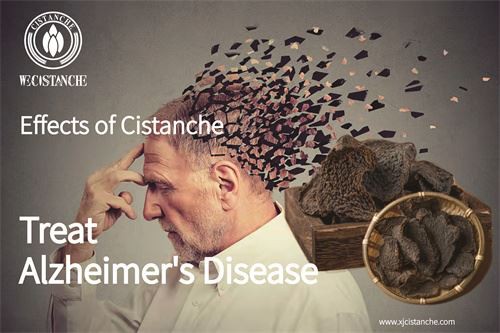
Cistanche as a dietary supplement may prevent Alzheimer's disease
1. Regulate AD cholinergic system
The cholinergic system is closely related to human brain learning and memory. The cholinergic neurons in the brain of AD patients are severely damaged, and the activity of choline acetyltransferase (ChAT) in the brain tissue of patients is significantly reduced, while the activity of acetylcholinesterase (AchE) is significantly reduced. Significantly enhanced, so the content of acetylcholine was significantly reduced, which eventually led to clinical manifestations dominated by learning and memory impairment and cognitive impairment, resulting in dementia symptoms. Therefore, improving the function of the cholinergic nervous system has become one of the important methods for the prevention and treatment of AD. Relevant experiments found that Xiaoyao Powder (composed of traditional Chinese medicines such as Bupleurum, Angelica, Baishao, Mint, Poria, Atractylodes) can increase the ChAT activity of choline hydrobromide-induced AD model mice, reduce AchE activity, and improve AD. Cholinergic function in model mice. Jin Siwei (composed of traditional Chinese medicines such as ginseng, Cistanche, Polygala Radix, Curcuma Radix et Rhizoma) can increase the Ach content in the cortex and hippocampus of AD model mice caused by choline, and reduce AchE activity in the cortex and hippocampus, thereby improving the AD induced by choline learning and memory ability of model mice.

herba cistanches for AD
2. Antagonize beta-amyloid and hyperphosphorylated Tau protein in AD
Studies have shown that neuronal plaques (SP) with Aβ as the main component and neuronal fibrillary tangles (NFT) caused by hyperphosphorylated Tau protein are the main pathological manifestations of AD, so the intervention of Aβ aggregation and Tau protein hyperphosphorylation Metabolism is one of the main measures to prevent AD. Studies have found that Jiajiajingyijing decoction can reduce the phosphorylation level of Tau protein-related sites by reducing the active expression of GSK-3β, protecting the morphology and function of nerve cells in the hippocampus, and preventing the development of Alzheimer's disease. Erzhi Pills (composed of Ligustrum lucidum and Eclipta Chinensis) can treat AD by delaying the generation of Aβ and the oxidative damage of nerve cells. Fuzheng Quxie Recipe (composed of ginseng, Coptis Chinensis, and Chuanxiong) can enhance the activity of AD model cells by reducing the expression of the Aβ protein.
3. Inhibit oxidative stress and scavenge free radicals in AD
Most scholars believe that in the process of brain degeneration, unsaturated fatty acids on neuron cell membranes are easily oxidized to generate a large number of free radicals, resulting in a large number of lipid peroxides (LPO), and malondialdehyde (MDA) is the most toxic metabolite. It is strong, greatly affects cell metabolism and normal function leads to apoptosis of nerve cell function, and induces the formation of AD. But there are many free radical scavenging systems in the body, such as superoxide dismutase (SOD) and glutathione peroxidase (GSH-Px), and other antagonistic oxidation systems. Therefore, antagonizing oxidative stress has become one of the important measures to prevent and treat AD.
Jiawei Buwangsan (composed of Zhiyuanzhi, Shichangpu, Ginseng, Poria, Angelica, Atractylodes, Coptidis, and Fusion) can enhance chAT activity in SD rats with cognitive impairment caused by overexpression of microRNA-30e in the hippocampus. Liuwei Dihuang Pill containing serum can slow down the leakage of LDH and the content of MDA in PC12 cells damaged by H2O2, enhance the activity of SOD, improve the antioxidant capacity of cells, and delay the oxidative damage of cells. Self-made Qingxin Yizhi Decoction (composed of raw astragalus, fried jujube kernel, Dilong, hemp seed, red peony root, Yizhi benevolence, angelica, peach kernel, cinnamon twig, and Zhigancao) can improve the vitality of SOD and reduce MDA in AD patients content, thereby improving the quality of life and cognitive level of AD patients.

Eat Cistanche Supplements to Prevent Alzheimer's Disease
4. Antagonize the apoptosis of AD neurons
Several studies have confirmed that the loss of nerve cells in the brain is one of the main pathological manifestations of AD. The neuronal apoptosis mechanism of AD is closely related to Aβ overexpression, oxidative stress, caspase activation, abnormal regulation of many factors in the cell cycle, and energy metabolism disorders. The Bcl-2 gene family is a class of genes related to neuronal reduction that has been widely studied, and its regulation and expression are one of the important factors affecting neuronal apoptosis. Therefore, inhibition of neuronal apoptosis has become an important content in the prevention and treatment of AD.
Bunao Fushen Recipe (composed of Bamboo ginseng, Gastrodia, Ginkgo) can significantly inhibit Aβ25-35-induced brain damage in the hippocampus of AD model rats, increasing the number of Nissl bodies, promote the synthesis of neurotransmitters, and achieving protection The purpose of brain tissue and neurons. Bushen Yizhi Recipe (composed of Cnidium, Lycium barbarum, Ginseng, Polygonum multiflorum, Cortex Moutan, and Borneol) can repair the damage and loss of neurons in the hippocampus, enhance the learning and memory ability of mice with memory impairment induced by Aβ25-35 injection in the hippocampus, and has AD has a certain therapeutic effect.
5. Anti-AD inflammatory response
Chronic inflammatory processes have long been considered to be one of the important mechanisms of the neuropathological pathogenesis of AD. In the process of AD inflammatory response, the damage of inflammatory cytokines, nuclear transcription factor (NF-κB), activation, and glial cells have received extensive attention. Therefore, inhibiting the inflammatory response has become one of the important ways to prevent and treat AD.
Buying Huanwu Decoction affects the vascular endothelial inflammation mediated by ICAM-1 and VCAM-1 proteins by antagonizing the NK-κBP65 signaling pathway, repairs the morphological changes caused by Aβ-induced cerebral microvascular endothelial cell damage, and protects cerebral microvascular endothelial cells. effect. Kidney-tonifying formula (composed of Rehmannia glutinosa, Cornus Officinalis, Chinese yam, Poria cocos, Morinda Officinalis, Schisandra Chinensis, Cistanche deserticola, Lycium barbarum, Eucommia ulmoides, and tunicate) may act through neuroinflammatory pathways to treat AD. Modified Sanjia Powder (composed of Sunburned Turtle, Sunburned Turtle Shell, Sunburned Turtleworm, Chidilong, Shichangpu, and Polygonum multiflorum) containing medicated cerebrospinal fluid can reduce JNK phosphorylation, delay the release of inflammatory mediators and cytokines, thereby attenuating activated BV2 Cell toxicity to PC12 cells, thereby playing a role in the treatment of Alzheimer's disease.
6. Improve AD synaptic plasticity
The pathogenesis of AD has a huge relationship with the impairment of synaptic plasticity. The damage to brain synaptic structure and functional plasticity is a crucial central link in the pathological progression of AD, and it is also one of the pathological mechanisms of the decline of AD learning and memory ability. Therefore, improving synaptic plasticity has become one of the main measures to prevent AD. The study found that the traditional Chinese medicine compound Jin Siwei (composed of ginseng, Cistanche deserticola, calamus, and turmeric) can increase the number of synapses in the neuropil of AD model mice, and improve the neuron and synaptic structure to varying degrees. Toxin recipe (consisting of Codonopsis pilosula, Guizhi, Shichangpu, Polygala, keel, white peony, and licorice) can inhibit the synaptic structure degeneration and less number of synapses in APP/PS1 double transgenic AD mice, which has a negative impact on cognitive and cognitive function. Synapses are protective.
At present, although a large number of clinical studies have confirmed the efficacy of traditional Chinese medicine in the prevention and treatment of AD, there are still many shortcomings in its research. For example, some compound prescriptions have a small sample size, unstandardized design, and lack of evidence-based evidence; some compound prescriptions have carried out research on their mechanism of action, but the clinical evidence is not yet sufficient; some self-prepared prescriptions with good clinical efficacy lack standardized clinical research. The promotion and application are limited; some traditional Chinese medicine compounds that have been clinically verified for a long time have not been able to obtain sufficient evidence-based evidence in accordance with modern research standards, and the mechanism research is not deep enough, etc. Therefore, on the one hand, we should fully exploit and give full play to the thinking and efficacy advantages of traditional Chinese medicine in the prevention and treatment of AD, and more reasonably combine different traditional therapies for clinical application, carry out multi-center, large-sample, long-term standardized clinical research, and obtain high-standard clinical research. On the other hand, it is necessary to do more in-depth research on the efficacy mechanism of effective compound prescriptions, and to reveal the multi-target effect mechanism between different components and compatibility of traditional Chinese medicine compounds at a deep level, so as to form a mature traditional Chinese medicine optimization therapy for the prevention and treatment of AD., to contribute Chinese solutions for the effective prevention and treatment of AD.