Research Progress On The Use Of Traditional Chinese Medicine To Warm And Tonify Kidney Yang To Promote Testosterone Secretion in Leydig Cells Ⅱ
May 21, 2024
2 Effects of kidney-tonifying traditional Chinese medicine and its active ingredients on testosterone secretion
2. 1. Epimedium
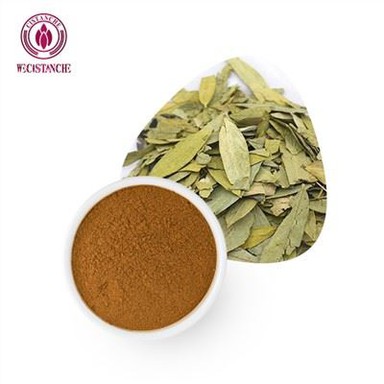
Epimedium, also known as Xianlingpi, is warm, pungent, and sweet in taste, and returns to the liver and kidney meridians. It has the effects of warming kidney yang, strengthening muscles and bones, and dispelling rheumatism. It is mainly used to treat impotence and spermatorrhea, weakness of muscles and bones, rheumatic arthralgia, numbness and spasms, and menopausal hypertension. Icariin is a total flavonoid extracted from epimedium stems and leaves and is the main component of epimedium. A large number of studies have shown that icariin has a similar effect to testosterone. Compared with rats treated with cyclophosphamide injected with testosterone propionate for 7 consecutive days, it was found that icariin can increase serum testosterone levels, up-regulate LH and FSH, and stabilize serum levels. Osteocalcin can also reduce the level of tartrate-resistant phosphatase and inhibit the apoptosis of corpus cavernosum smooth muscle cells in the penis.
degree and has properties similar to testosterone [12].
In the male reproductive system, oxidative stress or abnormal cell apoptosis may cause cell structure and function changes, resulting in reduced androgen synthesis. Among them, Fas and NF-κB are involved in LC apoptosis.
plays a key role in the process [13]. Radiation can promote LC apoptosis by activating the Fas factor, and icariin has a protective effect on rat LC under γ-ray irradiation [14]. At the same time, it can improve the structure of testicular seminiferous tubules, reduce germ cell apoptosis, promote spermatogenesis and LC testosterone secretion, and reduce the accumulation of GnRH in the median eminence [15]. It may also upregulate matrix metalloproteinase (ma) in the testicular tissue of aging rats. trix metalloproteinase (MMP) MMP-2 and MMP-9 expression levels achieve a protective effect on testicular damage [16]. NF-κB is inflammation
Epimedium, an essential transcription factor in cell apoptosis, can exhibit anti-inflammatory effects by inhibiting the MAPK and NF-κB signaling pathways mediated by the TLR4/MD-2 complex [17]. Epimedium total flavonoids can promote AMPK phosphorylation, up-regulate SIRT1 protein expression, inhibit NF-κB acetylation level and its transcriptional activity, reduce the expression of inflammation-related factors IL-1β and TNFα, and reduce the inflammatory response of testicular tissue in naturally aging rats. [18]. In the D-galactose-induced aging model, icariin can down-regulate malondialdehyde levels, improve oxidative stress, and increase testicular tissue superoxide dismutase, lactate dehydrogenase, acid phosphatase, and glutamyl transpeptidase. activity, improve testicular antioxidant capacity and significantly increase serum testosterone levels [19].

Icariin can promote the synthesis and secretion of testosterone and increase serum testosterone levels by regulating related mRNA and proteins. It may promote testosterone production by injecting peripheral benzodiazepine receptor (PR) and StARR genes through regulation of mRNA expression [20]. The serum testosterone content, gonadal androgen receptor mRNA, and protein expression in mice with kidney-yang deficiency all decreased compared with normal mice, and icariin can inhibit their decline and alleviate the symptoms of kidney-yang deficiency [21].
In addition, icariin can increase the activation and action levels of vitamin D in the adrenal cortex of aging rats, increase the expression and production of sex hormone-related genes in the adrenal cortex of aging rats, such as CYP24A1, CYP27B1, CYP19A1, and CYP17A1, and upregulate the blood levels of aging rats.
Clear DHEA and testosterone levels [22].
In addition, estrogen plays an important role in the maintenance of the development and function of the male reproductive system, and 1/3 of endogenous estrogens are also converted from androgens in the LC through the action of P450arom. Icariin can partially increase the activity of P450arom, a key enzyme in LC that upregulates estrogen synthesis, promotes the synthesis of estrogen (Estradiol, E2), effectively prevents the damage of transforming growth factor-β1 to LC, and improves the gap junction communication function between LC cells. function, thus playing a protective role in LC [23].

2. 2 dodder
Cuscuta japonica is neutral, pungent, and sweet, and returns to the kidney, liver, and spleen meridians. It has the effects of nourishing yang and yin, nourishing the liver and kidneys, fixing sperm and reducing urination, preventing miscarriage, improving eyesight, and stopping diarrhea. Cuscuta flavonoids play the main role
As an important ingredient, many studies have shown that Cuscuta flavonoids can maintain the stability of testosterone secretion and protect against reproductive damage. Exercise-induced hypotestosteronesis caused by long-term high-intensity exercise training. Supplementing dodder can reduce the impact of high-intensity exercise on blood testosterone in rats, maintain normal levels, reduce the production of corticosterone, and maintain glucocorticoids in the body within the normal range, thus Improve fatigue resistance [24].
Studies have shown that Tripterygium wilfordii polyglycosides can reduce the expression of P450scc in Leydig cells and serum testosterone levels in young male rats due to their reproductive toxicity. Intervention with Cuscuta flavonoids can significantly increase
The mRNA expression level of P450scc increases the expression of EGF mRNA and EGF protein, thereby increasing serum testosterone levels and protecting male young mice from reproductive damage caused by tripterygium glycosides [25-26]. Bisphenol A has estrogen-like and anti-androgenic effects, can interfere with LC hormone secretion, and reduce the expression of CYP11A1, 3β-HSD, 17β-HSD, and CYP17A1. Cuscuta flavonoids have a significant protective effect on the abnormal secretion of testosterone and luteinizing hormone in mouse testicular Leydig cells caused by bisphenol A [27].

2. 3 Cistanche
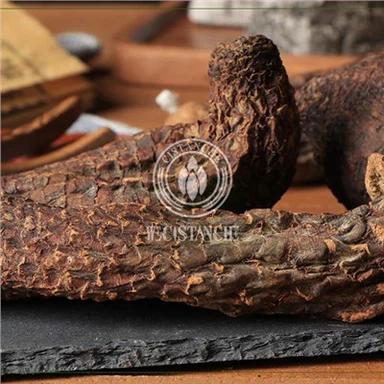
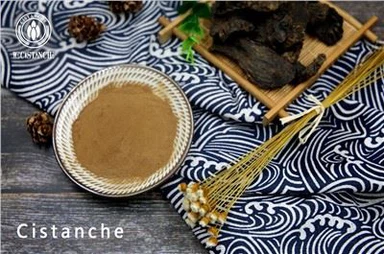
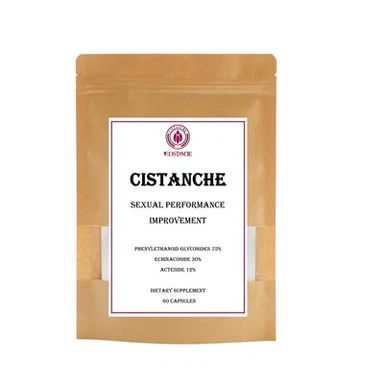
Cistanche deserticola is warm, sweet, and salty. Returns to the kidney and large intestine meridians. It has the effects of nourishing kidney yang, replenishing essence, and blood, moistening intestines, and laxative. Used for impotence, infertility, soreness and weakness of the waist and knees, weakness of muscles and bones, intestinal dryness, and constipation.
shape. Cistanche deserticola crude extract has androgen-like effects [28]. Cistanche deserticola contains betaine and ergoside (verbascoside), both of which can increase the weight of accessory sexual organs such as the seminal vesicles and prostate, showing androgen-like effects without thymus atrophy. side effect. Betaine and ergosterol may be the main active ingredients responsible for the androgenic effects of Cistanche deserticola. In addition, exhaustive exercise will cause a decrease in serum testosterone in rats, and Cistanche deserticola can reduce the impact of high-intensity exercise on blood testosterone and maintain it at normal physiological levels [29]. Cistanche deserticola can also antagonize the reproductive toxicity of Tripterygium wilfordii, regulate testosterone hormone levels, and increase the pregnancy rate [30]. It can increase testosterone and urinary 17-hydroxy cortisol content, downregulate urinary HCG, and improve the inhibitory effect of Tripterygium wilfordii polyglycosides on the reproductive system of male mice. [31].
2. 4 other traditional Chinese medicines that warm and nourish kidney yang
In addition, traditional Chinese medicines such as Morinda officinalis, Cynomorium Cynomorium, actinolite, Eucommia ulmoides, and Psoralen also regulate the synthesis and secretion of testosterone [32]. Eucommia ulmoides is warm in nature and sweet in taste, and returns to the liver and kidney meridians. It has the effects of nourishing the liver and kidneys, strengthening muscles and bones, and preventing miscarriage. Eucommia ulmoides aqueous extract can reduce the apoptosis of Leydig cells in young mouse testicles, promote their proliferation, and improve their ability to synthesize testosterone by down-regulating the expression of caspase9 [33]. Morinda officinalis, sweet and warm, returns to the heart and kidney meridians. It can protect mouse LC from oxidative stress, increase testosterone production levels, scavenge DPPH free radicals, and increase catalase activity [34]. Cynomorium Cynomorium is sweet and warm and returns to the spleen, kidney, and large intestine meridians. Its water extraction
The drug can increase serum testosterone concentration and thereby improve sperm quality, and the effect is significant in the low, medium, and high-dose groups without obvious dose-dependence [35]. Psoralen is warm in nature and pungent in taste. It has the functions of nourishing the kidneys and supporting yang, strengthening the essence and reducing urine, warming the spleen and stopping diarrhea, and relieving qi and relieving asthma. Psoralen can regulate the mRNA expression of CYP450 enzymes, downregulate CYP2D1 and CYP2E1, and significantly upregulate CYP1A2 and CYP3A1 [36].

3 Discussion
Kidney yang is the driving force behind human life activities and has the function of warming and promoting. A large number of previous studies [37] have shown that kidney-yang deficiency syndrome is related to the function of the hypothalamus-pituitary-target gland (gonads, thyroid, adrenal glands) axis, and is characterized by multi-target gland dysfunction. The decrease in function of each gland is reflected in the main symptoms of kidney-yang deficiency syndrome. A large number of "kidney nature" studies have shown that the renal function of traditional Chinese medicine involves the hypothalamus-pituitary-gonad axis. It can be considered that gonads and sex hormones are highly relevant to kidney deficiency syndrome. Testosterone is an important sex hormone in the body. Its deficiency often causes male hypogonadism. In addition to a decrease in serum testosterone levels, it is often accompanied by clinical manifestations similar to kidney deficiency syndrome such as loss of sexual desire, osteoporosis, sexual dysfunction, and even depression.
Testosterone replacement therapy is commonly used in modern medicine, that is, giving exogenous testosterone such as methyltestosterone and testosterone propionate. However, exogenous testosterone and its metabolite estrogen will inhibit the production of GnRH by the hypothalamus and the production of LH by the pituitary gland, thereby inhibiting the production of testosterone by the testicles. At the same time, there are also contraindications to testosterone replacement therapy such as male breast cancer and prostate cancer [38]. Traditional Chinese medicines that warm and tonify kidney yang, such as epimedium, often achieve better results in the treatment of such diseases due to their androgen-like effects. The key to improving the symptoms of kidney yang deficiency may be by upregulating the enzymes necessary for steroidogenesis, at the same time It upregulates steroid production in the gonads and adrenal glands, and in addition protects the reproductive system by reducing oxidative stress and inflammation, which is not possible with ordinary testosterone replacement therapy.
Testosterone synthesis and secretion are regulated by a variety of factors. The role of traditional Chinese medicine to warm and tonify kidney yang and its main components such as icariin in regulating testosterone secretion is relatively clear, but its specific mechanism has not yet been perfected.
It is necessary to further understand the significance of these drugs in regulating key genes, enzymes, and transcription factors in the process of testosterone synthesis and secretion, such as StRA, CYP11A1, CYP17A1, 3β-HSD, 17β-HSD, SF-1, etc. Previous relevant experimental studies have shown that epimedium isothermal and kidney-yang-tonifying traditional Chinese medicine can upregulate the activity of CYP17A1, but the specific mechanism still needs to be further elucidated.
In addition, the adrenal gland is also the main site for steroid production in the human body. Adrenal-derived DHEA and DHEAS produced through SULT2A1 are even considered to be the most abundant androgens in circulation [39], and testosterone may also have a causal relationship with adrenal-derived steroids [ 40], therefore it may be necessary to comparatively evaluate whether the androgen produced by adrenocortical cells and testicular interstitial cells, which are regulated by warming and tonifying kidney-yang traditional Chinese medicine, has a significant dose effect on improving kidney-yang deficiency syndrome under different symptoms of kidney-yang deficiency. Differences and sequential relationships, thus inferring that among the main symptoms of different kidney-yang deficiency syndromes, the main regulatory links of traditional Chinese medicine for warming and tonifying kidney-yang need to be further studied.
There are some congenital steroid synthase deficiency diseases in clinical practice, such as sexual development disorders caused by 17β-HSD3 deficiency [41] and congenital adrenal hyperplasia and early childhood disorders caused by 3β-HSD2 deficiency.
[42], etc., if traditional Chinese medicines that warm and tonify kidney yang and their main components can promote the expression of related proteins, regulate the synthesis and secretion of steroids in the body, and broaden the application fields of traditional Chinese medicines that warm and tonify kidney yang, there will be more treatment options for these patients. for selection. In addition, there is an increase in the number of people with sexual dysfunction caused by reduced androgen synthesis ability. Traditional Chinese medicine syndrome differentiation and treatment can often play a certain corrective role. Among them, the use of traditional Chinese medicine for warming and tonifying kidney yang and its therapeutic mechanism need to be studied in depth.