Review Of Studies On Phlomis And Eremostachys Species (Lamiaceae) With Emphasis On Iridoids, Phenylethanoid Glycosides, And Essential Oils
Aug 04, 2023
ABSTRACT:
As the sixth-largest Angiosperm family, Lamiaceae contains
more than 245 genera and 7886 species that are distributed
worldwide. It is also the third-largest family based on the
number of taxa in Turkey where it is represented by 46 genera
and 782 taxa with a high endemism ratio (44%). Besides,
Lamiaceae are rich in plants with economic and medicinal value containing volatile and nonvolatile compounds. Many aromatic plants of Lamiaceae such as Salvia, Sideritis, Stachys,
Phlomis, and Teucrium species are used in traditional herbal
medicine throughout Turkey as well as in other Mediterranean
countries. Salvia (Sage tea “Adaçayı”), Sideritis (Mountain tea
“Dağçayı”), Stachys (Hairy Tea “Tüylü Çay”), and Phlomis
(Turkish sage “Çalba or Şalba”) are the largest genera that
are used as herbal teas. This review focuses on the volatile
and nonvolatile compounds of Lamiaceae from the genera
Phlomis and Eremostachys of the subfamily Lamioideae with emphasis on iridoids, phenylethanoid glycosides, and essential oils.
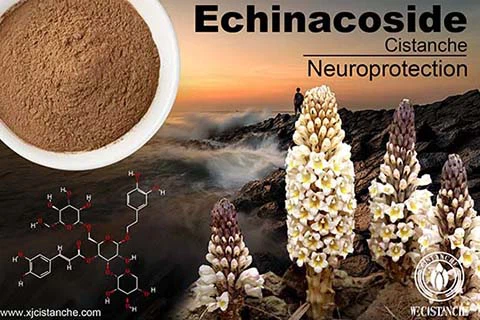
CLICK HERE TO GET SAMPLE OF 75% PHENYLETHANOID GLYCOSIDES HERBAL CISTANCHE EXTRACT
Introduction As the sixth-largest Angiosperm family, Lamiaceae contains more than 245 genera and 7886 species distributed worldwide. It is also the third-largest family based on the number of taxa in Turkey. In Turkey, the family Lamiaceae comprises 46 genera and 782 taxa (603 species, 179 subspecies, and varieties), of which 346 taxa (271 species, 75 subspecies and varieties) (ca. 44%) are endemic. There are 28 hybrid species, 24 of which are endemic. Stachys L. (118 taxa), Salvia L. (107 taxa), Sideritis L. (54 taxa), Phlomis L. (53 taxa), and Teucrium L. (49 taxa) are the largest 5 genera. Approximately 72% of the species are found in the largest 10 genera, while 15 genera are monotypic [1]. Lamiaceae are rich in plants with high economic and medicinal value due to essential oils and other active constituents. In the early 1990s, research focused mainly on the constituents of essential oils including mono and sesquiterpenes. With the advancement of spectroscopic techniques, a great variety of nonvolatile isoprenoids with diand triterpenoid structures (free or glycosylated derivatives) and ecdysteroids were reported as constituents responsible for a wide range of biological activities. Iridoids and monoterpene lactones are nonvolatile glycosidic isoprenoids. The occurrence of iridoids in certain subfamilies has been of major taxonomic interest. Additionally, phenolic compounds, flavonoids (flavones, flavonols, flavanones, dihydro flavonols, chalcones), anthocyanins (cyanidin, delphinidin, malvidin, pelargonidin glycosides, and their acylated derivatives), and caffeoyl ester glycosides were attractive targets for many research groups because of their taxonomic significance and biological and pharmacological activities [2]. The high biological diversity in terms of the number of taxa, together with the large proportion of plants used traditionally, triggered phytochemical and pharmacognostic studies in drug discovery.

Initial Studies The research interest in iridoids, as well as other chemical constituents of Lamiaceae plants, goes back to the year 1982 for one of the authors of this work (IC). Galeopsis pubescent was one of the species studied for iridoids by E. Rogenmoser at the Swiss Federal Institute of Technology (ETHZ) in the group of Prof. Sticher [3]. Iridoids such as daunoside, harpagide, acetylharpagide, and galiridoside had been reported from G. pubescens. A study performed on yet uncharacterized fractions of G. pubescens resulted in the isolation of 2 phenylethanoid glycosides (PhEts), martynoside and isomartynoside [4]. These 2 metabolites showed close similarity to the caffeic acid derivatives reported in higher plants by Harborne [5]. It was suggested that caffeic esters might be of considerable value in chemotaxonomic studies. The distribution of rosmarinic acid and orobanchin has been studied concerning their occurrence in some Tubiflorae. Orobanchin was described as a derivative of caffeic acid, 3,4-dihydroxyphenylethanol, glucose, and rhamnose, and had only been reported as a constituent of Orobanche minor (Orobanchaceae). In fact, the first studies on caffeoyl sugar esters go back to the 1950s. Echinacoside, a triglycosidic phenylethanoid isolated from Echinacea angustifolia (Asteraceae) in 1950 was structurally determined in 1983, while verbascoside first isolated in 1963 was structurally determined in 1968 [6].
The coexistence of iridoids and phenylethanoid glycosides in some plants of Tubiflorae led us to focus our research on randomly selected plants of Lamiaceae and Scrophulariaceae. Both compound groups have been suggested as being of considerable value in chemotaxonomic studies. Thus, studies have been initiated on plants such as Scrophularia scopolii (Scrophulariaceae) [7–9], Betonica officinalis (Lamiaceae) [10], Stachys lavandulifolia (Lamiaceae) [11], Phlomis linearis (Lamiaceae) [12–14], P. bourgaei [15–16], Pedicularis species (Scrophulariaceae) [17], Lagotis stolonifera (Scrophulariaceae) [18] Phlomis armeniaca, and Scutellaria salviiifolia [19], yielding iridoid and phenylethanoid glycosides. In contrast to the presence of a majority of aucubine-type iridoids in Scrophulariaceae, loganin-type iridoids were mostly detected and identified in Lamiaceae plants.

The Lamiaceae (Labiatae) Congress of 1991 at Royal Botanic Gardens, Kew, London has been a milestone for future studies. Ajugoideae, Chloanthoideae, Lamioideae, Nepetoideae, Pogostomonoideae, Scutellarioidea, Teucrioideae, and Viticoideae were declared as 8 subfamilies of Lamiaceae [20]. At this congress, the family Lamiaceae was discussed in the light of biogeography and phylogenetic relationships, systematic studies of selected characters and groups, biology, chromosome numbers and breeding system, chemical constituents, plant-insect interactions, and the economics of genera.
During the last 2 decades, the aspects and classification of various members of Lamiaceae have been investigated both chemotaxonomically and systematically. In 1999, 96 Lamiaceae taxa have been investigated for the presence of rosmarinic and caffeic acids [21]. Rosmarinic acid was found in all species of the subfamily Nepetoideae but was absent from those in the subfamily Lamioideae. However, Lamioideae species were rich in caffeic acid. In 2000, Pedersen studied 110 genera of Lamiaceae (Labiatae) for 2 chemical characters giving support to the subfamily division of the Lamiaceae [22]. Within the 2 large subfamilies, the genera of Lamioideae, rich in iridoids, were reported to contain phenylethanoid glycosides and to possess tricolpate pollen grains, while the genera of Nepetoidea that contain a higher amount of essential oils were reported to contain rosmarinic acid and were found to possess hexacolpate pollen grains. In 2017, 2 new subfamilies have been included in the Lamiaceae: Callicarpoideae (170 Callicarpa species) and Tectonoideae (3 Tectona species) [23]. According to recent studies, 12 subfamilies are recognized in Lamiaceae: Ajugoideae, Lamioideae, Nepetoideae, Prostantheroideae, Scutellarioideae, Symphorematoideae, Viticoideae. Cymarioideae, Peronematoideae, Premnoideae, Callicarpoideae, and Tectonoideae [1, 24, 25]. Thus, systematic studies strongly supported a rich diversity of Lamiaceae in many aspects including their chemical constituents. In the Flora of Turkey, Ajugoideae, Lamioideae, Nepetoideae, Scutellarioideae, and Viticoideae are the subfamilies of Lamiaceae that are represented by 48 genera and 782 taxa with a high degree of endemism (ca. 44%). Stachys (118 taxa), Salvia (107 taxa), Sideritis (54 taxa), Phlomis (53 taxa), and Teucrium (49 taxa) are the largest 5 genera that show high endemism (▶ Table 1) [1, 26]. The members of this family are known as culinary, flavoring herbs or herbal teas, many of them native to Turkey as well as the Mediterranean area and many subtropical semi-arid zones worldwide.

Our phytochemical and chemotaxonomic studies focused on the genus level of the members of tribes in Lamioideae (Lamieae: Lamium; Marrubieae: Marrubium, Molucella; Leonureae: Leonurus; Phlomideae: Phlomis, Eremostachys; Stachydeae: Stachys, Sideritis, Prasium; Galeopseae: Galeopsis), Scutellarioideae (Scutellaria), Ajugoideae (Ajugeae: Ajuga; Clerodenreae: Clerodendrum; Teucrieae: Teucrium) for iridoid and PhEts contents. The present review gives a detailed overview of the results from the studies performed on the species of genus Phlomis L. and Eremostachys Bunge from the Phlomideae tribe of the subfamily Lamioideae.
Supportive Service:
Email:wallence.suen@wecistanche.com
Whatsapp/Tel:+86 15292862950
Shop:
https://www.xjcistanche.com/cistanche-shop