Risk Of SARS-CoV-2 Reinfection And COVID-19 Hospitalisation in Individuals With Natural And Hybrid Immunity: A Retrospective, Total Population Cohort Study in Sweden Part 1
Feb 27, 2024
Summary
Background Real-world evidence supporting vaccination against COVID-19 in individuals who have recovered from a previous SARS-CoV-2 infection is sparse.
First of all, we need to understand that infection can cause physical fatigue, mental lethargy, and other uncomfortable symptoms, which will affect our brain and memory. Research shows that changes in physical state can affect the neurons in the brain involved in the memory process, thereby affecting memory performance. Therefore, during the recovery period, it is necessary to actively adjust the physical state and help the brain return to a normal state through appropriate rest, nutritional supplements, etc., thereby promoting the improvement of memory.
Secondly, exercise and training during the rehabilitation process are also very critical. After being infected with a disease, the human body's physical functions, nervous system, and immune system will be damaged to varying degrees. Proper exercise and training can help the human body recover quickly and also improve the brain's memory ability. Exercise can promote blood supply to the brain and the vitality of neurons, and improve brain cognition and thinking abilities. There are scientific memory training methods that can also be used during the rehabilitation stage.
In addition, emotional regulation is also very important. During the infection, many people will feel depressed, anxious, and restless, and these negative emotions will affect the function of the brain and thus affect memory. Therefore, during the recovery period, making full use of the support system, facing life positively, and adjusting the mentality are also important factors in helping to restore memory.
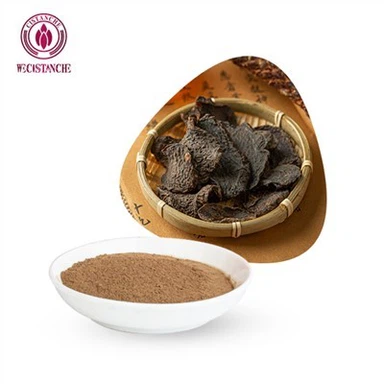
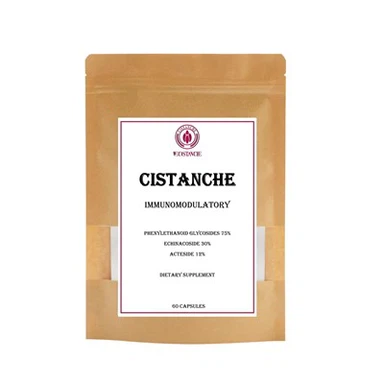
In short, although infection can bring a lot of inconvenience and pain to people, as long as we have a good attitude and scientific and reasonable recovery methods, we can defeat the disease and welcome a better life. Because even if the memories gained are relatively vague, life itself will be full of surprises and wonders. It can be seen that we need to improve memory, and Cistanche deserticola can significantly improve memory, because Cistanche deserticola has antioxidant, anti-inflammatory, and anti-aging effects, which can help reduce oxidation and inflammatory reactions in the brain, thereby protecting the health of the nervous system. In addition, Cistanche deserticola can also promote the growth and repair of nerve cells, thereby enhancing the connectivity and function of neural networks. These effects can help improve memory, learning ability, and thinking speed, and may also prevent the development of cognitive dysfunction and neurodegenerative diseases.

Click Know to improve short-term memory
We aimed to investigate the long-term protection from a previous infection (natural immunity) and whether natural immunity plus vaccination (hybrid immunity) was associated with additional protection.
MethodsIn this retrospective cohort study, we formed three cohorts using Swedish nationwide registers managed by the Public Health Agency of Sweden, the National Board of Health and Welfare, and Statistics Sweden. Cohort 1 included unvaccinated individuals with natural immunity matched pairwise on birth year and sex to unvaccinated individuals without natural immunity at baseline.
Cohort 2 and Cohort 3 included individuals vaccinated with one dose (one-dose hybrid immunity) or two doses (two-dose hybrid immunity) of a COVID-19 vaccine, respectively, after a previous infection, matched pairwise on birth year and sex to individuals with natural immunity at baseline. Outcomes of this study were documented SARS-CoV-2 infection from March 20, 2020, until Oct 4, 2021, and inpatient hospitalization with COVID-19 as the main diagnosis from March 30, 2020, until Sept 5, 2021.
Findings Cohort 1 was comprised of 2 039 106 individuals, cohort 2 of 962 318 individuals, and cohort 3 of 567 810 individuals. During a mean follow-up of 164 days (SD 100), 34 090 individuals with natural immunity in cohort 1 were registered as having had a SARS-CoV-2 reinfection compared with 99168 infections in non-immune individuals; the numbers of hospitalizations were 3195 and 1976, respectively.
After the first 3 months, natural immunity was associated with a 95% lower risk of SARS-CoV-2 infection (adjusted hazard ratio [aHR] 0·05 [95% CI 0·05–0·05] p<0·001) and an 87% (0·13 [0·11–0·16]; p<0·001) lower risk of COVID-19 hospitalization for up to 20 months of follow-up. During a mean follow-up of 52 days (SD 38) in cohort 2, 639 individuals with one-dose hybrid immunity were registered with a SARS-CoV-2 reinfection, compared with 1662 individuals with natural immunity (numbers of hospitalizations were eight and 113, respectively).
One-dose hybrid immunity was associated with a 58% lower risk of SARS-CoV-2 reinfection (aHR 0·42 [95% CI 0·38–0·47]; p<0·001) than natural immunity up to the first 2 months, with evidence of attenuation thereafter up to 9 months (p<0·001) of follow-up. During a mean follow-up of 66 days (SD 53) in cohort 3, 438 individuals with two-dose hybrid immunity were registered as having had a SARS-CoV-2 reinfection, compared with 808 individuals with natural immunity (numbers of hospitalizations were six and 40, respectively). Two-dose hybrid immunity was associated with a 66% lower risk of SARS-CoV-2 reinfection (aHR 0·34 [95% CI 0·31–0·39]; p<0·001) than natural immunity, with no significant attenuation up to 9 months (p=0·07).

To prevent one reinfection in the natural immunity cohort during follow-up, 767 individuals needed to be vaccinated with two doses. Both one-dose (HR adjusted for age and baseline date 0·06 [95% CI 0·03–0·12]; p<0·001) and two-dose (HR adjusted for age and baseline date 0·10 [0·04–0·22]; p<0·001) hybrid immunity were associated with a lower risk of COVID-19 hospitalization than natural immunity.
Interpretation The risk of SARS-CoV-2 reinfection and COVID-19 hospitalization in individuals who have survived and recovered from a previous infection remained low for up to 20 months. Vaccination seemed to further decrease the risk of both outcomes for up to 9 months, although the differences in absolute numbers, especially in hospitalizations, were small. These findings suggest that if passports are used for societal restrictions, they should acknowledge either a previous infection or vaccination as proof of immunity, as opposed to vaccination only.
Introduction
Evidence from clinical trials and real-world observational studies conclusively shows that vaccines against COVID-19 induce immunity that effectively reduces the risk of SARS-CoV-2 infection1–7 and severe COVID-19 disease including hospitalization and death.4,7–12 Research also shows that individuals who have recovered from an infection can develop naturally acquired immunity, which seems to be at least as protective as vaccine-induced immunity.13
Although some countries acknowledge a recently documented infection as sufficient proof of immunity, others do not unless the natural immunity has been supplemented by vaccination,14 so-called hybrid immunity. In general, national healthcare authorities and government institutions recommend that individuals who have recovered from an infection should receive primary series and booster vaccinations.15
There are several lines of evidence underpinning these recommendations and regulations. For example, not all individuals develop detectable concentrations of antibodies following a SARS-CoV-2 infection, especially if the infection is asymptomatic.16 Research also indicates a vaccine-induced immune response in individuals with a documented previous infection,17 suggesting that vaccines in people with natural immunity provide additional benefits, with some support also from published18 and preliminary data.19
Yet, the strongest argument for the immunization of people with natural immunity is the scarcity of studies investigating the long-term protection from natural immunity and its protection against severe disease, hospitalization, and death.13,15,18,20,21In this retrospective cohort study based on the total population of Sweden, we investigated the association between natural immunity and risk of SARS-CoV-2 reinfection and COVID-19 hospitalization for up to 20 months of follow-up.

To investigate whether individuals with natural immunity would benefit further from vaccination, we also did head-to-head comparisons between people with hybrid immunity and people with a natural immunity for up to 9 months of follow-up.

Methods
Study design and cohort construction
This retrospective cohort study was based on registry data covering the total population of Sweden.
Vaccination in Sweden began on Dec 27, 2020, with older, frail individuals and individuals with specific comorbidities initially prioritized for vaccination.22 For the specific period and data underlying the present study, Sweden had three large pandemic waves: the first was from March to June 2020; the second from October 2020 to January 2021; and the third from February to May 2021.
There was also a small wave that started in August 2021. Individuals considered for inclusion were all people who had received at least one dose of any vaccine up until May 26, 2021 (N=3 640421), and all individuals with a documented SARS-CoV-2 infection up until May 24, 2021 (N=1331989).
Data on individuals vaccinated against COVID-19, including the type of vaccine received, were collected from the Swedish Vaccination Register and data on documented SARS-CoV-2 infections were collected from the SmiNet register; both registers are managed by the Public Health Agency of Sweden.23,24 All healthcare providers in Sweden are obliged to report to these registers according to Swedish law, with an expected 100% coverage.
For each of these individuals, we randomly sampled one individual from the general population using the Statistics Sweden database. Individuals were matched (1:1) on birth year, sex, and municipality, resulting in a total cohort of 5 833003 unique individuals (figure 1), from Sweden's total population of about 10·5 million individuals in June 2021. This cohort was updated concerning data on documented infections and vaccinations up to Oct 4, 2021.
From this cohort, three study cohorts were formed. Cohort 1 was formed to compare natural immunity (exposed) to no immunity (unexposed). Here, all individuals with natural immunity with no previous vaccination (N=1028 640) were randomly matched pairwise on birth year and sex to an individual from the total cohort.
The matched individual was required to be alive at baseline, uninfected and without previous infection, and unvaccinated, otherwise a new match was sought from the remaining total cohort.
A total of 1019 553 exposed individuals could be pairwise matched to unexposed individuals, resulting in a total cohort size of 2 039 106 individuals. The baseline date for both individuals within each pair was the date of the documented previous infection in the exposed individual. The second and third cohorts were formed to do head-to-head comparisons of one-dose and two-dose hybrid immunity (exposed) versus natural immunity (unexposed).
All individuals with one-dose hybrid immunity (N=763 213) or two-dose hybrid immunity (N=712806) were randomly matched pairwise to an individual from the total cohort with natural immunity (N=1,028,640). Using the same principles for matching as in the first cohort, 481 159 matched pairs were identified in the second cohort (N=962318), and 283 905 matched pairs were identified in the third cohort (N=567810).

The baseline data for both individuals within each pair in the second and third cohorts was the date of the first dose of vaccine and second dose of vaccine in the exposed individual, respectively. The present study was approved by the Swedish Ethical Review Authority (495/2021), which waived the requirement of obtaining informed consent given the retrospective study design.
For more information:1950477648nn@gmail.com