ROS Modulating Effects Of Lingonberry (Vaccinium Vitis-idaea L.) Polyphenols On Obese Adipocyte Hypertrophy And Vascular Endothelial Dysfunction Part 2
Apr 28, 2022
Please click oscar.xiao@wecistanche.com for more information
3.2.The Effect of PP and ACN Fractions on ROS Generation in Hypertrophied 3T3-L1 Adipocytes
An animal study has shown that obesity is characterized by increased vascular oxidative stress and endothelial dysfunction [15]. Enzymatic sources contributing to increased ROS production in pathophysiological states such as obesity are xanthine oxidase, NADH/NADPH oxidase, and inducible nitric oxide synthase (iNOS)[16]. Oxidative stress contributes to endothelium dysfunction via the inactivation of nitric oxide (NO) by superoxide and other ROS; thus, diet intervention rich in antioxidants that prevent their production might ultimately correct endothelial dysfunction [16]. Therefore, the potential of ACN and PP fractions derived from lingonberry fruit to mitigate oxidative stress in hypertrophied adipocytes was evaluated. The results obtained in the NBT assay indicate that the PP fraction decreased ROS accumulation in adipocytes in a dose-dependent manner (Figure 1A). The PP fraction at concentrations of 5,10, and 20ug/mL reduced the ROS production by 10.5%,12.1%, and 15%,respectively(p<0.01).In contrast, the ACN fraction did not signifi-cantly influence intracellular ROS production (Figure 1B). Moreover, it should be noted that both PP and ACN fractions did not affect adipocyte viability(Figure 2A), indicating that the PP inhibitory effect on intracellular ROS generation was not due to cytotoxicity. NADPH oxidase 4 (NOX4) from the NOX family NADPH oxidases is considered the primary ROS synthesis source in adipose tissue [16]. The NOX-enhanced ROS generation in hypertrophied adipocytes decreased the production of the insulin-sensitizing, antiatherogenic and anti-inflammatory factors. It decreased the mRNA expression of antioxidant defense enzymes, including superoxide dismutase (SOD), catalase, and glutathione peroxidase (GPx) [17]. Furthermore, iNOS, an inducible pro-inflammatory enzyme, is overexpressed in obese adipose tissue, and disruption of the iNOS gene protected obese mice from insulin resistance development [18]. The oxidant imbalance in obese patients causes endothelial dysfunction and leads to increased blood pressure and coronary artery disease [19]. Our previous study has shown that lingonberry fruit extract reduces ROS generation in inflamed adipocytes by increasing the expression of antioxidant enzymes (SOD2, catalase, GPx) and decreasing a pro-oxidant enzyme (NOX4)[11]. In the current study, the antioxidant effect of lingonberry-derived ACN and PP fractions was evaluated in hypertrophied 3T3-L1 adipocytes. Real-time PCR analysis showed that the PP fraction at the highest dose of 20ug/mL significantly downregulated NOX4 (40%,p<0.01) and iNOS (37%,p<0.05), and upregulated SOD2 (82%,p<0.001) mRNA expression (Figure 1C).The ACN fraction at a dose of 20ug/mL inhibited NOX4 by 33%(p<0.01), iNOS by 37%(p<0.01), and enhanced the expression of SOD2 by 23%(p>0.05)(Figure 1D). The obtained results indicate that the lingonberry fruit antioxidant potential is probably associated with upregulation of SOD2 expression and downregulation of iNOS expression by the PP fraction and ACN fraction. In addition, the compounds from both PP and ACN fractions were found to inhibit NOX4 expression.
Please click here to know more
Yen et al. (2011) investigated the effect of 21 polyphenolic compounds on oxidative stress in 3T3-L1 adipocytes induced by TNF-α. They found that p-coumaric acid, quercetin, and resveratrol enhance antioxidant defense enzymes, including SOD2, GPx, glutathione, and glutathione S-transferase [20]. Cyanidin-3-glucoside, an anthocyanin derivative commonly found in different berries, reduced the intracellular ROS production in adipocytes induced by H2O2 or TNF-α [21].
Polyphenol-rich plant extracts significantly reduced ROS generation induced in 3T3-L1 cells by H2O2, and this effect was associated with an increase in SOD2 gene expression [22]. Animals fed a diet inducing oxidative stress and supplemented with lingonberry extract (23 mg/kg of body weight) had a decreased total oxidant status by 25%, and increased levels of antioxidant enzymes: SOD, catalase, and glutathione reductase in red blood cells and liver [23].
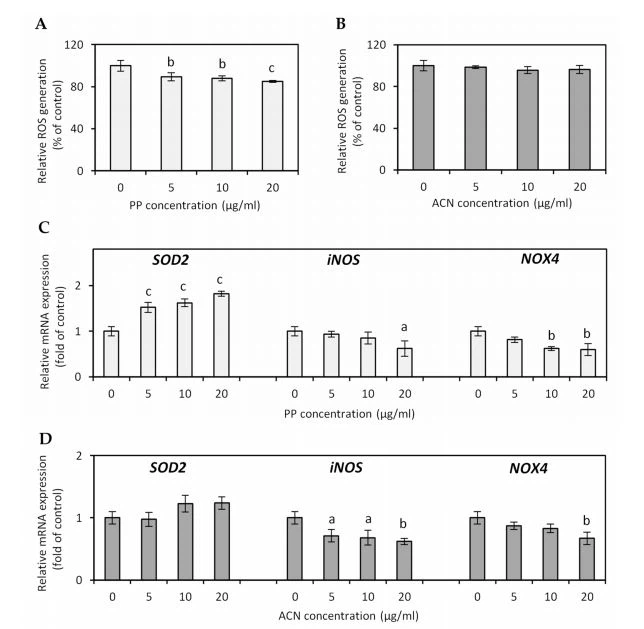
Figure 1. Effect of anthocyanin(ACN) and non-anthocyanin polyphenol(PP) fraction on the intracellular ROS production (A,B) and antioxidant and pro-oxidant enzymes mRNA expression(C,D)in hypertrophied 3T3-L1 adipocytes. Data are the mean values ± SD (n = 3).ap <0.05, p<0.01,`p<0.001.
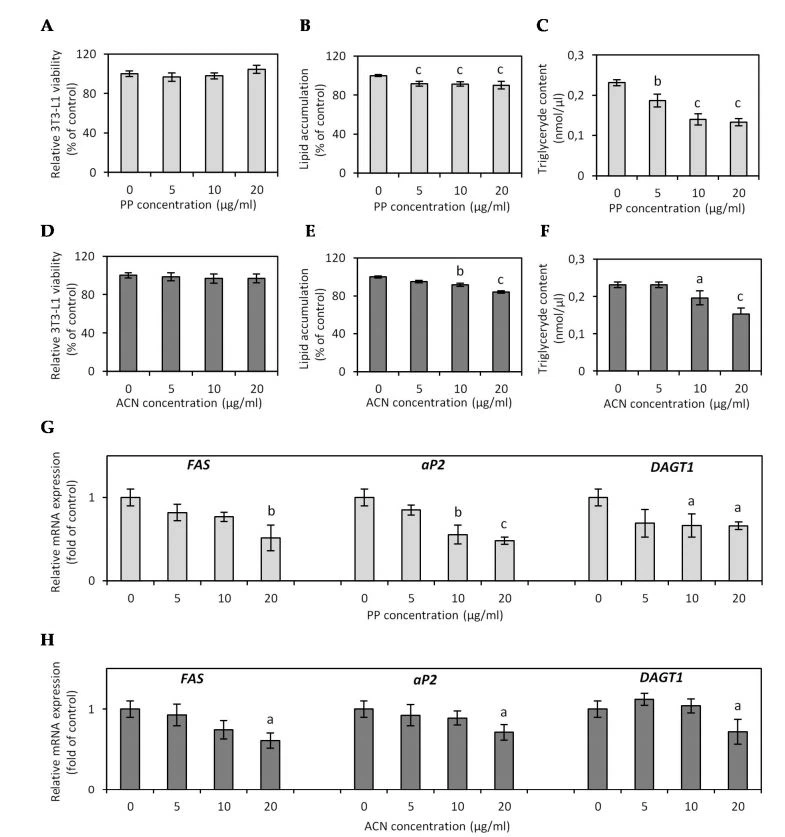
Figure 2. Effect of non-anthocyanin polyphenol (PP) fraction and anthocyanin(ACN)fraction on cell viability (A,D),lipid accumulation (B,E), triglyceride content(C,F), and lipogenic gene expression (G,H) in hypertrophied 3T3-L1 adipocytes. Data are the mean values±SD (n=3).p<0.05,"p<0.01,`p<0.001. The photos present hypertrophied 3T3-L1 adipocytes on day 12 after differentiation(I), Oil Red-stained hypertrophied 3T3-L1 adipocytes non-treated (J), and treated with PP fraction (K) and ACN fraction(L) at the concentrations of 20 ug/mL. The cells were photographed at a magnification of 100×.
3.3.Effect of ACN and PP Fractions on Lipid Accumulation in Hypertrophied 3T3-L1 Adipocytes
In this study, hypertrophic 3T3-Ll adipocytes, formed following the prolonged cultivation of differentiated mature adipocytes in high glucose conditions with medium replacement in 2-day intervals, displayed a morphological pattern typical for adipocyte hypertrophy with disturbance of the lipid handling processes. The 3T3-L1 adipocytes reached the critical cell size and became lipid-overloaded, largely occupied by fat droplets, as shown in Figure 2I. The effect of ACN and PP fractions on lipid content in the hypertrophied 3T3-L1 adipocytes was determined by Oil Red O staining and measurement of the total TG concentration on the cellular level. Semi-quantitative Oil Red O staining revealed that the PP fraction at concentrations of 5,10, and 20ug/mL reduced lipid accumulation by 4.9%,8.4%,and 16%(p<0.001) compared to untreated cells(Figure 2BJ,K), while the ACN fraction at the same concentrations reduced lipid content by 8.4%,8.6%(p<0.01), and 9.8%(p<0.001), respectively (Figure 2E,J,L).Quantitative analysis of TG content in the cells has shown that 24-h treatment of hypertrophied adipocytes with the PP fraction decreased the TG content by 19.4%(p<0.01),49.6%, and 42.4%(p<0.001)at a concentration of 5, 10, and 20 ug/mL, respectively (Figure 2C). The effect of the ACN fraction on TG content was less profound, and only the highest dose of ACN fraction 20 ug/mL decreased lipid accumulation by 9.8% (p<0.001), and TG content by 33.9% (p<0.001)(Figure 3F).
Cistanche can improve immunity
The effect of both fractions on lipid accumulation was confirmed by real-time PCR analysis of the expression of genes FAS(fatty acid synthase), DGAT1(diacylglycerol acyltransferase 1), and aP2(fatty acid-binding protein)involved in fatty acid (FA)and TG synthesis. Animal models with genetic modifications have shown that adipogenic and lipogenic genes, including FAS, DGAT1, and aP2, play a fundamental role in FA and TG synthesis and lipid storage, and a high-fat (HF) diet significantly increased the relative expression of these genes in adipose tissue [24]. DGAT1 is highly expressed in adipose tissue and catalyzes the final reaction of TG synthesis. DGAT1-deficient animals are resistant to obesity and more sensitive to insulin and leptin; therefore, inhibition of DGAT1 may be a potential strategy for decreasing TGsynthesis for treating obesity [25]. Fatty acid-binding protein 4(FABP4), also named adipocyte FABP or aP2, is mostly expressed in fat cells and plays a significant role in developing insulin resistance and atherosclerosis concerning metabolically driven low-grade and chronic inflammation [26]. Circulating aP2 levels are associated with several aspects of metabolic syndrome and endothelial dysfunction; thus, inhibition of the aP2 function could be a novel therapeutic strategy for several diseases, including obesity and cardiovascular disease [27]. FAS is also highly expressed in adipose tissue, and enhanced FAS expression correlates to visceral fat accumulation, impaired insulin sensitivity, and intensified pro-inflammatory cytokine production [28].
In our study, real-time PCR analysis showed that the PP and ACN fraction treatment dose-dependently inhibited DAGT1, aP2, and FAS mRNA expression (Figure 2G, H), but the PP effect was more significant. The PP fraction decreased the expression of DAGT1 in the range of 31-34%(p<0.05). The effect of the PP fraction with statistical significance on aP2 and FASexpression was observed only at concentrations of 10 and 20 ug/mL with 44.7%(p<0.01) and 51.9%(p<0.001) decreases in aP2 expression and 23.3% and 48.6%(p<0.01) decreases in FAS expression (Figure 2G). The ACN fraction only at the highest dose of 20ug/mL downregulated FAS, aP2, and DAGT1 expression by approximately 28%(p <0.05) (Figure 2H).
In vivo study has shown that DGAT1-deficient mice(Dgat1-/) had less adipose mass and smaller adipocytes. Despite reduced tissue TG levels, the diacylglycerol and fatty acyl CoA, substrates of the DGAT reaction, were not significantly elevated in skeletal muscle and liver. Moreover, the serum TG level was normal in Dgat1-/-mice [25]. cistanche tubulosa vs deserticola DGAT1 deficiency also altered the endocrine function of WAT. Adiponectin mRNA expression in WAT was increased 2-fold in Dgat1-/mice fed an HF diet [29]. The aP2-deficient mouse model revealed a slight increase in plasma FA. An elevated FA was found to link with the development of obesity and insulin resistance, but paradoxically, mice lacking aP2 were more sensitive to insulin [30].
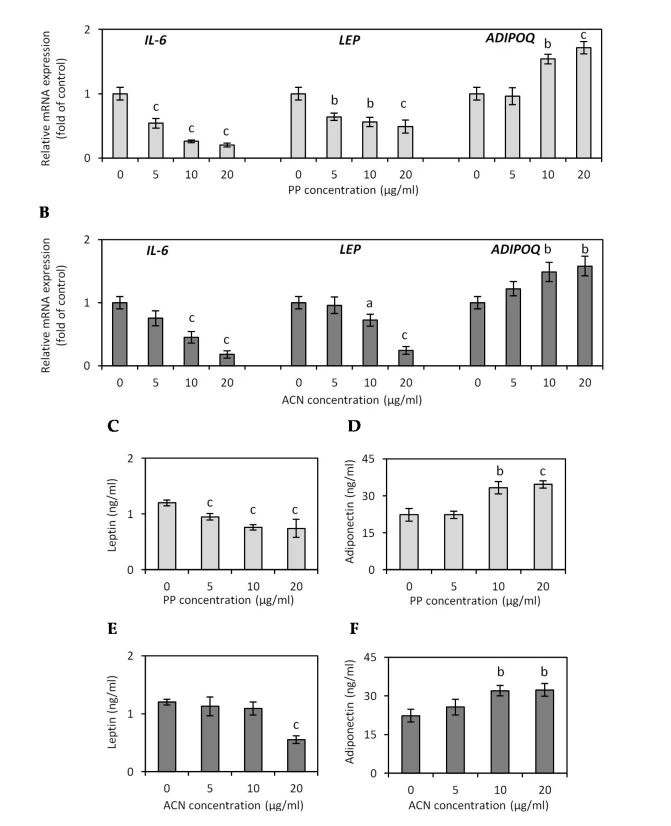
Figure 3. Effect of non-anthocyanin polyphenol (PP) and anthocyanin(ACN) fractions on adiponectin(ADIPOQ), lep-tin (LEP), and interleukin-6(IL-6) gene expression (A,B), and adiponectin (D,F) and leptin(C,E)protein secretion by hypertrophied 3T3-Ll adipocytes.Data are the mean values± SD (n=3).ap<0.05,bp<0.01,cp<0.001.
Many natural products from plants have been identified as potent DGAT inhibitors [31]. Rose petals, rich in polyphenols and free gallic acid had high antioxidant activity and the ability to inhibit TG synthesis. An extract of rose petals showed selective DGAT inhibition without suppressing other microsomal enzymes [32]. Anthocyanin-rich extracts effectively decreased body weight gain and accumulation of lipids by decreasing the mRNA level and inhibiting FA and TG synthesis enzymes and lipogenic activity [33]. cistanche vitamin shoppe Heyman et al. (2014) have found that lingonberries prevented adiposity, hepatic lipid accumulation, and dyslipidemia in mice fed an HF diet [34]. Qin et al. (2011)have found that consumption of the chokeberry extract, rich in polyphenols, reduces weight gain and epididymal fat accumulation; at the molecular level, it inhibits aP2, FAS, and LPL mRNA expression [35].
3.4.Effect of ACN and PP Fractions on Adipokine and Inflammatory Cytokine Expression in Hypertrophied 3T3-L1 Adipocytes
Adiponectin is the most abundant peptide secreted by adipocytes. Adiponectin production, which has a beneficial effect on insulin sensitivity and cardiovascular function, is significantly reduced in obese adipose tissue. Numerous epidemiological studies have shown that adiponectin deficiency is an independent risk factor for endothelial dysfunction [36]. Adiponectin exerts protective effects by inhibiting TNF-α, resistin, and adhesion molecules (VCAM-1, ICAM-1, and E-selectin) in endothelium and increasing endothelial NO production [37]. The most available therapy for cardiovascular diseases is lifestyle modifications by calorie restriction and dietary interventions that increase plasma levels of adiponectin. There is also a growing interest in the pharmaceutical industry to search for natural compounds that can increase adiponectin production [36].
In our study, adiponectin mRNA expression in hypertrophied adipocytes after PP treatment was upregulated, with a significant enhancement by 57.0%(p<0.01)and 72.7%(p<0.001) at the concentrations of 10 and 20 μg/mL(Figure 3A). The ACN fraction at concentrations of 10 and 20 ug/mL increased adiponectin expression by 50.5%and 59.6%, respectively (p<0.01)(Figure 3B). Contrary to adiponectin, the serum level of leptin is elevated in obesity due to increased leptin release from large hypertrophic adipocytes compared with small fat cells [38]. Evidence from clinical trials and animal experiments suggests that hyperleptinemia is involved in the pathogenesis of obesity-related cardiovascular disease and endothelial dysfunction due to ROS-mediated inactivation [39]. In vitro studies have shown that leptin increases ROS production in endothelial cells [40]. In this research, a significant reduction in leptin expression was found after treatment of adipocytes with ACN and PP fractions(Figure 3A, B). Reduction of leptin expression by 27.3% and 75.8% was obtained in hypertrophied adipocytes treated with the ACN fraction at the concentrations of 10(p<0.05) and 20ug/mL(p<0.001)(Figure 3B).The PP fraction decreased leptin mRNA expression by 35.0%,43.4%, and 50.5% at a concentration of 5, 10(p<0.01), and 20 μg/mL (p<0.001), respectively (Figure 3A).A similar effect of PP and ACN fractions was observed on leptin (Figure 3C, E) and adiponectin (Figure 3D, F)secretion. Treatment of hypertrophied adipocytes with the PP fraction increased the secretion of adiponectin by 49.3% and 55.2% at a concentration of 10(p<0.01)and 20 μg/mL (p<0.001), respectively(Figure 3D).All tested concentrations of PP fraction (5, 10, and 20 ug/mL) decreased leptin secretion(J20.8%,J36.7%, and、38.1%;p<0.001)(Figure 3C). cistanche Only at a concentration of 20 ug/mL did the ACN fraction significantly decrease leptin secretion(J53.9%,p<0.001)(Figure 4E).At doses of 10 and 20ug/mL, the ACN fraction increased adiponectin production by 43.3% and 44.8%(p<0.01), respectively (Figure 3F).
Moreover, adipocytokines such as IL-1 and IL-6 are closely linked to endothelial dysfunction and subclinical inflammation [41]. Yudkin et al. (2002)have shown, in healthy subjects, relationships between levels of a hepatic acute-phase C-reactive protein (CRP)and levels of IL-6 released from obese adipose tissue, indicating adipose tissue as a major source for circulating IL-6[41]. The study with 368 participants showed that persistently high levels of IL-6 were associated with a higher body mass index and an increased number of cardiovascular diseases compared to persistently lower levels of IL-6 [42]. Therefore, we investigated the effect of ACN and PP fractions on the expression of IL-6 in hypertrophied adipocytes after 24-h treatments. Compared to the control adipocytes, the PP fraction downregulated the expression of IL-6 by 45.5%,73.7%, and 79.8% at a dose of 5,10,and 20 ug/mL (p<0.001)(Figure 3A).The ACN fraction suppressed IL-6 mRNA expression by 54.5% and 82.0% at a concentration of 10 and 20ug/mL(p<0.001), compared to untreated adipocytes (Figure 3B).
Our previous study showed that lingonberry fruit extract suppressed pro-inflammatory cytokines IL-6, L-1β, and leptin expression, and significantly enhanced the expression of anti-inflammatory cytokines IL-10 and adiponectin in TNF-α-induced 3T3-L1 cells [11. In mice fed the HF diet and supplemented with chokeberry juice concentrate, a higher plasma adiponectin level was observed [43]. Qin et al. (2012) have found that chokeberry extract elevated plasma adiponectin and inhibited plasma TNF-α and IL-6 levels in rats fed a high-fructose diet [35]. C57BL/6J mice fed the HF diet had elevated serum levels of TG, cholesterol, and leptin. Purified ACNs provided along with the HF diet led to decreasing serum TG, cholesterol, and leptin to the low-fat diet levels [44]. Tsuda et al. (2004) also found that adiponectin gene expression was upregulated in the WAT of ACN-fed mice [45].

Twenty healthy volunteers supplemented for 4 weeks with 200 mL/day of ACN-rich Oueen Garnet plum juice for 4 weeks had a significantly reduced body weight and BMI with an average decrease of 0.6 kg in body weight and 0.2 units in BMI. Furthermore, consumption of ACN-rich plum juice significantly increased adiponectin blood levels (average increase of 3.8ug/mL) and decreased leptin blood levels (average decrease of 1.3 ng/mL)[46]. A study conducted by Vugic et al. (2020)showed that the regular intake of ACNs reduced obesity-associated inflammation in obese subjects. The supplementation with purified ACNs for 28 days significantly reduced the plasma IL-6 level [47]. Several in vitro and in vivo studies confirmed that ACN-rich food consumption prevents obesity-related consequences such as diabetes, inflammation, and oxidative stress. ACN supplementation favorably alters genes involved in glucose, FA, and lipid metabolism, immune and inflammatory system, antioxidant defense, and the antiangiogenic system [48].
3.5. The Effects of PP and ACN Fractions on TNF-αx-Induced Endothelial Dysfunction
The endothelium plays a vital role in vascular homeostasis and response to various stimuli, synthesizing and releasing many vasoactive substances, growth modulators, and other elements that mediate/influence these functions. The loss of balance between pro-atherogenic and antiatherogenic factors production leads to endothelial dysfunction [49]. The plasma levels of markers of endothelial activation, such as vascular cell adhesion molecule (VCAM), intercellular adhesion molecule (ICAM), endothelin 1(ET-1), E-selectin (SELE), and markers of low-grade inflammation such as CRP, IL-1β, and IL-6 indicate the endothelial dysfunction [7]. Obesity has been confirmed to activate endothelial cell functions. It has been shown that endothelial cells of obese mice express higher levels of ICAM-1[50].
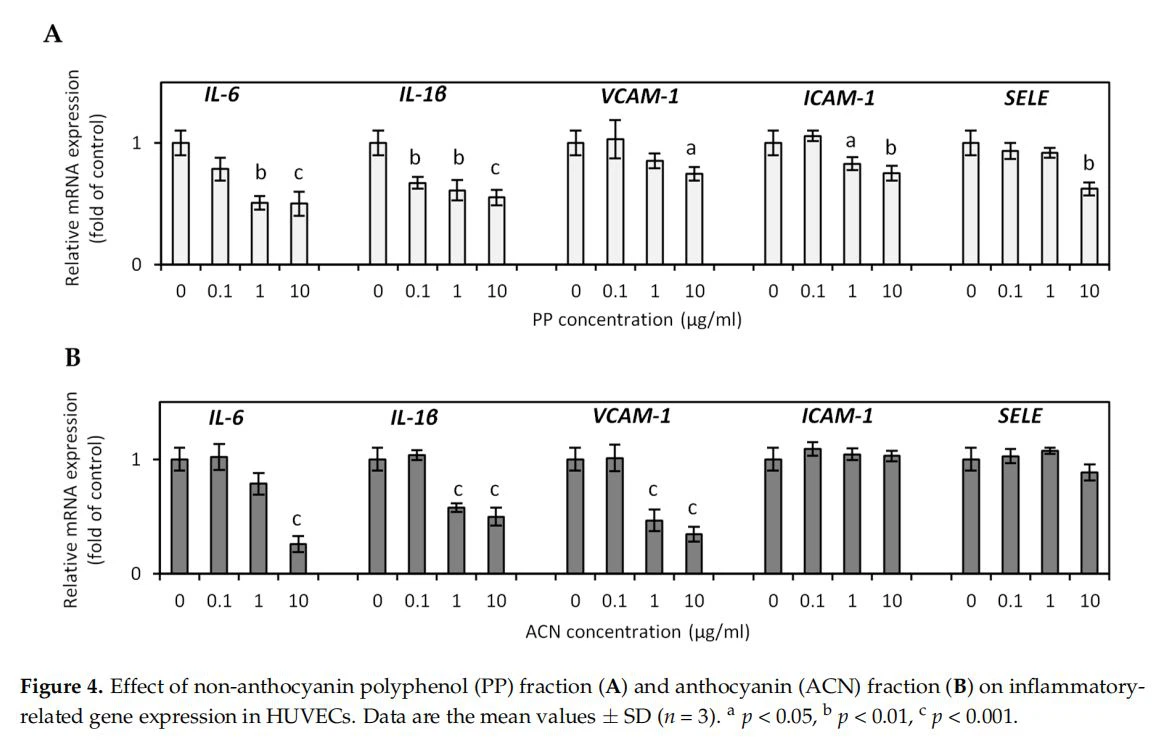
Our study examined the ability of ACN and PP fractions to decrease endothelial dysfunction in HUVECs induced by TNF-α. Accumulating evidence from clinical trials and basic research proves a crucial role of TNF-α in vascular dysfunction and vascular dis-ease [51]. TNF-α is a proinflammatory cytokine with multiple immune response functions, playing a pivotal role in low-grade systemic inflammation. TNF-α-mediated signaling pathways initiate and stimulate atherosclerosis, thrombosis, vasculitis, vascular oxidative stress, and endothelial cell apoptosis, contributing to vascular impairment [51]. A close relationship between TNF-α upregulation and lipid metabolism and HF and high-carbohydrate diets has been reported in several studies. Significantly increased plasma levels of TNF-ax, IL-6, ICAM-1, and VCAM-1 have been observed in patients with hyperlipidemia, obesity, metabolic syndrome, and type 2 diabetes [51,52]. In our study, TNF-α significantly stimulated several inflammation-related genes and adhesion molecules such as IL-6, IL-1β, VCAM-1, ICAM-1, and SELE in HUVECs. Compared to control cells, PP and ACN fractions decreased TNF-α-induced increase in IL-6, IL-1β, VACM-1, and ICAM-1 expression in a dose-dependent manner(Figure 4A, B). After incubation of HUVECs with a PP fraction at a concentration of 10 ug/mL, IL-6 and IL-1β mRNA expression decreased by 49.6% and 45.0%(p<0.001), respectively. The mRNA expression of VCAM-1, ICAM-1, and SELE decreased by 25.5% (p<0.05),25.0%(p<0.01),and 38.0%(p<0.01)(Figure 4A).The ACN fraction at a dose of 10ug/mL suppressed IL-6,IL-1β, and VCAM-1 mRNA expression by 74.0%,50.0%,and 65.6%, respectively (p<0.001). The ACN fraction did not affect ICAM-1 and SELE expression (Figure 4B).In TNF-α-induced HUVECs, the upregulated VCAM-1, ICAM-1, and E-selectin were meaningfully reduced by pretreatment with quercetin [53]. ACNs and hydroxycinnamic acids present in blueberry and cranberry fruits reduced TNF-α-induced upregulation of various inflammatory mediators (IL-8, MCP-1, and ICAM-1)in HUVECs [54]. A clinical study with 27 subjects with metabolic syndrome has shown that consumption of freeze-dried strawberries for 8 weeks decreased circulating levels of VCAM-1 by 18%, while no effects were noted in ICAM-1 [55]. Ruel et al. (2008) reported a significant decrease in adhesion molecules (ICAM-1 and VCAM-1) in healthy volunteers after a 12-week supplementation with low-calorie cranberry juice [56]. Mechanisms that link obesity and endothelial dysfunctions are multidirectional and complex. Several clinical studies have shown that reducing WAT hypertrophy leads to decreased plasma levels of various adipocytokines, attenuates the pro-inflammatory state, and improves endothelial functions [57].
In summary, the results have shown that PP and ACN fractions obtained from lingonberry fruit ameliorate adipocyte hypertrophy by acting directly on the molecular and cellular pathways. Both fractions decreased intracellular ROS generation by enhancing the expression of antioxidant defense enzyme SOD2 and inhibiting oxidant enzymes such as NOX4 and in. Moreover, PP and ACN fractions downregulated the expression of FAS, DGAT1, and aP2, which resulted in reduced TG content in adipocytes. Both fractions downregulated the expression of pro-inflammatory mediators (L-6 and leptin) and up-regulated adiponectin expression. To our knowledge, the present study is the first to show the protective effect of PP and ACN fractions from lingonberry fruit on endothelial functions by significantly decreasing the expression of several inflammation-related genes and adhesion molecules such as I-6, IL-1β, VCAM-1, ICAM-1 and SELE in TNF-α-induced HUVECs. These results suggest that consuming polyphenol-rich lingonberry fruit may help prevent and treat obesity and endothelial dysfunction due to their antioxidant and anti-inflammatory actions. Thus, lingonberries could be a dietary recommendation for preventing and managing obesity and cardiovascular complications, although further in vivo studies in animal models, followed by clinical trials, are needed.
Supplementary Materials: The following are available online at https://www.mdpi.com/2072-664 3/13/3/885/s1, Table S1: The primers sequence used for real-time PCR.
Author Contributions: Conceptualization, K.K.and A.O.; methodology, K.K., R.D., and A.O; validation, K.K.and A.G.; formal analysis, A.O.; investigation, K.K., R.D., A.G., and M.O.; writing—original draft preparation, K.K.; writing—review and editing, A.O.visualization, K.K., project administration, A.O.; funding acquisition, A.O.All authors have read and agreed to the published version of the manuscript.
Funding; This research was funded by the NATIONAL SCIENCE CENTRE, POLAND, grant number 2015/19/B/NZ9/01054.
Conflicts of Interest: The authors declare no conflict of interest. The funders had no role in the design of the study; in the collection, analyses, or interpretation of data; in the writing of the manuscript; or in the decision to publish the results.
This article is extracted from Nutrients 2021, 13, 885 15 of 17