Sex Diferences in Post‑exercise Fatigue And Function in Myalgic Encephalomyelitis/chronic Fatigue Syndrome Part 2
Sep 25, 2023
Discussion
This pilot study utilized the low-burden six-minute walk test to identify potential post-exercise abnormalities in ME/CFS with a focus on biobehavioral sex differences. Our hypothesis that females as compared to males would show slower recovery to baseline on autonomic (HRV and heart rate) or self-report (e.g. fatigue) measures was not confirmed, although females showed a significant short-term linear trend of higher postexercise fatigue, whereas no post-exercise fatigue trends were found in male ME/CFS participants. Heart rate significantly decreased in male ME/CFS participants on the last 2 days of post-exercise tracking. The aggregate ME/CFS patient group showed significantly increasing fatigue from baseline to the first walk test day followed by significantly decreasing fatigue to baseline levels by seven days post-exercise. The healthy control group evidenced a significant decrease in HRV in the seven days after the walk tests, whereas the ME/CFS group showed no significant HRV change. The ME/CFS and healthy control groups showed significantly different trend slopes for fatigue (up for ME/CFS; down for healthy controls) from baseline to the first walk test day.

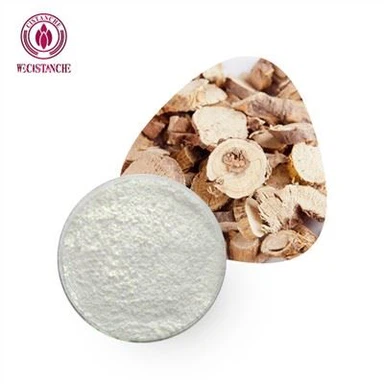
Cistanche can act as an anti-fatigue and stamina enhancer, and experimental studies have shown that the decoction of Cistanche tubulosa could effectively protect the liver hepatocytes and endothelial cells damaged in weight-bearing swimming mice, upregulate the expression of NOS3, and promote hepatic glycogen synthesis, thus exerting anti-fatigue efficacy. Phenylethanoid glycoside-rich Cistanche tubulosa extract could significantly reduce the serum creatine kinase, lactate dehydrogenase, and lactate levels, and increase the hemoglobin (HB) and glucose levels in ICR mice, and this could play an anti-fatigue role by decreasing the muscle damage and delaying the lactic acid enrichment for energy storage in mice. Compound Cistanche Tubulosa Tablets significantly prolonged the weight-bearing swimming time, increased the hepatic glycogen reserve, and decreased the serum urea level after exercise in mice, showing its anti-fatigue effect. The decoction of Cistanchis can improve endurance and accelerate the elimination of fatigue in exercising mice, and can also reduce the elevation of serum creatine kinase after load exercise and keep the ultrastructure of skeletal muscle of mice normal after exercise, which indicates that it has the effects of enhancing physical strength and anti-fatigue. Cistanchis also significantly prolonged the survival time of nitrite-poisoned mice and enhanced the tolerance against hypoxia and fatigue.

Click on Feeling light-headed and tired all the time
【For more info:george.deng@wecistanche.com / WhatsApp:8613632399501】
A systematic review of cardiac autonomic dysfunction in ME/CFS reported significant differences in HRV and other heart parameters between patients and healthy controls in both exercise and non-exercise designs40. By comparison, our modest post-exercise findings indicate that more effortful exercise tests may be necessary, such as maximal tests or longer duration and/or higher intensity submaximal tests, to produce enduring symptoms and cardio-autonomic abnormalities. The minimal level of physical exercise required to sustain PEM and potential biological abnormalities over multiple days is currently a matter of speculation. Perhaps the established and easy-to-administer 12-minute walk test41 with instructions to “walk as fast as you can” would be a more effortful and perhaps more productive alternative to the six-minute walk test. Developing a home-based walk test protocol for PEM would potentially open up research access to many disabled ME/CFS patients who lack the mobility to participate in laboratory-based studies.
Apart from identifying a useful minimal exercise test, the issue of sex differences in exercise requires comment. In healthy individuals, a study by Mendonca et al.42 demonstrated that the cardiac autonomic function of women is more affected by brief intense exercise than that of men. Even though both sexes showed a significant modification in HRV five min post-exercise, women showed a greater change in the HRV Low Frequency/High-Frequency ratio than men from rest to recovery. Furthermore, sex differences in healthy subjects during exercise recovery have been found following a moderate effort 3 min cycling task at 60% maximum heart rate43. Specifically, the mean arterial pressure decreased more in females than males during the first five minutes after exercise. Perhaps biological sex differences in response to intense but brief exercise may be too short-lived to be captured in multi-day assessments. In addition, the data published here do not support the use of HRV in studies trying to understand more prolonged duration exercise intolerance or PEM.
In ME/CFS, sex differences in daily fatigue ratings following short walk tests may be due to differences in disease and/or differences in how females experience and present symptoms compared to males 44. Biological studies of prolonged post-exercise sex differences in ME/CFS have not been published as far as we are aware. A report on multi-day post-exercise symptoms in a relatively small sample of ME/CFS and healthy controls utilizing a single maximal exercise test found no symptom increases in the ME/CFS group until day 5 postexercise. Computerized watches were used to track daily fatigue. By comparison, days 5–7 post-exercise in the current study evidenced declining trends in fatigue and heart rate and increased HRV. These post-exertional differences in fatigue and cardio-autonomic status between these two studies may reflect the use of very different provocation tests.

Finally, the significant downtrend in post-walk test HRV for healthy controls was not expected. Conceivably this may reflect a less than robust overall health status (e.g. unhealthy diet is associated with lower HRV)46 in the healthy controls, given that their HRV values (20–30 ms RMSSD) were well below short-term measurement norms47,48 that are largely based on individuals over 40 years of age, similar to the current study. However, physical deconditioning could not be compared between patients and healthy controls given that walk test distances were not recorded for control subjects. Thus, differences between the two groups could be in part attributable to deconditioning in addition to illness factors.

The ME/CFS HRV values (RMSSD) in this study are similar to those published in our previous prospective study13 which collected weekly HRV data over 6 months from primarily female subjects with ME/CFS. However, the relatively small sample size in this study yielded less than definitive findings, particularly for possible sex differences. Although our home-based walk tests have shown feasibility, a more exertion-sensitive test may be needed for remote studies that seek to produce post-exertional malaise and potential biological correlates. This is particularly important for disabled, home-bound patients with ME/CFS who are under-represented in scientific studies.
This pilot study utilizing a modest burden six-minute walk test to provoke prolonged post-exertional fatigue and autonomic abnormalities did not confirm hypotheses that females as compared to males would show slower recovery to baseline on autonomic (HRV and heart rate) or self-report (e.g. fatigue) measures, although females showed a significant short-term increasing trend of higher post-exercise fatigue. The aggregate ME/CFS group showed increasing fatigue from baseline to the first walk test day followed by decreasing fatigue to baseline levels

by day 15. The ME/CFS and healthy control groups showed opposite trends in fatigue (up for ME/CFS; down for healthy controls) from baseline to the day of the first walk test. A more exertion-sensitive test may be required to document prolonged post-exertional fatigue and autonomic abnormalities in ME/CFS.
Data availability
The datasets used and/or analyzed during the current study are available from the corresponding author upon reasonable request.

References
1. Montague, T. J., Marrie, T. J., Klassen, G. A., Bewick, D. J. & Horacek, B. M. Cardiac function at rest and with exercise in the chronic fatigue syndrome. Chest 95(4), 779–784 (1989).
2. Black, C. D., O’Connor, P. J. & McCully, K. K. Increased daily physical activity and fatigue symptoms in chronic fatigue syndrome. Dyn. Med. 4(1), 3 (2005).
3. Peterson, P. K. et al. Effects of mild exercise on cytokines and cerebral blood flow in chronic fatigue syndrome patients. Clin. Diagn. Lab. Immunol. 1(2), 222–226 (1994).
4. Riley, M. S., O’Brien, C. J., McCluskey, D. R., Bell, N. P. & Nicholls, D. P. Aerobic work capacity in patients with chronic fatigue syndrome. BMJ 301(6758), 953–956 (1990).
5. Meyer, J. D. et al. Post-exertion malaise in chronic fatigue syndrome: Symptoms and gene expression. Fatigue 1(4), 190–209 (2013).
6. Keech, A. et al. Capturing the post-exertional exacerbation of fatigue following physical and cognitive challenges in patients with chronic fatigue syndrome. J. Psychosom. Res. 79(6), 537–549 (2015).
7. Cook, D. B. et al. Responses to exercise differ for chronic fatigue syndrome patients with fibromyalgia. Med. Sci. Sports Exerc. 44(6), 1186–1193 (2012).
8. Ohashi, K., Yamamoto, Y. & Natelson, B. H. Activity rhythm degrades after strenuous exercise in chronic fatigue syndrome. Physiol. Behav. 77(1), 39–44 (2002).
9. Vanness, J. M., Snell, C. R. & Stevens, S. R. Diminished cardiopulmonary capacity during post-exertional malaise. J. Chronic Fatigue Syndr. 14(2), 77–85 (2007).
10. LaManca, J. J. et al. Influence of exhaustive treadmill exercise on cognitive functioning in chronic fatigue syndrome. Am. J. Med. 105(3a), 59s–65s (1998).
11. Jammes, Y., Steinberg, J. G., Delliaux, S. & Brégeon, F. Chronic fatigue syndrome combines increased exercise-induced oxidative stress and reduced cytokine and Hsp responses. J. Intern. Med. 266(2), 196–206 (2009).
12. VanNess, J. M., Stevens, S. R., Bateman, L., Stiles, T. L. & Snell, C. R. Postexertional malaise in women with chronic fatigue syndrome. J. Womens Health 19(2), 239–244 (2010).
13. Friedberg, F. et al. Nonimprovement in chronic fatigue syndrome: Relation to activity patterns, uplifs and hassles, and autonomic dysfunction. Psychosom. Med. 84(6), 669–678 (2022).
14. Keller, B. A., Pryor, J. L. & Giloteaux, L. Inability of myalgic encephalomyelitis/chronic fatigue syndrome patients to reproduce VO2 peak indicates functional impairment. J. Transl. Med. 12, 104 (2014).
15. Bazelmans, E., Bleijenberg, G., Van Der Meer, J. W. & Folgering, H. Is physical deconditioning a perpetuating factor in chronic fatigue syndrome? A controlled study on maximal exercise performance and relations with fatigue, impairment, and physical activity. Psychol. Med. 31(1), 107–114 (2001).
16. Nelson, M. J., Buckley, J. D., Tomson, R. L., Bellenger, C. R. & Davison, K. Markers of cardiac autonomic function during consecutive day peak exercise tests in people with myalgic encephalomyelitis/chronic fatigue syndrome. Front. Physiol. 12, 771899 (2021).
17. Van Oosterwijck, J. et al. Reduced parasympathetic reactivation during recovery from exercise in myalgic encephalomyelitis/ chronic fatigue syndrome. J. Clin. Med. 10, 4527.
18. Miller, R. R. et al. Submaximal exercise testing with near-infrared spectroscopy in Myalgic Encephalomyelitis/Chronic Fatigue Syndrome patients compared to healthy controls: A case-control study. J. Transl. Med. 13, 159 (2015).
19. Jason, J. A. et al. Estimating rates of chronic fatigue syndrome from a community-based sample: A pilot study. Am. J. Community Psychol. 23(4), 557–568 (1995).
20. Goldman, M. D., Marrie, R. A. & Cohen, J. A. Evaluation of the six-minute walk in multiple sclerosis subjects and healthy controls. Mult. Scler. 14(3), 383–390 (2008).
21. Friedberg, F., Adamowicz, J., Caikauskaite, I., Seva, V. & Napoli, A. Efficacy of two delivery modes of behavioral self-management in severe chronic fatigue syndrome. Fatigue 4(3), 158–174 (2016).
22. Friedberg, F. & Sohl, S. J. Longitudinal change in chronic fatigue syndrome: What home-based assessments reveal. J. Behav. Med. 32(2), 209–218 (2009).
23. Kendig, H., Browning, C. J. & Young, A. E. Impacts of illness and disability on the well-being of older people. Disabil. Rehabil. 22(1–2), 15–22 (2000).
24. Fukuda, K. et al. The chronic fatigue syndrome: A comprehensive approach to its definition and study. Ann. Intern. Med. 121(12), 953–959 (1994).
25. King, C. & Jason, L. A. Improving the diagnostic criteria and procedures for chronic fatigue syndrome. Biol. Psychol. 68(2), 87–106 (2005).
26. Krupp, L. B., LaRocca, N. G., Muir-Nash, J. & Steinberg, A. D. Te fatigue severity scale: Application to patients with multiple sclerosis and systemic lupus erythematosus. Arch. Neurol. 46(10), 1121–1123 (1989).
27. Taylor, R., Jason, L. A. & Torres, A. Fatigue rating scales: An empirical comparison. Psychol. Med. 30(4), 849–856 (2000).
28. Antony, M. M., Bieling, P. J., Cox, B. J., Enns, M. W. & Swinson, R. P. Psychometric properties of the 42-item and 21-item versions of the Depression Anxiety Stress Scales in clinical groups and a community sample. Psychol. Assess. 10(2), 176 (1998).

29. Vasquez, L. M. et al. Effect of resistance exercise performed to volitional failure on ratings of perceived exertion. Percept Mot. Skills 117(3), 881–891 (2013).
30. Du, H., Newton, P. J., Salamonson, Y., Carrieri-Kohlman, V. L. & Davidson, P. M. A review of the six-minute walk test: Its implication as a self-administered assessment tool. Eur. J. Cardiovasc. Nurs. 8(1), 2–8 (2009).
31. Butland, R. J., Pang, J., Gross, E. R., Woodcock, A. A. & Geddes, D. M. Two-, six-, and 12-minute walking tests in respiratory disease. Br. Med. J. (Clin. Res. Ed.) 284(6329), 1607–1608 (1982).
32. Pan, J. & Tompkins, W. J. A real-time QRS detection algorithm. IEEE Trans. Biomed. Eng. 3, 230–236 (1985).
33. Tarvainen, M. P., Niskanen, J.-P., Lipponen, J. A., Ranta-Aho, P. O. & Karjalainen, P. A. Kubios HRV–heart rate variability analysis software. Comput. Methods Programs Biomed. 113(1), 210–220 (2014).
34. Shafer, F., McCraty, R. & Zerr, C. L. A healthy heart is not a metronome: An integrative review of the heart’s anatomy and heart rate variability. Front. Psychol. 5, 1040 (2014).
35. Akselrod, S. et al. Power spectrum analysis of heart rate fluctuation: A quantitative probe of beat-to-beat cardiovascular control. Science 213(4504), 220–222 (1981).
36. Malik, M. et al. Heart rate variability: Standards of measurement, physiological interpretation, and clinical use. Eur. Heart J. 17(3), 354–381 (1996).
37. Huang, Q. Hands-on tutorial for piecewise linear mixed-effects models using SAS® PROC MIXED. PharmaSUG China 8, 2015 (2015).
38. Fitzmaurice, G. M., Laird, N. M. & Ware, J. H. Applied Longitudinal Analysis (Wiley, 2012).
39. Conroy, K. E., Islam, M. F. & Jason, L. A. Evaluating case diagnostic criteria for myalgic encephalomyelitis/chronic fatigue syndrome (ME/CFS): Toward an empirical case definition. Disabil. Rehabil. 45(5), 840–847.
40. Nelson, M. J., Bahl, J. S., Buckley, J. D., Tomson, R. L. & Davison, K. Evidence of altered cardiac autonomic regulation in myalgic encephalomyelitis/chronic fatigue syndrome: A systematic review and meta-analysis. Medicine 98(43), e17600.
41. Cooper, K. H. A means of assessing maximal oxygen intake. Correlation between field and treadmill testing. JAMA 203, 201–204 (1968).
42. Mendonca, G. V. et al. Sex differences in linear and nonlinear heart rate variability during early recovery from supramaximal exercise. Appl. Physiol. Nutr. Metab. 35(S1), 439–446 (2010).
43. Carter, R., Watenpaugh, D. E. & Smith, M. L. Selected contribution: Gender differences in cardiovascular regulation during recovery from exercise. J. Appl. Physiol. 91(4), 1902–1907 (2001).
44. van Wijk, C. M. & Kolk, A. M. Sex differences in physical symptoms: The contribution of symptom perception theory. Soc. Sci. Med. 45(2), 231–246 (1997).
45. Yoshiuchi, K. et al. A real-time assessment of the effect of exercise in chronic fatigue syndrome. Physiol. Behav. 92(5), 963–968 (2007).
46. Young, H. A. & Benton, D. Heart-rate variability: A biomarker to study the influence of nutrition on physiological and psychological health. Behav. Pharmacol. 29(2 and 3-Spec Issue), 140–151 (2018).
47. Nunan, D., Sandercock, G. R. & Brodie, D. A. A quantitative systematic review of normal values for short-term heart rate variability in healthy adults. Pacing Clin. Electrophysiol. 33(11), 1407–1417 (2010).
48. Van Cauwenbergh, D. et al. Malfunctioning of the autonomic nervous system in patients with chronic fatigue syndrome: A systematic literature review. Eur. J. Clin. Invest. 44(5), 516–526 (2014).
Acknowledgments
We thank Christina Guifre for her editorial assistance. The six graphs in Figures 2, 3, 4, 5, 6, and 7 were drawn by Xiaoyue Zhang.
Author contributions
F.F. conceived the original research study. J.L.A. and S.R. collected data. F.F., J.L.A., P.B., M.M. X.Z., and J.Y. critically reviewed the paper and were involved in data interpretation. X.Z. and J.Y. conducted the data analysis. F.F. and J.L.A. co-led the writing of the paper. All authors reviewed and approved the final versions.
Funding
This work was funded by the National Institute of Nursing Research, R01NR015850.
Competing interests
The authors declare no competing interests.
Additional information
Correspondence and requests for materials should be addressed to F.F.
Publisher's note Springer Nature remains neutral about jurisdictional claims in published maps and institutional afliations.
【For more info:george.deng@wecistanche.com / WhatsApp:8613632399501】