Stability And Influence Of Storage Conditions On Nanofibrous Film Containing Tooth Whitening Agent Part 1
Apr 26, 2023
According to relevant studies,cistanche is a common herb that is known as "the miracle herb that prolongs life". Its main component is cistanoside, which has various effects such as antioxidant, anti-inflammatory, and immune function promotion. The mechanism between cistanche and skin whitening lies in the antioxidant effect of cistanche glycosides. Melanin in human skin is produced by the oxidation of tyrosine catalyzed by tyrosinase, and the oxidation reaction requires the participation of oxygen, so the oxygen-free radicals in the body become an important factor affecting melanin production. Cistanche contains cistanoside, which is an antioxidant and can reduce the generation of free radicals in the body, thus inhibiting melanin production.

Click on Cistanche Tubulosa for Whitening
For more info:
david.deng@wecistanche.com WhatApp:86 13632399501
1. Introduction
Carbamide peroxide (CP) is an active ingredient for tooth whitening [1]. This compound is known as urea peroxide or hydrogen peroxide–urea. CP was first used as an anti-inflammatory and antiseptic for treating periodontal diseases and gingivitis [2,3]. However, tooth whitening was a side effect during the treatments [4]. The whitening action of CP resulted from a chemical oxidative process involving the peroxide and organic pigmented molecules in enamel and dentine. The change in the structure of the pigmented molecules resulted in clearer, smaller molecules, and the teeth appeared white [5–7]. Due to the increased interest in the esthetics of healthy white teeth, dental whitening procedures became more popular [8] and tooth whitening products containing CP are widely used. Other applications of CP in the oral cavity are for treating plaque, gingivitis, and caries, by its antibacterial and anti-inflammatory activities [9–11].
Despite its attractive properties, CP is chemically unstable [12]. It is highly sensitive to light and thermal exposure [13]. These factors are the main cause of CP degradation upon storage and result in a reduction in tooth whitening efficiency [14]. Many stabilizers and deterioration inhibitors have been used for preventing CP degradation. However, the stabilizers are varied in their effectiveness and exhibit disadvantages such as being expensive, failing to prevent effervescence, imparting undesirable color, or lacking sufficient solubility [15]. The aqueous formulations containing tooth-whitening agents show the severe disadvantage of poor stability during long-term storage [16], leading to the products losing their tooth-whitening potency [17].
The development in pharmaceutical technology has made it possible to produce functional formulations to overcome drug problems such as low stability [18]. Encapsulation of a drug in a dry form of nanofibrous film with diameters in the nano range by electrospinning technique is currently gaining a large interest, due to its simplicity, capacity to produce the non-woven nanofibrous film with a high surface-to-volume ratio, low-cost, and capability of scale-up production [19,20]. The electrospun nanofibrous film is a viable formulation that can allow active compounds to be incorporated with an appropriate polymer or polymer mixture. Considering that CP is highly unstable, particularly in aqueous systems, drug delivery in terms of solid formulation such as nanofibrous film should be a good candidate for the delivery of this agent. In addition, the nanofibrous film formulation can increase patient compliance due to its convenience of use [21].

Recently, we reported that CP-loaded nanofibrous film (CP-F) could be produced by an electrospinning technique for tooth whitening [22]. Polyvinyl alcohol (PVA) was used as a base solution for electrospinning nanofibrous film production. Polyvinylpyrrolidone (PVP) and silica helped to stabilize the CP and were used as drug carriers for the prevention of CP degradation during the process. The developed CP nanofibrous film exhibited high drug entrapment efficacy and tooth-whitening activity. However, the stability of CP in the developed CP-F has not yet been comprehensively investigated. Therefore, stability tests of this novel formulation to predict monitoring and to determine the validity and the ideal storage conditions are needed. Stability testing of formulations could provide evidence of the quality of the formulation and the influence of environmental factors, such as temperature, light, and humidity [23]. The evidence can be applied to developing a suitable manufacturing process and selecting packaging, and storage conditions. Therefore, the present study aimed to investigate the stability of CP in CP-F after keeping it in various conditions. The degradation kinetics were studied to estimate the half-life and shelf-life of the developed products. The physicochemical properties of CP-F were characterized and the amount of CP remaining in CP-F was determined to evaluate the efficiency of CP-F on the stabilization of CP.
2. Materials and Methods
2.1. Materials
2.2. Preparation of CP-F
The preparation of CP-F was according to the procedure reported in previous work [22]. Brieflfly, CP solution composed of PVA, PVP, silica, CP, and water in a weight ratio of 5.5:3:1:0.5:90 was firstly prepared by dissolving PVA and PVP in distilled water and continuously stirred at 70 ◦C for 12 h. The prepared PVA–PVP solution was cooled to room temperature. Silica and CP were weighed and dispersed in 1% N, N-dimethylformamide. Afterward, the prepared PVA–PVP solution was added to this solution until the final concentration of CP was 0.5%. The sample was gently stirred until a clear solution was obtained. This CP solution was used for electrospinning. For the fabrication of CP-F, the electrospinning process was performed. The setup consisted of a high-voltage power supply (FC Series Glassman High Voltage Regulated DC Power Supplies, High Bridge, NJ, USA), a syringe connected with a pump (Harvard Apparatus Pump 11 Elite Syringe Pumps, Holliston, MA, USA), and a stationary metal collector (VWR International, Radnor, PA, USA) covered with aluminum foil. The prepared CP solution for electrospinning was transferred to a syringe fitted with a stainless-steel needle (Hamilton 2.5 mL, Model 1005 TLL SYR, Hamilton Metal Hub Needles, Bonaduz, Switzerland) and was horizontally pumped at a flow rate of 10 µL/min. The electrospinning was set at 15 kV and the distance between the syringe tip and the collector plate was 10 cm. Before the further test, the obtained CP-F was cut into 10 mm × 50 mm and measured for thickness at 10 points using a micrometer (INSIZE 3203-25A, Suzhou, China). The thickness value was confirmed by an optical microscope (Axio Vert.A1 FL-LED, ZEISS, Oberkochen, Germany) equipped with a digital camera (ZEISS Axiocam 105 color). The sample was cut in a cross-sectional direction and vertically fixed on a glass slide. Photomicrographs of the samples were examined at magnification 5× and measured for thickness by Image J software (US National Institutes of Health, Bethesda, MD, USA). CP in polymer solution (CP-P) was prepared by dissolving CP in a polymer solution containing 5.5% PVA, 3% PVP, and 1% silica to have a final CP concentration of 5%. CP in water solution (CP-W) was obtained from dissolving CP in distilled water to obtain a final concentration of CP the same as CP-P. The amount of CP was analyzed using high-performance liquid chromatography (HPLC).

2.3. HPLC Analysis
For the determination of CP remaining in the samples, HPLC (Hewlett Packard series 1100, Agilent Technologie, Santa Clara, CA, USA) was performed, and HPLC condition from previous reports [24] was used with some modifications. Briefly, an amount of 0.1 g of sample was dissolved in 10 mL deionized water, then the solutions were centrifuged using a SorvallTM ST16R Centrifuge (Thermo Fisher Scientific, Waltham, MA, USA) with a speed of 10,000 rpm for 15 min. An amount of 1000 µL of the collected samples was mixed with 1000 µL of 0.1 M triphenylphosphine and stirred for 2 h with light protection. The determination was carried out at 25 ± 0.2 ◦C. A reversed-phase column (4.6 mm × 250 mm Hypersil ODS Agilent Technologies, Santa Clara, CA, USA) was used and detected at 225 nm. The injection volume was 10 µL. A mobile phase at different ratios of acetonitrile to water was run with a flow rate of 1.0 mL/min. At the start of the running time, a volume ratio of 50:50 was used until 6.5 min. After that, the mobile phase ratio was changed to 100:0. At 10 min, the mobile phase ratio was changed back to 50:50 until the complete run time of 25 min was reached. The calibration curve was prepared using an aqueous solution of CP at a range of 50–200 µg/mL. A linear standard curve was obtained with a correlation coefficient (r 2 ) of 0.9997. The amount of CP remaining was calculated using Equation (1):

2.4. Effects of Temperature and UV Light on Degradation Kinetics of CP
2.5. Effects of Temperature and Humidity on CP-F after Long-Term Storage
2.6. Color Measurement
The color of CP-F was analyzed using a colorimeter (Fru WR10 portable precision colorimeter, Shenzhen wave optoelectronics technology Co., Ltd, Shenzhen, China). The measurements were taken from three different points on the surface of CP-F. Color measurement outcomes were evaluated under the CIE (Commission International declarative) L*a*b* coordinate values, where L* represents the degree of lightness ranging from 0 (zero) to 100 (white), and a* and b* represent the degree of green−red and the degree of blue−yellow color coordinates, respectively [25]. A positive a* value indicates the degree of red and a negative a* value indicates the degree of green. A positive b* value indicates the degree of yellow and a negative b* value indicates the degree of blue. The center of the a* and b* coordinates is achromatic and the increasing values of a* and b* represent the saturation of the color. The L*a*b* values of CP-F were measured. To evaluate the color change between the color of CP-F initially and 12 months after storage, the total color difference (∆E) was calculated using Equation (2). The ∆E value relates to the visual perception of color. If the ∆E values are below 1, the color change cannot be visible, if the ∆E values are 1 to 3, a minor color change is visible, and if the ∆E values are above 3, the color change is visible. The color measurement was performed at 5 points from three independent samples at each storage condition.

2.7. Morphology Study
2.8. Internal Structure Investigation
2.9. Thermal Behavior Investigation
2.10. Molecular Interaction Study
2.11. Mechanical Property Investigation
Mechanical properties of CP-F were evaluated using a texture analyzer (TA.XT Plus, Texture Analyzer Stable Micro Systems, Surrey, UK) by the method previously described [26], with some modifications. Before testing, a texture analyzer was calibrated with a 5 kg load cell and equipped with tensile grips (A/TG). CP-F was cut into a rectangular shape of 0.5 cm × 5.0 cm. The sample was clamped between the grips. The initial length between grips was set at 3 cm. The test speed was 1 mm/s with 5 g of trigger force. The sample was pulled until the breaking of the sample occurred. At the point of breaking, the value of force and elongation was recorded. The measurement was done with three independent film samples from each storage condition. The mechanical properties of the films were characterized by the tensile strength (σ), elongation at break (ε), and Young’s modulus (E), calculated by using Equations (3)–(5), respectively:
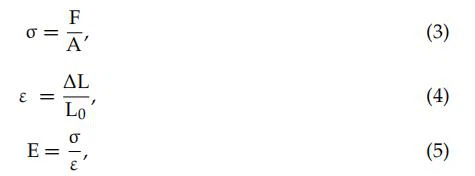
where F is the maximum force at the film breaking (N), A is the cross-sectional area of the sample (cm2), ∆L is the extension of the sample, and L0 is the original length of the sample (cm).

2.12. Mucoadhesive Property Investigation
A texture analyzer (TA.XT Plus Texture Analyzer, Stable Micro Systems, Surrey, UK) was utilized to investigate the adhesive properties of CP-F using a method previously described [22], with some modification. Before testing, a texture analyzer was calibrated with a 5 kg load cell. CP-F was attached to the probe (P 0.5 Perspex, 0.5-inch diameter) using double-sided adhesive tape. A piece of 2 cm × 5 cm porcine intestinal mucosa was attached to a glass slide and then placed on the stand. The surface of the mucosa was hydrated by dropping 1 mL of artificial saliva. The probe was lowered to contact the mucosal surface. A contact force of 0.2 N was applied with a contact time of 60 s, and then the probe was withdrawn at the rate of 1 mm/s. The Texture Exponent software (Stable Micro Systems, Surrey, UK) was used to determine the adhesive force. The experiment was conducted in triplicate for the film samples from each storage condition.
2.13. Statistical Analysis
3. Results and Discussion
It was found that most fabricated CP-F had a uniform thickness. Using a micrometer, the films showed an average thickness of 0.98 ± 0.10 mm. The cross-section photo micrograph from optical microscopy of CP-F as presented in Figure 1 showed that the thickness of the films was 1.00 ± 0.05 mm, which was the result from the micrometer. The obtained CP-F having a thickness of approximately 1 mm was selected to further study.

In general, the HPLC analysis used for the determination of CP in the formulation was validated by the selectivity of triphenylphosphine oxide and triphenylphosphine. The HPLC chromatogram peaks of triphenylphosphine oxide and triphenylphosphine were presented in the different retention times of 5.0 min and 10.5 min, respectively, as shown in Figure S1a [27]. Triphenylphosphine oxide was obtained from the oxidation of triphenylphosphine by CP [28]. In the present study, the determination of CP was obtained from the triphenylphosphine oxide peak area. The residual peak of triphenylphosphine in the HPLC chromatograms confirmed that all CP was completely reacted. Moreover, to limit oxidative interference from other factors that might lead to an overestimation of CP, the determination of triphenylphosphine oxide in a blank sample without CP was performed, and the result is shown in Figure S1b.
For more info: david.deng@wecistanche.com WhatApp:86 13632399501