Sweet And Warm Entering The Kidneys, Nourishing Essence And Strengthening Yang - Interpreting The Health Wisdom Of Cistanche Tubulosa From The Perspective Of Its Nature, Taste, And Meridian
May 25, 2026
The core thinking of traditional Chinese medicine lies in "treating based on syndrome differentiation and returning to the meridians based on nature and taste". The efficacy of each medicinal herb is closely related to its own characteristics of nature and taste, as well as the direction of returning to the meridians. As a traditional and precious medicinal herb in China, Cistanche tubulosa grows in the desert and the Gobi. With its tenacious vitality, it nurtures unique medicinal value and enjoys the reputation of "desert ginseng". The "Compendium of Materia Medica" states: "Cistanche tubulosa is a medicinal herb that nourishes the gate of life, nourishes kidney qi, and replenishes essence and blood. It is a calming tonic, warm but not hot, firm but not steep, warm but not dry, smooth but not leaking, hence it is called calm." This statement accurately summarizes the core characteristics of Cistanche tubulosa, and its core effects of warming and tonifying kidney yang and nourishing kidney essence are essentially determined by the combination of its "sweet and warm" nature and the characteristic of entering the kidney meridian. This article will systematically interpret the efficacy principles, clinical applications, compatibility wisdom, and modern research of Cistanche tubulosa in warming and tonifying kidney yang and nourishing kidney essence, starting from the traditional Chinese medicine theory of "nature and taste returning to the meridian". It will deeply explore the health essence of this "desert ginseng" and provide theoretical and practical support for its rational application.

superman herbs cistanche
Fundamentals of Traditional Chinese Medicine: The return of nature, taste, and meridian is the "soul code" of the efficacy of medicinal herbs
In the theoretical system of traditional Chinese medicine, "nature and taste" refer to the medicinal properties and flavors of herbs, while "meridian tropism" refers to the direction of the organs and meridians through which herbs act. Together, they form the core basis of the efficacy of herbs, determining what diseases they treat and how they treat them. The medicinal properties are divided into four qi: cold, hot, warm, and cool. There are also medicinal herbs with a calming effect, which mainly reflect the regulatory effect of medicinal herbs on the balance of yin and yang in the human body. The medicinal flavors are divided into five parts: sour, bitter, sweet, spicy, and salty. Different medicinal flavors correspond to different directions of efficacy, such as acid astringency, bitter purging, sweet nourishing, spicy dispersing, and salty softening. Guijing refers to the corresponding relationship between the efficacy of medicinal herbs and the organs and meridians. Medicinal herbs act on specific organs through Guijing to regulate the imbalance of the body. For example, medicinal herbs that enter the Kidney Meridian can regulate kidney function, while those that enter the Liver Meridian can regulate liver qi and blood.
As one of the "Five Organs" in traditional Chinese medicine, the kidney is responsible for storing essence, regulating water, and regulating qi. It is the "innate foundation" and the driving force behind human life activities. Kidney essence is the fundamental substance that constitutes the human body and is also the core substance that maintains human growth, development, and reproductive function. Kidney yang is the yang energy of the kidneys, which has the function of warming the organs, promoting the circulation of qi and blood, and promoting reproductive development. When the kidney yang is insufficient, and the kidney essence is deficient, the human body will experience a series of symptoms such as fear of cold and coldness, soreness and weakness of the waist and knees, dizziness, tinnitus, mental fatigue, and reduced reproductive function. However, the characteristic of Cistanche tubulosa, which is "sweet and warm entering the kidney meridian", perfectly meets the physiological needs of the kidneys and has become a classic medicinal herb for warming and tonifying kidney yang and nourishing kidney essence.
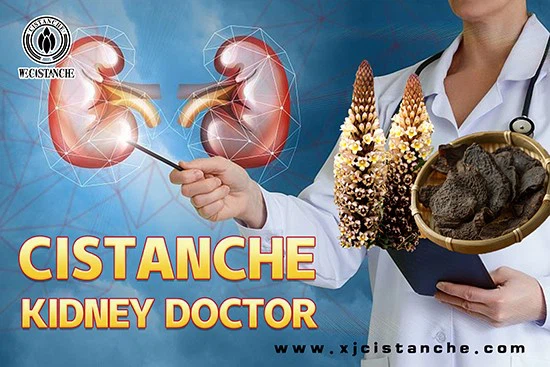
Effects of Cistanche: Improve Kidney Function
The nature and taste of Cistanche tubulosa are clearly recorded in ancient Chinese herbal literature. The "Shennong Bencao Jing" lists it as a top-grade product and records that it has a "sweet taste and a slight warmth". Although it is not explicitly classified as a classic, it has been mentioned that it is "responsible for five labor and seven injuries, tonifying the middle, nourishing the five organs, strengthening yin, and nourishing essence and qi", indirectly indicating its nourishing effect on the kidneys; The "Record of Famous Doctors" supplements its "salty taste" and clarifies its "return to the kidneys and colon meridian"; The Chinese Pharmacopoeia clearly records: "Cistanche tubulosa has a sweet and salty taste, and a warm nature. It belongs to the kidney and large intestine meridians. It has the effects of tonifying kidney yang, nourishing essence and blood, moistening the intestines and promoting bowel movements." Among them, "sweet and warm" is the core of its medicinal taste, and "entering the kidney meridian" is the main target of its efficacy. The two complement each other and jointly achieve the unique advantage of Cistanche tubulosa in "tonifying the liver and kidney, nourishing essence and blood".
Analysis of Cistanche tubulosa: its sweet and warm nature lays the foundation for tonifying the kidneys and nourishing essence
The core flavor of Cistanche tubulosa is "sweet and warm", with a salty taste. "Sweet and warm" is its core characteristic of warming and tonifying kidney yang and nourishing kidney essence, while salty taste assists in enhancing the effect of nourishing the kidney and essence. The synergistic effect of the two makes Cistanche tubulosa's nourishing effect gentle and long-lasting, avoiding the drawbacks of ordinary yang tonifying drugs such as "warming dryness and damaging yin".
(1) Sweet taste: nourishing and nourishing, harmonizing medicinal properties
In traditional Chinese medicine theory, the core efficacy of sweet taste is "tonifying, harmonizing, and relieving urgency". The Yellow Emperor's Inner Canon states: "Sweet herbs nourish the organs, nourish qi and blood, and harmonize medicinal properties, making them suitable for regulating various deficiency syndromes. Cistanche tubulosa has a sweet taste, which allows it to fully exert its nourishing effect, directly tonifying kidney essence and nourishing kidney yang, while harmonizing its own warmth and avoiding excessive heat and dryness that can damage yin fluid.

Dragon Herbs cistanche-improve kidney function
Compared with other kidney yang tonifying herbs, the sweet taste of Cistanche tubulosa makes its nourishing effect gentler, not too harsh, and suitable for long-term regulation. For example, although Fuzi and Cinnamon are also commonly used medicinal herbs for warming and tonifying kidney yang, they have a strong and intense nature, and although they have a strong ability to tonify yang, they are prone to consuming harmful yin fluids. They are only suitable for severe kidney yang deficiency and need to be used in combination with nourishing yin medicinal herbs. The sweet taste of Cistanche tubulosa can nourish Yin fluid and complement its warm nature, forming the characteristic of "warming yang without dryness, supplementing essence without stagnation". It can be used for both kidney yang deficiency and kidney essence deficiency, as well as mild and chronic deficiency.
In addition, the sweet taste of Cistanche tubulosa can also harmonize its medicinal properties. When combined with other medicinal herbs, it can alleviate the sharpness of other herbs, making the entire formula more peaceful in its medicinal properties. For example, when combined with hot medicinal herbs such as aconite and cinnamon, the sweet and warm nature of Cistanche tubulosa can alleviate its heat and dryness, avoiding damage to the spleen, stomach, and yin fluids; When combined with medicinal herbs such as Rehmannia glutinosa and Angelica sinensis, the sweet and warm nature of Cistanche tubulosa can prevent excessive nourishing of yin and the growth of dampness, achieving a balance of "nourishing yang without dryness and nourishing yin without greasiness".
(2) Warm nature: Warm kidney yang, dispersing cold and promoting pulse circulation
The core efficacy of warm medicinal herbs is "warming, dispelling cold, and promoting circulation", which can supplement the body's yang qi, dispel cold qi in the body, and is suitable for various diseases caused by insufficient yang qi and excessive cold pathogenic factors. Cistanche tubulosa has a warm nature, which directly targets the core pathogenesis of kidney yang deficiency. It can warm and supplement kidney yang, dispel kidney coldness, and restore the warm function of the kidneys.
Kidney yang is the fundamental source of yang energy in the human body, known as the "fire of the gate of life", responsible for warming the internal organs of the whole body and promoting the circulation of qi and blood. When the kidney yang is insufficient, the fire in the gate of life weakens, and the human body may experience symptoms such as chills, coldness in the limbs, cold and painful waist and knees, long and clear urine, and increased nocturia. Women may experience uterine cold infertility, dysmenorrhea, and uterine cold, while men may experience impotence, premature ejaculation, and cold limbs. The warm nature of Cistanche tubulosa can directly warm and nourish the fire of the life gate, enhance kidney yang, fundamentally improve the state of insufficient yang qi, and alleviate the above symptoms.
It is worth noting that the warmth of Cistanche tubulosa is not "hot and dry", but "mild and warm", which is closely related to its sweet taste. Ordinary warm yang medicines such as dried ginger and galangal have a hot and dry nature, and long-term use can easily damage yin fluids, leading to symptoms such as dry mouth and tongue, sore throat, etc; The sweet and warm nature of Cistanche tubulosa, with its ability to nourish and dispel cold, combined with its ability to warm and nourish the kidney yang without damaging the yin fluid, makes its warming and nourishing effects gentle and long-lasting. This is also the core reason why it is known as the "calming and nourishing agent". As stated in "Bencao Zhengyi," "Cistanche tubulosa is sweet and warm in taste, with a moist texture. It can warm and nourish kidney yang, nourish essence and blood, without the disadvantages of dryness and weakness. It is a good product for nourishing kidney yang, essence, and blood.
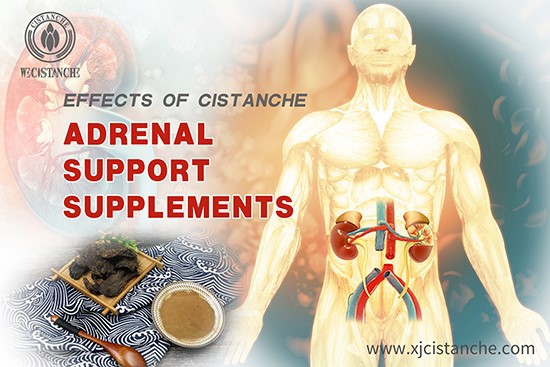
Effects of cistanche-Improve Kidney Function
Click here to view Cistanche for Kidney disease products
【Ask for more】 Email:cindy.xue@wecistanche.com / WhatsApp: 0086 18599088692 / Wechat: 18599088692
(3) Salty taste: Helps to nourish the kidneys, softens and nourishes dryness
In addition to its sweet and warm nature, Cistanche tubulosa also has a slight salty taste. Traditional Chinese medicine believes that "salty taste enters the kidneys". The Yellow Emperor's Inner Canon records: "Salty herbs can moisten the lower body, moisten the dryness of the kidneys, and soften, firm, and disperse lumps." Salty medicinal herbs can tonify the kidneys, nourish essence, soften, firm, and dry, combined with the sweet and warm nature of Cistanche tubulosa, further enhancing its kidney tonifying and essence nourishing effects, while also having the function of moistening the intestines and promoting bowel movements.
Salty taste enters the kidneys and can directly act on them, assisting in nourishing kidney essence with a sweet and warm nature, and enhancing the kidneys' ability to store essence. For symptoms such as soreness and weakness of the waist and knees, dizziness and tinnitus, premature graying of the beard, and memory loss caused by kidney essence deficiency, salty taste can synergize with sweet and warm nature to better nourish kidney essence and promote its generation and storage. In addition, the "moistening effect" of salty taste can moisten and smooth the intestines, relieve intestinal dryness and constipation caused by kidney yang deficiency and kidney essence deficiency. This is also an important reason why Cistanche tubulosa has the function of moistening the intestines and promoting bowel movements - when kidney yang is insufficient, the intestines lose warmth, and when kidney essence is deficient, the intestines lose nourishment, leading to dry and difficult bowel movements. On the other hand, the sweet and warm nature of Cistanche tubulosa warms and nourishes kidney yang and kidney essence, while the salty taste moistens and smooths the intestines. The synergy of the two can not only tonify the kidneys but also promote bowel movements, killing two birds with one stone.
Focus on the core: Entering the Kidney Meridian, directly targeting the pathogenesis of kidney yang and kidney essence deficiency
If the "sweet and warm" nature is the "material basis" for the tonifying kidney and nourishing essence of Cistanche tubulosa, then the meridian characteristic of "entering the kidney meridian" is the "targeted positioning" of its efficacy. Traditional Chinese Medicine believes that the meridian function of medicinal herbs determines the organs and meridians they act on. Medicinal herbs that enter the Kidney Meridian mainly act on the kidneys, directly regulating their physiological functions and improving their imbalance. Cistanche tubulosa clearly enters the kidney meridian, which makes its warming and tonifying effects on kidney yang and nourishing kidney essence more precise. It can directly target the core pathogenesis of kidney yang deficiency and kidney essence deficiency, achieving "targeted regulation".
(1) The physiological functions and imbalanced manifestations of the kidney meridian

Effects of cistanche-Improve Kidney Function
The Kidney Meridian is an important component of the traditional Chinese medicine meridian system, which runs through the whole body and is closely connected to the kidneys. It is responsible for transporting qi and blood and regulating kidney function. The core physiological functions of the kidneys are "storing essence", "regulating water", and "regulating qi", among which "storing essence" is the most essential function. Kidney essence is divided into innate essence and acquired essence. Congenital essence comes from parents and is the source of human life; The essence of the day after tomorrow comes from the transportation of food, water, and grains, which is the material basis for maintaining daily life activities in the human body. Kidney yang is the yang energy of the kidneys, responsible for warming the kidney essence and promoting its circulation and utilization.
When the kidney meridian qi and blood are insufficient, and the kidney function is imbalanced, the main manifestations are kidney yang deficiency and kidney essence deficiency. For those with kidney yang deficiency, the fire in the vital gate weakens, the warming function decreases, and symptoms such as fear of cold, coldness in the limbs, cold and painful waist and knees, long and clear urine, frequent nocturia, uterine cold and non pregnancy, impotence and premature ejaculation occur; Individuals with kidney essence deficiency may experience symptoms such as soreness and weakness in the waist and knees, dizziness and tinnitus, premature graying of hair, decreased memory, mental fatigue, and reduced reproductive function due to insufficient kidney essence and decreased nourishing function. These two types are often interrelated. Prolonged deficiency of kidney yang can lead to deficiency of kidney essence, which can also affect the generation of kidney yang, forming a vicious cycle of "yang damage to yin, yin damage to yang".
(2) Cistanche tubulosa entering the kidney meridian: targeted effects of warming and tonifying kidney yang, and nourishing kidney essence
Cistanche tubulosa enters the kidney meridian, and its sweet and warm nature can directly act on the kidneys, regulating the imbalance of the kidneys in a targeted manner, achieving the effects of warming and tonifying kidney yang and nourishing kidney essence, while breaking the vicious cycle of "yang loss and yin, yin loss and yang", and achieving a balance between kidney yin and yang.
From the perspective of warming and tonifying kidney yang, after entering the kidney meridian, the warm nature of Cistanche tubulosa can directly warm and tonify the fire of the life gate, enhance the warming function of kidney yang, dispel the coldness in the kidneys, and improve symptoms such as fear of cold, limb coldness, and pain in the waist and knees caused by insufficient kidney yang. Compared with other warm yang medicinal herbs that enter the kidney meridian, the advantage of Cistanche tubulosa is that it is "warm but not dry". Its sweet taste can nourish yin fluids, avoid excessive warm yang and damage to kidney essence, and achieve the effect of "warming yang but not damaging yin". Modern pharmacological research has also confirmed that Cistanche tubulosa can promote the secretion of pituitary gonadotropins, prevent and treat the decrease in blood testosterone caused by exercise, accelerate fatigue recovery, which is consistent with its medicinal warming and tonifying kidney yang effects, and can prove its regulatory effect on kidney function from a modern medical perspective.

Effects of cistanche-Improve Kidney Function
From the perspective of nourishing kidney essence, after entering the kidney meridian, the sweet taste of Cistanche tubulosa can nourish kidney essence, while the salty taste can assist in nourishing kidney essence. The two work together to promote the generation and storage of kidney essence, improve symptoms such as waist and knee soreness, dizziness, tinnitus, and premature graying caused by kidney essence deficiency. The kidneys store essence, which can generate marrow and nourish bones and the brain. Therefore, the effect of Cistanche tubulosa on nourishing kidney essence can indirectly improve bone health and brain function, alleviate problems such as soreness and weakness in the waist and knees, muscle and bone weakness, and memory loss. In addition, Cistanche tubulosa contains a large amount of nutritional supplements such as amino acids, cysteine, vitamins, and minerals, which can effectively improve male sperm vitality and quality. This also provides material support for nourishing kidney essence and improving reproductive function.
It is worth emphasizing that the entry of Cistanche tubulosa into the Kidney Meridian is not simply to supplement yang or essence, but to "supplement both yang and yin, and balance the specimen". Its warm nature nourishes yang, sweet taste nourishes essence, salty taste nourishes dryness, and the combination of the three can not only warm and nourish kidney yang (symptomatic), alleviate the symptoms of insufficient yang qi, but also nourish kidney essence (fundamental), fundamentally restore the physiological function of the kidneys, and achieve a virtuous cycle of "nourishing yang to generate essence and supplementing essence to assist yang". This is also its core advantage compared to other kidney tonifying herbs.