The Association Between Senile Dementia And Kidney Deficiency, How Does Cistanche Tubulosa Resist Dementia?
May 26, 2026
Alzheimer's disease, commonly referred to as senile dementia in medicine, is a degenerative disease of the central nervous system with insidious onset and progressive development. Its clinical manifestations mainly include memory loss, cognitive impairment, and personality changes, which seriously affect the quality of life of the elderly. Currently, there is no cure for this condition. In traditional Chinese medicine theory, the onset of senile dementia is closely related to kidney deficiency, and Cistanche tubulosa, as a traditional kidney tonifying Chinese medicine, has been proven to have certain improvement effects on senile dementia with its various active ingredients. This article will systematically analyze the intrinsic relationship between senile dementia and kidney deficiency, clarify the core components and mechanisms of action in Cistanche tubulosa that are effective for senile dementia, and provide scientific reference for the prevention and treatment of senile dementia in traditional Chinese medicine.

Benefits of Cistanche tubulosa: Anti-Alzheimer's disease
The intrinsic correlation between senile dementia and kidney deficiency: the integration of traditional Chinese medicine theory and modern research
Although traditional Chinese medicine does not have a clear name for "senile dementia", based on its symptoms, it can be classified as "dementia", "forgetfulness", "dementia" and other categories. Many medical experts throughout history have believed that the core pathogenesis of Alzheimer's disease is closely related to "kidney deficiency", and as age increases, kidney deficiency becomes more pronounced, and dementia symptoms also worsen. This viewpoint is highly consistent with modern medicine's understanding of the pathogenesis of Alzheimer's disease.
From the perspective of traditional Chinese medicine theory, "the kidneys store essence, the main bone generates marrow, and the brain is the sea of marrow." Kidney essence is the source of maintaining human life activities and the material basis for normal brain function. In old age, when the kidney qi is naturally deficient, and the kidney essence is insufficient, the marrow sea loses nourishment, and the brain and orifices are obscured, leading to dementia symptoms such as memory decline, slow response, and delayed thinking. The Yellow Emperor's Inner Canon states: "At the age of forty, with half of the yin energy, daily life has declined; at fifty, weight, and lack of intelligence in the ears and eyes; at sixty, impotence, significant decline in qi, and unfavorable conditions in the nine orifices." It clearly points out that the deficiency of kidney qi and the decline of kidney essence in old age are physiological inevitabilities, and this physiological change is an important prerequisite for the onset of senile dementia. In addition, kidney deficiency can also lead to abnormal circulation of qi and blood, with phlegm turbidity and blood stasis endogenous, blocking brain meridians, further exacerbating brain marrow malnutrition, and accelerating the process of dementia.

Effects of cistanche-Improve Kidney Function
Modern medical research also provides evidence for this association. The core pathological features of senile dementia are beta amyloid deposition, excessive phosphorylation of Tau protein, and cholinergic neuron death, while individuals with kidney deficiency exhibit abnormalities in endocrine, immune function, and neurometabolism. Research has found that patients with kidney deficiency have reduced cerebral blood flow, decreased volume of the hippocampus (a brain area closely related to memory and cognition), and disrupted neurotransmitter secretion, which are highly consistent with the pathological changes of Alzheimer's disease. At the same time, kidney tonifying traditional Chinese medicine can regulate the neuroendocrine function of people with kidney deficiency, improve cerebral circulation, and protect neurons, which indirectly confirms the intrinsic relationship between kidney deficiency and senile dementia - kidney deficiency is an important physical basis for the onset of senile dementia, and senile dementia is one of the pathological manifestations of further development of kidney deficiency.
It should be clarified that the "kidney deficiency" referred to in traditional Chinese medicine is not simply a kidney organ disease, but a systemic functional state that covers the functional decline of multiple systems such as the nervous system, endocrine system, and immune system. This is consistent with the multi-system pathogenesis of senile dementia in modern medicine, and also provides a theoretical and practical basis for traditional Chinese medicine to prevent and treat senile dementia from the perspective of kidney tonifying.

Desert ginseng prevents Alzheimer's disease
Core components of Cistanche tubulosa: active substances effective in treating senile dementia
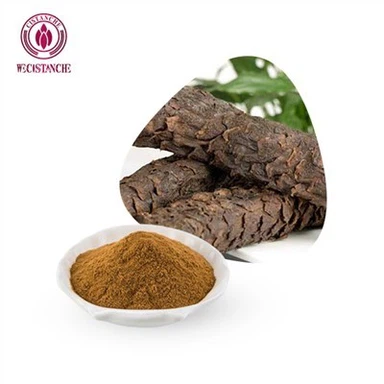
Cistanche tubulosa, also known as Jiangyun or Cunyun, is a dried, scaly, fleshy stem of Cistanche tubulosa or Guanhua Cistanche tubulosa, a plant in the family Liliaceae. It is a traditional and precious Chinese medicine for tonifying the kidneys. The "Shennong Bencao Jing" lists it as a top-grade herb, recording that it "mainly nourishes the five organs and seven injuries, replenishes the middle, removes cold and heat pain in the stem, nourishes the five viscera, regulates yin, and benefits essence and qi". The "Treatise on Medicinal Properties" also mentions its "benefits the marrow, enhances color, and prolongs life", indicating that its effects on tonifying the kidneys, essence, and brain marrow have long been recognized by medicine. Modern pharmacological research has found that Cistanche tubulosa contains various active ingredients, among which phenylethanolic glycosides and Cistanche tubulosa polysaccharides are the core components that improve Alzheimer's disease in the elderly. In addition, components such as betaine and lignin also have auxiliary effects.

herb cistanche
(1) Phenylethanoid glycosides: the core active ingredient of Cistanche tubulosa in anti dementia
Phenylethanolic glycosides (PhGs) are the most abundant and active class of components in Cistanche tubulosa, and are currently the most extensively studied anti dementia active substances. Among them, echinacoside (Ech) and verbascoside (Act) are the most important, and they are considered as the core indicators for evaluating the quality of Cistanche tubulosa. There are differences in the content of phenylethanoid glycosides in different varieties of Cistanche tubulosa. The content of pineal glycosides in Cistanche tubulosa is almost six times that of other varieties, and the variety of effective ingredients is more abundant, with a more significant anti dementia effect.
The improvement effect of phenylethanolic glycosides on Alzheimer's disease is mainly achieved through the following three pathways: firstly, inhibiting the deposition of β - amyloid protein and excessive phosphorylation of Tau protein, which are the core pathological processes of Alzheimer's disease. Research has found that echinacoside and verbascoside can reduce the accumulation of beta amyloid protein in the brain, prevent the formation of toxic plaques, and inhibit the abnormal phosphorylation of Tau protein, reducing the formation of neurofibrillary tangles, thereby protecting neurons from damage and delaying cognitive decline. The second is antioxidant and anti-inflammatory, reducing oxidative stress damage in the brain. Phenylethanolic glycosides contain abundant phenolic hydroxyl groups, and the more phenolic hydroxyl groups there are, the stronger their activity. They can clear excess free radicals in the brain, reduce malondialdehyde (MDA) content, increase superoxide dismutase (SOD) activity, and reduce oxidative stress damage to neurons. At the same time, it can also inhibit the inflammatory response in the brain, regulate immune function, reduce the stimulation of inflammatory factors on the brain network, and improve the microenvironment in the brain. The third is to regulate neurotransmitter secretion and improve brain function. Phenylethanolic glycosides can inhibit acetylcholinesterase activity, increase the level of acetylcholine (a neurotransmitter closely related to memory and cognition) in the brain, regulate the secretion of neurotransmitters such as serotonin and dopamine, improve the speed of brain information processing and executive function, and alleviate symptoms such as memory loss and delayed response.

Main Chemical Constituents of Cistanche
In addition, molecular docking studies have shown that phenylethanoid glycosides such as verbascoside have high affinity for AD-related core targets (such as ESR1, BDNF, MAPK1, APP, etc.), and can promote the expression of neurotrophic factor BDNF by regulating the cAMP signaling pathway, improve hippocampal neuronal damage, and further exert anti dementia effects.
(2) Cistanche polysaccharides: an important component that assists in improving cognitive function
Cistanche tubulosa polysaccharide (CDPS) is another important active ingredient in Cistanche tubulosa, composed of various monosaccharides, with good water solubility and biological activity. Its improvement effect on Alzheimer's disease is mainly reflected in two aspects. On the one hand, polysaccharides from Cistanche tubulosa have significant antioxidant capacity, which can clear free radicals in the brain, protect neurons from oxidative damage, and delay age-related memory decline. At the same time, it can also regulate the body's immune function, enhance the body's resistance, and reduce the impact of inflammatory reactions on brain function. On the other hand, polysaccharides from Cistanche tubulosa can promote the proliferation of neural stem cells in the hippocampus, increase synaptic plasticity, help repair damaged neurons, and improve the learning and memory functions of the brain. Animal experiments have shown that polysaccharides from Cistanche tubulosa can improve learning and memory impairment in AD model mice, enhance their water maze test scores, and reduce damage to hippocampal neurons.
(3) Other auxiliary components
In addition to phenylethanolic glycosides and polysaccharides from Cistanche tubulosa, Cistanche tubulosa also contains components such as betaine, lignin, amino acids, trace elements, etc. Although these components are not the core components of anti dementia, they can assist in enhancing the anti dementia effect. For example, betaine can regulate osmotic pressure in the body, protect nerve cells, and improve cerebral circulation; Lignin components have certain anti-inflammatory and antioxidant effects, and can synergistically exert neuroprotective effects with phenylethanolic glycosides and polysaccharides; The trace elements such as iron, manganese, zinc, and copper contained in Cistanche tubulosa participate in brain nerve metabolism and are of great significance in maintaining normal brain function.
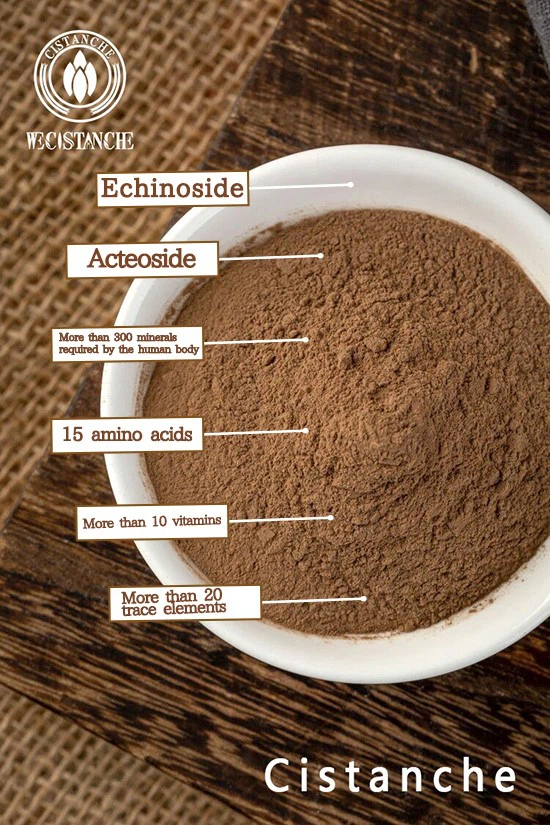
Main Chemical Constituents of Cistanche tubulosa
The advantages and precautions of Cistanche tubulosa in preventing and treating senile dementia
Based on the association between senile dementia and kidney deficiency, Cistanche tubulosa has become a commonly used traditional Chinese medicine for the prevention and treatment of senile dementia due to its effects of "tonifying kidney yang, nourishing essence and blood, and nourishing marrow sea". Its advantages are mainly reflected in two aspects: firstly, it can balance the sample, improve kidney deficiency constitution from the root, delay the dementia process, and directly protect neurons, improve cognitive function, and alleviate dementia symptoms through its active ingredients; Secondly, it has high safety. Modern research has shown that high-dose use of Cistanche tubulosa has no significant toxicity and is suitable for long-term moderate use by the elderly. Compared with Western medicine, it has fewer side effects and is more suitable for long-term regulation of elderly dementia patients.
It should be noted that the use of Cistanche tubulosa should follow the principle of syndrome differentiation and treatment. Its nature is warm, its taste is sweet and salty, and it belongs to the kidney and colon meridians. It is mainly suitable for elderly dementia patients with kidney deficiency, manifested as symptoms such as memory loss, soreness and weakness of the waist and knees, chills and coldness, and dry stools. For patients with constipation caused by excess heat and those with yin deficiency and excessive fire, caution should be taken to avoid exacerbating the symptoms. In addition, the processing method of Cistanche tubulosa will affect its effective ingredient content. After being roasted with alcohol, the content of phenylethanolic glycosides in Cistanche tubulosa will increase, which has a better anti dementia effect and can avoid the drawbacks of diarrhea caused by slippery intestines in raw products. When using, it is recommended to consume 3-5 grams per day, which can be fried or combined with ingredients such as walnut kernels and black sesame seeds to improve brain microcirculation and enhance anti dementia effects. Continuous use should not exceed three months, and traditional Chinese medicine practitioners should be consulted for diagnosis and guidance before use.
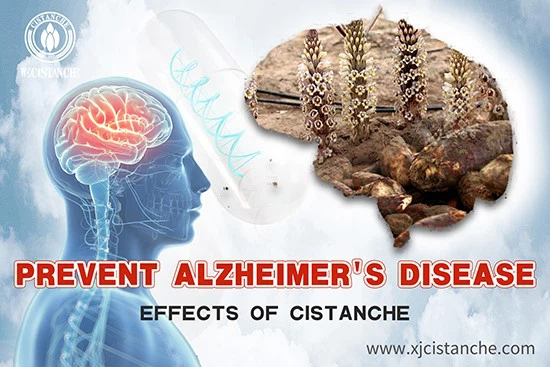
Benefits of Cistanche tubulosa: Anti-Alzheimer's disease
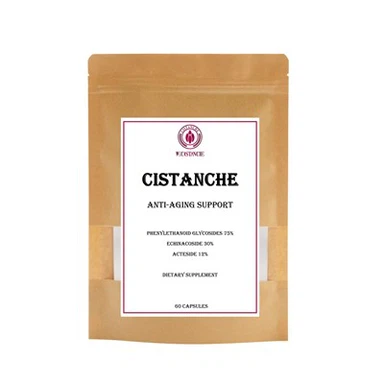
Click here to view Cistanche Improving Memory and Preventing Alzheimer's Disease products
【Ask for more】 Email:cindy.xue@wecistanche.com / WhatsApp: 0086 18599088692 / Wechat: 18599088692
There is a close intrinsic relationship between Alzheimer's disease and kidney deficiency. Kidney deficiency is an important physical basis for the onset of Alzheimer's disease, and the core pathogenesis is the loss of nourishment in the marrow and obstruction of phlegm and blood stasis. As a traditional Chinese medicine for tonifying the kidney and nourishing essence, Cistanche tubulosa contains active ingredients such as phenylethanolic glycosides (such as pineal glycoside and verbascoside) and Cistanche polysaccharides, which can protect neurons, improve cognitive function, and have significant auxiliary preventive and therapeutic effects on Alzheimer's disease by inhibiting the deposition of β - amyloid protein, antioxidant, anti-inflammatory, and regulating neurotransmitters.
With the aging of the population, the incidence rate of Alzheimer's has increased year by year, which has brought a heavy burden to families and society. As a natural anti dementia ingredient and medicinal herb, the anti dementia mechanism of active ingredients in Cistanche tubulosa has been confirmed by multiple studies, providing new ideas and directions for the prevention and treatment of senile dementia. In the future, further in-depth research is needed on the mechanism of action of active ingredients in Cistanche tubulosa, optimizing extraction processes, and developing more efficient and safe anti dementia products. At the same time, combined with traditional Chinese medicine syndrome differentiation and treatment, the advantages of Cistanche tubulosa in nourishing the kidneys and marrow should be fully utilized to safeguard the cognitive health of the elderly.