The Difference And Efficacy Of Sliced Cistanche Deserticola, Enzyme Killing Slices, And Regular Slices
May 16, 2025
Cistanche deserticola: a 'treasure' in the desert

chinese herb cistanche
In the field of health preservation and nourishment, Cistanche deserticola has always occupied a unique and important position, known as the "desert ginseng". This parasitic plant that parasitizes the roots of the desert plant Salix is extremely picky about its growth environment and is mainly distributed in desert areas such as Inner Mongolia, Gansu, Ningxia, and Xinjiang in China. It grows tenaciously in the harsh desert environment, absorbs the essence of the earth, and matures after several years. It is a precious gift from nature to mankind.
Cistanche deserticola is rich in various beneficial components for the human body, such as echinacoside, verbascoside, polysaccharides, etc. These ingredients endow Cistanche deserticola with powerful nourishing effects, with significant effects in tonifying kidney yang, nourishing essence and blood, moistening intestines, and promoting bowel movements. For people with insufficient kidney yang and deficiency of essence and blood, Cistanche deserticola can effectively improve their symptoms such as fear of cold, soreness and weakness of waist and knees, impotence and premature ejaculation, infertility, etc; Rich dietary fiber can promote intestinal peristalsis, help alleviate constipation problems in middle-aged and elderly people, and improve their quality of life. It is precisely because of these outstanding effects that Cistanche deserticola has been highly praised by doctors since ancient times and widely used in traditional Chinese medicine clinical practice and folk health preservation.
With the increasing awareness of health among people, the market demand for Cistanche deserticola is growing day by day. For the convenience of preservation and consumption, Cistanche deserticola is often processed into slices. Among the numerous slices of Cistanche deserticola, enzyme-killing slices and regular slices are the two most common types, with significant differences in production process, appearance, nutrient retention, and taste when consumed. Next, let's delve into these two types of slices to make more informed decisions when choosing.

Drying of Cistanche deserticola
Ordinary slicing: presentation of traditional craftsmanship
The production process of sliced ordinary Cistanche deserticola is relatively simple and is a more traditional processing method. In the past, due to technological and equipment limitations, this process was widely used, and even in modern times, it still has a certain market share due to its simple operation and low cost.
The production process is roughly as follows: first, the excavated Cistanche deserticola is preliminarily cleaned to remove impurities such as sediment attached to the surface. This step may seem simple, but it requires operators to be careful to ensure that impurities on the surface of Cistanche deserticola are thoroughly removed, so as not to affect subsequent processing and product quality. After cleaning, the Cistanche deserticola is sliced directly, usually using simple knives or slicing equipment to cut the Cistanche deserticola into slices of varying thickness. The thickness of slices is often influenced by the experience and technical level of operators, making it difficult to ensure that the thickness of each slice is uniform and consistent. Subsequently, these slices will be placed in a natural environment for air drying, using sunlight and natural wind to remove moisture from the Cistanche deserticola slices. In clear and well-ventilated weather, the drying process of Cistanche deserticola slices may take several days or even weeks to reach the appropriate level of dryness. If encountering rainy weather, the drying time will be further extended, and the Cistanche deserticola slices are also prone to mold in humid environments, leading to a decrease in quality.
However, this traditional manufacturing process has some obvious flaws. Cistanche deserticola contains abundant active ingredients, such as echinacoside and verbascoside, which are key to its nourishing effects. But in the process of making ordinary slices, especially in the natural drying stage, the hydrolytic enzymes inside Cistanche deserticola will be activated under suitable temperature and humidity conditions. These hydrolytic enzymes will launch an "attack" on the active ingredients in Cistanche deserticola, breaking them down and causing a significant decrease in the content of active ingredients in the final ordinary slices. Research has shown that the retention rate of active ingredients such as echinacoside and verbascoside in ordinary Cistanche deserticola slices may be reduced by more than 50% compared to fresh Cistanche deserticola, which undoubtedly greatly weakens the originally powerful nourishing effects of Cistanche deserticola.
Ordinary slices also face many challenges in storage. Due to the lack of special treatment during its production process to inhibit microbial growth and enzyme activity, ordinary slices are highly susceptible to environmental factors during storage. When the environmental humidity is high, sliced Cistanche deserticola is like a "moisture absorbing sponge", quickly absorbing moisture from the air, becoming moist and soft, providing a breeding ground for microorganisms such as mold. Once the mold begins to grow and reproduce, the sliced Cistanche deserticola will exhibit mold growth, with black, green, or white mold spots on the surface. This not only affects the appearance but also produces harmful substances, causing the sliced Cistanche deserticola to lose its edible value. If the storage environment temperature is high, the oil and other components in the sliced Cistanche deserticola may undergo oxidation and rancidity, producing a pungent odor and further reducing its quality.

Drying of Cistanche deserticola
Enzyme inactivation slicing: technology empowered sublimation
Enzymatic slicing is a new type of processing technology for Cistanche deserticola slices that has emerged with the development of modern technology. Its emergence has brought revolutionary changes to the processing and utilization of Cistanche deserticola. Compared with ordinary slices, enzyme-killing slices have more complex and refined production processes, fully reflecting the powerful power of technology in the field of traditional Chinese medicine processing.
The production of enzyme-killing slices begins with the selection of raw materials, and only fresh and high-quality Cistanche deserticola can enter the subsequent processing stages. After being picked, these fresh Cistanche deserticola will be quickly sent to the production workshop to ensure their freshness and the integrity of their active ingredients. Next, the staff will use professional cleaning equipment to thoroughly clean the Cistanche deserticola, removing surface impurities and dirt, and providing clean raw materials for subsequent processing. After cleaning, the Cistanche deserticola will be accurately sliced into thin slices with uniform thickness. This process is usually completed by high-precision slicing equipment, which can ensure that the thickness error of each Cistanche deserticola slice is controlled within a very small range, which is beneficial for subsequent enzyme inactivation and drying treatment.
Enzyme inactivation is the core process of the entire manufacturing process, and currently, microwave inactivation technology is mainly used. Microwave is an electromagnetic wave with a frequency between 300 MHz and 300 GHz, which can interact with water molecules and enzyme molecules in Cistanche deserticola. When the sliced Cistanche deserticola is placed in a microwave field, water molecules quickly absorb the energy of the microwave, producing intense vibrations and friction, thereby causing the temperature inside the Cistanche deserticola to rise rapidly in a short period. During this process, enzymes such as hydrolytic enzymes in Cistanche deserticola will lose their activity due to high temperatures, making it impossible to further decompose and destroy the active ingredients in Cistanche deserticola. This technology, which utilizes microwave energy to achieve rapid and efficient enzyme inactivation, can accurately inactivate enzymes without significantly affecting other nutrients in Cistanche deserticola, maximizing the preservation of its natural characteristics and efficacy.
After enzyme inactivation, the sliced Cistanche deserticola will be sent to a low-temperature drying equipment for drying treatment. Unlike the natural drying of regular slices, this low-temperature drying method can quickly remove moisture from the sliced Cistanche deserticola at lower temperatures, avoiding the loss of active ingredients and quality degradation caused by high temperatures and prolonged drying. Meanwhile, low-temperature drying can also reduce the risk of microbial growth, further ensuring the quality and safety of the product. After drying, the sliced Cistanche deserticola undergoes strict quality testing and screening. Only slices that meet the quality standards will be packaged and marketed to ensure that every enzyme-killing slice purchased by consumers has high quality and stable efficacy.
This advanced manufacturing process enables enzyme-killing slices to demonstrate outstanding advantages in multiple aspects. In terms of nutrient retention, enzyme-killing slices are outstanding. Research data shows that enzyme-killed slices can retain 98% of active ingredients such as echinacoside and verbascoside, which is a world of difference compared to ordinary slices. Ordinary slices, due to the significant loss of active ingredients, have greatly reduced their nourishing effects, while enzyme-killing slices can fully utilize the kidney tonifying Yang, nourishing essence and blood, moistening intestines, and promoting bowel movements of Cistanche deserticola, bringing consumers a better health experience.
In terms of storage performance, enzyme-killed slices also performed well. Due to the inactivation of enzymes in the enzyme-killing slices, the growth and reproduction of microorganisms have been effectively inhibited, which makes the enzyme-killing slices more stable during storage and less susceptible to environmental factors. Whether in humid southern regions or northern regions with large temperature changes, enzyme-killed slices can maintain good quality for a long time, and are less prone to problems such as mold and oxidation, providing consumers with more convenient and long-lasting storage options.

reddit cistanche
Click here to view Cistanche for Kidney disease products
【Ask for more】 Email:cindy.xue@wecistanche.com / WhatsApp: 0086 18599088692 / Wechat: 18599088692
Comparison between the two: the data speaks for itself
To gain a more intuitive understanding of the differences between enzyme-killing sections and regular sections, we may compare and analyze them using specific data.
In terms of the content of active ingredients, as mentioned earlier, during the production process of ordinary slices, the retention rate of active ingredients such as echinacoside and verbascoside is relatively low due to the decomposition effect of hydrolytic enzymes. Related research data shows that the retention rate of these key active ingredients in ordinary Cistanche deserticola slices is usually only between 20% and 50%. And with advanced microwave enzyme inactivation technology, the retention rate of active ingredients in the enzyme killing section has been successfully increased to over 98%. This means that consuming the same weight of sliced Cistanche deserticola can provide the human body with several times more effective nutrients than regular slices, which has significant advantages in nourishing kidney yang, nourishing essence, and blood. For example, if the nourishing effect of regular slices is the warm swallowing effect of slow simmering over low heat, then enzyme-killing slices are the rapid attack of high heat and quick frying, which can meet the human body's nutritional and health needs faster and more effectively.
In terms of storage time, ordinary slices have a relatively short shelf life due to their susceptibility to microbial growth, oxidation, and other factors. Under normal storage conditions, the shelf life of ordinary Cistanche deserticola slices is generally only about 6-12 months. Over time, ordinary slices will gradually develop problems such as mold, discoloration, and odor, leading to a decrease in quality and ultimately losing their edible value. Due to the enzyme inactivation and low-temperature drying treatment, the microbial growth and enzyme activity of the enzyme slices have been effectively inhibited, greatly improving their storage stability. Under the same storage conditions, the shelf life of enzyme-killed slices can be extended to 2-3 years or even longer. For consumers, this not only means that purchasing once can last longer and reduce the hassle of frequent purchases, but also reduces the risk of food waste caused by improper storage.
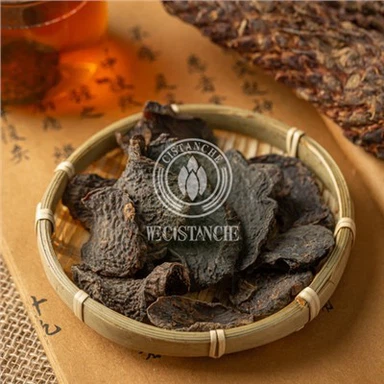
From the perspective of appearance and color, ordinary slices often become uneven in color during natural drying due to factors such as sunlight and air. Some parts have darker colors, while others have lighter colors, resulting in a dull overall color. Moreover, as the storage time increases, the color of ordinary slices will further deepen, and even blackening may occur. In contrast, due to the precise process control used in the production of enzyme-killed slices, the thickness of the slices is uniform, and the color presents a relatively consistent light yellow or light brown, with a bright color. Even after long-term storage, the color of the enzyme-killed slices can remain relatively stable without significant changes, giving people a visual impression of excellent quality and freshness as before.
In terms of taste, there are also certain differences between the two. Ordinary slices, due to their rough drying method, often have a hard texture. When consumed, whether chewed directly or used for brewing tea or soup, it takes a long time to soak or stew them to make them soft and easy to eat. Moreover, after a long period of natural drying, the original fresh and tender taste and unique aroma of ordinary slices will be lost, and the taste will be relatively poor and not strong enough when consumed. During the low-temperature drying process, the enzyme-killing slices effectively preserve the original texture and taste of Cistanche deserticola, which is relatively soft and easier to chew when consumed. Using enzyme-killed slices to brew tea can quickly release the aroma and taste of Cistanche deserticola. The tea soup is clear and transparent, with a rich and smooth taste. When used to make soup, enzyme-killing slices can be quickly integrated into the soup, making the soup more delicious and leaving a lasting aftertaste.

Cistanche deserticola slice
How to choose: discerning goods with keen eyes
After understanding the difference between enzyme-killed slices and regular slices, how to select high-quality Cistanche deserticola slices has become the most concerned issue for everyone. Faced with the dazzling array of sliced Cistanche products on the market, we can start from the following aspects to cultivate a pair of keen eyes and select truly high-quality Cistanche slices.
Firstly, reviewing product certification is an important step in ensuring product quality. Legitimate sliced products of Cistanche deserticola should have relevant quality certifications, such as organic certification, green food certification, etc. These certifications signify that the product strictly adheres to relevant standards and specifications during production and processing, ensuring the quality and safety of the product from the source. For example, sliced Cistanche deserticola that has obtained organic certification does not use chemical fertilizers, pesticides, growth regulators, or other synthetic substances during the planting process, following natural laws and ecological principles to ensure the natural purity of Cistanche deserticola. We can also pay attention to whether the product has passed the testing of third-party testing institutions, and check the various indicators in the testing report, such as the content of active ingredients, heavy metal content, pesticide residue, etc., to ensure that the product meets the quality requirements.
Understanding the origin and brand cannot be ignored. The quality of Cistanche deserticola is closely related to its production area, and natural conditions such as climate and soil in different production areas can have a significant impact on its growth and quality. The Alxa region of Inner Mongolia, with its unique desert environment, has become a high-quality production area for Cistanche deserticola. The Cistanche deserticola here has thick and oily flesh, high content of active ingredients, and superior quality. Choosing sliced Cistanche deserticola from high-quality production areas such as Alxa often provides better quality assurance. Famous brands usually invest more in product quality control, production process research and development, and have stricter quality standards and a comprehensive after-sales service system. Brands such as Tongrentang and Fudonghai have rich experience and good reputation in the field of processing Cistanche deserticola, and their sliced Cistanche deserticola is highly trusted by consumers in the market.
Observing the appearance of slices is an intuitive method for selecting slices of Cistanche deserticola. High-quality slices of Cistanche deserticola should have uniform thickness, indicating the use of advanced equipment and fine craftsmanship during the slicing process, which can ensure that the thickness error of each slice of Cistanche deserticola is controlled within a very small range. Slices with uniform thickness not only look more aesthetically pleasing, but also release the nutritional components of Cistanche deserticola more evenly during subsequent consumption, ensuring consistency in the effectiveness of consumption. If the slice thickness is uneven, it may lead to insufficient content of effective ingredients in some slices, affecting the nourishing effect. Color is also an important indicator for judging the quality of sliced Cistanche deserticola. Good sliced Cistanche deserticola has a natural color, appearing light yellow or light brown. This is a reflection of the natural color of Cistanche deserticola, indicating that it has not undergone excessive processing during processing and has retained its original quality. If the color of the slice is too bright or dim, it may be due to staining or other factors affecting the quality.
Smelling is also one of the effective methods to judge the quality of sliced Cistanche deserticola. Authentic sliced Cistanche deserticola has a special medicinal aroma, which is fresh and pleasant, with a slight sweetness, and is the unique scent of Cistanche deserticola itself. If you smell a musty, sour, or other pungent odor, it indicates that the sliced Cistanche deserticola may have been contaminated or spoiled during storage, and such slices should not be purchased. Some unscrupulous merchants may use sulfur fumigation to mask the odor of sliced Cistanche deserticola. Slices of Cistanche deserticola that have been sulfur-smoked may have a pungent sulfur smell, which is harmful to human health. We can put the sliced Cistanche deserticola in a sealed bag for half an hour, and then open it to smell the odor. This will make the odor more noticeable and help us distinguish the authenticity and quality of the slices.

Cistanche deserticola slice
Proper consumption: maximize effectiveness
After understanding the types and selection methods of sliced Cistanche deserticola, it is also crucial to master the correct consumption methods to fully utilize the nourishing effects of Cistanche deserticola. There are various ways to consume sliced Cistanche deserticola, each with its unique flavor and characteristics. You can choose according to your preferences and needs.
One of the most convenient ways to consume sliced Cistanche deserticola is to soak it in water. Take 3-5 grams of sliced Cistanche deserticola, put it in a cup, brew it with boiling water, cover it for 5-10 minutes, and then it can be consumed. This method is simple and easy to implement, suitable for enjoying anytime in busy daily life. The water brewed from Cistanche deserticola has a faint fragrance and sweetness, with a rich and mellow taste. It can be brewed repeatedly until the water tastes lighter. During work breaks, soaking a cup of Cistanche deserticola in water can not only replenish water, but also have a health-promoting effect.
Cistanche deserticola infused wine is a traditional way of consumption that is deeply loved by many people. Put 50-100g sections of Cistanche deserticola into 1000 ml of high Baijiu, and soak them in a sealed container for 15-30 days. During the soaking process, the active ingredients in Cistanche deserticola gradually dissolve into the wine, giving it a rich medicinal aroma and unique taste. Drinking 15-30 milliliters per day can have the effect of tonifying the kidneys, strengthening yang, and enhancing physical fitness. It should be noted that drinking alcohol should be moderate. Excessive drinking not only causes harm to the body, but may also affect the nourishing effect of Cistanche deserticola. Minors, alcohol allergy sufferers, pregnant women, and individuals taking other medications should avoid drinking Cistanche deserticola-infused liquor to prevent adverse reactions.
Using sliced Cistanche deserticola to make soup is also a good choice. Whether paired with ingredients such as chicken, pork ribs, or lamb, it can create a nutritious and delicious soup. When making soup, first slice the Cistanche deserticola and put it together with other ingredients in the pot, add an appropriate amount of water, bring it to a boil over high heat, then reduce the heat and simmer for 1-2 hours. This can fully integrate the effective ingredients of Cistanche deserticola into the soup, making the nutritional value of the soup higher. A family sits together and drinks a steaming bowl of Cistanche deserticola soup, which not only warms the body but also nourishes health.
Slicing Cistanche deserticola and cooking Congee with rice is a nutritious and delicious breakfast choice. First, wash the sections of Cistanche deserticola, put them into the pot together with the washed rice, add a proper amount of water, and cook until the rice is soft and rotten into Congee. You can add a proper amount of rock sugar or honey to flavor the Congee according to your taste to increase its sweetness and taste. Cistanche Congee is not only easy to digest and absorb, but also plays the role of tonifying the kidney and yang, moistening the intestines, and relieving constipation. It is especially suitable for middle-aged and elderly people and people.
There are also some precautions to remember when eating sliced Cistanche deserticola. Cistanche deserticola is warm, and excessive consumption may cause internal heat, leading to symptoms such as dry mouth and tongue, sore throat, and dry stools. Therefore, when consuming, it is important to pay attention to moderation and control the amount of food according to individual physical condition and constitution. Cistanche deserticola has the function of moistening the intestines and promoting bowel movements. Consuming it may worsen diarrhea symptoms for diarrhea sufferers, so it should be avoided during diarrhea. People with yin deficiency and excessive fire may have insufficient yin fluid in their bodies and excessive yang energy. Consuming the warm and yang-promoting ingredient Cistanche deserticola may further exacerbate the symptoms of yin deficiency and excessive fire, which is not conducive to their health and should not be consumed. Pregnant and lactating women must consult a doctor before consuming sliced Cistanche deserticola, as its nourishing properties may have potential effects on fetuses or infants. It is important to ensure safety before consumption.
There are significant differences in the production process, effective ingredient retention, storage performance, appearance, color, and taste between the enzyme-killed slices and ordinary slices of Cistanche deserticola. Although ordinary slices have the simplicity of traditional craftsmanship and a relatively simple production process, the loss of effective ingredients is severe, and they are prone to spoilage during storage, resulting in many shortcomings in quality and efficacy. And with the help of modern technology, enzyme-killed slices retain the effective ingredients of Cistanche deserticola to the greatest extent possible through precise microwave enzyme killing technology and low-temperature drying process, extending the shelf life and outperforming it in quality and taste.
In today's pursuit of health and quality, when choosing sliced Cistanche deserticola, enzyme-killed slices are undoubtedly a wiser choice. It can provide us with richer nutrition and stronger nourishing effects, allowing us to better enjoy the health benefits brought by the desert treasure of Cistanche deserticola. Of course, everyone's needs and budget are different. If you only consume occasionally and do not have particularly high requirements for the efficacy of Cistanche deserticola, and place more emphasis on cost-effectiveness, then regular slices can also be an affordable choice. But if you want to achieve the best health benefits by consuming Cistanche deserticola for a long time to regulate your body, then enzyme-killing slices are your best choice.