The Hidden Fat in Your Liver: How Cistanche Tubulosa Supports Metabolic Liver Health
Sep 18, 2026
Fatty liver disease was once a condition associated with heavy drinking. Today, it is increasingly diagnosed in people who rarely or never drink alcohol. Non-alcoholic fatty liver disease now affects an estimated 25–30% of adults worldwide, and it has become the most common chronic liver condition in developed countries. It begins silently, with fat accumulating in hepatocytes-the liver's primary functional cells-often without symptoms. For some, it remains stable. For others, it progresses to steatohepatitis, fibrosis, and cirrhosis. The driving forces are metabolic: insulin resistance, visceral obesity, and chronic low-grade inflammation. There is no approved pharmaceutical treatment. The management relies on weight loss, dietary change, and exercise. But the cellular mechanisms of the disease are increasingly well understood, and they are targetable by botanical compounds. Cistanche tubulosa, through its active ingredients echinacoside and acteoside, is demonstrating the ability to address the core metabolic and inflammatory drivers of fatty liver disease.
Why Fat Accumulates in the Liver
The liver is the body's central metabolic hub. It processes nutrients, synthesizes proteins, detoxifies harmful substances, and stores energy. When the supply of fatty acids exceeds the liver's capacity to oxidize them or export them as very-low-density lipoproteins, triglycerides accumulate in cytoplasmic lipid droplets. This is steatosis, the first stage of fatty liver disease.
Three sources contribute to this overload. First, dietary fat delivered from the intestine via chylomicron remnants. Second, free fatty acids released from insulin-resistant adipose tissue-visceral fat that has become resistant to insulin's signal to store fat, releasing it into the bloodstream instead. Third, de novo lipogenesis-the synthesis of new fatty acids from excess glucose within hepatocytes themselves. In insulin-resistant individuals, high insulin levels drive this pathway, converting sugar into fat.
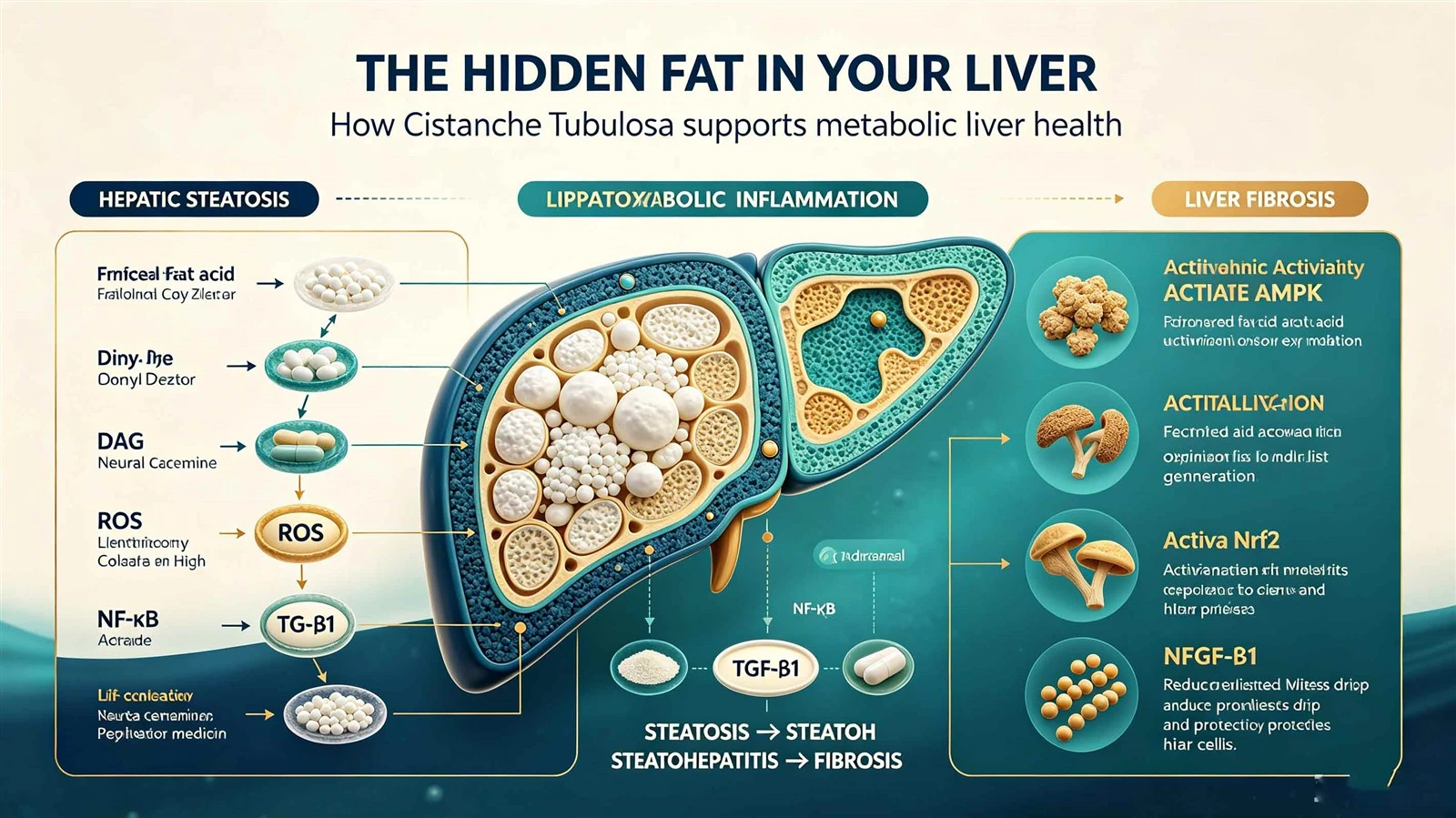
Steatosis alone is relatively benign. The damage begins when lipid accumulation triggers lipotoxicity. Excess free fatty acids and their metabolites-diacylglycerol, ceramides-activate inflammatory and apoptotic pathways. Mitochondria become overloaded, generating excess reactive oxygen species. The resulting oxidative stress activates NF-κB, which drives the production of TNF-α, IL-6, and IL-1β, recruiting inflammatory cells and triggering hepatocyte injury. Simultaneously, transforming growth factor-beta 1 activates hepatic stellate cells, initiating the fibrotic process. This transition from steatosis to steatohepatitis is the critical step in disease progression.
How Cistanche Tubulosa Supports Metabolic Liver Health
1. Activating AMPK to Reduce Lipogenesis and Enhance Fatty Acid Oxidation
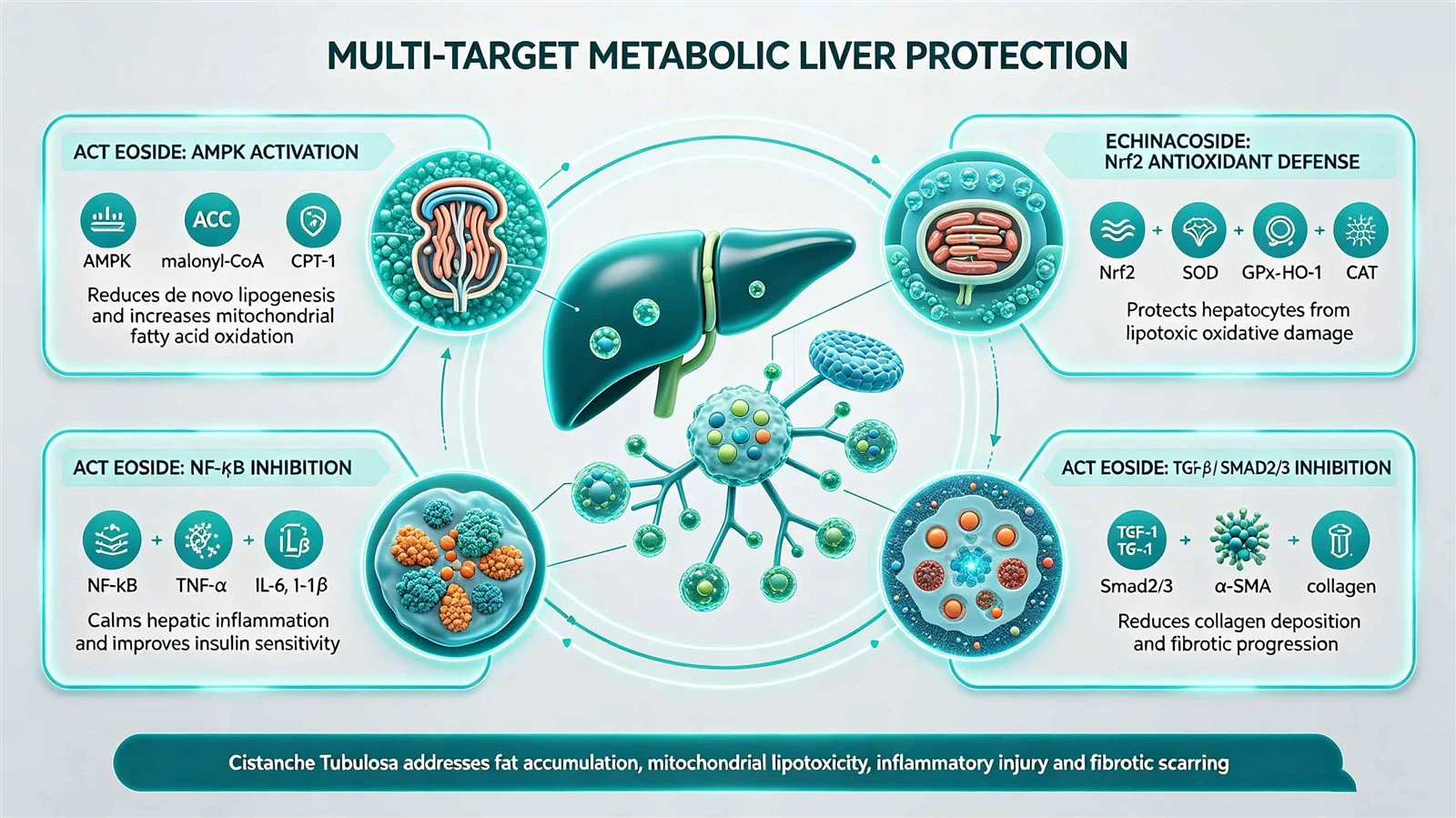
AMPK is the liver's master metabolic switch. When activated, it phosphorylates and inhibits acetyl-CoA carboxylase, reducing the production of malonyl-CoA-the building block for fatty acid synthesis. This simultaneously reduces de novo lipogenesis and releases the inhibition on carnitine palmitoyltransferase-1, the enzyme that transports fatty acids into mitochondria for oxidation. The net effect is less fat production and more fat burning. Acteoside is a potent AMPK activator, and this mechanism is central to its anti-fatty liver activity. In animal models of high-fat diet-induced fatty liver, acteoside treatment significantly reduced hepatic triglyceride content, decreased liver weight, and improved serum lipid profiles. Histological examination showed a marked reduction in lipid droplets within hepatocytes, indicating reversal of steatosis.
2. Activating Nrf2 to Protect Hepatocytes from Lipotoxic Oxidative Damage
Lipotoxicity is fundamentally an oxidative stress problem. Excess free fatty acids overwhelm the mitochondrial beta-oxidation machinery, causing electron transport chain dysfunction and a surge of ROS. These ROS damage mitochondrial membranes, activate inflammatory pathways, and trigger hepatocyte apoptosis. Echinacoside, through Nrf2 activation, upregulates the liver's endogenous antioxidant defenses-glutathione, superoxide dismutase, heme oxygenase-1, and catalase-that neutralize the ROS before they can cause cellular injury. By protecting mitochondria from lipotoxic damage, echinacoside helps maintain the hepatocyte's capacity for fatty acid oxidation and prevents the transition from simple steatosis to steatohepatitis.
3. Suppressing NF-κB to Calm Hepatic Inflammation
The inflammatory transition from steatosis to steatohepatitis is driven by NF-κB activation in hepatocytes and Kupffer cells. Pro-inflammatory cytokines-TNF-α, IL-6, IL-1β-recruit additional immune cells, amplify hepatocyte injury, and worsen systemic insulin resistance. Acteoside, through its potent NF-κB inhibition, suppresses the production of these cytokines. In animal models of steatohepatitis, acteoside treatment reduced hepatic inflammatory infiltrates, lowered serum transaminase levels, and improved liver histology. The anti-inflammatory effect also has systemic benefits: by reducing the inflammatory cytokines released by the steatotic liver, acteoside helps improve whole-body insulin sensitivity, breaking the metabolic-inflammatory vicious cycle.
4. Inhibiting TGF-β1 to Prevent Fibrosis
Fibrosis is the most prognostically important complication of fatty liver disease. It is driven by TGF-β1, which activates hepatic stellate cells, transforming them into collagen-producing myofibroblasts. Acteoside has been shown to inhibit the TGF-β1/Smad2/3 signaling pathway, reducing collagen deposition and preventing the architectural distortion of the liver. In models of hepatic fibrosis, acteoside treatment significantly reduced collagen content, preserved liver structure, and decreased the expression of fibrotic markers including alpha-smooth muscle actin and type I collagen.
5. Improving Systemic Metabolic Parameters
Because fatty liver disease is a component of metabolic syndrome, the systemic benefits of Cistanche's active ingredients are highly relevant. AMPK activation improves insulin sensitivity in muscle and adipose tissue. Nrf2 activation reduces systemic oxidative stress. NF-κB inhibition reduces systemic inflammation. These combined effects improve glycemic control, lipid profiles, and blood pressure-all of which contribute to the metabolic environment that sustains fatty liver disease.
A comprehensive 2022 review in Frontiers in Pharmacology catalogs the hepatoprotective, metabolic, anti-inflammatory, and anti-fibrotic properties of Cistanche tubulosa, confirming its multi-targeted utility in metabolic liver disease. (Frontiers in Pharmacology review)
The Active Ingredients for Liver Metabolism
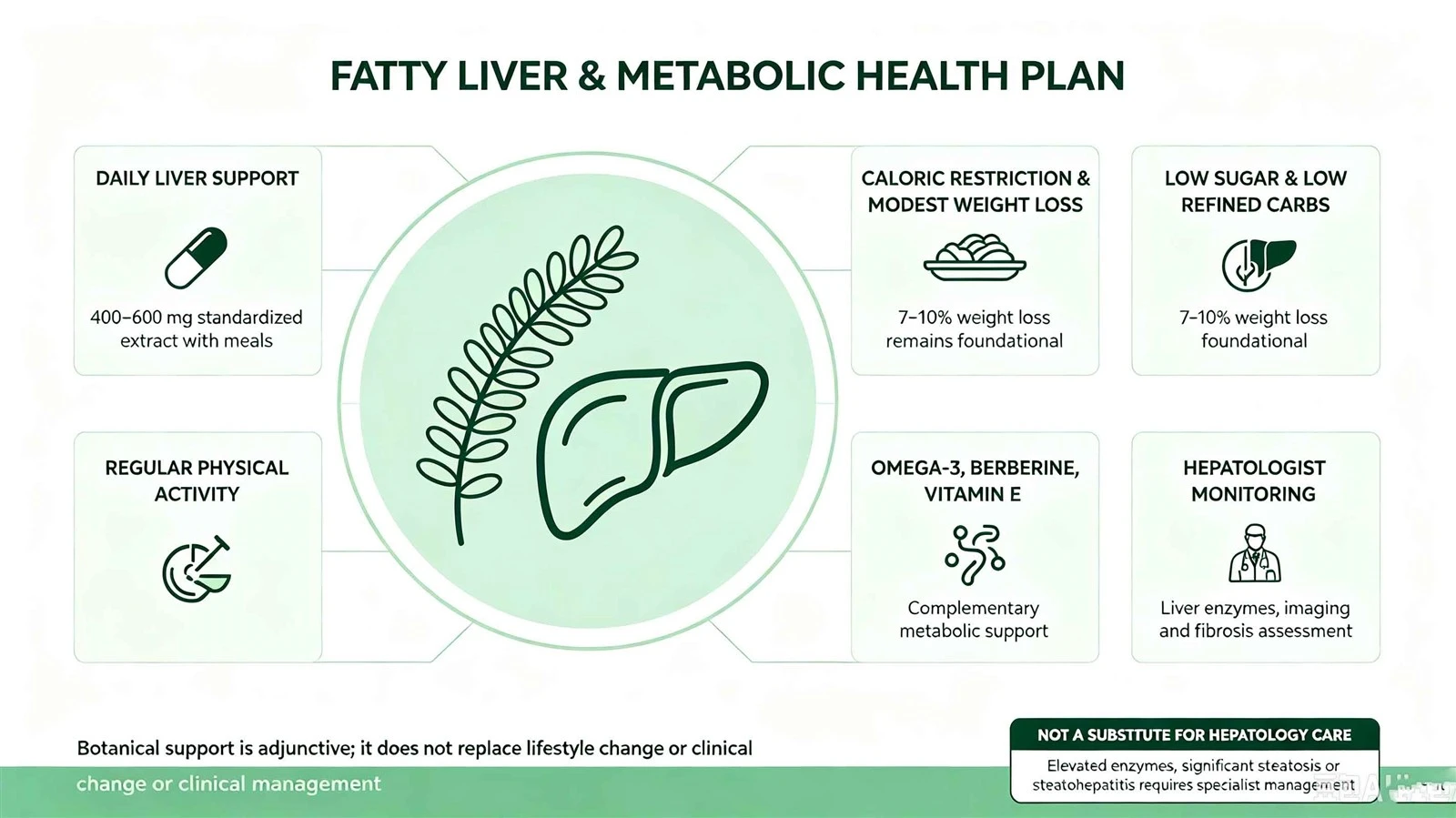
The metabolic liver benefits are driven by echinacoside and acteoside. Acteoside is the primary AMPK activator, NF-κB inhibitor, and TGF-β1 suppressor. Echinacoside is the primary Nrf2 activator and mitochondrial protector. A standardized extract containing 20–40% total phenylethanoid glycosides is essential. The evidence-informed dose for liver support is 400–600 mg daily, taken with a meal.
Integrating Cistanche for Fatty Liver Management
Fatty liver disease is fundamentally a lifestyle disease. Weight loss of 7–10% is the most effective intervention for reducing hepatic steatosis and inflammation. Cistanche should be used as an adjunct to, not a replacement for, a hypocaloric, low-sugar, low-refined-carbohydrate diet and regular physical activity. The extract pairs well with other metabolic-supportive nutrients: omega-3 fatty acids reduce hepatic lipid synthesis; berberine is another AMPK activator with documented anti-fatty liver effects; and vitamin E has shown benefit in non-diabetic steatohepatitis patients. Consistency over months is required to see meaningful improvements in liver enzymes, hepatic fat content, and metabolic parameters.
For those seeking reliable, research-grade liver support, we offer Cistanche tubulosa extract products with verified active ingredient content.
Safety and Medical Context
Cistanche tubulosa is well tolerated with a centuries-long safety record. It does not cause the gastrointestinal side effects associated with some metabolic medications. However, fatty liver disease can progress to cirrhosis and hepatocellular carcinoma if unmanaged. Anyone with elevated liver enzymes, significant hepatic steatosis on imaging, or diagnosed steatohepatitis should be under the care of a hepatologist. This botanical is a supportive and preventive tool for early fatty liver disease and metabolic syndrome, not a substitute for medical diagnosis or treatment.