Therapeutic Effect And Mechanism Of Ligusticum Wallichii Extraction And The Prescription On Testosterone Inducted 57 HairL/6 B Cin C
Oct 31, 2022
ABSTRACT:
OBJECTIVE To observe the effects of the local application of Ligusticum wallichii extract and its compound extract (including Ligusticum wallichii, Cistanche, Ginger, Platycladus orientalis, Ginseng, Salvia miltiorrhiza, Polygonum multiflor/6 on C57Llorum) seborrheic alopecia model mice and then explore the mechanisms involved in it.
METHODS The seborrheic alopecia model of C57BL/ 6 mice were inducted by applying testosterone solution on the back for 21 days. After the treatment of difference concepts Ligusticum wallichii extract and its contract extract, the length and coverage of new hair in micce were evaluated th. hair gtr Skin Moisture, oil and temperature changes were measured by skin test. The histological changes such as skin thickness, hair follicle shape and size of the mice in each group were measured by microscope. The levels of α-MSN, TGF-β1 and VEGF in the skin of mice after
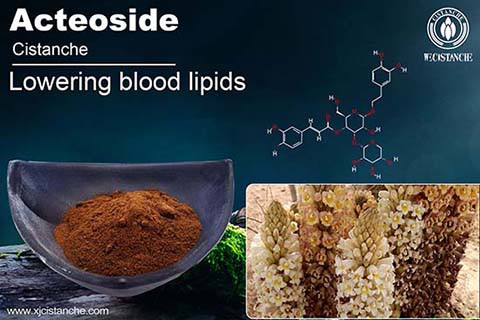
Administration were detected by ELISA.
RESULTS The alcohol extract of Ligusticum wallichii promoted the hair grown of alopecia mice, and the effect of the low-dose group was better than that that of the high-dose group and the compound formula group. The results of moisture, oil and temperature values shown that the skin moisture of the model mice was reduced, the oil content was incr, the temple was slightly increased. After treatment, the water content, oil content and temperature of mice returned to normal values. Histological results showed that Ligusticum wallichii and its compound form could increase the skin thickness and numb
hair follicles in mice's growth phase. Moreover, high and low doses of Ligusticum wallichii and the compound formula could promote the contents of α-MSN, TGF-β1 and VEGF in mice skin to different extent.
CONCLUSION The topical application of traditional Chinese medicine Ligusticum wallichii can promote hair growth in mice with androgenetic alopecia l by restoring moi and temperature in alopecia model mice, and increasing skin VEGF, α-MSN, and TGF-β1.
KEY WORDS: Ligusticum wallichii; C57BL/6mice; seborrheic alopecia; testosterone
Traditional Chinese medicine believes that the formation of hair loss is related to the deficiency of liver and kidney and the weakness of blood qi. Many traditional Chinese medicines have the functions of nourishing liver and kidney, nourishing essence and blood, cooling blood and promoting blood circulation, and are often used for alopecia and leukoplakia. Chuanxiong has the characteristics of warm nature, pungent taste, and slightly bitter taste. It was first recorded in "Shen Nong's Materia Medica", and it can be used in combination with other medicines to promote blood circulation, promote qi, expel wind and relieve pain [7]. Other traditional Chinese medicines such as ginger have the functions of relieving the exterior and dispelling cold, warming the middle and relieving vomiting, warming the lungs and relieving cough [8]; Polygonum multiflorum nourishes blood and replenishes essence [9]
Arborvitae leaves cool blood and black hair [9-10]; Salvia miltiorrhiza promotes blood circulation, dispels blood stasis and relieves pain[11];
. Modern research has found that many traditional Chinese medicine compounds or single prescriptions can promote the growth of hair follicles and hair, and have a significant effect on hair loss. Some traditional Chinese medicines can inhibit the activity of 5α-reductase, have anti-inflammatory, antibacterial, antioxidant and other physiological activities, all of which help prevent hair loss. Since the active ingredients of traditional Chinese medicine have mild effects and have both nutritional and curative effects, they have been used more and more in hair-growth cosmetics in recent years [13].
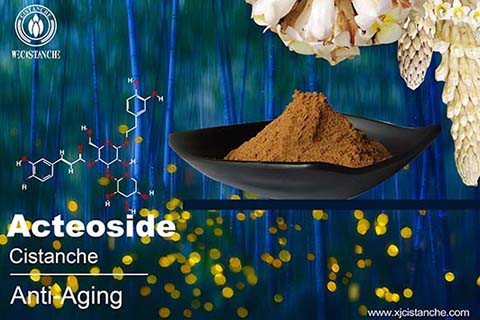
Cistanche Anti-aging
In this experiment, the AGA model was established on C57BL/6 mice by applying testosterone on the back, and the effects of Chuanxiong extract and compound formula (including Chuanxiong, ginger, oriental orientalis leaf, ginseng, Salvia miltiorrhiza, Polygonum multiflorum) on it and its effects were studied. mechanism in order to provide new ideas for the development of new preparations and new formulations for the prevention of hair loss.
1 Materials
1.1 Reagents and drugs
Chuanxiong, Ginger, Cistanche, Arborvitae, Panax ginseng, Salvia miltiorrhiza and Polygonum multiflorum were purchased from CHENGDU WECISTANCHE BIOTECH; Testosterone (Lot: 58-22-0) was purchased from Ron Reagent Company; Minoxidil Tincture (Lot: 20210615) was purchased from Zhejiang Wansheng Pharmaceutical Co., Ltd.; anhydrous ethanol (batch number: 2021-12-1) was purchased from Jindong Tianzheng Fine Chemical Reagent Factory; chloral hydrate (batch number: 302-17-0) was purchased from McLean Reagent Company; α - Melanocyte-stimulating hormone (α-MSH) kit was purchased from CUSABIO Reagent Company (batch number: N20016218); Transforming growth factor-β1 (TGF-β1) kit was purchased from Signalway Antibody Reagent Company (batch number: 211230); Vascular Endothelial Growth Factor (VEGF) kit was purchased from Signalway Anti-body Reagent Company (lot number: 211230).

Cistanche Snack
1.2 Instruments
Microplate reader (Thermo Fisher Scientific), EG1160 embedding machine (Leica, Germany); Tissue-Tek® GlasTM 6410 automatic closed-type sealing machine (Sakura, Japan); YD-AB spreader (Jinhua Yidi Medical Equipment Co., Ltd.); 1/100,000th analytical balance (sartorius, MSX), ultrasonic cleaning machine (KQ-100 type), skin tester (Fuxi), heating mantle (PTHW HEAT-ER) , Optical microscope (BX53, Olympus), rotary evaporator, tissue homogenizer (KFBIO), centrifuge (Cence, H1650R).
1.3 Animals
C57BL/6 mice (SPF class), male, 5-6 weeks old, physical
The amount of 18-22 g was provided by the Experimental Animal Center of Southern Medical University, license number: SCXK (Guangdong) 2016-0041.
2 Experimental method
2.1 Preparation of medicinal solution
For the extract of Chuanxiong (single drug), weigh the medicinal materials of Chuanxiong, add 4 times the amount of 75% ethanol (v/v), and heat under reflux for extraction for 4 h. For the compound extract, weigh Chuanxiong, ginger, arborvitae leaves, ginseng, Salvia and Polygonum multiflorum (the ratio is 1:1:1:1:1:1) and add 4 times the amount of 75% ethanol (v/v) to reflux for extraction 4 hours. The single drug and compound extracts were filtered with gauze to remove the residual drug residues and concentrated in a rotary evaporator. The Chuanxiong extract was concentrated to 1 g·mL-1 (including crude drug), as the high-dose group of Chuanxiong; before use, the high-dose group was diluted to 0.5 mg·mL-1 as the low-dose group of Chuanxiong. For Chuanxiong, Ginger, Arborvitae, Panax ginseng, Danshen and Polygonum multiflorum compound group, concentrated to 1 g·mL
-1 (including the total amount of crude drugs). Store the prepared extract in a refrigerator at 4 °C.

Cistanche improve testosterone
2.2 Modeling
Except for the blank group, C57BL/6 mice in other groups were anesthetized by intraperitoneal injection of chloral hydrate (4%, w/v), and the back hair was removed with depilatory cream at a dose of 10 mg·kg.
-1 dose of testosterone was smeared on the back of mice for 21 days. After 21 days, when the back of the mouse was smooth and pink and the hair no longer grew, the modeling was considered successful.
2.3 Animal grouping and administration
C57BL/6 (SPF grade) male mice were randomly divided into 6 groups, with 6 mice in each group, which were stored in separate cages and numbered [blank group, model group, minoxidil positive group, low-dose chuanxiong group, and high-dose chuanxiong group. , Compound group (Chuanxiong: Ginger: Arborvitae: Ginseng: Salvia: Polygonum multiflorum = : 1: 1: 1: 1: 1)].
After successful modeling, the mice in the model group were not given administration; the other groups of mice were smeared with 0.3 mL of minoxidil solution (2%), high and low doses of Chuanxiong extract and compound formulations on their backs, respectively. For 12 days, once a day. After administration, the backs of the mice were covered with an appropriate size of plastic wrap to prevent the loss of the drug solution from the back. During the administration period, the hair growth on the backs of the mice in each group was observed and recorded every day.
2.4 Determination of new hair length and coverage
On the 8th, 10th and 12th days of administration, 10 hairs were randomly extracted from each mouse, and the length of the hair (mm) was measured with a ruler. The promotion effect EE1 (Enhancing effect) is calculated according to the following formula:
Boosting effect (hair length) =
Hair length (administered group)
Hair Length (Model Set)
Formula (1)
In formula (1), the hair length (administration group) is the mean value of the newly born hair length of mice in each medication group (n = 6); the hair length (model group) is the mean value of the newly born hair length of mice in the control (model) group ( n = 6).
On the 4th, 8th and 12th days of administration, the area covered by the newly born hair on the back of the mice was calculated by imageJ software, and the hair coverage (%) and the promotion effect EE2 were calculated according to the following formula:
Hair Coverage (%) = Hair Area Back Depilation Area
Formula (2)
Promotion effect (hair coverage rate) = hair coverage rate (administration group) hair coverage rate (model group)
In formula (3), the hair area in formula (2) is the area covered by the newly born hair on the back of the mouse, and the depilated area on the back is the area of the entire shaved area on the back of the mouse; in formula (3), the hair coverage (administration group) is the area of each The average percentage of new hair coverage in the administration group (n = 6), and the hair coverage (control group) was the average value of the percentage of new hair in the control (model) group (n = 6).
2.5 Determination of skin moisture, oil and temperature
After the 12-day treatment of mice, a skin tester (Fuxi) was used to measure and record the moisture, oil and temperature values of the back skin of the mice, to investigate the different effects of testosterone and drugs on these skin indicators, and to evaluate the effect of drugs on the AGA model mice. the therapeutic effect.
2.6 Histological observation of mouse skin
After 12 days of treatment, the mice were sacrificed, the back skin was immediately removed, fixed with 4% paraformaldehyde solution, dehydrated, embedded in paraffin, sectioned, stained with hematoxylin-eosin (HE), and the stained slices were placed in a fully automatic The skin structure, thickness changes and hair follicle growth of mice in different groups were observed by scanning in a slide scanner (KFBIO).
2.7 Determination of α-MSH, TGF-β1 and VEGF factors in mouse skin
α-MSH, TGF-β1 and VEGF factors were operated according to the relevant instructions of Mouseα-MSH kit, Mouse TGF-β1 kit and Mouse VEGF kit, respectively.
2.8 Statistical processing method
SPSS 21.0 statistical software was used for statistical analysis, and the experimental data were expressed as mean ± standard deviation (x ± s).
Support:
wallence.suen@wecistanche.com