What is cistanche and what are the benefits of cistanche?
Mar 09, 2022
For more information:ali.ma@wecistanche.com
Xing Xuejun, Diao Zhimin, Xu Zhengze
Keywords: Cistanche; chemical composition; pharmacological effects; application value
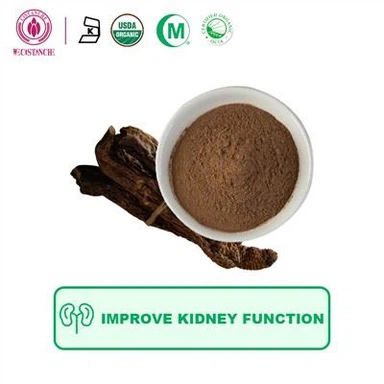
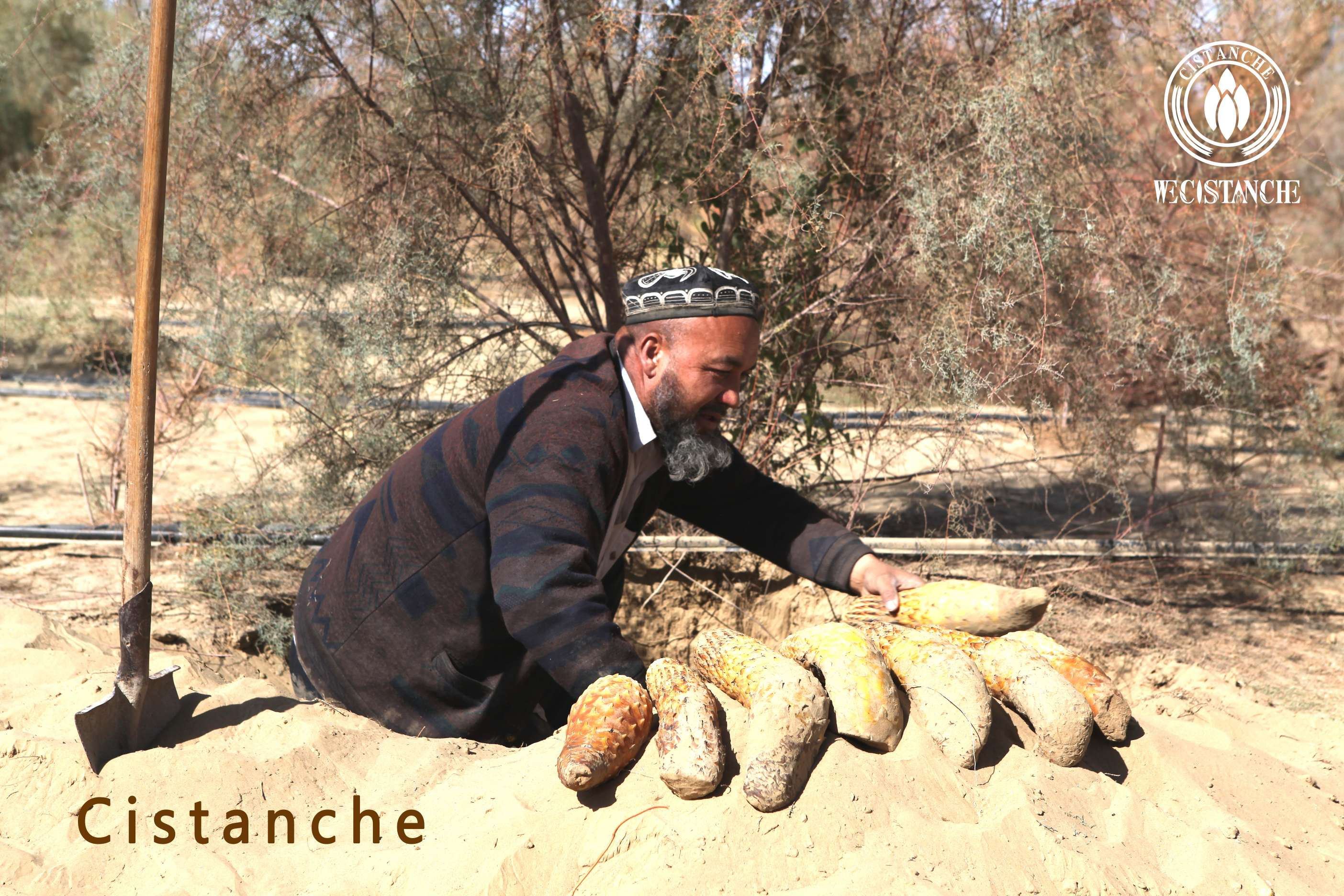
Cistanche (Herba Cistanche) is a fleshy stem with dry scaly leaves of a Cistanche plant in the Cistanche genus of the Orobanchaceae, also known as goblins, golden bamboo shoots, Dragon herb, and Dayun. Cistanche has a history of nearly two thousand years of use in my countries. Cistanche is ranked the second tonic herb just after ginseng, it has the name of "desert ginseng". Cistanche has high medical values and has been widely used in the treatment of men's sexual dysfunctions such as impotence and premature ejaculations etc. Modern pharmacological studies also confirm that cistanche has the effects such as protecting neurons from damages caused by ischemia and ischemic reperfusion, protecting livers from damages caused by excessive drinking, nourishing kidneys so as to improve sexual function, treating infertility, anti-aging, anti-oxidation, and anti-tumor, etc.
Click to Cistanche in Urdu products
In recent years, the research, development, and utilization of Cistanche has become one of the hot spots in the field of traditional Chinese medicine. Japan uses the Cistanche as an ameliorating or therapeutic agent for stress dysfunction to treat various dysfunctions. Especially sexual dysfunction and amnesia, and it is believed that they also have a preventive or therapeutic effect on psychosomatic diseases, and the phenylethanoid glycoside extracted from cistanche are widely used in cosmetics. Asian countries began to use Cistanche to treat elderly chronic constipation and eliminate uterine tumors clinically. At the same time, cistanche is also a very effective herb that can help with anti-aging. Therefore, protecting Cistanche and its host plants (sand-protecting plants), and using advanced technology for reasonable development and utilization, are of great significance for promoting the environmental management of western deserts and desert areas and improving the level of traditional Chinese medicine.
1 Main geographical distribution of Cistanche in China
The original plant of Cistanche is a parasitic plant of the genus Cistanche. There are about 20 species in the world. There are 6 species and 1 variety in my country, namely: Cistanche (Cistanche deserticola YC Ma.), Halo-Cistanche Salsa, Cistanche Tubulosa (Schenk) R. Wight], Cistanche Deserticola (C. Sinensis G. Beck), Cistanche, and 1 variety of white flower Cistanche salsa. Mainly distributed in 36 north latitudes. ~37. , East and West across provinces such as Inner Mongolia, Shaanxi, Gansu, Qinghai, Ningxia, and Xinjiang. Mainly produced in Inner Mongolia (Ulan Buhe Desert, Tengger Desert, Badain Jaran Desert), Xinjiang (Taklimakan Desert and Gurbantong Ancient Desert), Gansu (Hexi Corridor Sandy Land), Qinghai (Guide, Dulan), Golmud, Delingha, Ulan) and Ningxia. Mainly born in saline-alkali land, dry river ditch, sandy land, Gobi, desert environment, it has certain cold and drought resistance. In Qinghai, there is mainly meat from pureed and salted Cistanche.
2 Cistanche biological characteristics
2.1 Botany characteristics
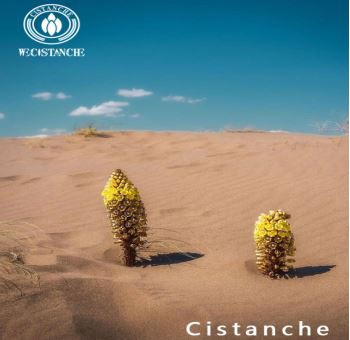
Cistanche mainly grows in an extremely arid climate, strong sunshine, annual precipitation less than 250mm, drastic changes in cold and heat, heavy wind and sand, poor soil development, medium-fine sand, thin soil layer, coarse texture, neutral or partial alkali In the Gobi and desert environments with high salinity and lack of organic matter. The plant is 15~70cm high and the stem is bright yellow, unbranched, 1.5~2.2cm in diameter, gradually thicker from the base. The lower leaves are dense, triangular in shape, 0.6~lcm long, 4-8mm wide, nearly glabrous on the surface, and sparse on the upper part, lanceolate, 0.5~2cm long, and 5-6mm wide. Terminal spikes, length 5~15cm, diameter 4-6cm; bracts are lanceolate, length 1.6~2cm, width 3~7mm, pubescent, with dense margins; bracteoles shorter than calyx, gradual at base narrow. The corolla is simple bell-shaped, light yellow, often turns dark blue when dried, 2.2 ~ 3cm long, densely growing in a circle of long pilose where the filaments are inserted, the top is 5-lobed, the lobes are nearly round or semicircular, and the length is 6 ~8mm, width 0.6~1.2cm, whole edge. The ovary is ovoid, 6-7mm long, 3mm wide, lateral membrane placenta 2, style slightly longer than flower's silk, nearly glabrous, stigma spherical. The sprouting fruit is a long ovoid ellipsoid, with a length of 1-1.5cm and an H diameter of about 1cm, at the base of the persistent style. The seeds are oblong and spherical, many, brown after drying, with a net-like surface; the length of the seeds is about 0.4mm (diameter 0.69-1.2mm), and each fruit has about 450 seeds. Flowering from May to June. Fruit period from June to August.

2.2 Reproductive characteristics
Cistanche has fully developed reproductive organs, cucurbits are oval, each fruit has about 450 seeds, and the seed diameter is 0.3~1.0 mm. The thousand-grain weight is 0.09g, which is about 10,000 seeds per gram. The seed has a longer lifespan. The seeds have to go through two winters in the natural environment before their embryos can complete the post-maturation process. After the seeds have matured, when they fall near the host roots, the new root tips of the host’s new roots penetrate the seed coat from the seed hole of the Cistanche seed, secrete chemicals, induce the embryo cells to enter an active state and absorb the nutrients provided by the endosperm. The end of the seed hole forms a sucker, and together with the host root, it protrudes out of the seed coat from the end of the seed hole. When the sucker grows to 1~3cm, its front end extends into the host root. After the host obtains a source of nutrients, the sucker gradually shrinks and is The seed coat falls off together, and the bud primordium differentiates at the end away from the root of the host, which later develops into a Cistanche plant, and its stem expands into fleshy.
3 main chemical components
In recent years, many analyses and studies have been conducted on the chemical composition of meat ring paste at home and abroad. Mycelium strata contain trace alkaloids and crystalline neutral substances. Cistanche's fat-soluble components include 6-Methyl indole and 3-Methyl-3-ethyl hexane (3-Methyl-3- ethyl-hexane), 4,6-Dimethyl dodecane (4,6-Dimethyl dodecane), 2••Methyl-5-propyl nonane (2-Methyl-5 -prove nonane), 3,6-Dimethyl undecane, Hetpadecane, Nonadecane, Eicosane, Heni -cosine) and so on. The water-soluble components N, N-dimethyl glycine (N, N-Dimethyl glycine), and Betaine, Sitosterol, Daucosterol, Triacontanol are obtained from Cistanche (Triacontanol), Caffeic Acid Sugar Ester (Acteoside), 8-Epilog-organic acid (8-Epilog-organic acid), Mannitol, Stearic acid (stearic acid), 2-Noncosone (2- Nonacosanone), Bis-2-Ethylhexyl-phthalate (Bis-2-Ethylhexyl-phthalate). Various types of substances have been separated, such as phenylethanoid oxides, medulla, volatile Ingredients, lignans, polysaccharides, alkaloids, etc.
4 The old biological function and medicinal value of Cistanche
4.1 The medicinal value of Cistanche
Cistanche has been used as Chinese herbal medicine for more than 1800 years in China. According to Professor Tu Pengfei, School of Pharmacy, Peking University School of Medicine, Cistanche has unique anti-oxidation, anti-aging, anti-radiation, and immune regulation, strengthening physical strength, promoting wound healing, and protecting ischemia. The Cistanche improves digestive function, improve memory, and other medicinal functions. In modern Chinese medicine, Cistanche is often used to treat impotence, infertility, waist and knee weakness, muscle weakness and intestinal dryness, constipation, etc. Its main function is to invigorate the kidneys and yang and improve learning and memory. It is commonly referred to as the treatment of Alzheimer’s, which is to invigorate the kidneys. The most frequently used drugs in aphrodisiac prescriptions have a very high incidence in power-increasing prescriptions. In addition, it has more than a dozen effects such as anti-fatigue, anti-oxidation, and liver protection.

4.2. Ecological benefits of cistanche
The artificial inoculation of Cistanche first provides nutrition for the host, so that the host has enough nutrition for a certain period of time so that its root system has good growth conditions and forms a healthy and huge root system, which not only makes the host grow vigorously, but also At the same time, it provides good growth conditions for plants such as sand rice and cotton prickly, which increases the coverage of desert plants, reduces the hazards of wind and sand, and prevents desertification. Cistanche is mainly parasitized on sandy shrubs such as Haloxylon ammodendron and Ticulata Chinensis. It absorbs and accumulates nutrients through the roots of the host. After completing its life cycle, it shrinks and decays and returns to the soil as humus, which can improve the soil and form looseness after decay The pits are conducive to the planting and regeneration of the host and the infiltration of precipitation and surface runoff. It provides the host with certain water and nutrient conditions, promotes the growth and development of the host, and improves the wind-proof and sand-fixing effect of the desert bush plants. At the same time, the fleshy stems of Cistanche also nourish some beasts, birds, and insects in the sandy area. These animals play a certain role in maintaining the natural ecological balance of the sandy area. Comprehensive analysis shows that the development of artificial inoculation Cistanche is conducive to the growth of sand plants, and has the function of protecting and restoring desert vegetation and maintaining the balance of the desert ecosystem.
4.3 Economic benefits of cistanche
The inoculation time of Cistanche is generally from April to July each year. The first year is planted and the harvest begins in the third year. The main input for the first two years is the planting of Haloxylon ammodendron and the cost of labor and inoculation, on average per hectare. The investment is about 37,500 yuan, and it can be collected continuously for 15-20 years from the third year. There is no product in the first and second years. From the third year to the following 15-20 years, the average annual output of Cistanche fresh product per hectare is 1200~1800kg (about 160~240kg dry product), and the output value per hectare is 45000~60,000 yuan. The input-output ratio is (1:4.5)~(1:6). The short-term investment of Cistanche inoculated with Cistanche will benefit in the long-term and the economic rate of return is relatively high.
4.4 Social benefits of Cistanche
Cistanche on sandy land can expand the planting area of sandy plants such as Haloxylon ammodendron, Osmanthus, and Salina, wind-proof and sand-fixing, and protect farmland and grassland. It can also cultivate specialty products and increase economic income. The scientific and reasonable development and utilization of Cistanche has a positive effect on the development and utilization of desert land resources in the ecologically fragile Qinghai Province, the development of the sand industry economy, the promotion of farmers' income, and prosperity, and the improvement of the ecological environment.
References:
[1] Luo Tingbin, Chen Yaning, Ren Sui, et al. Research progress of Cistanche [J]. Arid Zone Research, 2002, 19(4): 56~58,
⑵ Lei Zaiquan. Chinese Materia Medica[M]. Shanghai: Shanghai Science and Technology Press, 2001.
[3] Chen Shaoshu, He Shenghu, Cao Xiaozhen, et al. Research progress of Cistanche pharmacology and chemical components [J]. Gansu Animal Husbandry and Veterinary Medicine, 2005, (3): 41 ~ 44.
[4] Chinese Pharmacopoeia Committee. Chinese Pharmacopoeia [M]. Beijing: Chemical Industry Press, 2005, 90.
[5]Lei Wa, Song Zhihong, Tu Pengfei. Progress in the research on the chemical constituents of Hawthorn from the genus Rouhuan[J]. Chinese Herbal Medicine, 2003, 34(5): 473~476.
[6] National Pharmacopoeia Commission, Pharmacopoeia of the People's Republic of China [M]. Beijing: China Medical Science and Technology Press, 2010.
[7]Tu Pengfei. Cistanche Industry and the Development of Western China [C]. Paper M of the First Cistanche Symposium, 2000.1-111.
[8] Li Sen, Wu Xin, Dong Xiaocheng, et al. Effect of Solanum elicitor on the amino acid content of Cistanche callus[J]. Northwest Pharmaceutical Journal, 1998, 13(6): 2471.
[9] Ma Hong, Tu Lizhu, Li Tianran, etc., Cistanche Embryology Research [J]. Journal of Inner Mongolia University (Natural Science Edition), 1997, 28(2): 219~221.