Transcriptome Analysis Of Polysaccharide Content Difference Between 2 Hosts Of Cistanche Deserticola
Mar 26, 2025
Abstract: Using Cistanche deserticola parasitizing two host plants (Haloxylon ammodendron and Atriplex canescens) as test materials, this study determined the polysaccharide content in C. deserticola from different hosts using the phenol-sulfuric acid method. Transcriptome sequencing and analysis of Haloxylon-Cistanche and Atriplex-Cistanche associations were conducted using the Illumina NovaSeq 6000 sequencing platform. The research focused on investigating transcriptome differences in C. deserticola from different hosts, screening key enzymatic genes involved in polysaccharide metabolism, and validating the selected genes through qRT-PCR verification. This study aims to provide a theoretical basis for exploring new host plants and genetic improvement of C. deserticola . The result showed that the polysaccharide content found in Atriplex quadriptera-C.deserticola was superior to that present in Haloxylon ammodendron-C. deserticola. Through comparative analysis of transcriptome, 14089 differentially expressed genes (DEGs) were screened from the fleshy stems of Atriplex quadriptera-C. deserticola and Haloxylon ammodendron-C. deserticola. The results of KEGG enrichment analysis revealed that these DEGs were most prominently enriched in pathways related to carbohydrate metabolism, galactose metabolism, amino acid metabolism, and fatty acid metabolism. Furthermore, a total of 26 DEGs were obtained from four pathways related to polysaccharide metabolism, among which the expression levels of βfructosidase gene and β-galactosidase gene in Haloxylon ammodendron-C. deserticola were significantly higher than those in Atriplex quadriptera-C. deserticola. The expression levels of UDP-glucose dehydrogenase gene and mannose-1-phosphate guanylate transferase gene in Atriplex quadriptera-C. deserticola were significantly higher than those in Haloxylon ammodendron-C. deserticola, which may be the key enzyme genes for regulating the difference of polysaccharide metabolism in C. deserticola.
Keywords Cistanche deserticola; transcriptome sequencing;hosts; difference of polysaccharide metabolism
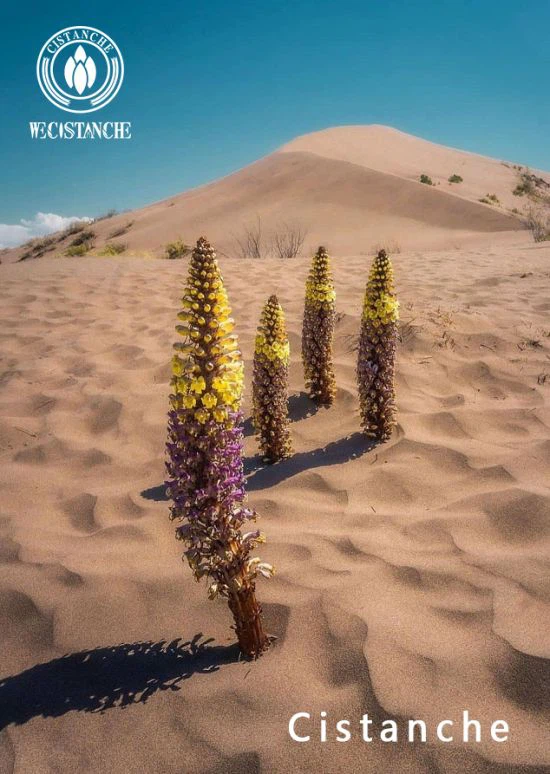
Cistanche deserticola
Cistanche deserticola Y. C. Ma, primarily distributed in Gansu, Xinjiang, Ningxia, and Inner Mongolia, is a traditional Chinese medicinal herb recently included in the "medicinal and food homologous" catalog. It has various health benefits, such as tonifying kidney yang, nourishing essence and blood, and promoting bowel movements, making it widely applied in medicine, healthcare, and the food industry[1]. Due to its heterotrophic nature, Cistanche deserticola parasitizes different host plants, with Haloxylon ammodendron and the newly introduced semi-evergreen shrub Atriplex canescens (Pursh) Nutt. being its primary hosts.
Polysaccharides are the key active substances in evaluating Cistanche deserticola quality. Under different host conditions, the accumulation and metabolic composition of Cistanche polysaccharides vary significantly[2]. Medical research has demonstrated that Cistanche polysaccharides possess antioxidant, neuroprotective, immune-regulating, and memory-enhancing pharmacological effects, effectively alleviating Alzheimer's disease, Parkinson's disease, and liver depression-induced spleen deficiency[3]. With advancements in modern extraction techniques and multi-spectrum analysis technologies, the content, composition, and structural characteristics of Cistanche polysaccharides are gradually being elucidated, expanding their applications.
In terms of molecular biology research on Cistanche species, transcriptome sequencing studies have mainly focused on Cistanche tubulosa and Haloxylon-Cistanche complex systems. For example, HOU et al.[4] performed full-length transcriptome sequencing and gene expression profiling of Cistanche tubulosa using PacBio and BGISEQ-500 RNA-seq technologies, identifying 237,772 unique transcripts and screening key enzyme genes involved in phenylethanoid glycoside biosynthesis. Similarly, FENG et al.[5] conducted transcriptomic and metabolomic analyses of the haustoria and adjacent tissues of Haloxylon roots and Cistanche fleshy stems, revealing the role of the host in the accumulation of Cistanche metabolites. Their study emphasized that the host plant not only affects the yield of Cistanche but also its quality. However, research on Cistanche parasitizing different host plants remains limited.
Atriplex canescens, a deep-rooted and highly stress-resistant plant, differs from the traditional Haloxylon host and originates from the semi-arid plateaus of the central United States. In recent years, it has been introduced and promoted as a new host for Cistanche deserticola cultivation in Northwest China. An Qing et al.[6] analyzed and compared the polysaccharide accumulation of Cistanche parasitizing Haloxylon and Atriplex canescens in the same production area, finding significant differences in polysaccharide content between the two host conditions.

Thus, this study aims to sequence the fleshy stems of Cistanche deserticola parasitizing Haloxylon and Atriplex canescens, analyzing the differential expression of key enzyme genes involved in polysaccharide biosynthesis. The findings will provide a theoretical foundation for further research on Cistanche polysaccharide biosynthesis mechanisms, enrich transcriptomic studies on Atriplex-Cistanche systems, and promote innovation in high-quality Cistanche germplasm resources.
Materials and Methods
1.1 Experimental Materials
Cistanche deserticola samples parasitizing Haloxylon ammodendron and Atriplex canescens were collected from the Cistanche cultivation base in Xiquan Town, Jingtai County, Gansu Province (latitude 36°5' N, longitude 103°42' E). Both Haloxylon and Atriplex canescens were cultivated in the same environment. The samples were categorized as Haloxylon-Cistanche (Sample A) and Atriplex-Cistanche (Sample H), with three replicates for each category (five plants per replicate). Sampling was conducted in April 2024, and the samples were identified as Cistanche deserticola fleshy bulbs by Professor Guo Yehong from the College of Agriculture, Gansu Agricultural University.
Following the sampling guidelines of Shanghai OE Biotech Co., Ltd., the Cistanche fleshy stems were rinsed with ultrapure water, and excess moisture was removed using filter paper. Thin slices were taken from the top, middle, and bottom of each stem, mixed thoroughly, and placed into cryogenic vials. The samples were rapidly frozen in liquid nitrogen for 2 hours before being transferred to a -80°C freezer for storage[7].
1.2 Experimental Methods
1.2.1 Establishment of Standard Curve and Determination of Polysaccharide Content
A 10 mg sample of D-glucose standard was accurately weighed and dissolved in a 100 mL volumetric flask with distilled water to prepare a 100 μg·mL⁻¹ stock solution. Calibration solutions of 0.2, 0.4, 0.6, 0.7, 0.8, and 0.9 mL of the stock solution were transferred into 10 mL stoppered test tubes, diluted with water to 1.0 mL, and then mixed with 1.0 mL of 6% phenol solution and 5 mL of concentrated sulfuric acid. After vortexing, the solutions were heated in a boiling water bath for 20 minutes, then cooled in an ice-water bath for 10 minutes. A blank control was prepared using 1.0 mL of distilled water instead of the glucose solution. The absorbance was measured at 482 nm using a UV-Vis spectrophotometer, and a standard curve was generated with concentration (x) as the horizontal axis and absorbance (y) as the vertical axis.
Following a modified approach from Li Jie et al.[8], 0.2 g of dried Cistanche powder was accurately weighed and placed into a 20 mL stoppered test tube. 10 mL of 80% ethanol was added, and the mixture was subjected to ultrasonic extraction at 80°C (100 W, 40 kHz) for 30 minutes. The extract was filtered while hot and the procedure was repeated once. After drying the residue, 10 mL of distilled water was added, and ultrasonic extraction was repeated twice. The filtrates were combined and diluted to 20 mL with distilled water. 1.0 mL of this solution was further diluted to 10 mL with distilled water.
A 1.0 mL aliquot of the prepared Cistanche sample solution was analyzed using the same procedure as the glucose standard. The absorbance at 482 nm was measured, and the polysaccharide content of Cistanche from different host plants was calculated.
1.2.2 RNA Extraction, cDNA Library Construction, and Sequencing
Total RNA was extracted from Cistanche deserticola samples parasitizing Haloxylon ammodendron and Atriplex canescens using the TIANGEN DP441 RNA Kit (China), following the TRIzol reagent protocol. RNA purity was assessed with a NanoDrop 2000 spectrophotometer (Thermo Scientific, USA), while RNA concentration and integrity were evaluated using an Agilent 2100 Bioanalyzer (Agilent Technologies, USA).
Transcriptome libraries were constructed using the VAHTS Universal V6 RNA-seq Library Prep Kit. After quality control with the Agilent 2100 Bioanalyzer, the libraries were sequenced on the Illumina NovaSeq 6000 platform, generating 150 bp paired-end reads.

1.3 Data Analysis
1.3.1 Transcriptome Assembly and Functional Annotation
Raw reads in FASTQ format were processed using Trimmomatic to remove ploy-N reads and low-quality reads, resulting in clean reads. Adapter sequences and low-quality regions were removed, and the clean reads were assembled into contigs (expressed sequence tags) using Trinity software. The longest transcript from each cluster was selected as a unigene for further analysis.
Functional annotation of unigenes was performed by comparing them against the NCBI Non-Redundant (NR) protein database, Swiss-Prot, and the Evolutionary Genealogy of Genes: Non-supervised Orthologous Groups (eggNOG) database using DIAMOND software (e-value < 1e-5). Eukaryotic Orthologous Groups (KOG) annotation was performed to identify homologous genes. Additionally, unigenes were mapped to Kyoto Encyclopedia of Genes and Genomes (KEGG) pathways for metabolic pathway annotation. Gene Ontology (GO) classification and functional annotation were conducted using mappings from the Swiss-Prot database.
1.3.2 Gene Expression Analysis and Identification of Differentially Expressed Unigenes (DEGs)
Gene expression levels were quantified using Bowtie2 to align clean reads to unigenes. Expression values were calculated as Fragments Per Kilobase of transcript per Million mapped reads (FPKM) using eXpress software. Differential expression analysis was performed using DESeq2 software, with negative binomial distribution (NB) tests used for significance testing. Differentially expressed genes (DEGs) were defined as those with q-value < 0.05 and fold change (FC) > 2.
1.3.3 qRT-PCR Validation of Differentially Expressed Genes
Key enzyme genes involved in polysaccharide biosynthesis with significant differential expression were selected for quantitative real-time PCR (qRT-PCR) validation. RNA samples were quality-checked, and OD values were measured before reverse transcription. cDNA synthesis was performed using the TransScript All-in-One First-Strand cDNA Synthesis SuperMix for qPCR Kit. The synthesized cDNA was diluted 10-fold, and qRT-PCR was conducted using a fluorescent qPCR system under different cycling conditions. ACTB (beta-actin) was used as an internal reference gene, and relative gene expression levels were calculated using the 2⁻ΔΔCt method.
Table 1 Primer Sequences
| Gene ID | Gene Name | Forward Primer (5'-3') | Reverse Primer (5'-3') |
|---|---|---|---|
| TRINITY_DN21412_c0_g1_i1_2 | GMPP | GATAGTGGCTACAACATCCACTT | CCTCCTCTTCGTCGTAGGATTC |
| TRINITY_DN30174_c0_g1_i17_2 | PFP | TATATGGGACCATGGAACCAA | GACCATAGGCCGTGATCGATC |
| TRINITY_DN25715_c0_g2_i4_1 | UGDH | AAAGATCTTCCAGTTCGTAAGC | ACCAATTCGTTGATGCTACC |
| TRINITY_DN28766_c1_g1_i6_1 | lacZ | GTCTCCTTGTTATTCGTGAGGAT | GTCGATGGTGGTGAAGCAGAT |
| TRINITY_DN24102_c0_g6_i1_1 | sacA | TTACGAGGATAGTGAGGTGCTA | AATGGAAGATGAGGAGGTTGA |
| TRINITY_DN21508_c1_g2_i4_2 | lacZ | GGCACAGTCAAGGAGTACGATG | CACTGGCATCGACGAGGAAAG |
| - | ACTB | CAATGGATGATGATATCGCCGCGT | CACTGGCATCGACGAGGAAAG |
1.4 Data Analysis
Hierarchical clustering analysis of differentially expressed genes (DEGs) was performed using R (v3.2.0) to visualize gene expression patterns across groups and samples. GO (Gene Ontology) enrichment analysis and KEGG (Kyoto Encyclopedia of Genes and Genomes) pathway enrichment analysis were conducted using R, based on the hypergeometric distribution. The significantly enriched functional terms were displayed using bar charts, bubble plots, and enrichment circle plots.
2 Results and Analysis
2.1 Polysaccharide Content Determination Results
The linear regression equation obtained from the absorbance measurements was:
y=0.0154x−0.1636(R2=0.9963)y = 0.0154x - 0.1636 \quad (R^2 = 0.9963)y=0.0154x−0.1636(R2=0.9963)
with a linear range of 20–90 μg·mL⁻¹. The precision, repeatability, stability, and sample recovery rate were 0.38%, 0.86%, 0.53%, and 99.67%, respectively.
The measured polysaccharide contents in Cistanche deserticola samples from different host plants were:
Haloxylon-Cistanche: 6.51%
Atriplex-Cistanche: 11.83%
2.2 Transcriptome Sequencing and Data Assembly
Transcriptome sequencing of six samples generated a total of 41.77 G of clean data. The valid data per sample ranged from 6.89 G to 7.04 G, with Q30 base percentages between 95.38% and 95.91%, and an average GC content of 45.13%.
A total of 61,423 unigenes were assembled, with a total length of 65,962,858 bp and an average length of 1,073.91 bp.
2.3 Gene Functional Annotation
A total of 61,423 unigenes were obtained from the sequencing of Cistanche deserticola samples parasitizing two different host plants. The annotation results are as follows:
30,689 unigenes (49.96%) were annotated in the NR (Non-Redundant) protein database.
18,698 unigenes (30.44%) were annotated in the Swiss-Prot database.
3,998 unigenes (6.51%) were annotated in the KEGG database.
17,188 unigenes (27.98%) were annotated in the KOG (Eukaryotic Orthologous Groups) database.
25,280 unigenes (41.16%) were annotated in the eggNOG (Evolutionary Genealogy of Genes: Non-supervised Orthologous Groups) database.
16,210 unigenes (26.39%) were annotated in the GO (Gene Ontology) database.
16,153 unigenes (26.30%) were annotated in the Pfam (Protein Families) database.
Among these, 21,650 unigenes were longer than 1 kb.
Homology analysis based on the NR database revealed that the top three most closely related species were:
Paulownia fortunei (30.23%)
Phtheirospermum japonicum (14.15%)
Chenopodium quinoa (7.1%)
Table 2 Annotation Information of Cistanche deserticola Gene Function
| Database | Annotation Gene Number | Proportion (%) |
|---|---|---|
| NR | 30,689 | 49.96 |
| Swiss-Prot | 18,698 | 30.44 |
| KEGG | 3,998 | 6.51 |
| KOG | 17,188 | 27.98 |
| eggNOG | 25,280 | 41.16 |
| GO | 16,210 | 26.39 |

2.4 GO and KEGG Functional Annotation and Classification
The GO (Gene Ontology) database was used to further annotate the unigenes identified in the NR database, resulting in a total of 16,210 unigenes. These unigenes were categorized into three main functional groups:
Biological Process (BP)
Molecular Function (MF)
Cellular Component (CC)
In the biological process (BP) category, the most abundant unigene clusters were:
"Cellular process" (11,023 unigenes)
"Metabolic process" (9,117 unigenes)
For the cellular component (CC) category, 17 subcategories were identified, with each subcategory containing at least 30 unigenes. The largest clusters were:
"Cell" (13,947 unigenes)
"Cell part" (13,918 unigenes)
In the molecular function (MF) category, the most enriched functional groups were:
"Binding" (10,039 unigenes)
"Catalytic activity" (8,490 unigenes)
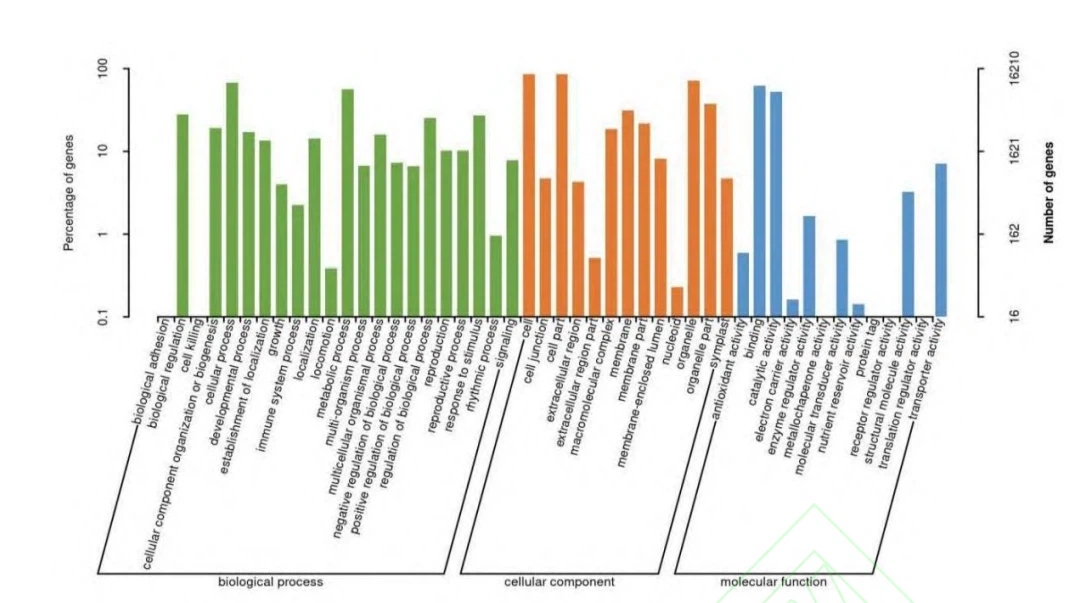
Fig.2 GO functional annotation and classification of unigenes
KEGG Functional Annotation and Classification
During transcriptome sequencing, a total of 3,998 unigenes were annotated in the KEGG (Kyoto Encyclopedia of Genes and Genomes) database. These unigenes were classified into six primary categories, with their respective unigene counts and proportions as follows:
Cellular Processes: 326 unigenes (8.15%)
Environmental Information Processing: 299 unigenes (7.47%)
Genetic Information Processing: 1,771 unigenes (44.30%)
Human Diseases: 14 unigenes (0.35%)
Metabolism: 1,465 unigenes (36.64%)
Organismal Systems: 123 unigenes (3.07%)
These six primary categories were further divided into 20 secondary classification levels. Among them, Genetic Information Processing had the highest proportion, followed by Metabolism. Within the Metabolism category, the most abundant pathways were:
Carbohydrate metabolism
Fatty acid metabolism
Flavonoid metabolism
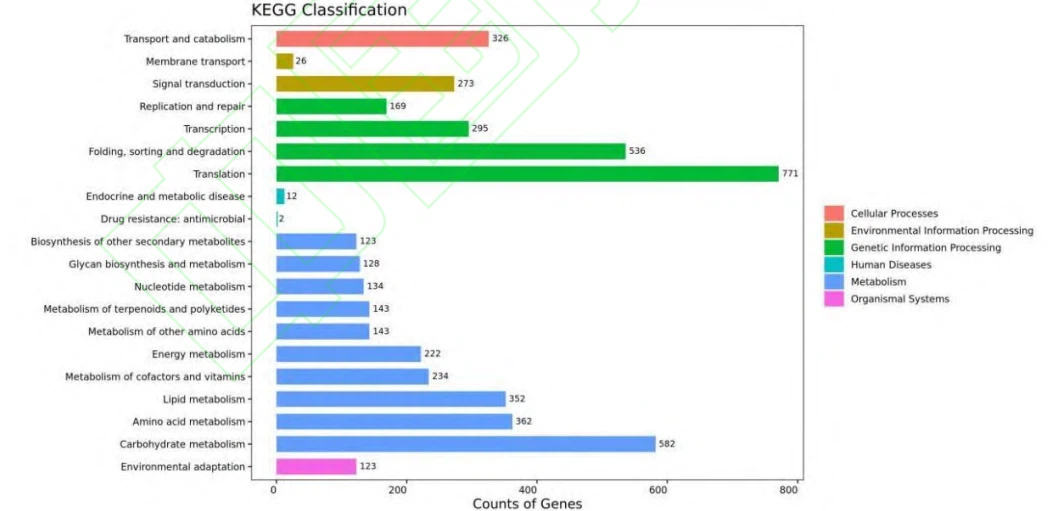
Fig.3 KEGG metabolic pathway annotation of unigenes
2.5 Differential Gene Expression and Enrichment Analysis of Cistanche deserticola from Different Hosts
Transcriptome sequencing data were filtered using the default differential expression selection criteria, resulting in the identification of 14,089 differentially expressed genes (DEGs):
6,576 genes were upregulated
7,513 genes were downregulated
A volcano plot was generated to visualize the overall distribution of DEGs.
In the top 30 GO enrichment functional classifications of DEGs, it was observed that:
Compared to Biological Process (BP) and Cellular Component (CC) categories, Molecular Function (MF) exhibited a more significant DEG enrichment.
The most notably enriched DEGs were associated with nucleic acid metabolism, protein metabolism, and key enzymes in galactose metabolism.
Additionally, DEGs were significantly enriched in GO terms related to polysaccharide metabolism, including:
Starch metabolic process
Glycogen biosynthetic process
Sucrose catabolic process
Glucosidase activity
UDP-L-rhamnose synthase activity
Polysaccharide hydrolase activity

Fig.4 Volcanic map of differentially expressed genes
KEGG Pathway Enrichment Analysis of DEGs in Cistanche deserticola from Different Hosts
To further investigate the differentially expressed genes (DEGs) in Cistanche deserticola from different host plants, KEGG pathway enrichment analysis was performed. The analysis revealed that:
DEGs were mapped to 117 metabolic pathways.
The top 20 pathways showed significant DEG enrichment, with the most enriched pathways including:
Fatty acid metabolism
α-Linolenic acid metabolism
Galactose metabolism
Lysine degradation
A further enrichment analysis of the top 20 metabolic categories with the smallest q-values indicated that DEGs were significantly enriched in:
Organismal Systems
Metabolism
Genetic Information Processing
Among these categories, "Metabolism" had the highest number of enriched DEGs and showed the most significant enrichment. Additionally, in the enriched metabolic pathways, the proportion of upregulated and downregulated unigenes was almost equal.
These findings suggest that metabolic pathways play a crucial role in the differential gene expression of Cistanche deserticola from different host plants, particularly in lipid, carbohydrate, and amino acid metabolism.