What’s In The Desert?
Oct 27, 2026
The real growing environment behind Cistanche-and the supply chain that makes it reliable
When people think of deserts, they often picture solitude-"endless sand, no traces of life."
But for those working along desert margins, the desert can also be a key: a place where ecological restoration and industry development progress together.
This matters for Cistanche (Rou Cong Rong). Because for a desert botanical, the most honest story starts with two facts:
Where it grows (the real land and climate), and
How it is handled (collection, storage, processing, and quality control).
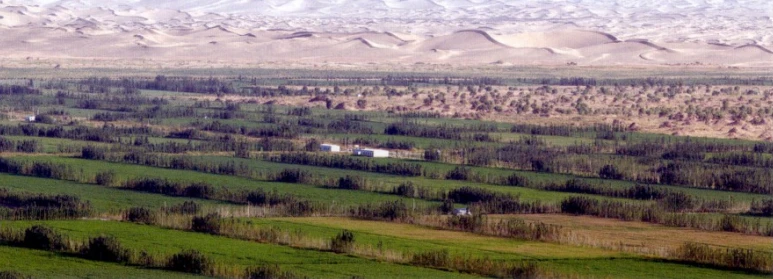
In summer, fertile fields in the 38th Regiment (2nd Division) contrast with the distant sand dunes-an everyday scene on the desert's edge.-wecistanche
1) Desert margins are not empty: they are ecosystems
On the edges of deserts and Gobi landscapes, development begins with ecology.
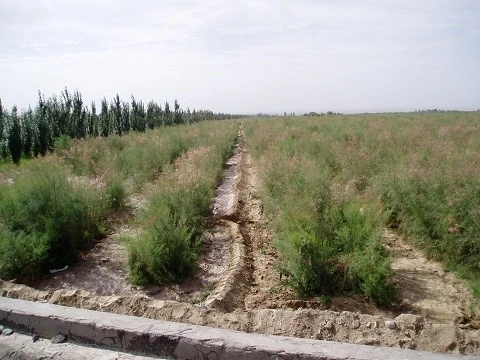
Local programs often rely on native, sand-adapted vegetation-including shelter forest systems such as saxaul-based vegetation-to stabilize dunes and reduce wind erosion.
These desert plant resources create the foundation for "sand industries"-specialty botanicals that fit arid conditions, such as:
Cistanche
Black goji berry
Sea buckthorn
The key is not to "fight" the desert, but to work with its realities-using the plants that naturally belong there.
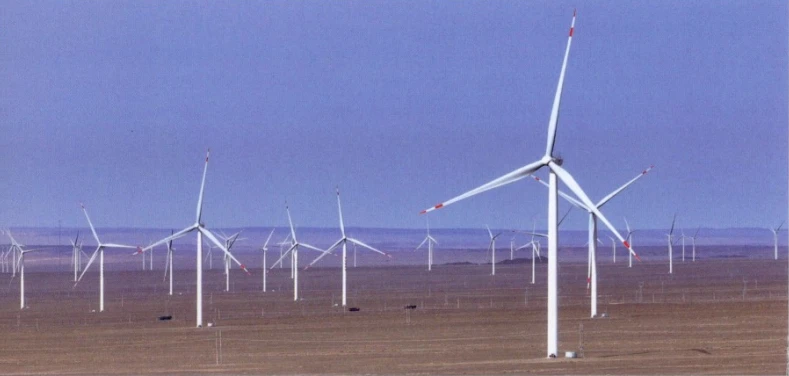
Wujiaqu City (6th Division) has expanded wind-and-solar projects by using barren hillsides, supporting high-quality growth in renewable energy. Photo taken on June 5 at part of the wind–solar site at Beitashan Pasture-wecistanche
2) The real Cistanche environment: sunlight, dryness, and patience
Cistanche is often described as "desert-grown," but that phrase is easy to turn into marketing. The real environment is specific:
strong sunshine and clear skies
low rainfall and arid air
large day–night temperature differences
open land where wind and sand are constant factors
sand-adapted vegetation systems that support long-term stability
This is why cultivation is not just "planting." It is ecological management and long-cycle field work.
3) Desert development is not only planting-industry is also built here
Across desert and Gobi regions, development has expanded into multiple sectors-because long-term stability requires diversified livelihoods.
You can see desert landscapes hosting:
wind and solar power in open, sun-rich areas
saline-alkaline water aquaculture built through technical problem-solving
standardized livestock farms established on gravelly, vegetation-scarce land, supported by processing and cold-chain logistics
The direction is consistent: protect the environment while developing resources responsibly, so that ecology improves and incomes become more stable.
4) What this means for buyers: Cistanche needs a real supply chain
For B2B buyers and brand owners, the desert story is not only scenery-it affects traceability, seasonality, and consistency.
That is why we emphasize an integrated approach.
According to our published company profile, Chengdu Wecistanche Bio-Tech Co., Ltd. was established in 2003 and is headquartered in Luopu County, Xinjiang, China. We focus on Cistanche-especially material originating from the Hotan (Hetian), Xinjiang area.
To support stable supply, the Cistanche chain described in our profile includes:
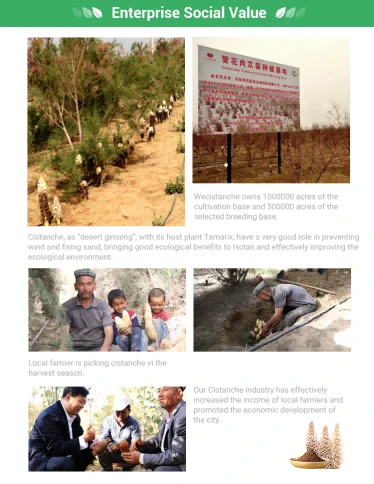
20,000 acres of selected seed breeding base
85,000+ acres of cultivation base
15,000 tons fresh collection and storage capacity
a GMP factory with processing capacity for 20,000 tons of fresh Cistanche and other botanical raw materials
and large-scale base development described as a 200,000-acre Cistanche base
These capacities are designed for the reality of desert botanicals: harvesting seasons are concentrated, logistics must be planned, and processing must be standardized.
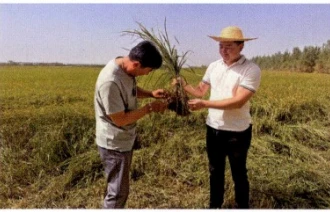
At the chufa (tigernut) planting area of the 54th Regiment (3rd Division), a grower checks crop growth conditions-wecistanche
Supportive Service Of Wecistanche-The largest cistanche exporter in the China:
Email:wallence.suen@wecistanche.com
5) From desert raw material to standardized processing
Consistency requires more than harvesting. Our factory advantages described publicly include:
a 100,000-class GMP production workshop
advanced ultrafiltration and nanofiltration purification and concentration facilities
a 10,000-class microorganism incubation laboratory
This type of infrastructure supports controlled processing conditions and routine verification-so that botanical inputs can be transformed into stable, export-oriented products.
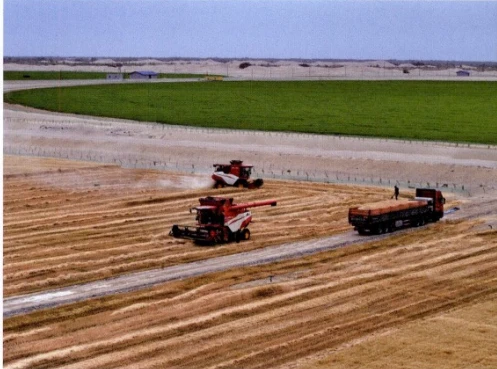
June 17 - A combine harvester harvests wheat in the Desert Comprehensive Management Core Demonstration Zone of the 224th Regiment (14th Division), on the southern edge of the Taklamakan Desert.
6) Documentation & collaboration: what responsible manufacturing looks like
For international markets, documentation matters. The profile lists certifications such as SC, HACCP, and organic-related items including NOP, and also states a portfolio of Cistanche-related invention patents including membrane separation-related technology.
The profile also mentions long-term research cooperation with institutions including Peking University, Shanghai Jiao Tong University, Xinjiang Medical University, and Japanese universities such as Kyoto Pharmaceutical University and Kinki University.
For customers, these are signals of a company investing in standardization rather than short-term trading.
Closing: from "yellow sand" to long-term value-without romanticizing it
The desert does not become "gold" by slogans. It becomes valuable through:
ecological foundations (shelter vegetation and land stabilization)
patient cultivation in real arid conditions
collection and storage capacity that matches the harvest season
and processing standards that keep quality consistent
That is the authentic environment behind Cistanche-and the reason a real supply chain matters.
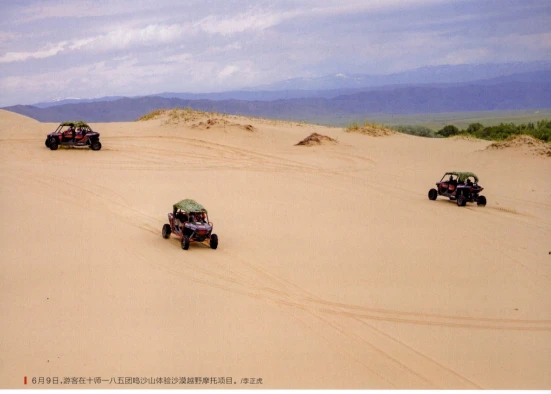
June 9 - Visitors experience desert off-road motorcycling at Mingshashan (Singing Sand Mountain) in the 185th Regiment (10th Division).