Xinjiang Cistanche Polysaccharides: Capable Of Clearing Reactive Oxygen Species And Free Radicals
Jul 23, 2025
abstract
The antioxidant activity of Cistanche deserticola polysaccharide in vitro was studied. Taking ascorbic acid as the control, taking the Fenton-like reaction to produce hydroxyl radicals, the autoxidation reaction of dopamine to produce superoxide anion radicals, the reaction of sodium hypochlorite with hydrogen peroxide to produce singlet oxygen, diphenyl bitter hydrazine radicals as the experimental model, the effects of Cistanche deserticola polysaccharides on superoxide anion radicals, hydroxyl radicals DPPH · free radical (diphenyl bitter hydrazine radical), the scavenging effect of singlet oxygen. The results showed that the polysaccharides from Cistanche deserticola had obvious scavenging effects on the above free radicals, and the scavenging effect was positively correlated with the concentration of polysaccharides.
Keywords :Cistanche deserticola; Polysaccharide; Free radical
1 . Introduction
The body continuously produces various reactive oxygen free radicals (ROS) in the process of oxidative metabolism of life activities, which are the intermediate products of the oxidation-reduction reaction of aerobic metabolism. Research has found that excess free radicals will attack life macromolecules and various organelles, causing various damages at the molecular level, cell level, tissue, and organ level, accelerating the aging process of the body and inducing diseases such as thrombosis, diabetes, atherosclerosis, tumors, etc. [1]. Due to the toxicity of chemically synthesized antioxidants to the human body, searching for natural antioxidants with high efficiency and low toxicity that can remove oxygen free radicals has become a hot research topic in the fields of medicine, food, chemical engineering, and other fields in recent years.
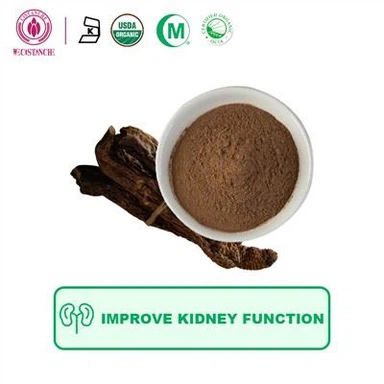
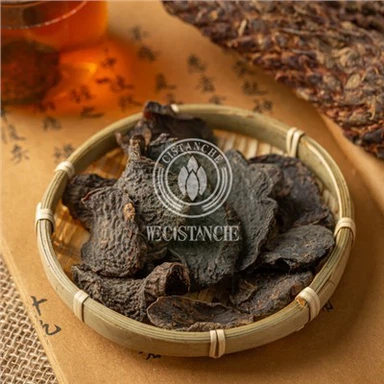
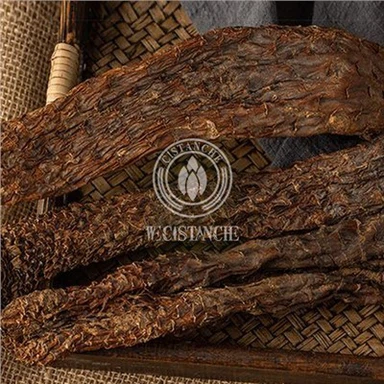
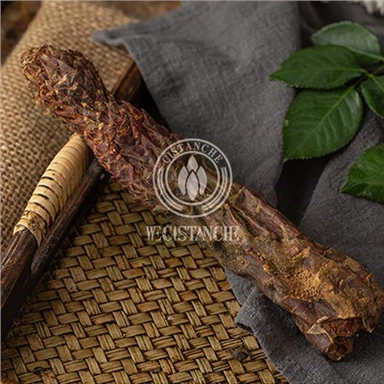
Cistanche deserticola (Y.C...) is a rare Chinese traditional medicine and is known as "desert ginseng" [2]. Cistanche deserticola ma polysaccharide is one of the main bioactive components of Cistanche deserticola, but there is no report on whether Cistanche deserticola's polysaccharide has the effect of scavenging free radicals. In this paper, the scavenging effects of Cistanche deserticola polysaccharide on superoxide anion radical, hydroxyl radical, DPPH · free radical, and singlet oxygen were determined by spectral analysis to evaluate its antioxidant activity and provide a scientific basis for the full development and utilization of this natural resource.

Chinese herb cistanche
2. Experimental part
2.1 Instruments and reagents
UV-2401 UV-visible spectrophotometer (Shimadzu, Japan); LumatLB9507 ultra-sensitive tube luminometer (Germany
BertholdTechnologies); RE-52CS rotary evaporator (Shanghai Yarong Biochemical Instrument Factory); HW-SY electronic thermostatic water bath (Jintan Xinhang Instrument Factory); PHS-3C pH meter (Shanghai Precision Scientific Instrument Co., Ltd.); DZF-6020 vacuum drying oven (Shanghai Yiheng Technology Co., Ltd.). Cistanche deserticola: purchased from Kuitun Pharmaceutical Corporation. Luminol (Sigma, USA), dopamine (China Institute for the Control of Pharmaceutical and Biological Products), FeSO4, EDTA, vitamin C, H2O2, NaClO, Na2CO3, NaHCO3, etc., are all domestic analytical reagents. The experimental water is ion-exchange distilled water.
2.2 Experimental method
2.2.1 Extraction method of Cistanche deserticola polysaccharide
Take 30g of Cistanche deserticola powder and put it into a 500 mL conical flask. Immerse it in petroleum ether (60-90 ℃), ether, and 80% ethanol hot solution (30 ℃) for 6h, respectively, and the residue is volatilized to dry the solvent. Soak the filter residue in water at a ratio of 1:10 for 24h, heat it at 30 ℃, and extract it for 100min. After extraction, centrifuge to obtain the supernatant. After the supernatant is concentrated under reduced pressure, it is precipitated with 95% ethanol of 3 times the volume. It is allowed to stand for 24 hours at 4 ℃. After centrifugation, it is collected and precipitated. After vacuum drying, the crude polysaccharide of Cistanche deserticola can be obtained. Weigh 1.00g of crude polysaccharide, dissolve it with water, and put it into a 50 mL volumetric flask for standby.

Desert ginseng-Antioxidant
Click here to view Cistanche powder products
【Ask for more】 Email:cindy.xue@wecistanche.com / WhatsApp: 0086 18599088692 / Wechat: 18599088692
2.2.2 Test on the scavenging ability of Cistanche deserticola polysaccharide to O2 · free radical
The scavenging ability of Cistanche deserticola polysaccharide to O-2 · was tested by the production of superoxide free radicals (O-2 ·) from dopamine autoxidation [3]. Add 3.0mL of 0.1mmol/LpH=10.12 carbonate buffer solution, 3.0mL of water, and 0.5mL of polysaccharide sample solution of different concentrations in the drying test tube with scale in turn. After preheating in a 30 ℃ water bath for 5min, add 1.0mL of 2.0mmol/L dopamine preheated in a 30 ℃ water bath, immediately mix and time, keep the reaction at 30 ℃ for 5min, and immediately stop the reaction with 2 drops of 10mol/L HCl. Use the buffer solution as the reference, measure the absorbance (sample A) at 221 nm, replace the sample (blank A) with 0.5 mL of water in the blank group, and replace the sample with 0.5 mL of ascorbic acid in the control group, measure each sample three times in parallel, and take the average value. O-2 · clearance rate (%)=(A blank - A sample)/A blank × 100%
2.2.3 Test on the scavenging ability of Cistanche deserticola polysaccharide to · OH free radical

Desert living cistanche-Antioxidant
EDTA-Fe (Ⅱ) - methylene blue - H2O2 system was used to test the scavenging ability of Cistanche deserticola polysaccharide on hydroxyl radical. The principle is that EDTA-Fe (Ⅱ) reacts with hydrogen peroxide to produce · OH free radicals, which reduces the characteristic absorption peak of methylene blue solution at 660 nm.
Add 1.0mL of 5mmol/L LFeSO4 solution, 1.2mL of 5mmol/L LEDTA solution, 2.0mL of 0.03mol/L NaH2PO4-Na2HPO4 (pH=7.4) buffer solution, and 1.3mL of 20mmol/L hydrogen peroxide solution into a series of 10mL test tubes with stoppers, shake well, add 0.7mL of 0.2mmol/L methylene blue solution, and then add 1.0mL of the solution to be tested and vitamin C1.0 of different concentrations respectively, dilute to 10.00mL with water, mix well, keep at 37 ℃ for 30min, and measure the absorbance value of each solution at 660nm, The blank group replaced the sample solution with water. Each sample shall be measured three times in parallel, and the average value shall be taken. · OH radical scavenging rate of sample (%)=[(A2-A1)/(A0-A1) × In the formula of 100%: A0 -- absorbance value of undamaged tube; A1 - absorbance value of damaged tube; A2 -- Photometric value after adding sample.
2.2.4 Test on DPPH · scavenging ability of Cistanche deserticola polysaccharide
Take 0.1mL of Cistanche deserticola polysaccharide solution and add it into 5.0mL DPPH · solution, mix it quickly, and stand for 10min at room temperature,
Determine its absorbance change at 517nm wavelength [4]. Each sample shall be measured three times in parallel, and the average value shall be taken. The sample clearance rate of DPPH · (%)=1 - [(A-B)/A0] × In the formula of 100%: A0 -- absorbance value of DPPH · (1.9mLDPPH ·+0.1mL50% ethanol) without sample; A - absorbance value of the sample after reaction with DPPH ·; B -- absorbance value of blank sample (sample 0.1mL+1.9mL 50% ethanol).
2.2.5 Cistanche deserticola polysaccharide scavenging singlet oxygen 1O2 test
Single-line oxygen (1O2) is produced by the chemical reaction of NaClO and H2O2 at 37 ℃ [5]. The solution used for the determination of 1O2 is 100 μ L2.8mmol/L NaClO solution, 400 μL 5 mmol/NaOH solution, 300 μL 10 mmol/H2O2 solution, and 50 μL 1 mmol/L/Luminol solution. During the reaction, the reaction solution is added to the sample solution, and the chemiluminescence instrument automatically records the reaction process at the same time. Take NaClO-H2O2-NaOH-Luminol as the blank control. Start the reaction, and add the reaction solution into the sample tube from the storage bottle of the chemiluminescence instrument according to the amount set by the procedure. Then the chemiluminescence intensity of the reaction mixture is recorded on the recording paper every 5s, each sample is measured three times in parallel, and the average value is taken.
The clearance rate is calculated according to the following formula: clearance rate (%)=(control luminous intensity - sample luminous intensity)/control luminous intensity × 100%
3 Results and discussion
3.1 Scavenging effect of Cistanche deserticola polysaccharide on O-2 ·

Benefits of cistanche tubulosa-Antioxidant
The chemical property of O-2 · is active, which can make the fatty acids on the biofilm produce peroxide, and then destroy the cells [6]. In this paper, the dopamine method was used to determine the scavenging ability of O2 ·. The scavenging ability of Cistanche deserticola to O2 · is shown in Figure 1. The results showed that Cistanche deserticola polysaccharide could inhibit the O2 · produced by the autoxidation of dopamine, and increased with the increase of concentration within the measured concentration range (0-8mg/mL), but the scavenging ability was lower than that of ascorbic acid.
3.2 Scavenging effect of Cistanche deserticola polysaccharide · OH
·OH is one of the most active oxygen-free radicals in the active oxygen species. It can react with almost any biological macromolecule in living cells and can lead to biochemical processes such as lipid peroxidation, protein polymerization, depolymerization, nucleic acid breakage, etc. in the body tissue, causing tissue and cell diseases, leading to the occurrence of various diseases and accelerating the aging of the body [7]. The scavenging ability of Cistanche deserticola polysaccharide to · OH is shown in Figure 2. The results showed that Cistanche deserticola polysaccharide had a good scavenging effect on · OH, and it increased with the increase of concentration.


3.3 The scavenging ability of Cistanche deserticola polysaccharide to DPPH ·
DPPH · (diphenyl bitter hydrazine radical) is a stable free radical, which is purple in organic solvents and has strong absorption near 517nm. After the addition of antioxidants, some free radicals are removed, which weakens the absorption, which can be used to evaluate the antioxidant activity of this substance [8]. See Figure 3 for the DPPH · scavenging capacity of Cistanche deserticola polysaccharide. The experimental results showed that the scavenging capacity of Cistanche deserticola polysaccharide on DPPH · was positively correlated with its concentration, and the scavenging capacity was greater than that of ascorbic acid.
3.4 Scavenging ability of Cistanche deserticola polysaccharide to 1O2
Single-line oxygen is excited molecular oxygen with active chemical properties. Because unpaired electrons tend to pair, free radicals show more active chemical properties [9]. The scavenging ability of Cistanche deserticola polysaccharide to 1O2 is shown in Figure 4. The experimental results showed that the scavenging capacity of Cistanche deserticola polysaccharide was lower than that of ascorbic acid in the range of 0-4.0mg/mL, and the scavenging capacity of Cistanche deserticola polysaccharide was higher than that of ascorbic acid when the concentration was greater than 4.0mg/mL.


4. Conclusion
The antioxidant activity of Cistanche deserticola polysaccharides in vitro was studied in detail through different reactive oxygen-free radical systems. From the experimental results, it can be seen that within the experimental concentration range, the polysaccharide extract of Cistanche deserticola has scavenging effects on O2 ·, · OH, DPPH ·, and 1O2, and the scavenging effects are different for different systems. The results showed that Cistanche deserticola polysaccharide is an effective exogenous natural antioxidant, which is worthy of further research, development, and comprehensive utilization.

Cistanche 200mg-Antioxidant
reference
[1] Ling Guanting. Antioxidant food and health [M]. Beijing: Chemical Industry Press, 2004.1-58.
[2] Gao Ming, Tian Ziyu, Cai Hongmei, et al. Alkali extraction and chemical analysis of polysaccharides from Cistanche deserticola [J]. Agricultural and Food Science and Technology, 2008,2 (3): 32-34.
[3] Shi Shuangqun, Song Xinfang. The autoxidation of dopamine [J]. Journal of Hebei Normal University, 1997,21 (4): 387-389.
[4] Zhang Zeqing, Tian Yingjuan, Zhang Jing. Study on the antioxidant activity of Fangfeng polysaccharide [J]. Chinese Medicine, 2008,31 (2): 268-271.
[5] Li Haiping, Zhang Shuhai, Zhang Kunsheng. Study on the antioxidant activity of lentinan [J]. Food Research and Development, 2008,29 (4): 56-60.
[6] Mo Jian. Introduction to Medical Free Radical Biology [M]. Beijing: People's Health Publishing House, 1989.21-25.
[7]FrederickVL.FreeRadicals[J].ClinicalChemistry,1993,65(12):374-377.
[8]MatsudaM,NagahamaY,SatoTetal.DMYisaSpecificDMDomainGeneRequiredforMaleDevelopmentintheMedakaFish[J].Nature,2002,30:559-563.
[9]KanofskyJR.SingletOxygenProductionbyLactoperoxidase[J].JournalofBiologicalChemistry,1983,258(10):5991-5993.