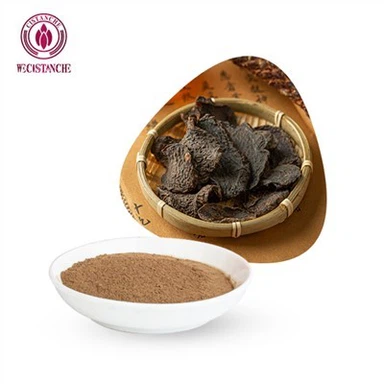
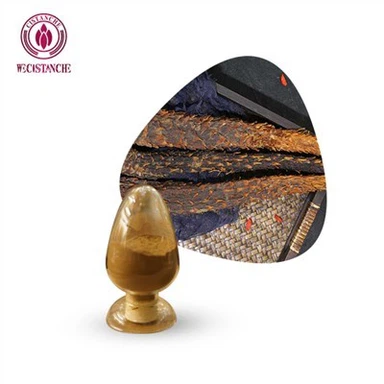
Cistanche Tubulosa Extract Natural Supplement Powder
Raw material: Cistanche tubulosa
Price: $580USD/kg
Active ingredients: echinacoside, verbascoside, phenethyl alcohol total glycosides, flavonoids.
Color: Brown
Form: powder
Particle volume: ≤100 mesh
Efficacy: anti-fatigue, anti-oxidation, treatment of kidney disease, improve immunity.
Usage: Oral / topical skin application
Dosage: 3~5g per day
Packaging: medical grade paper drum
Net weight: 25kg/drum
Gross weight: 28.5kg/barrel
Shipping Agreement: Free worldwide shipping when the order reaches MOQ
Origin: China
Appearance date: August 1, 2022
Shelf life: 3 years
- Fast Delievery
- Quality Assurance
- 24/7 Customer Service
Product Introduction
Re-textualization of Materia Medica of Chinese Medicine Cistanche
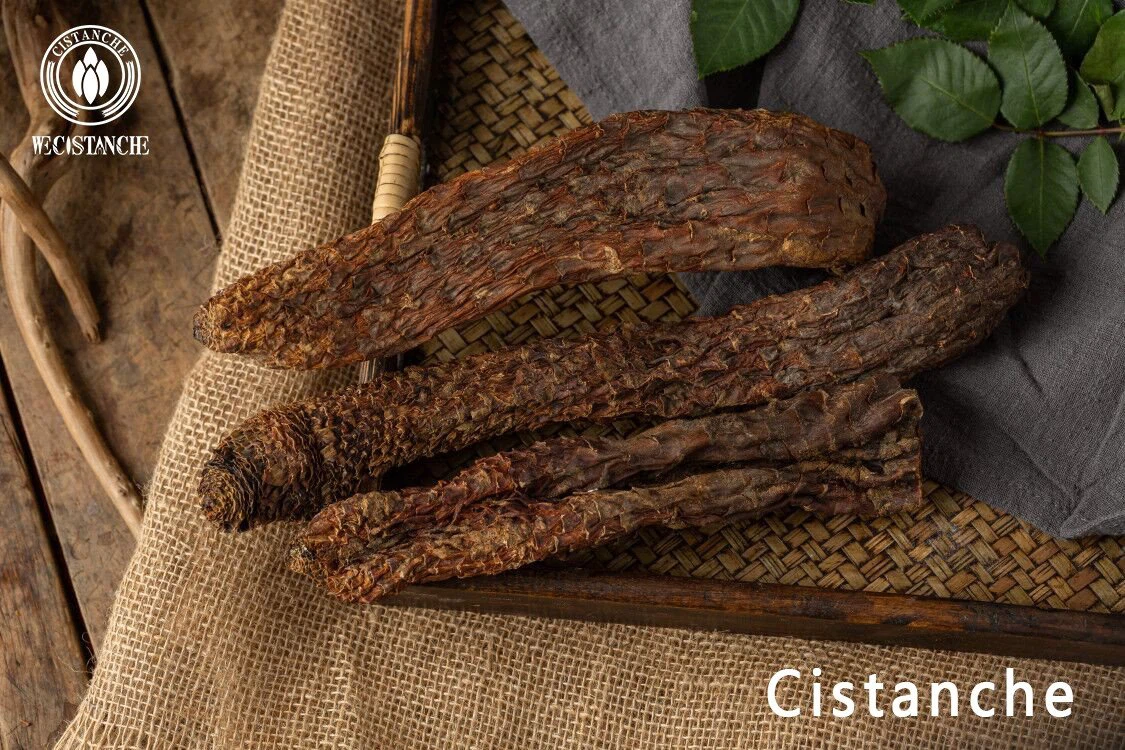
Cistanche is a well-known tonic in Chinese medicine, which has the functions of invigorating the kidney, nourishing essence, and laxative. Since then, the main herbal medicines of all dynasties have been recorded. Cistanche is a root parasitic plant, which is mainly distributed in the desert and desert areas of northwestern China and northern Shanxi, parasitic on the roots of Haloxylon ammonium, Tamarix, Salt Claw, Pearl Chai, Suaeda Serrata, and other plants. Before the Tang Dynasty, most of these areas belonged to the Western Qiang, Xiongnu, Western Regions, Turks, Uighurs, and other countries, and wars continued. Most of the distribution areas of Cistanche are in deserts and deserts, with inconvenient transportation and inaccessible people. In addition, as a root parasitic plant, Cistanche only emerges from the ground when it blooms. It is difficult to see its original plant. its original plant. Ancient herbal descriptions of the origin, growth environment, and morphology of Cistanche are very rough, and most of them are still heard from people, especially in the description of growth characteristics, which are full of mythology. In addition, there are few resources of Cistanche, and the price is relatively high. Therefore, Cistanche has always been one of the traditional Chinese medicinal materials with confusing sources in ancient times. In the early 1990s, the author conducted herbal research on the basis, of substitutes and counterfeit products of Cistanche. Since then, much literature has also conducted textual research on the origin and counterfeit products of Cistanche, and the results are basically consistent with the author's textual research results. Cistanche has a long history of medicinal use and is widely distributed in a wide area. In its long history, many names have been deduced, and each name has its cultural connotation or historical background. Cistanche has a wide range of properties, flavors, meridians, functions, and indications, and the records of herbal medicines in past dynasties are also confusing, and some even have mysterious colors. In order to dig deep into the cultural connotation and medicinal value of Cistanche, and to further clarify its medicinal material base, harvesting, and processing methods, this paper, on the basis of the author's in-depth research and profound understanding of the genus Cistanche for more than 30 years, discusses the name, In-depth research on harvesting, processing, processing methods, properties, flavors and meridians, efficacy and clinical medication, etc., and supplementary research on its origin and origin, in order to provide information for the research, medicinal material production, clinical medication, development and utilization and industrial development of Cistanche for reference.
Supplementary research on the origin and origin of Cistanche
In the early 1990s, the author conducted textual research on the basis of Cistanche and believed that Cistanche recorded in the past dynasties is the current Cistanche plant, and its basis is C. deserticola and C.salsa, and its origin is Shanxi, Shaanxi, western Inner Mongolia, Ningxia, Gansu, and northeastern Qinghai. Since then, much literature has also conducted textual research on the origin and origin of Cistanche deserticola, and the results are basically consistent with the author's textual research results. However, there are still some doubts, such as "the first to appear in Longxi today" as described in Materia Medica, what kind of basal plant was Cistanche in Longxi in history; whether C. tubulosa was used as Cistanche in history, etc. In order to clarify the relevant issues, the author made supplementary textual research on its origin and origin on the basis of more than 30 years of research on Cistanche and a large number of field investigations.

Textual research on the base of Cistanche that records the distribution of "Longxi" in Materia Medica
"Compendium of Materia Medica" records for the first time that "Longxi" is one of the main producing areas of Cistanche, and it is said that "this is the first one to come out of Longxi. In the past, it was considered to be Cistanche deserticola according to its "flat and broad shape, soft and smooth, many flowers and sweet taste", and other documents also considered it to be Cistanche deserticola. What kind of base is Cistanche deserticola distributed in "Longxi", first of all, it is necessary to determine the geographical location of "Longxi" that Tao Shi said. After reviewing the literature, "Longxi" generally referred to the area west of Longshan (Liupanshan) and east of the Yellow River at that time. "Longxi" is recorded under the item of Cistanche in the book "Jin Shiyuan's Experience in Traditional Identification of Chinese Medicinal Materials" as the south of Lintao County, Gansu. Two explanations for the geographical location of "Longxi", the Cistanche Cistanche distributed in "Longxi" should be Cistanche salsa. The evidence is as follows: (1) The distribution of Cistanche must be synchronized with its host plants. Haloxylon is naturally distributed in the Hexi Corridor in Gansu Province. Without the natural distribution of Haloxylon in "Longxi", there will be no desert Cistanche; There are many hosts. Among them, Salsola passerine Bunge is widely distributed on the hillsides in the central and northern parts of Gansu Province. During the survey, it was found that most of the Cistanche salina on the hillsides of Gansu Province were parasitic on the roots of Pearl Chai; The raw Cistanche can grow longer and thicker on the mountains with soft soil, and the inflorescence can be as high as 30cm. There is no obvious difference from the Cistanche deserticola.

Medicinal research of Cistanche Cistanche
According to modern literature records, the local government began to acquire Cistanche in the 1950s, and in the 1960s, it entered a large-scale acquisition and sold it to the mainland. So whether Cistanche Cistanche was used as a medicine in ancient times, the author conducted textual research on herbal medicine and field investigation.
The "Book of Sketches" says, "Cistanche deserticola, born in the Hexi Valley and Yanmen in Daijun, is present in many prefectures and prefectures in Shaanxi, but it is not as thick as those from the Western Qiang realm. Nowadays, Westerners often live here in the clouds and large woods and in the earthen walls. They are not wandering places but have them, so they know that they have their own kinds of ears.” First of all, the "Westerners" mentioned in the "Benkuojing" mainly refer to the people in western areas such as western Gansu and Xinjiang. Su Song heard from "Westerners" that it is more common among big trees and on the soil, and the genus Cistanche is parasitic on big trees, such as the desert Cistanche with the host of Haloxylon amaryllis, and the Cistanche Cistanche with the host of the tamarisk plant. In ancient deserts Cistanche and Cistanche Cistanche are indistinguishable. Previously, the herbal description of Cistanche deserticola used words such as "soft and smooth" and "flat and wide". Here, it is described as "thick and firm in flesh", indicating that the characteristics and texture of Cistanche produced in Xiqiang are indeed different from those produced in other places. In ancient times, the Western Qiang actually refers to a large area of the Western Regions, including today's western Gansu, northern Qinghai, and a large area of Xinjiang. The name of the "Ruoqiang" in today's Xinjiang is derived from the "Ancient Qiang". If some areas of Qiang and Qiemo belonged to the Western Qiang in ancient times, Cistanche pipiensis was distributed in these areas. Ruoqiang was the second strategic passage from the ancient inland to Central Asia and Xinjiang to the inland, and it was once a necessary route of the ancient "Silk Road". Cistanche Cistanche is a local specialty, and it should flow inland. Therefore, from the description of its origin "Xiqiang" and its texture "thick and firm", it is speculated that it should be C. tubulosa.
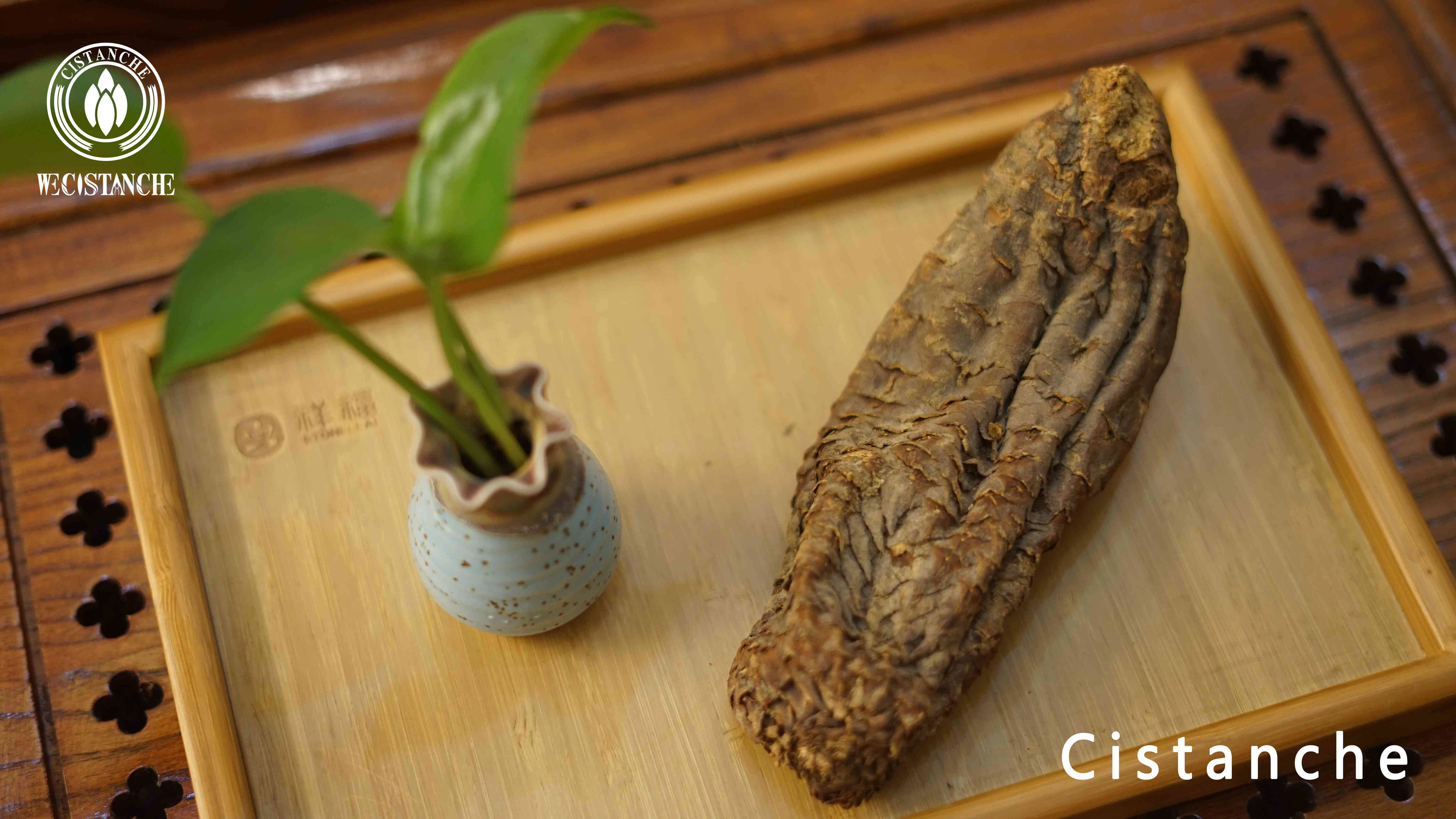
In order to further understand whether Cistanche tubulosa was used for medicinal purposes in history, the author investigated Dali Yabuyi, the main producing area of wild Cistanche in Yutian County, Xinjiang. Dali Yabuyi is 240km away from Yutian County. It is a wetland oasis formed by the Keriya River flowing into the Taklagan Desert. There are a large number of red willows. The people there belong to the ancient Yutian people. It is said that they migrated along the river after Lop Nur dried up. , retains many living and funeral customs of the Lop Nor people. They have a special place for drying Cistanche, and they have a unique method of discovering Cistanche underground in autumn, that is, hammering the ground with a fist or elbow to sense whether there is Cistanche underground. According to the memory of Maisha Wusman, who was born in 1920, when he was a child, he saw his grandfather digging up Cistanche and drying it in front of and behind the house. Azi Amat, a former employee of the Yutian County Pharmaceutical Company who started purchasing Cistanche in the 1960s, said that before 1949, local people in Dali Yabuyi had harvested Cistanche. After the establishment of the Xinjiang Production and Construction Corps, the corresponding units of the government began to purchase Cistanche from there. From the above investigation, it can be seen that the local use of Cistanche Cistanche should have a long history.
Supplementary research on the origin of Cistanche
As mentioned above, "Benkuojing" records that Cistanche is also produced in Xiqiang, and the quality is good. "Essentials of Compendium of Materia Medica" also records that "Cistanche comes out of "Shen Nong Benjing"...[Tao Di] Xiqiang and Longxi". The "Xiqiang" where Cistanche plants are distributed includes present-day Gansu, northeastern Qinghai, and eastern Xinjiang. Therefore, in addition to Shanxi, Shaanxi, western Inner Mongolia, Ningxia, Gansu, and northeastern Qinghai, the origin of the herbal records of Cistanche in the past dynasties should also include Xinjiang. The Alxa League of Inner Mongolia is one of the main authentic regions of Cistanche Cistanche today, but there is no place name "Alxa" in the records of the origin of Cistanche in ancient herbal works. This is mainly because the Alxa region belonged to Beidi, Wuwei, and Zhangye successively in ancient times. , Liangzhou, Ganzhou, Suzhou, and other jurisdictions, the Alxa Heshuote Banner was set up in 1697 (the thirty-sixth year of Kangxi), and the "Hexi" recorded in the Materia Medica actually includes the Alxa area. Peng Fang et al believe: "In ancient Inner Mongolia, people were sparsely populated... Cistanche cistanche was not excavated in large quantities." This should also be one of the reasons.
Hot Tags: cistanche tubulosa extract natural supplement powder, China, suppliers, manufacturers, factory, wholesale, buy, price, best, bulk, Organic Cistanche Extract Powder, Cistanche for Improving Memory, Cistanche Extract Product, Flavonoids, Cistanche Extract Improve Immunity, Cistanche Extract Anti Radiation