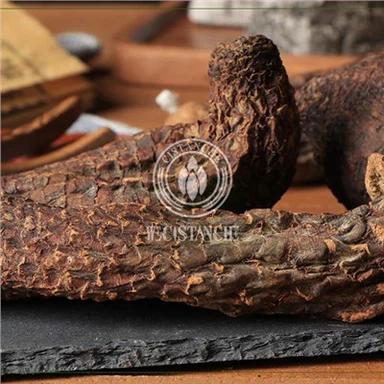
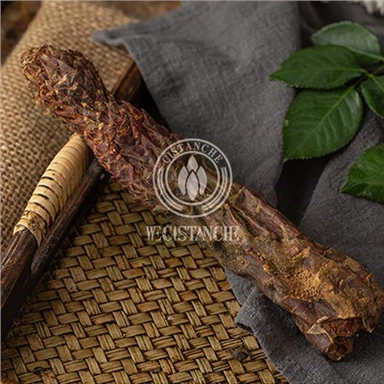
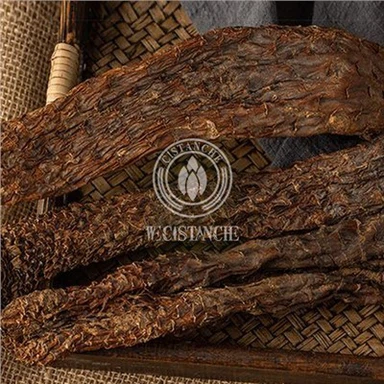
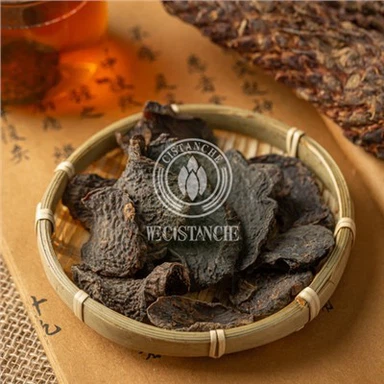
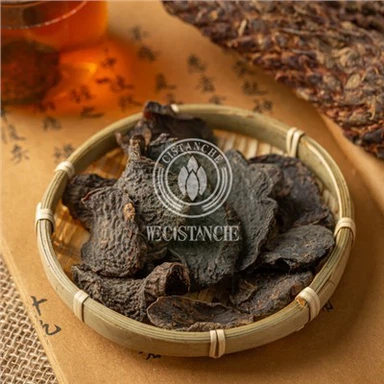
Cistanche Tubulosa Materials Cistanche Root Cistanche Stem Cistanche Extract
Raw material: Cistanche tubulosa
Price: $480 USD/kg
Active ingredients: echinacoside, verbascoside, phenethyl alcohol total glycosides, flavonoids.
Color: Brown
Form: powder
Particle volume: ≤100 mesh
Efficacy: anti-fatigue, anti-oxidation, treatment of kidney disease, improve immunity.
Usage: Oral / topical skin application
Dosage: 3~5g per day
Packaging: medical grade paper drum
Net weight: 25kg/drum
Gross weight: 28.5kg/barrel
Shipping Agreement: Free worldwide shipping when the order reaches MOQ
Origin: China
Appearance date: August 1, 2022
Shelf life: 3 years
- Fast Delievery
- Quality Assurance
- 24/7 Customer Service
Product Introduction
Research on Harvesting, Processing, and Processing Methods of Cistanche
The harvesting and processing of Cistanche were first recorded in "Famous Doctors' Records", which said that "collected on May 5th and dried in the shade", "Wu Pu Materia Medica" said "collected from February to August", that is, Cistanche is harvested from February to August of the lunar calendar. Can be harvested and dried in the shade after harvest.

"Jiayou Materia Medica" reprinted "Shu Ben" and quoted Tang "Graphic Classic" as saying: "In March and April, dig the roots, cut the middle three or four inches, and thread the rope to dry in the shade. It is good in August...and Cistanche. , that is, the spring seedlings, the force is weaker." It is pointed out that after excavation of Cistanche, take three or four inches of the center of the good one and use it as a medicine. And it is suggested that the effect of Cistanche Cistanche bolting after flowering is very small.
The "Book of Sketches" states that "roots are harvested in March, and the central ones are dug out during mining, and they are worn with ropes and dried in the shade. It can be used in August. The book says harvest on May 5th. May may be old. Unbearable, so more than three months to harvest." Corrected the "Collection on May 5th" in "Shen Nong's Materia Medica".

"Baoqing Materia Medica Eclectic" states that "Cistanche ... If you cut it, it will become coal and have grains, and when you chew it, it will melt without waste." The medicinal herbs of Cistanche described here are characterized by those of Cistanche that have been soaked in salt and then dried. "New Compilation of Materia Medica" states that "the ancients used cistanche for one or two to treat constipation, and washed out the salty taste", indicating that the ancient cistanche was mostly processed by putting it in a salt lake to absorb water or pickling it with salt. "Plant Names and Reality Maps" states that "the medicines sold in today's medicine shops are all made of salt"; "Materia Medica Mengquan" states that "it is also purchased with golden lotus root salt, which is harmful if swallowed by mistake"; "Materia Medica Original" also states that " Nowadays, people mostly use the roots of the golden lotus, Cistanche cistanche, and young pine shoots to moisten them with salt, which should be reviewed by those who use them.” From the processing methods of these fake products, we can also see the salt processing method of Cistanche cistanche. Due to the high water content of Cistanche, the drying time is very long, and most of them have been moldy and deteriorated during the drying process; at the same time, the origin of Cistanche is far from the Central Plains, and mildew may also occur during transportation. It is understandable that the ancients used the method of putting into a salt lake or salting in order to prevent the cistanche from going moldy and deteriorating.
The processing of Cistanche was first recorded in "Leigong Paozhi Lun", which said: "All envoys must first soak in sake for one night, until the light is bright, brush the sand and soil floating carapace with a scorpion (same brown), split the center, and remove the albuginea. The first layer is like bamboo silk grass. This is the reason why people can't get out of breath and make people feel out of breath. Any use, first need to be soaked in wine, brushed with grass, but steamed, from noon to You, out, and use again It is so crispy and crispy”, pointed out: To use Cistanche, you must first soak it in sake overnight, then use a brown brush to brush off the sand and scales on it, and then split it from the middle to remove a layer of bamboo grass-like albuginea, this layer of albuginea It will be "partially separated from the people's front, and people will not get angry"; then steam it again, from noon to the evening (17:00-19:00), and then cook it with ghee until it is dry. Since then, most herbal medicines have followed this method, but there are differences in the subsequent burning method. For example, "The Essentials of Medicinal Properties" "must be steamed with wine and fried"; "Materia Medica Mengquan" "or steamed with wine, still broken and pinch into the agent. Avoid using iron, do not commit it"; "Material Herbal Notes" " For drying. Avoid ironware" and so on.
"The Book of Sketches," says, "Westerners often use it as food, scrape off scales, wash with wine, remove black juice, slice thinly, combine potato and mutton as soup, it is very good and beneficial to people, eating is better than taking the tonic." "Materia Medica Yanyi" pointed out that "wash with wine, remove the black juice, and make soup. After the black juice is removed, the smell is gone. However, the tender ones can be used as soup, and the old ones are bitter." "New Compilation of Materia Medica" states that "the ancients used cistanche for the treatment of defecation in people with deficient people, using one or two cistanche, washed with water to get rid of the salty taste, and boiled it with clean water, that is, the bowel movement. Wash off the salty taste. "Benjing Fengyuan" is "wine to remove nails and rot, slice and bake". The processing methods recorded in these herbal medicines do not have the saying "removing the albuginea."

Regarding the salting and salty taste of Cistanche, "Ben Cao Zhengyi" pointed out that "Cistanbal is a very moist product, and it can be stored for a long time in the market. Even if the rinsing is very light, the original nature will be completely eliminated. Therefore, the various effects of tonifying yin and revitalizing yang that the ancients called are extremely weak, because they have been accustomed to both, and they can no longer be discussed with an example of the original quality.” Therefore, Cistanche should not be salted. If it is salted and then rinsed, its efficacy is basically lost.

To sum up, although there are certain differences in the harvesting time of Cistanche in the herbal records, it is basically harvested in spring, which is also because wild Cistanche is difficult to find in other seasons. "Wu Pu Materia Medica" records "picking from February to August", which is consistent with the fact that parasitic plants grow underground and cannot be excavated during permafrost. Cistanche Cistanche is harvested in the second to March of the lunar calendar in spring. At this time, Cistanche Cistanche will be exposed to the soil or just exposed to the soil without flowering. It is pointed out that the medicinal effect after flowering is weak and cannot be used medicinally; When the sandy soil is jacked up, bulges or fissures can be seen. After September, the desert area has frozen and it is impossible to excavate. It is basically the same as the current harvest time of Cistanche. The harvesting and processing method of Cistanche is to excavate the underground fleshy stem (the ancients thought it was the root), take the better part in the middle for medicinal purposes, dry it in the shade or thread it with a rope and dry it in the shade. In fact, in order to prevent mildew, the ancients mostly put them into salt lakes or pickled them with salt. Stores are all salted, so they can be stored for a long time.” There is no clear record, but the processing method of salting can be seen in the processing method and the production method of counterfeit products. The processing of Cistanche is basically carried out in accordance with the processing method recorded in "Leigong Paozhi Lun", that is, after soaking Cistanche in wine, brush the sand and scales with a brow brush, cut it in half, remove 1 layer of white film, and then steam it with wine for 5 ~7h, and finally sautéed with ghee, or steamed with wine, or dried. The active ingredients in Cistanche are all water-soluble ingredients. According to the above method, the active ingredients in the medicinal materials have long been lost and are no longer used. As for the albuginea like bamboo silk, it has never been seen in Cistanche. The literature believes that this "white membrane" is the vascular bundle of Cistanche deserticola. The main sources of ancient Cistanche Cistanche are the vascular bundles of the dried medicinal materials of Cistanche salina and desert Cistanche, which are arranged in wavy or deep wavy rings, and there will be no situation of "splitting the center and removing the albuginea, like bamboo silk grass". Therefore, the "removal of the first layer of albuginea" recorded in ancient Chinese herbal medicines requires further discussion.
Hot Tags: cistanche tubulosa materials cistanche root cistanche stem cistanche extract, China, suppliers, manufacturers, factory, wholesale, buy, price, best, bulk, Desert Ginseng Tea, Herbal Cistanches, Cistanche Cynomorium, Tonify Kidney Cistanche, Desert Ginseng