A TCM Multi‑Herb Formula For Atherosclerosis With Frequent Premature Atrial Contractions (PACs): Composition, Preparation Processes (Mixture & Granules), And Application Notes For Botanicals Businesses
Oct 26, 2026
1) Why this matters for herbal wellness brands (B2B perspective)
In the cardiovascular health space, "sub‑health" complaints often show up as palpitations, chest tightness, fatigue, poor sleep, and anxiety‑like discomfort, especially in older adults or those with metabolic/cardiovascular risk factors. In clinical settings, these symptoms may overlap with atherosclerosis and frequent premature atrial contractions (PACs) (also called frequent atrial premature beats).
From a product‑development standpoint, many brands are exploring Traditional Chinese Medicine (TCM) pattern‑based formulas as inspiration for:
formula architecture (tonifying + nourishing + blood‑moving + calming the mind)
process design (decoction → concentration → ethanol precipitation → filtration → granulation)
quality strategy (raw herb authenticity + manufacturing controls + marker‑based QC for key botanicals such as Cistanche)
This article translates and structures a disclosed invention describing a TCM herbal composition intended for atherosclerosis combined with frequent PACs, including its ingredient ratio, dosage forms, preparation methods, and a clinical study outline.
Compliance note (important): This article is for industry reference and technical communication only. It does not provide medical advice, does not replace diagnosis/treatment, and does not claim that any ingredient or formula can prevent, treat, or cure disease in any jurisdiction. Brands must follow local regulatory requirements (e.g., DSHEA structure/function boundaries in the U.S., EFSA rules in the EU, etc.).
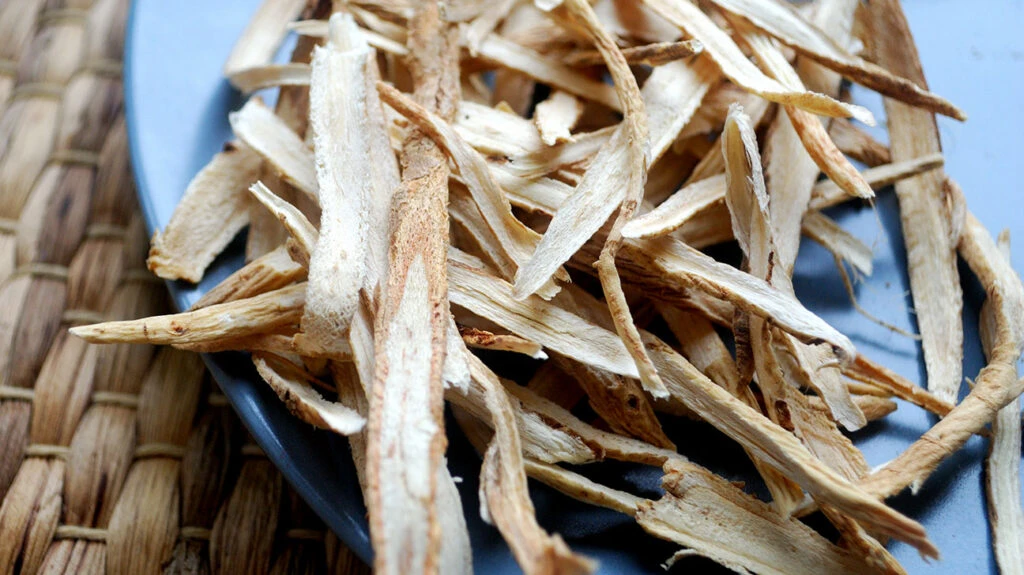
TCM Herb for Tonifying the Kidney and Heart
2) Invention title (translated)
Traditional Chinese Herbal Composition for Atherosclerosis with Frequent Premature Atrial Contractions (PACs), and Its Preparation Method and Use
3) Abstract (translated)
The invention discloses a traditional Chinese herbal composition intended for atherosclerosis complicated by frequent premature atrial contractions. The composition is prepared from the following crude herbs (in parts by weight):
Prepared Rehmannia root (Shu Di Huang) 12–15 parts
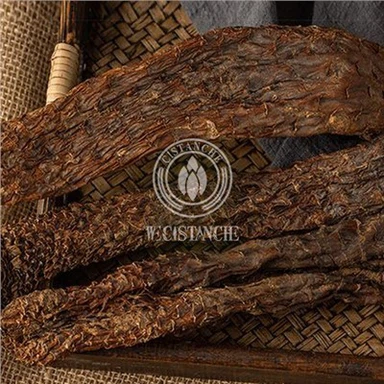
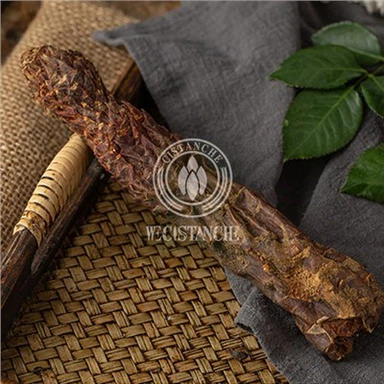
Cistanche (Rou Cong Rong) 9–12 parts
Raw Astragalus (Sheng Huang Qi) 12–15 parts
Codonopsis (Dang Shen) 12–15 parts
Ophiopogon (Mai Dong) 12–15 parts
Platycladus seed / Biota seed (Bai Zi Ren) 12–15 parts
Panax notoginseng (San Qi) 12–15 parts
Ganoderma (Ling Zhi) 12–15 parts
The invention further relates to the preparation method and use of the above composition.
4) Claims (key points, translated and structured)
Claim 1 - Composition (parts by weight)
A herbal composition made from:
Shu Di Huang 12–15
Rou Cong Rong 9–12
Sheng Huang Qi 12–15
Dang Shen 12–15
Mai Dong 12–15
Bai Zi Ren 12–15
San Qi 12–15
Ling Zhi 12–15
Claim 2 - Preferred fixed ratio example
A preferred formula ratio:
Shu Di Huang 12
Rou Cong Rong 9
Sheng Huang Qi 12
Dang Shen 12
Mai Dong 12
Bai Zi Ren 12
San Qi 12
Ling Zhi 12
Claim 3–4 - Dosage forms
The dosage form may be:
a mixture / oral liquid (合剂), or
granules (颗粒剂)
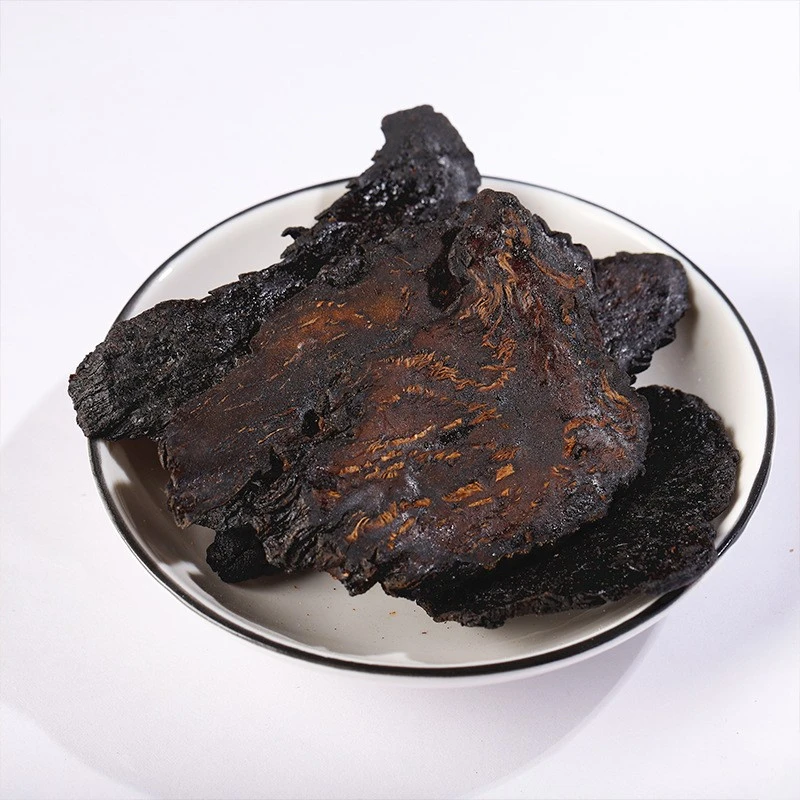
Cistanche
5) Preparation methods (translated as a technical process)
5.1 Preparation of the Mixture / Oral Liquid (合剂) - Method A
Weigh herbs according to the specified ratio.
Add water at 9–11× and 7–9× (two extractions).
Decoction 2–3 times; combine filtrates.
Concentrate until each 1 mL equals 5 g crude drug equivalent.
Add 2–4× ethanol to the concentrate to reach 60% alcohol content.
Refrigerate and stand for 22–26 hours.
Filter; recover ethanol from the filtrate until no alcohol odor remains.
Boil the recovered liquid; add preservatives:
Sodium benzoate 2–4 g
Ethylparaben 0.23–0.27 g
Filter, cool, add water to 480–520 mL, and hot‑fill to obtain the final mixture.
5.2 Preparation of the Mixture / Oral Liquid (合剂) - Method B (with volatile oil capture)
Weigh Shu Di Huang, Rou Cong Rong, Sheng Huang Qi, grind to 10–40 mesh.
Extract volatile oil by steam distillation or supercritical extraction; reserve volatile oil.
Combine the residues of these three herbs with the remaining herbs; add water 5–10×, decoct 2–3 times, combine filtrates.
Concentrate until each 1 mL equals 5 g crude drug equivalent.
Use a flocculation precipitation method, stand 22–26 hours, then centrifuge and filter.
Centrifugation speed: 4980–5020 rpm
Add volatile oils (noted for Dang Shen, Mai Dong, Bai Zi Ren in one section; in examples also mentions volatile oil from Shu Di Huang/Rou Cong Rong/Sheng Huang Qi), mix thoroughly.
Add preservatives (sodium benzoate + ethylparaben), filter, cool, adjust to 480–520 mL, hot‑fill.
B2B technical note: This process describes a classic "water decoction + ethanol precipitation (60% alc) + cold settling" route to reduce impurities and improve clarity/stability-commonly used when turning multi‑herb decoctions into industrial dosage forms.
6) Preparation methods for Granules (颗粒剂)
6.1 Granules - Method A (ethanol precipitation + wet granulation)
Weigh herbs as per formula.
Add water 9–11× and 7–9×; decoct 2–3 times; combine filtrates.
Concentrate to 1 mL = 5 g crude drug equivalent.
Add 2–4× ethanol, adjust to 60% alcohol content, refrigerate 22–26 hours.
Filter; recover ethanol until no alcohol odor remains.
Concentrate to relative density 1.25–1.30 (room temperature).
Add excipient as needed: dextrin or starch.
Wet granulate; dry; obtain 480–520 g granules; pack.
6.2 Granules - Method B (volatile oil + chitosan flocculation + inclusion complex)
For Shu Di Huang, Rou Cong Rong, Sheng Huang Qi: grind to 10–40 mesh; extract volatile oil by steam distillation or supercritical extraction; reserve volatile oil.
Decoction of residues + remaining herbs (water 5–10×, 2–3 times), combine filtrates, concentrate (same crude‑equivalent target).
Use chitosan flocculation precipitation, stand 22–26 hours, centrifuge and filter.
Concentrate to relative density 1.25–1.30 (room temperature).
Add dextrin/starch and add a β‑cyclodextrin inclusion complex of volatile oils from Shu Di Huang/Rou Cong Rong/Sheng Huang Qi.
Granulate (wet granulation or one‑step granulation), low‑temperature or vacuum drying, obtain 480–520 g granules; pack.
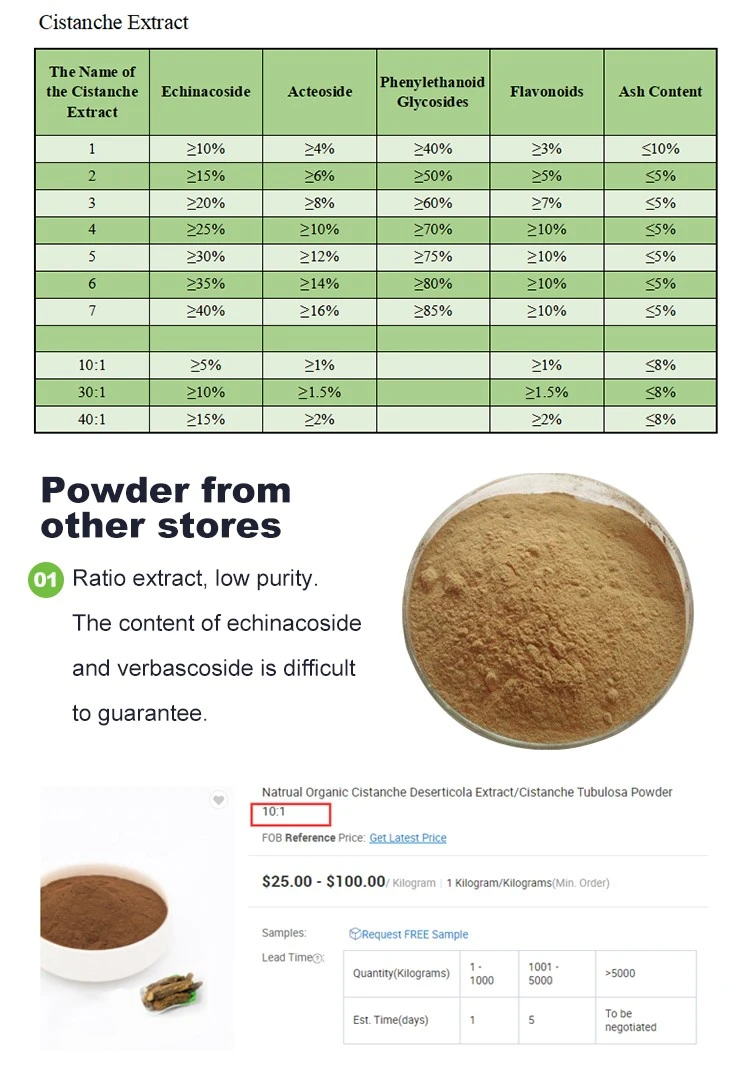
Cistanche Standardized Extract
Click to get more details
7) Formulation rationale (translated, with industry-friendly framing)
The disclosed therapeutic principle is described as "tonifying the kidney and replenishing essence, nourishing yin, and activating blood". The herbs are positioned as:
Shu Di Huang + Rou Cong Rong: tonify kidney / replenish essence
Sheng Huang Qi + Dang Shen: strengthen spleen / tonify qi
San Qi + Ling Zhi: promote blood circulation, support vessel network
Mai Dong: nourish yin and generate fluids
Bai Zi Ren: nourish heart and calm the mind
For businesses, this is useful as a blueprint for product story architecture (energy + circulation + calmness + sleep), provided claims remain compliant.
8) "Modern pharmacology" section (translated cautiously)
The text states that modern pharmacology research suggests:
Shu Di Huang and Rou Cong Rong have antioxidant activity and may influence hemorheology and reperfusion-related parameters.
Astragalus and Codonopsis may be associated with effects related to myocardial ischemia, vascular dilation, antithrombotic activity, and blood viscosity; Astragalus flavonoids are described as potentially influencing arrhythmia-related electrophysiology.
San Qi and Ling Zhi are described as supporting blood circulation and coronary flow.
Ophiopogon saponins are described with references to arrhythmia models.
Compliance note: The above reflects the invention text's narrative summary of pharmacology and models. If you want to use this part for overseas marketing, it should be rewritten into ingredient education (no disease claims), and supported with publicly citable papers.
9) Clinical study outline (translated and structured)
9.1 Study site and participants
Participants were recruited from outpatient and inpatient services, including atherosclerosis specialty clinics, at Longhua Hospital affiliated to Shanghai University of Traditional Chinese Medicine.
9.2 Design
Enrolled cases met diagnostic criteria for:
carotid atherosclerosis
frequent PACs
plus a TCM pattern diagnosis described as "heart‑kidney yin deficiency"
Randomization: patients were allocated into a treatment group and a control group using a random number table method.
Total sample size: 64 cases (32 treatment, 32 control).
9.3 Interventions
Control group: conventional Western medicine treatment; antiarrhythmic drug: propafenone hydrochloride tablets, 150 mg orally every 8 hours.
Treatment group: on top of conventional Western medicine, add the TCM formula (the above 8‑herb prescription). The preparation is described as a decoction pack, taken twice daily after meals, for 12 weeks.
9.4 Outcomes and monitoring
Baseline data: age, sex, comedications, allergy history, etc.
Physical exam: heart rate, blood pressure, respiration, weight; measured pre‑treatment, at 4 weeks, and at 12 weeks.
Safety monitoring: blood/urine/stool routine tests; liver & kidney function; adverse events.
Primary efficacy indicators:
Holter monitoring: number of premature beats
Carotid ultrasound: intima‑media thickness (IMT) and plaque area
Secondary indicators:
TCM symptom score (based on a referenced guideline)
Follow‑up hard endpoints after 12‑week treatment plus an additional 12‑week observation: events such as acute coronary syndrome and acute cerebrovascular accident (as described)
Efficacy criteria (as described):
"Markedly effective": PACs disappear or reduced by ≥90%, symptoms such as chest tightness/palpitations improved
"Effective": PACs reduced 50–90%, symptoms improved
"Ineffective": PACs reduced <50% or unchanged, symptoms not improved
9.5 Results (as described)
Baseline characteristics between groups showed no statistically significant differences.
After treatment, both groups had reductions in PAC frequency compared to baseline; the treatment group showed fewer PACs and higher total effective rate than control (reported as statistically significant).
Carotid ultrasound: control group plaque area increased versus baseline; treatment group showed smaller IMT and plaque area versus control after treatment (reported as statistically significant).
TCM symptom score decreased in both groups; treatment group decreased more.
Endpoint events: treatment group reported fewer endpoint events than control in follow‑up.
Safety: no obvious adverse reactions; safety indicators between groups not significantly different.
Conclusion (translated): The invention concludes that combining this herbal formula with conventional therapy may help limit plaque progression, reduce PAC frequency, improve TCM syndrome symptoms, and reduce related endpoint events.
B2B caution: This is a described clinical study summary inside an invention document. For international marketing use, brands typically need access to the full published paper/ethics approval details and should not present it as definitive clinical proof without appropriate context.
10) What this means for Cistanche (Rou Cong Rong) ingredient buyers
Even though the disclosed formula is multi‑herb, Cistanche is one of the core ingredients. For brands that want to build credible sourcing around Rou Cong Rong, the practical procurement question becomes:
Can your supplier demonstrate:
stable upstream supply (cultivation base, traceability)
GMP manufacturing capacity
marker‑based QC (e.g., Acteoside/Verbascoside, Echinacoside, total PhGs)
third‑party safety testing (heavy metals, pesticide residues, microbiology)
If you are developing products that include Cistanche as a key differentiator, it is often wise to select a supplier that can provide:
HPLC marker COA (batch‑to‑batch consistency)
documented GMP workshop and QC lab capability
compliance‑ready documents (as applicable to your market)
A professional standardized Cistanche extract manufacturer in China.
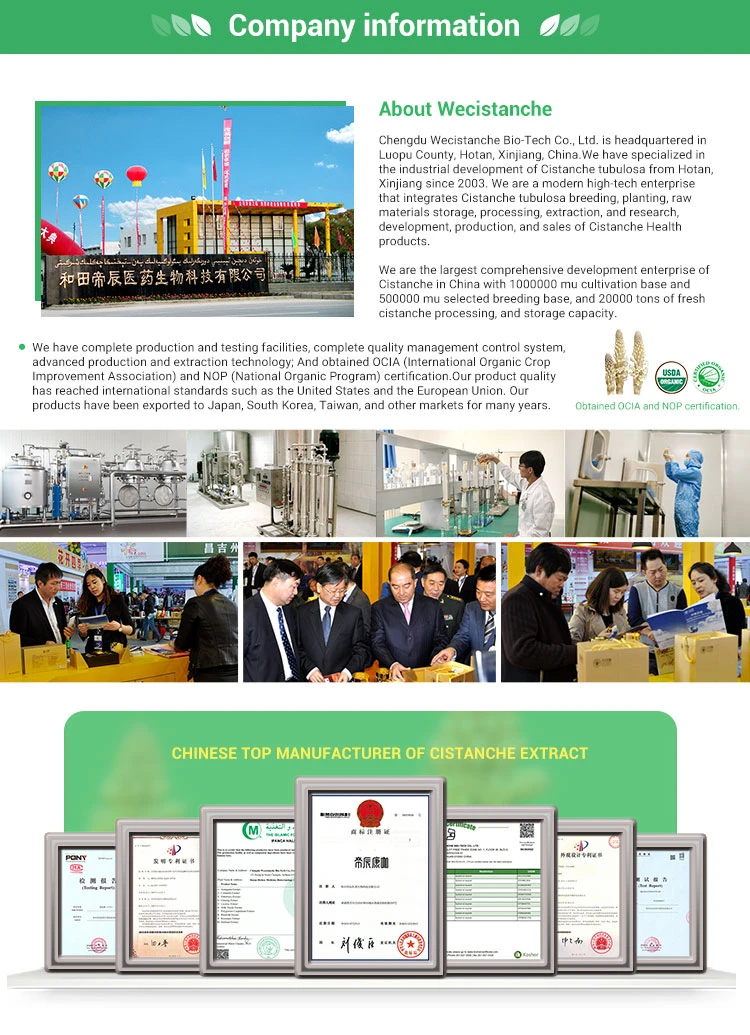
11) How we support Rou Cong Rong brands (factory capability snapshot)
For B2B customers seeking high‑actives Cistanche tubulosa extract, our manufacturing and QC overview includes:
GMP workshop and microbiology lab capacity (as described in corporate profile)
marker standardization focus (Acteoside/Verbascoside; Echinacoside; total PhGs)
third‑party safety testing availability (heavy metals, pesticide residues; per report images referenced on our site)
full‑chain control from cultivation through processing and ready stock for certain grades
If you want, I can also convert this into a one‑page "Buyer Audit Pack Outline": COA items checklist, typical spec table, documents list (HACCP/organic-related claims where applicable), and a clean "ND" legend for lab reports.
12) Suggested on‑site FAQ (helps conversion on independent sites)
Q1: Is this article a medical claim?
A: No. It is technical translation and formulation/process reference for industry readers.
Q2: Can the formula be used directly as a supplement overseas?
A: Regulatory classification varies by country/region. Consult regulatory counsel; claim language and ingredient status must be verified per market.
Q3: What should I request from a reliable Cistanche supplier?
A: At minimum: botanical identity confirmation, HPLC marker COA, heavy metals + pesticide residues + microbiology results, traceability documents, and GMP/food-safety system evidence.