Acute Onset Of Dark Urine in A Patient With LVAD Pump Dysfunction
Jun 01, 2022
For more info. contact david.wan@wecistanche.com
Case Description
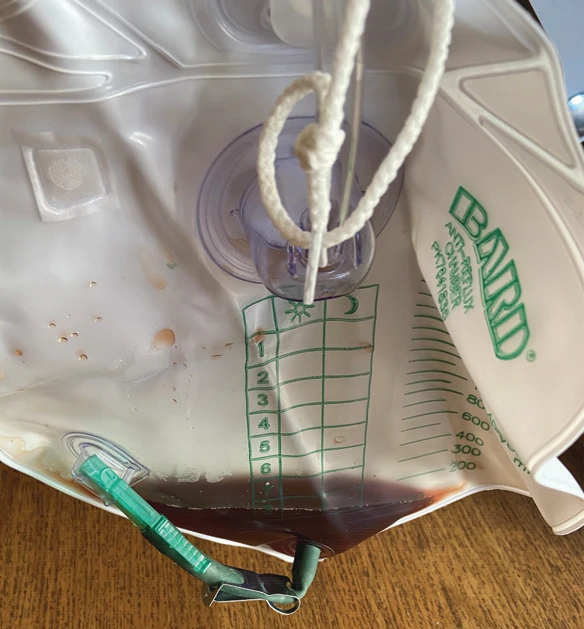
A 67-year-old man with a history of congestive heart failure (left ventricular ejection fraction 10%)requiring prior placement of a left ventricular assist device (LVAD)presented with LVAD alarms, fatigue, and dark urine. On exam, notable findings included jugular venous pressure elevation, mechanical hum throughout the precordium,1+ bilateral lower extremity pitting edema, and gross appearance of the urine was dark reddish-brown (Figure 1).
Laboratory results revealed international normal-ized ratio of 1.3.Hemoglobin was 9.6 g/dl, with ele-vated lactate dehydrogenase of 1814 U/L (reference range, 125-220 U/L), total bilirubin of 2.6 mg/dl (ref-erence range, 0.0-1.4 mg/dl), and direct bilirubin of 0.7 mg/dl (reference range,0.0-0.5 mg/dl).Serum cre-atinine was 1.0 mg/dl from a baseline of 0.6 mg/dl.
Click here to learn more about Cistanche
Uncentrifuged urine was compared with centrifuged urine, which showed persistent discoloration of the supernatant(Figure 2). Dipstick urinalysis was positive for blood. Microscopic examination showed 0-2 red blood cells (RBCs) per high power field. Further testing included serum creatine kinase of 119 U/L (reference range, 30-200 U/L). Plasma hemoglobin level was 149 mg/dl (reference range, 0.0-9.7 mg/dl), which supported hemoglobinuria in the setting of hemoglobinemia as the cause of the patient's dark urine. The patient's LVAD had evidence of pump failure with high power consumption and low pulsatility index.LVAD pump failure in the clinical context of subtherapeutic anticoagulation, hemolysis, and heart failure corroborated the diagnosis of LVAD thrombosis causing intravascular hemolysis and hemoglobinuria.

The visual appearance of urine can exhibit an assortment of abnormal colorations. Dark urine may result from processes that cause red, brown, or black-colored urine. In addition to history and exam, the initial step in evaluating dark urine is to obtain a urinalysis to evaluate for hematuria(1). In the absence of intact RBCs in the urine, darkly discolored urine can be due to the presence of a variety of different pigments (hemoglobin, myoglobin, urobilinogen, porphobilin, melanin), medications, compounds (homomeric acid in alkaptonuria), or foods, such as beets (1,2). The presence of free hemoglobin in the urine, hemoglobinuria, occurs after hemolysis of RBCs. When hemolysis occurs in sufficiently high amounts, hemoglobin can exceed the saturation of haptoglobin, causing it to dissociate into a dimeric form that is freely filtered at glomeruli(3). In hemoglobinuria, centrifuged urine will be discolored and heme positive. Myoglobinuria must be differentiated from hemoglobinuria. The clinical context combined with checking serum creatine kinase and free hemoglobin levels can discriminate between the two conditions.

Once hemoglobinuria in the setting of hemoglobin mia is determined, the cause of intravascular hemolysis should be discerned. In patients with LVADs, hemolysis can result from shear stress or pump thrombosis (4).In addition to hemolysis, pump thrombosis can produce heart failure or thromboembolic events. Interrogation of the LVAD with pump thrombosis will display high power consumption, and high pump speeds, but decreased pump flow (5). Management includes anticoagulation, circulatory support, thrombolysis on a case-by-case basis, and surgical pump exchange or heart trans-plantation(4,5).

Teaching Points
●Dark urine should be examined for the presence of blood
via microscopic examination and heme testing.
● Hemoglobinuria is a clinical sign resulting from a broad
variety of disorders that requires further investigation.
● Pump thrombosis, an LVAD-specific complication, can
result in pump failure, hemolysis, emboli, and death if left unmanaged.

Disclosures
R.Jhagroo reports receiving research funding from Amgen, Del-ganoid, and Keflex. The remaining author has nothing to disclose.
Funding
None.
Acknowledgments
Informed consent was obtained from the acting health care power of attorney of the patient.
Author Contributions
J. Alstott wrote the original draft, and R. Jhagroo provided supervision.

References
1.Aycock RD, Kass DA: Abnormal urine color.South Med/
105:43-47, 2012 https://dbi.org/10.1097/SM. 0b013e31823c413e
2.Ham TH: Hemoglobinuria.Am / Med 18:990-1006,1955
https/doi,org/10.1016/0002-9343(55)90177-7
3. Qian Q, Nath KA, WuY, Daoud TM, Sethi S: Hemolysis and
acute kidney failure. AmJ Kidney Dis 56:780-784,2010 https://doi.org/10.1053/i.ajikd,2010,03,O25
4. Papanstasiou CA. Kyriakoulis KG. Theo chair CA. Kokkinidis
DG, Karamitsos TD, Palaiodimos L: Comprehensive review of hemolysis in ventricular assist devices. World / Cardiol 12:334-341.2020 HTTP:"doi.org/10.430/wic,v12.j7.334
5.Long B,Robertson J, Koyman A,Brady W:Left ventricular assist
devices and their complications: A review for emergency clini-cians.Am/Emerg Med 37:1562-1570,2019 https//doi.arg/10. 1016/j.ajem.2019.04.050
Received: June 17,2021
Accepted: June 23,2021