Advantageous/Unfavorable Effect Of Quercetin On The Membranes Of SK-N-SH Neuroblastoma Cells Part 2
Apr 29, 2022
Please click oscar.xiao@wecistanche.com for more information
2.2.2. Antioxidant Activity of Quercetin
To test the effectiveness of quercetin in protecting membranes against oxidative stress, experiments were performed in which the lipid models of the membrane were exposed to ozone in the absence (Figure 4a) and presence of quercetin at a concentration of 6.25 μM (Figure 4b).
Under the influence of ozone, the course of both the dependencies, i.e., π=f(A)and Cs-1=f(rn)changes. The isotherms obtained for monolayer spread on the ozone-containing subphase were characterized by a smaller slope and a shift towards lower A values. Moreover, Cs-1 values decreased under the influence of ozone. These changes were greatest at an ozone concentration of about 0.4 ppm. cintanche A further increase in ozone concentration did not increase the changes in monolayer characteristics (Figure 4a inset).

Figure 4. Surface pressure isotherms and corresponding compressibility modulus(inset) of lipid model of neuroblastoma layers spread on the subphase contained the indicated concentrations of ozone dissolved in buffer. Isotherms:(a)in the absence of antioxidants;(b)in the presence of quercetin (6.25 μM) added to the ozone-containing buffer.
When quercetin at a concentration of 6.25 μM was introduced into the subphase, ozone did not significantly affect the course of the r(A) isotherm; however, the values of the compression modulus changed in ozone presence similarly as in the case of quercetin absence (Figure 4b inset).

Please click here to know more
The numerical values of the parameters characterizing the monolayers determined based on the obtained isotherms are presented in Table 3.
Table 3. Surface parameters of monolayers Alim and Cs-I calculated for monolayers of the model of neuroblastoma membrane spread on the subphase contained the indicated concentrations of ozone dissolved in the buffer in the absence and in the presence of quercetin (6.25 uM). Data represent the mean from three experiments ± SD. Different letters indicate significant differences (p≤0.05).

In the presence of ozone, a slight reduction in the surface area per molecule (Alim)in densely packed monolayer is observed. The maximum reduction of this parameter is 3.2% compared to the control (monolayer on the pure buffer). The Cs-I parameter is also reduced, reaching plateau values at ozone concentrations above 0.6 ppm O.The maximum reduction of this parameter reaches 24% in relation to the control.
When quercetin at a concentration of 6.25 uM is present in the subphase, Alim values (1-2%) decrease slightly, while the reduction in the Cs-1value is about 27%.
The nature of the Alim changes in the presence of ozone and of ozone in combination with quercetin have different courses. At an ozone concentration of about 0.3 ppm, in the absence of the quercetin, the Aimdecreases abruptly to about 88.3 A2. It then reaches the minimum plateau value giving characteristic S-shape dependence (Figure 5a, red points). In the presence of quercetin, there is a slight smooth monotonic decrease of Alim, reaching a higher ozone concentration a plateau of about 93.5 A2(Figure 5a, green points).

Figure 5. The dependence of the area per molecule on ozone concentration (a) and dependence of compression modulus on ozone concentration (b)for neuroblastoma membrane on subphase: Without quercetin-red points; with quercetin-green points. Lines do not present any physical model, were mathematically fitted and were drawn for the convenience of tracking parameter changes. The maximal layer compression modulus values change similarly with ozone concentration for both: In the absence and the presence of quercetin (Figure 5b).
3. Discussion
The mechanism of action of quercetin has been intensively studied for many years, but the results of experiments are often contradictory and indicate that in some circumstances, this compound is beneficial, and in others, unfavorable for cells. The analysis of the available studies shows that the effect of this compound on cells is related to two aspects, i.e., its interaction with membranes and antioxidant activity. However, in cells, it is not possible to distinguish these two modes of quercetin action and the assessment of the suitability of this compound as a potential substance, e.g., having antitumor activity. For this reason, the experiments have been planned in such a way as to assess in a qualitative and quantitative manner the influence of this compound on the mechanical properties of membranes, as well as its antioxidant activity in the model system, which eliminates the effects of the activity of other metabolic pathways.
Based on the performed experiments, it was confirmed that even at the lowest concentrations (6.25 uM), quercetin modifies(as indicated by the increase in Alimvalue)the model monolayers, mimicking the lipid part of the membrane of neuroblastoma cells. It points to a possibility of the interaction of quercetin with the membranes of these cells when reaching the brain, even at low concentrations. This is of particular importance for nerve cells whose membranes contain relatively large amounts of lipids.
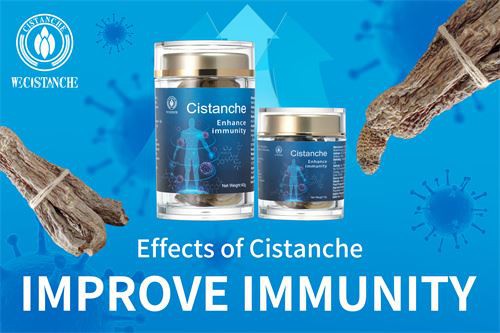
Cistanche can improve immunity
The approximate lipid-protein ratio for nerve cells is 80:20%, and for example, for the erythrocyte membrane, this ratio is 50:50%[29]. Such a level of lipids in the membrane of nerve cells is linked to the role of these cells in transmitting electrical signals. At the same time, even subtle changes in physicochemical properties, such as flexibility and stiffness, of the cell membrane, can significantly disturb this function.
The action potential is transferred along the membrane of the nerve cell thanks to the work of ion channels, and then, thanks to the action of ion pumps, the resting potential is restored. The proper functioning of these proteins (in particular, determined by their shape) is closely dependent on the lipid environment. Moreover, changes in the mechanical properties of the membrane may disturb the operation of channels whose gating mechanism depends precisely on the mechanical properties of the membrane.
These theses are confirmed by studies that showed that the effect of quercetin on the cell membrane is related, inter alia, to the transport of Ca2+ ions and/or Ca2+metabolism [30,31]. Thus, the introduction of quercetin molecules into the environment of the membrane (especially of nerve cells) may have significant consequences on their functioning.
To check whether quercetin action determined in model systems plays a beneficial or unfavorable role in cells, the results obtained for model membranes were compared with the effect of this compound on whole neuroblastoma cells. For SK-N-SH cells, the MTT test was done, Cistanche Extract Anti Alzheimer's giving the information about cell viability of cells which in turn is directly proportional to mitochondrial dehydrogenase enzymes.
The obtained results showed that the presence of quercetin at concentrations of 100 and 200uM increased the number of viable cells. Similar results were obtained by Bao et al. [32], investigating the effect of quercetin on PC-12 cells. The LDH leakage into the extracellular environment, which gives information about the disruption of the cell membrane, was also examined at the same quercetin levels. The obtained results demonstrated that the membranes of the tested cells were not damaged under such conditions. Boots et al. [2], studying the effects of quercetin on lung epithelial cells, observed similar results. Therefore, it can be concluded that at these concentrations, quercetin has a positive effect on cells, increasing their Viability.
The second important aspect of the mechanism of quercetin action is related to its antioxidant properties. To assess the associated effect of the studied polyphenol, experiments were carried out in which it was checked whether quercetin plays a protective role in cells exposed to oxidative stress. Oxidative stress was generated by introducing H, O2 into the cell environment. Cistanche for improving memory As demonstrated in this study, hydrogen peroxide causes significant cell mortality, expressed as damage to the mitochondria.
When SK-N-SH cells were cultured for3 h in a medium containing 3 and 5 mM H2O2, the cell viability decreased to approximately 44% of that of untreated cells (MTT assay). The studies showed that 24 h pretreatment of cells with quercetin causes an increase in the number of living cells in relation to cells treated with H2O2. Suematsu et al. [13] reported similar effects.
We also measured the level of MDA, which is a biomarker of oxidative stress as an end product of lipid peroxidation[33]. Cells pretreatment with high quercetin concentrations, followed by the addition of hydrogen peroxide, resulted in a slight increase of MDA content in comparison to cells exposed to HO, alone. This may be because quercetin (at higher concentrations) can also undergo oxide-reductive activation and be a subject of redox cycling, generating intracellularly reactive oxygen species [34].
There were no significant changes in membrane destruction (as indicated by unchanged LDH level) of cells treated with quercetin and H2O2 compared to the case when cells were exposed to oxidative stress only. Therefore, it can be concluded that despite an increase in lipid peroxidation(at high quercetin concentrations), this was not significant enough to destroy the membranes and disrupt their continuity.

The observations obtained for the native system were confronted with those received for a model system where it is possible to control exactly both quercetin concentration and stress level. It was checked how the lipid part of the neuroblastoma membrane is resistant to oxidative stress. Stress conditions were created by introducing ozone into the buffer, wherein the water environment ozone undergoes decomposition reactions forming oxidative radicals, among others hydroxyl radicals and superoxide anion radicals [35]. The obtained mixture of reactive oxygen species corresponds to those naturally occurring in cells, due to the redox status disturbance imbalance [36-38].
Under the influence of stress, the shape of isotherms changed, indicating a significant decrease in the area per single molecule in the densely packed monolayer. Such changes took place due to the oxidation of unsaturated bonds in the fatty acid chains. This effect increased with the increase in ozone concentration to about 0.3 ppm, and then this isotherm parameter remained at the same level despite the increase in ROS. This means that at an ozone concentration of about 0.3 ppm, all unsaturated fatty acids present in the monolayer were oxidized (in the neuroblastoma model, the total amount of unsaturated fatty acids was 52%)
Oxidized monolayers have substantial stiffness, cistanche in Chinese as represented by the Cs-1 value (the higher the value of this parameter, the larger the stiffness of the layer). In the presence of quercetin, even at a low concentration (6.25 μM), the modifications of the membrane exposed to ozone, as visualized by changes in the Alim value, were significantly reduced (Figure 5a), which proves the antioxidant activity of this compound. It is worth noting, however, that although quercetin scavenged the radicals, protecting the unsaturated fatty acids against oxidation, it did not reverse the changes in membrane stiffness (Figure 5b).
Thus, it has been shown that quercetin exhibits an antioxidant action, but its mere presence between lipid molecules influences (determines) the parameters of the laver, i.e., despite the protection of fatty acid chains against oxidation, the membrane stiffness decreased significantly (Cs-I value about 25% lower compared to the control).

These results indicate that it is the membrane change that is the main factor in the cellular effects resulting from the presence of quercetin. However, the consequences of this change(modification of signaling, transport) vary depending on the number of polyphenol molecules, the initial composition of the membrane, and the function of the cell. This explains why, in different circumstances and in different studies, quercetin shows a protective effect, while in others quite the opposite.
In a situation of high oxidative stress, the antioxidant effect helps the cell by protecting its components against damage. However, if the membranes are significantly modified by locating this compound in their environment resulting in the distribution of the signaling or transport pathways by changed membrane stiffness, this may lead to unfavorable effects. It should also be remembered that many processes in a cell take place simultaneously, both those related to membranes and those that generate oxidative stress. The effect that can be observed and measured by determining the level of specific indicators is always total. Hence, there are situations in which the effect of quercetin is perceived as favorable and unfavorable.
4. Materials and Methods
4.1.Materials
The composition of the model of the lipid part of the neuroblastoma cells membrane was established based on the work by the authors of [39-41]. Phospholipids: 1-oleoyl-2-palmitoyl-sn-glycerol-3-phosphocholine;1-hexacosanoyl-d4-2-hydroxy-sn-glycerol-3-phosphocholine;1,2-dioleoyl-sn-glycerol-3-phosphocholine; L-α-phosphatidylethanolamine (Brain); sphingomyelin (Brain)-(Avanti Polar Lipids Inc., Alabaster, AL, USA). Cholesterol was pur-chased (Sigma-Aldrich, Darmstadt, Germany). Phospholipid to cholesterol ratio was 79%to 21%. The ratio of saturated to unsaturated fatty acids was 48% to 52%.
The solvents(chloroform, ethanol) of chemical purity-Poch (Gliwice, Poland); freshly deionized water produced by HLP 5 Hydrolab (Straszyn, Poland). The culture medium, serum, and antibiotics were purchased from CytoGen GmbH. The chemical reagents used in the experiments were obtained from Sigma Aldrich.
4.2.Cell Culture
Human neuroblastoma cell line SK-N-SH (The European Collection of Authenticated Cell Cultures(ECACC) was cultured in 10% fetal bovine serum (FBS) in Dulbecco's Modified Eagle Medium(DMEM), supplemented with 0.01% penicillin-streptomycin at 37 °C in a humidified atmosphere, containing 5% CO2.
4.3. Measurement of Cell Viability (MTT Assay)
Cells were seeded in a 96-well plate at a density of 1×10⁴ cells per well in a volume of 0.1 mL. The cells were treated for 24 h with various concentrations of quercetin (3.75-200 μM). After this time,3 mM and 5 mM hydrogen peroxide was added for 3 h. Due to the lack of differences between the effects of HO2 at3 and 5 μM concentrations, for statistical studies, they were treated as the same treatments and described as 3-5 uM H2O2 treatment.
After then 50μL MTT(3-【4,5-dimethylthiazol-2-yl】-2,5 diphenyl tetrazolium bromide)solution (sterile stock solution of 5 mg/mL) was added to cells and incubated for 2 h at 37 °C in a humidified 5%CO, atmosphere. Then,0.4 mL of dimethyl sulfoxide(DMSO)was added to each well and kept for 10 min. After centrifugation, the optical density of the supernatant was measured at 570 nm using a microliter plate reader (BioTek Instruments, VT, USA).
4.4.Mem1brane Damage Assay (LDH Assay)
The lactate dehydrogenase (LDH) assay was used as a marker of cell membrane entirety.
Cells in the amount of 1× 10* cells per well were seeded in a 96-well plate and incubated in the presence of quercetin (3.75-200 μM) for 24 h; Then, 3 mM and 5 mM H2O, were added for 3 h. To the tubes containing0.5 mL of 0.75 mM sodium pyruvate and 10 uL NADH(140 μM)(heated at 37C for 10 min), 150 μL of supernatant was added and incubated for 30 min at 37 °C. Then 0.5 mL of 2,4-dinitrophenylhydrazine was added to the sample, and after 1 h the absorbance was measured at 450 nm.
4.5. Determination of Lipid Peroxidation(MDA Concentration)
Membrane lipid peroxidation was estimated by thiobarbituric acid (TBA)reaction with malondialdehyde (MDA). Cells were seeded in 46-well plates containing quercetin and H, O2 (in concentrations and times described above) in the amount of 1×10⁴ cells per well in a volume of 0.25 mL. After treatment, the samples were collected and centrifuged (1000×&,5min). To the pellets, 0.5 mL of 0.5%TCA was added, vortexed for 1 min, and lysed through sonicating for 5 min. After centrifugation at 10,000×g for 10 min, 0.4 mL of supernatant was added to the 1.25 mL 20%TCA with 0.5%TBA and heated in a dry thermoblock(100°C)for 30 min. After cooling, the absorbance was measured at 532 nm using the molar extinction coefficient of MDA equal to 155 M-1 cm-1.
4.6.Model Membranes
Buffer Ozonation. Phosphate buffer(0.01 M, pH 7.4)was saturated with ozone produced by ozone generator FM 500 (Grekos, Poland). The concentration of ozone in a buffer was determined according to Bader and Hoigne [42].
Surface Pressure Isotherms. cistanche penis growth Langmuir trough (KSV, Finland) was used for surface pressure isotherm registration at a constant compression rate corresponding to 5 mm/min barrier speed. Lipid monolayer was formed by spreading a defined amount of lipid chloroform solution at 1 mg/mL concentration on the subphase composed of aqueous 0.01 M phosphate buffer, pH 7.4 with or without quercetin, and with or without ozone. Surface tensions were measured with a Pt-Wilhelmy plate. Experiments were performed at 25°C±1°C.
4.7. Statistical Analysis
Three to six independent analyses were performed for each tested variant and averaged (±SD). The significant differences compared to the controls were estimated by exploiting the SAS ANOVA procedure. The statistical analysis was performed by Duncan's multiple range test, taking p<0.05. Statistical tests were carried out using STATISTICA 13.3(Cracow, Poland).
Author Contributions: Conceptualization, B.K., B.D.,and E.R.-S.methodology, B.K. B.D.; software, B.K., B.D.validation, B.K., B.D., E.R.-S., A.B.writing—original draft preparation B.K., B.D., E.R.-S., writing—review and editing, B.K., B.D., E.R.-S., A.B.visualization, B.K., B.D.supervision, B.K., B.D., E.R.-S., A.B.All authors have read and agreed to the published version of the manuscript.
Funding: This research received no external funding.
Institutional Review Board Statement: Not applicable.
Informed Consent Statement: Not applicable.
Data Availability Statement: Data is contained within the article. Conflicts of Interest: The authors declare no conflict of interest.
This article is extracted from Molecules 2021, 26, 4945. https://doi.org/10.3390/molecules26164945 https://www.mdpi.com/journal/molecules