Analysis Of The Kidney-Tonifying Effects Of Cistanche Tubulosa: Supported By Analytical And Pharmacological Data
Nov 10, 2026
1. Executive Summary
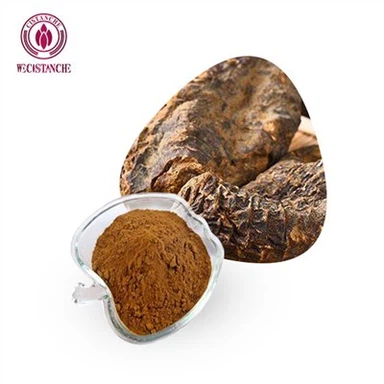
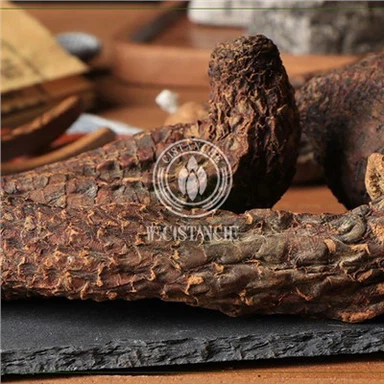
Cistanche tubulosa (Guanhua Roucongrong) is a traditional Chinese medicinal herb classified in TCM as entering the Kidney and Large Intestine meridians, with actions of "tonifying kidney yang, replenishing essence and blood, and moistening the intestines."
In modern terms, its kidney-tonifying effects can be examined through three measurable dimensions:
Chemical standardization - quantifiable phenylethanoid glycosides by HPLC
Endocrine modulation - regulation of the hypothalamic–pituitary–gonadal axis

Effects of Cistanche: Improve Kidney Function
Reproductive protection - improvement in sperm quality and reduction of oxidative testicular damage
Current evidence is strongest in analytical chemistry and animal studies. High-quality human randomized controlled trials using isolated C. tubulosa extract remain limited.
2. Chemical Profiling: What the Tests Show
2.1 Pharmacopoeial Requirements
For Cistanche tubulosa, the combined content of echinacoside and acteoside should not be less than:
1.50% (dry weight, calculated by HPLC)

Echinacoside is the main chemical component of Cistanche tubulosa

Acteoside is the main chemical component of Cistanche tubulosa
Detection is typically performed at 330 nm using reversed-phase HPLC after 50% methanol ultrasonic extraction.
2.2 Reported Measured Values
Published HPLC studies report:
Average Xinjiang samples (68 batches):
Echinacoside: 3.32%
Acteoside: 0.91%
Pre-flowering high-quality material:
Echinacoside: 16.04 mg/g
Acteoside: 3.71 mg/g
Optimized ultrasound extract:
Echinacoside: 12.96 ± 0.33 mg/g
Acteoside: 1.19 ± 0.09 mg/g
Formula granules (multi-batch):
Echinacoside: 29.36–52.99 mg/g
Acteoside: 1.64–4.99 mg/g
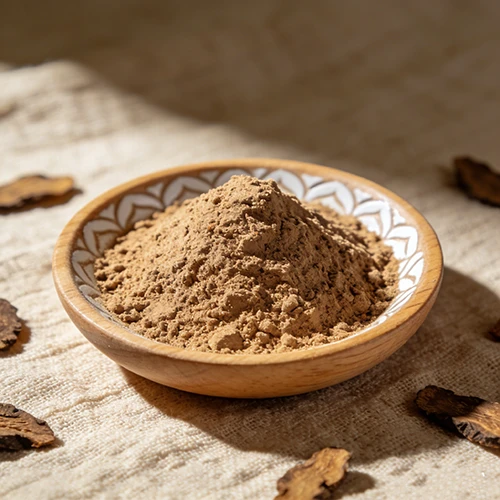
cistanche powder
These data support batch-to-batch standardization and ingredient traceability.
3. Translating "Kidney Deficiency" into Measurable Endpoints
|
TCM Concept |
Modern Biomarkers |
|
Kidney yang deficiency |
Low testosterone, disordered LH/FSH, fatigue, cold intolerance |
|
Essence-blood deficiency |
Low sperm count, poor motility, high deformity rate |
|
Oxidative weakness |
Reduced SOD, elevated MDA, increased ROS |
C. tubulosa research maps closely to these biomarkers.

Effects of cistanche-improve kidney function
Click here to view Cistanche for Kidney disease products
【Ask for more】 Email:cindy.xue@wecistanche.com / WhatsApp: 0086 18599088692 / WeChat: 18599088692
4. Pharmacological Evidence from Animal Models
4.1 Cyclophosphamide-Induced Testicular Injury in Mice
Compared with the model group, Cistanche tubulosa water extract improved:
Sperm concentration: 32.60 → 58.40 × 10⁶/mL
Sperm motility: 45.20% → 72.30%
Serum testosterone: 7.49 → 10.89 ng/L
Testicular SOD: 152.22 → 217.69 U/mg prot
Testicular MDA: 54.91 → 36.41 nmol/mg prot
Antioxidant pathway markers Nrf2/HO-1 were up-regulated, while apoptotic Caspase-3 expression decreased.
Interpretation: the extract does not merely "stimulate desire"; it reduces testicular oxidative stress and supports spermatogenesis.
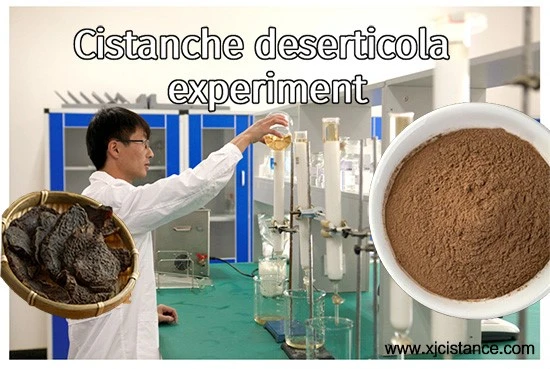
Cistanche tubulosa experiment
4.2 Bisphenol A-Induced Reproductive Damage in Rats
After 42 days of intervention:
Serum testosterone recovered
Sperm parameters improved
Expression of steroidogenic enzymes increased:
StAR, CYP11A1, CYP17A1, 3β-HSD, 17β-HSD
Echinacoside was identified as a key active contributor.
Mechanism: central hormonal-axis regulation plus local testicular steroidogenesis support.
4.3 Diabetic Male Rat Model
C. tubulosa extract supplementation:
Elevated serum testosterone
Improved sperm count and motility
Reduced oxidative stress and inflammation
Restored hypothalamic reproductive regulatory genes such as Kiss1, GPR54, and SIRT1
Cistanche efficacy-Tonifying kidney
5. Active Components and Their Roles
Echinacoside: primary marker; protects testis from oxidative injury; promotes steroidogenic enzyme expression
Acteoside (verbascoside): radical scavenging; germ-cell protection; mild androgen-like activity
Polysaccharides and tubulosides: anti-fatigue, immune modulation, metabolic and intestinal support
Higher total phenylethanoid glycoside content generally correlates with greater kidney-yang improvement in animal models, but higher dose is not linearly better.

Phenylethanol glycoside is the main active component of Cistanche tubulosa
6. What This Means for Human Use
Supported by evidence
Traditional use for kidney yang deficiency and essence deficiency
Animal-level improvement in hormones, sperm quality, and oxidative status
Chemically standardized, reproducible raw material
Still limited
Few standalone human RCTs on isolated extract
Optimal human dosage and intervention duration unclear
Not suitable for everyone; yin deficiency or damp-heat patterns require caution
Reasonable positioning
Cistanche tubulosa should be viewed as:
A long-term, cyclic, moderate-dose reproductive and endocrine supportive botanical - not a fast-acting aphrodisiac.
Typical observation windows in studies are 8–12 weeks.
Effects of Cistanche-Improve kidney function
7. Quality and Sourcing Recommendations
Require HPLC reports separating echinacoside and acteoside, not only "total glycosides."
Prefer traceable origins, pre-flowering harvest, and controlled drying.
Extract specifications should include solvent, glycoside content, heavy metals, pesticides, and microbiology.
Formulation logic: compatible with goji, polygonatum, or yam for essence-nourishing combinations, without overloading stimulants.
8. Conclusion
The "kidney-tonifying" effect of Cistanche tubulosa is not merely traditional rhetoric.
Chemically, it is definable by HPLC markers.
Mechanistically, it acts on the HPG axis and steroidogenic enzymes.
Experimentally, it improves testosterone, sperm quality, and antioxidant defenses in animal models.
Its best modern role is as a standardized, long-cycle botanical ingredient for male reproductive support and yang-deficiency-related fatigue - with clear claims, tested quality, and no overpromising.