Anti-inflammatory Iridoids From The Stems Of Cistanche Deserticola Cultured in Tarim Desert
Mar 03, 2022
Contact: Audrey Hu Whatsapp/hp: 0086 13880143964 Email: audrey.hu@wecistanche.com
ABSTRACT
In order to determine the chemical constituents of Cistanche deserticola cultured in the Tarim desert, a systematically phytochemical investigation was carried out. The constituents were isolated by silica gel, Sephadex LH-20, MCI gel, ODS column chromatography, and semi-preparative HPLC. Their structures were determined on the basis of MS and NMR spectroscopic analyses, by chemical methods, and/or comparison with literature data. The anti-inflammatory activities of the isolates were evaluated for their inhibitory effects on the lipopolysaccharide (LPS)-induced nitric oxide (NO) production in BV-2 mouse microglial cells. Nine iridoids were isolated and identified as cistanche desertoside A (1), cistanin (2), cistachlorin (3), 6-deoxycatalpol (4), gluroside (5), kankanoside A (6), ajugol (7), bartsioside (8), and 8-epi-loganic acid (9). Compound 9 exhibited potent inhibition on the NO production with an IC50 value being 5.2 μmol·L−1, comparable to the positive control quercetin (4.3 μmol·L−1). Compound 1 was a new iridoid, and compounds 5, 6, and 8 were isolated from this species for the first time.
[KEY WORDS] Cistanche deserticola; Iridoids; Structure elucidation; Anti-inflammatory activity

Introduction
Cistanches Herba (Roucongrong in Chinese) belonging to the Orobanchaceae family, is mainly distributed in North Africa, Arabia, and Asian countries [1]. As a well-known tonic in traditional Chinese medicine (TCM), the stems of Cistanche deserticola and Cistanche tubulosa have long been used in China and Japan for the treatment of kidney deficiency, female infertility, morbid leucorrhea, neurasthenia, and senile constipation [2-3]. Previous phytochemical investigations have
[Research funding] This project was financially supported by the National Natural Sciences Foundation of China (No. 81222051), Scientific Research Project of Traditional Chinese Medicine (No. 201307002), and National Key Technology R&D Program “New Drug Innovation” of China.
These authors have no conflict of interest to declare. Published by Elsevier B.V. All rights reserved indicated the presence of phenylethanoid glycosides (PhGs), iridoids, lignans, and polysaccharides in the Cistanche species [4], and some of the isolates presented neuroprotective, hepatoprotective, anti-inflammatory, anti-bacterial, anti-viral, and antioxidant effects [5-6].
In the late 1990s, in order to protect Tazhong Oilfield and control the desert, the sand-fixation plant Haloxylon ammodendron (C. A. Mey.) Bunge, the host of Cistanche deserticola, was introduced from the north to the south of Xinjiang, and large quantities of C. deserticola were cultured. The climate conditions and growth environment in the south are very different from that in the north of Xinjiang. Whether the chemical constituents of Cistanche deserticola cultured in southern Xinjiang vary or not is not clear. In order to determine the chemical constituents of Cistanche deserticola cultured in the Tarim Desert, a systematically phytochemical investigation was carried out in the present study. Herein, the isolation and structural elucidation of a new iridoid glycoside (1) together with eight known analogs (2–9) are reported, along with their anti-inflammatory activities.

Anti-inflammatory effect of Cistanche deserticola
Results and Discussion
The 85% aqueous ethanol extract of the stems of Cistanche deserticola was suspended in H2O (10 L) and extracted with EtOAc (10 L × 3) and n-BuOH successively. The EtOAc and n-BuOH extracts were subjected to silica gel, Sephadex LH-20, MCI gel, and ODS column chromatography (CC), and semi-preparative HPLC to afford one new (1) and eight known iridoids (2-9) (Fig. 1).


Compound 1 was isolated as a white amorphous powder with negative optical rotation ([a]20 –118.0, c 0.1, MeOH). Its IR spectrum showed strong absorption bands at around 3 393 cm−1 ascribable to the hydroxy groups. It has a molecular formula of C16H26O9 determined by the quasi-molecular ion at m/z 385.148 5 [M + Na]+ (Calcd. for C16H26O9Na, 385.146 9) and m/z 401.122 8 [M + K]+ (Calcd. for C H O K, 401.120 8) correlations from H-1 to C-1′, H-10 to C-7, C-8, and C-9, and from H-11 to C-3, C-4, and C-5 also supported the above elucidation.
The stereochemistry of compound 1 was determined by comparison of the chemical shifts and coupling constants with literature data and by analysis of the NOESY spectrum. The relationship of H-5 to H-9 was determined as cis from their coupling constant (10.5 Hz) [8-9]. For the most natural iridoids, the configurations of C-1-OH, H-5, and H-9 are β, and the 13C NMR chemical shifts of C-1 and C-1′ are generally at δC 93–98 and 97–101, respectively. While, for those of α- configuration, the resonances of C-1 and C-1′ are, on average,5–6 downfield shifted [10-11]. The 13C NMR data of com-16 26 9 in the (+)-HR-ESIMS and supported by the 13C NMR data (Table 1), indicating 4 degrees of unsaturation. Acid hydrolysis−1Table 1 1H NMR (500 MHz) and 13C NMR (125 MHz) data of 1 (δ in ppm, J in Hz) of compound 1 with 2 mol, L of trifluoroacetic acid afforded D-glucose, which was identified by analysis of its silane derivatives by GC analysis. The relative configuration at the anomeric center of the glucosyl was assigned as β from the coupling constant of 8.0 Hz. The 1H and 13C NMR data (Table1) of compound 1, which were unambiguously assigned by various 2D NMR experiments, showed signals assignable to two methyls at δH 1.23 (3H, s, H-10) and 1.52 (3H, br s, H-11), one methylene at δH 1.70 (1H, dt, J = 13.5, 5.5 Hz, H-6α), and 1.92–1.98 (1H, m, H-6β), three methines at δH 2.47 (1H, br d, J= 10.5 Hz, H-9), 2.67–2.72 (1H, m, H-5), and 3.62 (1H, t-like, J= 5.5 Hz, H-7), and an α, β-unsaturated acetal group δH 5.40 (1H, d, J = 2.0 Hz, H-1), 5.92 (1H, br s, H-3), together with a β-D-glucopyranosyl anomeric proton at δH 4.61(1H, d, J = 8.0 Hz, H-1′). The 1H and 13C NMR data of compound 1 were very similar to those of Lankan side A (6) except for the obvious deshielded signals of H-7 [δH 3.62 (1H, t-like, J = 5.5 Hz)] and C-7 (δC 79.8), indicating the hydroxylation of C-7 position [7]. This deduction was supported by analyses of the 1H-1H COSY of H-1/H-9/H-5/H-6/H-7 and of the HMBC correlations from H-7 to C-5, C-6, C-8, C-9, and C-10 (Fig. 2). The other HMBC

Pound 1 reported here (Table 1) indicated the normal β- configurations for the C-1-OH, H-5, and H-9. The relative configurations of H-7 and H3-10 were determined from the NOESY spectrum (Fig. 2), in which the NOE correlations between H-1 and H3-10, and between H3-10 and H-7 indicated that these protons are all on the same face. No NOESY correlation between H3-10 and H-9 suggested that H-9 and H3-10 are on the opposite face of the molecule. Therefore, the structure of compound 1 was elucidated as 7-hydroxyl- Lankan side A named cistadesertoside A.
The known compounds were identified as certain (2) [12], cistachlorin (3) [12], 6-deoxycatalpol (4) [13], glucoside (5) [14], Lankan side A (6) [7], Lugol (7) [15], bartsioside (8) [16], and 8-epi-organic acid (9) [17] by comparison with the NMR data with that reported in the literature. The anti-inflammatory activities of these isolated iridoids were evaluated for their inhibitory effects on LPS-induced NO production in BV-2 microglial cells, and their cytotoxicities were first tested in BV-2 cells with LPS treatment for 24 h. The purities of the isolates are all greater than 95% based on the 1 H NMR spectroscopic analysis. All of the isolates did not show any significant cytotoxicity at a concentration of 40 μmol·L−1 in BV-2 cells (Table 2). Compound 9 showed a potent inhibitory effect on NO production with an IC50 value being 5.2 μmol·L−1 , comparable to the positive control quercetin (4.3 μmol·L−1 ), while the others didn’t show any remarkable effect at the tested concentration of 40 μmol·L−1 (Table 2). The preliminary structure-activity relationship analysis indicated that the presence of a carboxyl group at C-4 position in compound 9 could be related to its significant activity. In summary, one new and eight known iridoids were isolated from the stems of C. deserticola cultured in Tarim Desert and compound 9 presented a remarkable inhibitory effect on LPS-induced NO production in BV-2 microglial cells. All of the known iridoids have been previously reported from the wild C. deserticola [7, 12-17], and thus, there is no obvious difference in the chemical constitution of iridoids and phenylethanoids between the C. deserticola cultured in the Tarim Desert with the other habitats, in combined consideration of our last report [19].
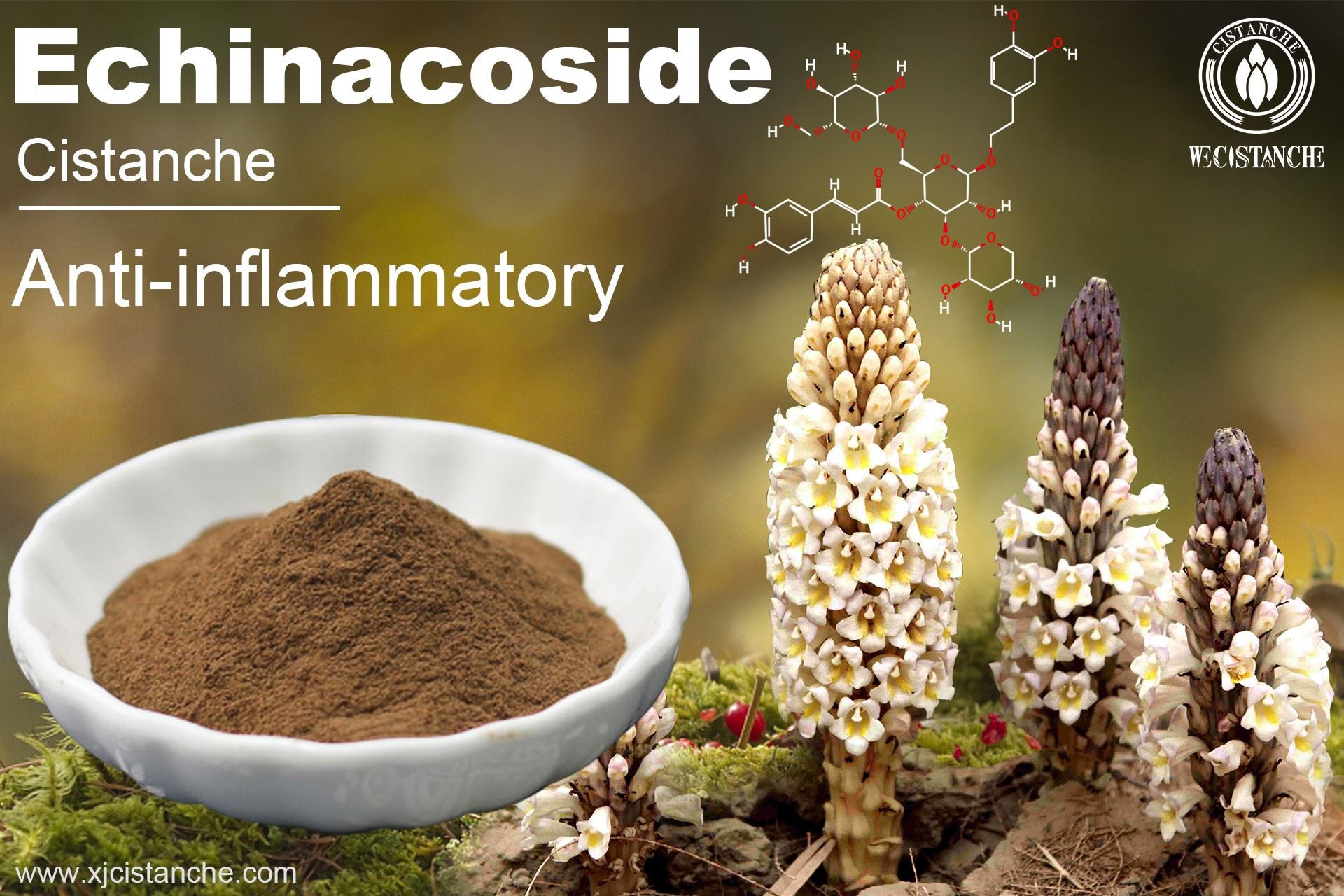
Cistanche deserticola: Anti-inflammatory effect
Experimental
General experimental procedures
The IR spectra were recorded on a Nicolet Nexus 470 FT Infrared Spectrometer. The NMR spectra were obtained on a Varian Inova-500 spectrometer. The HR mass spectra were measured on a Bruker APEX IV FT-MS (7.0 T) mass system equipped with an ESI source. The ESI-MS were measured on an Agilent 6320 ion trap MS spectrometer. Optical rotations were measured on a Rudolph AUTOPOL IV polarimeter. The melting points were determined on an X-4 digital display micromelting point apparatus (uncorrected). The semi-preparative HPLC was carried on Waters 600 instrument with an ODS column (Alltech, 250 mm × 10 mm ID, 5 µm). The GC analyses were performed on VARIAN CP-3800 gas chromatograph with a DB-5 column (0.25 mm × 30 m). Column chromatography was performed on silica gel (200–300 mesh, Qingdao Marine Chemistry Ltd., China), MCI gel (CHP20P, 75–150 μmol·L−1 , Mitsubishi Chemical Industries Ltd., Japan), Sephadex LH-20 (Amersham Biosciences, Sweden), and ODS C18 (40–63 μm; Merck, Germany). The TLC was carried out on glass precoated silica gel GF254 plates. Spots were visualized under UV light or by spraying with 5% sulfuric acid ethanol solution.
Plant material
The stems of C. deserticola were collected in Tarim Desert, Xinjiang Uygur Autonomous Region, China, and identified by Prof. TU Peng-Fei. A voucher specimen (No. CD201011) was deposited at the Herbarium of the Peking University Modern Research Center for Traditional Chinese Medicine. Extraction and isolation The dried stems of C. deserticola (15.3 kg) were finely cut and extracted with 85% aqueous ethanol (120 L × 1 h × 3). The concentrated residue (4.5 kg) was suspended in H2O (10 L) and extracted with EtOAc (10 L × 3) and n-BuOH (10 NAN Ze-Dong, et al. / Chin J Nat Med, 2016, 14(1): 6165 – 64 – L × 3) successively. Compounds 2–6 were obtained from the EtOAc extract, while compounds 1 and 7–9 were obtained from the n-BuOH extract.
The EtOAc extract (65.8 g) was subjected to silica gel CC (200–300 mesh), using a gradient solvent system of CHCl3/MeOH (50: 1, 20: 1, 10: 1, 6: 1, 2: 1, and 1: 1), to afford ten fractions (Fr. 1–Fr. 10). Fr. 2 (5.3 g) was separated by Sephadex LH-20 CC, eluting with CHCl3/MeOH (1: 1) to yield three major fractions (Fr. 2-1, Fr. 2-2, and Fr. 2-3). Fr. 2-3 was separated by silica gel CC using PE/Me2CO (50 : 1, 20 : 1, 10 : 1, 5 : 1, 2 : 1, 1 : 1, and 0 : 1) to afford four fractions (Fr. 2-3-1–Fr. 2-3-4). Fr. 2-3-2 was separated by silica gel CC, eluting with PE/CHCl3/MeOH (8: 8: 1) to yield compound 3 (20.6 mg). Compound 2 was obtained from Fr. 2-3-3 after purification by chromatography on silica gel CC, eluting with PE/CHCl3/MeOH (5: 5: 1). Fr. 4 (2.5 g) was separated by Sephadex LH-20 CC, eluting with CHCl3/MeOH (1: 1), to yield three fractions (Fr. 4-1, Fr. 4-2, and Fr. 4-3). Fr. 4-2 was subjected to MCI gel CC (MeOH/H2O, 10: 90 to 90: 10, V/V) to afford three major fractions (Fr. 4-2-1, Fr. 4-2-2, and Fr. 4-2-3). Fr. 4-2-1 was purified by semi-preparative HPLC [CH3CN-H2O (10: 80)] to yield compound 4 (32.3 mg), and 5 (15.0 mg), while Fr. 4-2-2 was purified by semi-preparative HPLC [CH3CN-H2O (10: 80)] to yield compound 6 (8.3 mg). The n-BuOH extract (536 g) was subjected to silica gel CC (200–300 mesh), using a gradient solvent system of CHCl3/MeOH (20: 1, 10: 1, 6: 1, 2: 1, 1: 1, 0: 1), to afford ten major fractions (Fr. D1–Fr. D10). Fr. D5 (3.0 g) was subjected to MCI gel CC (MeOH/H2O, 10: 90 to 80: 20, V/V) to afford three fractions (Fr. D5-1–Fr. D5-3). Fr. D5-2 (120 mg) was separated by silica gel CC (200–300 mesh, 10.0 g; PE/EtOAc/MeOH 3 : 3 : 1) to give compound 8 (12.5 mg). Fr. D8 (4.5 g) was separated by Sephadex LH-20 CC, eluting with MeOH to yield three fractions (Fr. D8-1–Fr. D8-3). Fr. D8-3 was separated over an opening ODS column (MeOH/ H2O, 20: 80 to 80: 20, V/V) to afford three fractions (Fr. D8-3-1–Fr. D8-3-3). Fr. D8-3-1 was subjected to semi-preparative HPLC [CH3CN-H2O (8: 90)] to give compound 1 (2.3 mg). Fr. D9 (10.1 g) was separated by Sephadex LH-20 column, eluting with MeOH, to yield three major fractions (Fr. D9-1–Fr. D9-3). Fr. D9-3 was subjected to a column of MCI gel (MeOH/H2O, 0: 100 to 50: 50, V/V) to give compounds 7 (15.3 mg) and 9 (45.5 mg). Cistadesertoside A (1): White amorphous powder. [] 20 D –118.0 (c 0.1, MeOH); IR (KBr) νmax: 3 393, 1 071, 1 028 cm−1 ; (+)-HRESI-MS m/z 385.146 9 [M + Na]+ (Calcd. for C16H26O9Na, 385.148 5) and m/z 401.120 8 [M + K]+ (Calcd. for C16H26O9K, 401.122 8); 1 H NMR and 13C NMR data, see Table 1.
Acid hydrolysis of compound 1
Compound 1 (1.0 mg) was stirred at 90 °C for 5 h with 2 mol·L−1 CF3COOH (EtOH: H2O, 1: 1, 2 mL). After being cooled to room temperature, the solution was concentrated under reduced pressure. The residue was dissolved in 2 mL of pyridine with 0.1 mol·L−1 L-cysteine methyl ester hydrochloride and stirred at 60 °C for 1.5 h. After being cooled and concentrated, the mixture was treated with trimethylchlorosilane (TMSCl) and hexamethyldisilazane (HMDS) (1: 2, V/V, 0.5 mL) in pyridine (2 mL), followed by stirring at 60 °C for 0.5 h. Then, the solution was concentrated to dryness, and the residue was partitioned with H2O and n-hexane (2 × 3 mL) [18]. The n-hexane fraction was analyzed by GC using a DB-5 column (0.25 mm × 30 m). The temperatures of the injector and detector were both set at 220 °C. A temperature gradient system was applied to the oven, starting at 140 °C for 1 min and increasing up to 250 °C at a rate of 4 °C·min−1. The peak of the hydrolysate of sugar derivative was identified by comparison of retention time with the authentic sample of D-glucose (19.24 min) after similar treatment with TMSCl/ HMDS.Inhibition of NO production
The NO inhibitory activities of the isolated compounds were evaluated against LPS-induced BV-2 microglial cells by Griess method using an NO assay kit (Nanjing-Jiancheng BioTech Institute, Nanjing, Jiangsu, China) as previously described [19], and quercetin were used as the positive control. In addition, cell viabilities were evaluated by MTT assay.

Cistanche benefit: anti-inflammation
References
[1] Kobayashi H, Oguchi H, Takizawa N, et al. New phenylethanoid glycosides from Cistanche tubulosa (Schrenk) Hook. f. I [J]. Chem Pharm Bull, 1987, 35(8): 3309-3314.
[2] Culture techniques of Xinjiang staple medicinal plants [M]. Xinjiang: Xinjiang Institute of Traditional Chinese and Ethnologic Medicines Ed, Xinjiang Science and Technology Press, 2004: 84-88.
[3] China pharmacopoeia committee, Chinese Pharmacopoeia [M]. Vol. I, Beijing: China Medical Science and Technology Press, 2010: 126.
[4] Jiang Y, Tu PF. Analysis of chemical constituents in Cistanche
species [J]. J Chromatogr A, 2009, 1216(11): 1970-1979.
[5] Pan J, Yuan CS, Lin CJ, et al. Pharmacological activities and mechanisms of natural phenylpropanoid glycosides [J]. Pharmazie, 2003, 58(11): 767-775.
[6] Fu GM, Pang HH, Wong Y. Naturally occurring phenylethanoid glycosides: potential leads for new therapeutics [J]. Curr Med Chem, 2008, 15(25): 2592-2613.
[7] Xie HH, Morikawa T, Matsuda H, et al. Monoterpene constituents from Cistanche tubulosa-chemical structures of kankanosides A-E and kankanol [J]. Chem Pharm Bull, 2006, 54(5): 669-675.
[8] Foderaro TA, Stermitz FR. Chemistry of the Scrophulariaceae. Part 24. Iridoid glycosides from Penstemon species: A C-5, C-9 trans-iridoid and C-8 epimeric pairs [J]. Phytochemistry, 1992, 31(12): 4191-4195.
[9] Krull RE, Stermitz FR. Trans-fused iridoid glycosides from Penstemon mucronatus [J]. Phytochemistry, 1998, 49(8): 2413-2415.
[10] Takeda Y, Yagi T, Matsumoto T, et al. Nepetanudosides and iridoid glucosides having novel stereochemistry from Nepeta nuda ssp. albiflora [J]. Phytochemistry, 1996, 42(4): 1085-1088.
[11] Takeda Y, Ooiso Y, Masuda T, et al. Iridoid and eugenol glycosides from Nepeta camera [J]. Phytochemistry, 1998, 49(3): 787-791.
[12] Kobayashi H, Karasawa H, Miyase T, et al. Studies on the constituents of Cistanchis herba. II. Isolation and structures of new iridoids, cistanin and cistachlorin [J]. Chem Pharm Bull, 1984, 32(5): 1729-1734.
[13] Arslanian RL, Harris GH, Stermitz FR. Chemistry of the Scrophulariaceae. 7. Some iridoid glucosides, including the new 6-deoxycatalpol, from Indian paintbrush species related to Castilleja miniata [J]. J Nat Prod, 1985, 48(6): 957-961.
[14] Sticher O, Weisflog A. Determination and isolation of iridoid glucosides from Galeopsis tetrahit (Labiatae) and the structure elucidation of gluroside [J]. Pharm Acta Helv, 1975, 50(11): 394-403.
[15] Nishimura H, Sasaki H, Morota T, et al. Chemical and biological studies on Rehmanniae Radix. Part 3. Six iridoid glycosides from Rehmannia glutinosa [J]. Phytochemistry, 1989, 28(10): 2705-2709.
[16] Junior P. Further iridoids from Penstemon species [J]. Planta Med, 1984, 50(6): 530.
[17] Boros CA, Stermitz FR. Iridoids. An updated review. Part I [J]. J Nat Prod, 1990, 53(5):1055-1147.
[18] Jian R, Zeng KW, Tu PF, et al. Anti-neuroinflammatory constituents from Asparagus cochinchinensis [J]. Fitoterapia, 2013, 84: 80-84.
[19] Nan ZD, Zeng KW, Shi SP, et al. Phenylethanoid glycosides with anti-inflammatory activities from the stems of Cistanche deserticola cultured in Tarim desert [J]. Fitoterapia, 2013, 89: 167-174.