Antioxidant, Whitening And Antibacterial Effects Of Fengdan Peony Flavonoids
Mar 23, 2022
Contact: ali.ma@wecistanche.com
Jie Lu †, Zhiqiang Huang †, Yusheng Liu, Huimin Wang, Min Qiu, Yinghui Qu and Wenpeng Yuan *
Abstract: Flavonoids have important biological activities, such as anti-inflammatory, antibacterial, antioxidant and whitening, which is a potential functional food raw material. However, the biological activity of Fengdan peony flavonoid is not particularly clear. Therefore, in this study, the peony flavonoid was extracted from Fengdan peony seed meal, and the antioxidant, antibacterial and whitening activities of the peony flavonoid were explored. The optimal extraction conditions were methanol concentration of 90%, solid-to-liquid ratio of 1:35 g:mL, temperature of 55 ◦C and time of 80 min; under these conditions, the yield of Fengdan peony flavonoid could reach 1.205 ± 0.019% (the ratio of the dry mass of rutin to the dry mass of peony seed meal). The clearance of Fengdan peony total flavonoids to 1,1-diphenyl-2-picrylhydrazyl (DPPH) free radical, hydroxyl radical and 2,2’-azino-bis (3-ethylbenzothiazoline-6-sulfonic acid) (ABTS) free radical could reach 75%, 70% and 97%, respectively. Fengdan peony flavonoid could inhibit the growth of the Gram-positive bacteria. The minimal inhibitory concentrations (MICs) of Fengdan peony flavonoid on S. aureus, B. anthracis, B. subtilis and C. perfringens were 0.0293 mg/mL, 0.1172 mg/mL, 0.2344 mg/mL and 7.500 mg/mL, respectively. The inhibition rate of Fengdan peony flavonoid on tyrosinase was 8.53–81.08%. This study intensely illustrated that the antioxidant, whitening and antibacterial activity of Fengdan peony total flavonoids were significant. Fengdan peony total flavonoids have a great possibility of being used as functional food materials.
Keywords: Fengdan peony flavonoid; antioxidant; whitening; antibacterial activity; functional food
Flavonoids, the main element of Cistanche, is anti-aging.
Click to cistanche extract benefits for anti-aging
1. Introduction
Peony is one of the economic and ornamental crops, which has been cultivated for more than 1600 years in China [1]. Oil peony refers to the variety of peony that can be used as a raw material for edible oil [2]. As one of the most commonly used oil peonies, Fengdan peony contains dark oval seeds, which has abundant unsaturated fatty acids (>90%) [3]. Peony seed oil has been authenticated as a new resource food by the Chinese government, because of its high proportion of α-linolenic acid in 2011 [4]. Moreover, peony seeds have been certified as a new resource of functional food to enhance human health by the National Health and Family Planning Commission of the People’s Republic of China in 2011 [5]. Fengdan peony seed meal is one of the most important by-products in preparation of peony seed oil, which accounts for approximately 60% to 70% of Fengdan peony seed, and is rich in flavonoids, protein, polysaccharides, polyphenols, paeoniflorin and other active ingredients. However, a large amount of Fengdan peony seed meal is only used as feed or as waste at present [6], which results in the waste of natural resources and environmental pollution [2].
According to literature, flavonoids have important biological activities, such as anti- inflammatory, antibacterial, antioxidant and whitening effects [7–10], which are considered potential functional food raw materials. For example, soybean isoflavone can protect cells from the damage of free radicals because of its antioxidant properties [11–13]. Flavonoid in ginkgo biloba extract has strong antioxidant properties and can directly inhibit free radi- cals [14]. The flavonoid extract of white guava is a natural antibacterial agent, which can change the microscopic morphology of E. coli and S. aureus [15].
Unfortunately, as a potential functional food raw material, Fengdan peony flavonoid has not only been involved in industrial production, but its biological activity is also not particularly clear. Therefore, in order to improve the application value of peony flavonoids in the food field as much as possible and reduce the waste of resources, peony flavonoid was extracted from the Fengdan peony seed meal, and the antioxidant, whitening and antibacterial activities of Fengdan peony flavonoid were studied. It is expected to lay a foundation for the development of new functional food raw materials from Fengdan peony.
2. Results and Discussion
2.1. The Influence of Four Factors to Total Flavonoids Yield
The influence of methanol concentration to total flavonoids yield was shown in Figure 1a. Total flavonoid yield was increased at first, and then decreased with the in- crease of methanol concentration, and reached the maximum (1.016%, the ratio of the dry mass of rutin to the dry mass of peony seed meal) when methanol concentration was 90%. The reason may be related to the polarity of methanol and the solubility of total flavonoids in peony seed meal [16]. Thus, the optimal methanol concentration was 90%.

As shown in Figure 1c, total flavonoids yield was increased at first and then decreased with the increase of temperature. Total flavonoids yield reached the maximum value (1.141%, the ratio of the dry mass of rutin to the dry mass of peony seed meal) at 55 ◦C. The dissolution rate of total flavonoids in seed meal was accelerated by raising the tem- perature appropriately. However, a partial total flavonoid was decomposed when it was exposed at high temperature [18], which leads to a decrease in the yield of total flavonoids. Thus, 55 ◦C was the best temperature.
The influence of extraction time to total flavonoids yield was shown in Figure 1d. Total flavonoids yield was increased rapidly in 0.5 h to 1.5 h. When the extraction time was more than 1.5 h, total flavonoids yield remained unchanged. The reason for this phenomenon may be that the total flavonoids in seed meal were continuously dissolved with the extension of extraction time in 0.5 h to 1.5 h. Furthermore, with the time reaching 1.5 h, all total flavonoids may have been dissolved. Therefore, increasing the time had a slight effect on total flavonoids yield [4,19]. Thus, the best extraction time was 1.5 h.
2.2. Optimization for Total Flavonoids Yield
2.2.1. Model Fitting and Data Analysis Using RSM
To further explore the relative importance of the various factors to the total flavonoids yield of Fengdan peony seed meal, the RSM experiment was carried out. RSM is used in the statistical design and data analysis of multifactor experiments to assess the relative significance of several variables, and to find the best conditions for ideal responses [20]. The Box–Behnken design with RSM can fit the linear regression equation, so the experiment can be more precisely analyzed to find the law among the influencing factors [21].
Table S1 showed the relationship between the total flavonoids yield and the test vari- ables. The experimental data were analyzed by multiple regression analysis. The quadratic polynomial regression equation of total flavonoids yield (Y) to solid-to-liquid ratio (A), extraction temperature (B) and extraction time (C) was: y = 1.19 + 0.01A − 0.02B − 0.003C + 0.02AB − 0.02AC + 0.01BC − 0.03A2 − 0.04B20.02C2.
The anova of the quadratic polynomial model was demonstrated in Table 1. The F-value of model was 18.57, the p value of model was 0.0004 (p < 0.01), the fitting degree of the model was 0.1202, and the determination coefficient (R2) was 0.9598, which indicated that the model had extremely significant statistical significance. Primary term (B) and secondary term (A2, B2, C2) had extremely significant effects on total flavonoids yield (p < 0.01). A, AB and AC had significant effects on total flavonoids yield (p < 0.05). C and BC had no significant effect on total flavonoids yield (p > 0.05). According to the F-value of the three factors, the effect on total flavonoids yield was extraction temperature > solid-to-liquid ratio > extraction time.
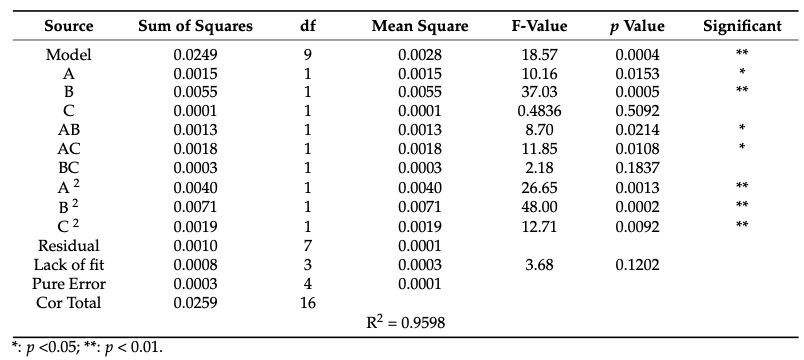
Table 1. The anova of quadratic polynomial model.
The three-dimensional (3D) response surface diagrams were shown in Figure 2a,c,e. The highest point of the 3D graph was the best condition for interactive factors. The contour slopes of the interaction between A and B (Figure 2b), A and C (Figure 2d) were steeper, while those of A and C (Figure 2f) were smooth. This illustrated that the interaction between A and B, A and C had a great influence on total flavonoids yield, while the interaction between B and C had no significant effect on total flavonoids yield. The consistency between the RSM experiment and regression analysis further proved that the established model was more accurate.
Figure 2. The diagrams of 3D surface for AB (a), AC (c) and BC (e) to total flavonoids yield.
2.2.2. Verification of Optimal Conditions
The theoretical optimum parameters given by the model were solid-to-liquid ratio of 1:36.11, extraction temperature of 53.52 ◦C, extraction time of 82.65 min, and the theoretical value of total flavonoids yield was 1.195%. Considering the actual operation, the theoretical parameters were adjusted to the solid-to-liquid ratio of 1:35, the extraction temperature of 55 ◦C, and the extraction time of 80 min. Under these conditions, total flavonoids yield was 1.205 ± 0.019%. Compared with the theoretical forecast value, the relative error was 0.8%. The theoretical value was consistent with the actual result, indicating that the optimization parameters were available. Chen et al. [10] extracted flavonoids from peony using 60% ethanol-aqueous solution and the yield was 1.34%, which were consistent with this paper. RSM was widely used to optimize the optimal extraction process of flavonoids from plants, such as Aurantii Fructus [22], Pueraria [23], and Curcuma Zedoaria leaves [24]. Compared with the orthogonal test, RSM had the advantages of accurate predictability, higher accuracy, and more easily analyzing influence factors [25].
2.3. Antioxidant Activity of Fengdan Peony Flavonoid
Flavonoids are natural antioxidants which can effectively clean free radicals in the body. The antioxidant capacity of the flavonoids is due to the fact that flavonoids can provide hydrogen atoms to free radicals and convert themselves into phenolic free radicals. The transfer rate of the automatic oxidation chain reaction can be slowed down by the stability of phenolic free radicals, thus inhibiting the further oxidation of lipids [26].
The clearance of total flavonoids to DPPH free radical was shown in Figure 3a. In the concentration range of 0.1 to 1.0 mg/mL, the clearance of total flavonoids and VC to DPPH free radicals was positively correlated with their concentration. In the range of 0.1 to 0.5 mg/mL, the clearance of VC was increased with its concentration. When the concentration was greater than 0.5 mg/mL, the clearance of VC reached 98% and tended to be stable. In the range of 0.1 to 0.8 mg/mL, the clearance of total flavonoids was increased with the increase of concentration. When the concentration was greater than 0.8 mg/mL, the clearance of total flavonoids stabilized to about 75%. Oancea et al. [27] reported that the clearance of peony crude extract to DPPH free radical was 81%; the clearance was similar to the results of this study. Fengdan peony total flavonoids had a certain clearing capacity to DPPH free radicals, but the capacity was slightly lower than VC. The reaction between antioxidant and DPPH free radical is realized by hydrogen atom and electron transfer mechanism [28]. DPPH free radical is purple in ethanol solution. When the antioxidant scavenges DPPH free radical to a stable state through hydrogen supply, its color turns yellow and has strong absorption at 517 nm [29]. In this paper, the scavenging effect of peony flavonoids on DPPH was significantly enhanced with the increase of flavonoid concentration, which indicated that the peony flavonoids were effective antioxidants.
The clearance of total flavonoids to hydroxyl radical was illustrated in Figure 3b. In the concentration of 0.1 to 1.0 mg/mL, the clearance of total flavonoids to hydroxyl radical was lower than VC. At 0.4 mg/mL, the clearance of VC basically reached the maximum, about 97%. The scavenging rate of total flavonoids on hydroxyl radicals was increased with the raise of concentration, and reached the maximum value (70%) when the concentration was higher than 0.8 mg/mL. Hydroxyl radical is quite active and could react quickly with any biomolecule, which causes great harm to organs or tissues [30]. Hydroxyl radical is the most toxic reactive oxygen species to cells [31], which accelerates cell apoptosis by enhancing the oxidation of the body [32]. Yang et al. [33] found that the scavenging effect of peony seed oil on hydroxyl radical was concentration-dependent, and the clearance of hydroxyl radical was up to 92% in the concentration range of 0.1–0.5 mg/mL. Compared with this paper, the clearance of peony seed meal flavonoids was lower than that of peony seed oil, but as a by-product in the production of peony seed oil, the flavonoids extracted from peony seed meal also had obvious scavenging effect on hydroxyl radical at lower concentration. Therefore, peony flavonoids could be considered as a functional food raw material with the ability of a scavenging hydroxyl radical. On the one hand, it had a better protective effect on the human antioxidant defense system, and on the other hand, it could also improve the comprehensive utilization of peony seeds.
2.4. Whitening Activity of Fengdan Peony Flavonoid
As shown in Figure 4, Fengdan peony flavonoid (0.03–1.00 mg/mL) produced 8.53–81.08% inhibition of tyrosinase, which exhibited tyrosinase inhibition dose-dependently. The IC50 was 0.24 mg/mL. Lin et al. [36] found that the inhibition rate of tyrosinase was about 75% when the concentration of ethanol extract from peony was 1 mg/mL. The inhibition rate of tyrosinase was close to the results of this paper. Melanin is the key substance to inhibit whitening [37]. Tyrosinase is a crucial enzyme in the synthesis of melanin, which is used as an index for screening cosmetic and whitening functional foods [38]. Tyrosinase inhibitors are essential ingredients in most cosmetics or whitening foods [39]. In this study, the peony flavonoid had an obvious inhibitory effect on tyrosinase activity. Therefore, it was feasible and valid to add peony flavonoids to cosmetics or whitening foods as whitening materials.

Table 2. Diameter of inhibition zone.
3. Materials and Methods
3.1. Material and Reagents
The skimmed Fengdan peony seed meal was purchased from Guyu Peony Biotech- nology Co., Ltd. (Heze, China). The seed meal was ground into powder and then passed through a 40-mesh sieve [45]. The seed meal powder was collected and stored at 4 ◦C for future use. Rutin standard, Vitamin C (VC), Methanol, Anhydrous ethanol Sodium nitrite (NaNO2), aluminum nitrate (Al(NO3)3) and Sodium hydroxide (NaOH) were supplied by China Pharmaceutical Group Co., Ltd. (Beijing, China); Hydroxyl radical, DPPH free radical and ABTS free radical scavenging capacity kit were purchased from Shanghai Tongwei Industrial Co., Ltd.
3.2. Extraction of Total Flavonoids
Moreover, 15.00 g skimmed Fengdan peony seed meal was added into a 1000 mL beaker. Then, it was placed in a digital display thermostatic water bath (HH-S4, Jiangsu, China) with an electric blender (OES-60M, Wenzhou, China, 220 r/min) and extracted under the following conditions: methanol concentration was 90%, solid-to-liquid ratio was 1:35 g:mL, extraction temperature was 55 ◦C, and extraction time was 80 min. Upon extraction, the filtrate of total falvonoids was collected by vacuum filter.
3.3. Single-Factor Experiment
The total flavonoids yield of Fengdan peony seed meal was optimized by using single-factor experiment. It could reflect the effect of four factors on total flavonoids yield. This experiment was investigated by the single variable method. Factors and variables of the experiment were shown in Table 3.

Table 3. The factors and variables of single-factor experiment
3.4. RSM Experiment
The single-factor experiment provided three variables of each factor for the RSM experiment. In this study, on the basis of single-factor experiment, methanol concentration was selected to be 90%; solid-to-liquid ratio, extraction temperature, and extraction time were used as arguments. The peony total flavonoids yield was used as the response value. Based on the principle of the Box–Behnken test in Design-Expert software 12.0, the RSM with three factors and three levels was designed to optimize the extraction conditions of total flavonoids from peony seed meal. The whole experimental design was composed of 17 experimental points (Table S1). Five replications (13–17) were performed in the design center to estimate a pure error. The factors and levels of RSM were demonstrated in Table 4.

Table 4. The factors and levels of RSM.
3.5. Preparation of Fengdan Peony Total Flavonoids Powder
After the optimum extraction process was determined by RSM, the Fengdan peony total flavonoids filtrate was extracted with the best extraction process, then the peony total flavonoids powder was obtained after the filtrate was concentrated by rotary evaporator (20 mL/min, 25 W, R-1001VN, Zhengzhou, China) and dried by freeze dryer (−80 ◦C, 24 h, SCIENTZ-12N, Ningbo, China). The powder would be used in antioxidant, whitening and antibacterial experiments.
3.6. Antioxidant Activity Evaluation
Fengdan peony total flavonoids solution and VC solution with different mass concen- trations (0.1, 0.2, 0.3, 0.4, 0.5, 0.6, 0.7, 0.8, 0.9, 1.0 mg/mL) were prepared with 80% ethanol, which will be used to determine the clearance of total flavonoids to three free radicals.
3.6.1. DPPH Free Radical Assay
The clearance of total flavonoids to DPPH free radical was determined as described by Pham, D. C., with minor modifications [48]. Briefly, 150 μL of 0.2 mM DPPH in anhy- drous ethanol was added to 150 μL of sample at different concentrations (0.1–1.0 mg/mL). The mixture was shaken and incubated for 30 min at room temperature in the dark. The 200 μL mixture was added into a 96-well plate, and the absorbance was measured at 517 nm by enzyme-labeled instrument (SpectraMax 190, Shanghai, China). VC was used as the control substance. The clearance of DPPH was calculated by the following formula.
The clearance of DPPH%= {1− [(Ai − Aj) / Ao] ×100 } % (2)
where Ai was the absorbance of 150 μL sample + 150 μL DPPH; Aj was the absorbance of 150 μL sample + 150 μL anhydrous ethanol; A0 was the absorbance of 150 μL DPPH + 150 μL anhydrous ethanol.
3.6.2. Hydroxyl Radical Assay
The clearance of total flavonoids to hydroxyl radical was determined as described by Zhou, J., with some modifications [49]. Briefly, 50 μL sample solutions of different concentrations (0.1–1.0 mg/mL), 50 μL of 9.0 mM salicylic acid-ethanol solution, 50 μL of 9.0 mM FeSO4 solution and 200 μL of distilled water were mixed in a tube. Then, 50 μL of 8.8 mM H2O2 was added into the mixture above, and the absorbance was measured at 510 nm. The clearance of hydroxyl radical was calculated by the following formula.
The clearance of hydroxyl radical %= {1− [(Ai − Aj) / Ao] ×100 } % (3)
where Ai was the absorbance of the sample; Aj is the absorbance of deionized water instead of H2O2; A0 was the absorbance of deionized water instead of sample.
3.6.3. ABTS Free Radical Assay
The clearance of total flavonoids to ABTS free radical was determined as described by Gong, J. with some modifications [50]. Briefly, 1 mL of 7 mM ABTS solution and 1 mL of 2.45 mM potassium persulfate solution were mixed in a tube for 12 h at room temperature in the dark. The mixture was diluted 40 times with anhydrous ethanol. Then, 190 μL of mixture and 10 μL of samples at different concentrations (0.1–1.0 mg/mL) were mixed in a tube for 6 min at room temperature in the dark; the absorbance was measured at at 734 nm. The clearance of ABTS free radical was calculated by the following formula.
The clearance of ABTS % = {1− [(Ai − Aj) / Ao] ×100 } % (4)
where Ai was the absorbance of 10 μL sample + 190 μL mixture; Aj was the absorbance of 10 μL sample + 190 μL anhydrous ethanol; A0 was the absorbance of 10 μL anhydrous ethanol + 190 μL mixture.

Cistanche clear free radicals.
3.7. Whitening Activity Evaluation
The tyrosinase inhibition assay was determined as described by Chen Q with minor modifications [38]. Briefly, 40 μL of 5 mmol/L tyrosine dissolved in 80 μL of 1/15 phosphate buffers (pH 6.8) was mixed with 40 μL Fengdan peony total flavonoids solution at 37 ◦C for 15 min. Next, 40 μL of tyrosinase (300 IU/mL) was added to initiate the reaction. The assay mixture was incubated at 37 ◦C for 10 min. The absorbance was measured by an enzyme-labeled instrument (SpectraMax 190, Shanghai, China) at 482 nm. At the same time, the blank group and the control group were set up. In the blank group, tyrosinase was not added and the phosphate buffer was used to make up the volume. In the control group, the flavonoid solution was not added, and the phosphate buffer was used to make up the volume. The inhibitory percentage of the tyrosinase activity was calculated by the following formula:
Inhibition rate(%)= [1−(As − Ab) / (Ac − Ab)]×100% (5)
where AB was the absorbance of blank group at 482 nm, AC was the absorbance of control group at 482 nm, and AS was the absorbance of sample at 482 nm.
3.8. Antibacterial Activity Experiment
Then, 400 μL of sterile water was added into the bacterial freeze-dry tube. After being fully mixed, 200 μL of bacteria liquid was evenly spread agar plate. It was incubated in a biochemical incubator (LRH-250, 650 W, Changzhou, China) at 37 ◦C for 24 h to activate the bacteria. Then, the single colony was picked in agar plate with a disposable inoculation loop (65-0001, Shandong, China) and inoculated in the liquid medium. The medium was placed in an intelligent constant temperature culture oscillator (HNYC-202T, 1800W, Tianjin, China) at 37 ◦C, 120 r/min for 24 h. The concentration of bacterial suspension was observed and counted by hemocytometer (Q401, Shanghai, China), and then adjusted to 106 CFU/mL [51].
The inhibition zone experiment was operated by the punching method. First, Fengdan peony total flavonoids solutions of different concentrations (30 mg/mL and 500 mg/mL) were prepared with 80% methanol. Then, the 80 μL of bacteria suspension was spread evenly on the sterile agar medium. Next, 4 holes were punched in the medium by a puncher with a diameter of 7 mm (A0358, Guangzhou, China). Three of the holes were added to 100 μL of total flavonoids solution, and the other was added to the 100 μL of 80% methanol as a control. Final, it was cultured in a biochemical incubator at 37 ◦C for 24 h. The diameter of the clear inhibition zone around each hole was measured by using a vernier caliper (SWB-227-150, Guangzhou, China).
The MIC experiment was performed according to the following steps. The bacte- rial growth system containing different concentrations of total flavonoids solution (0.0037, 0.0073, 0.0146, 0.0293, 0.0586, 0.1172, 0.2344, 0.4688, 0.9375, 1.8750, 3.7500, 7.5000, 15.0000 mg/mL) was prepared by a double gradient dilution method [52]. In addition, adding bacterial solution without total flavonoids solution was used as growth control group, and total flavonoids solution without bacterial solution was used as a blank control group. They were cultured in intelligent constant temperature culture oscillator (HNYC- 202T, 1800 W, Tianjin, China) at 37 ◦C, 120 rpm/min for 24 h. The maximum diluted concentration of total flavonoids without bacterial growth was the MIC of total flavonoids on the bacteria [53].
3.9. Statistical Analysis
Design-Expert V12.0.3.0 (Stat-Ease Inc., Minneapolis, MN, USA) was used to calcu- late the coefficients of the quadratic polynomial model and the optimization. F-values and p-values were used to check the accuracy of the polynomial model equation, and p-values less than 0.05 (p < 0.05) were considered as statistically significant. All experi- ments were measured three times, and the data values were expressed as means ± standard deviation (SD).
4. Conclusions
In this study, the optimum extraction conditions of Fengdan peony total flavonoids were methanol concentration of 90%, solid-to-liquid ratio of 1:35, extraction temperature of 55 ◦C, extraction time of 80 min, and the total flavonoids yield was 1.204%. We believe that the extraction process is suitable for industrial production. The Fengdan peony flavonoids demonstrated excellent antioxidant effects, the clearance of total flavonoids to DPPH free radical was 75%, to hydroxyl radical was 70%, and to ABTS free radical was 97%. In addition, the Fengdan peony flavonoids had a certain whitening effect, the inhibition rate of Fengdan peony flavonoids to tyrosinase exhibited dose-dependently and the IC50 could reach to 0.24 mg/mL. Moreover, the Fengdan peony total flavonoids could inhibit the growth of Gram-positive bacteria. All the results provided a reliable data support for the application of Fengdan peony total flavonoids in health product and functional food raw materials, and laid a foundation for the industrial production of Fengdan peony total flavonoids.

cistanche tablets that contains flavonoids
click the picture and get more details