Exploring The Role Of Vitamin D/VDR in Kidney-Essence Deficiency–Pattern Alopecia Areata Based On The TCM Principle “The Kidney Manifests in The Hair”*
Apr 09, 2026
Abstract
In Traditional Chinese Medicine (TCM), the principle "the Kidney manifests in the hair" is rooted in the Zang-Fu (viscera) theory and the concept that "the Kidney stores Essence (Jing)." From this perspective, alopecia areata (AA) often involves an underlying pattern commonly described as "Kidney Essence deficiency." Changes in Kidney Essence are believed to correlate with changes in the microstructure and quality of hair, providing a potential objective basis for interpreting this classical doctrine.
Modern research indicates that the vitamin D / vitamin D receptor (VDR) system is deeply involved in hair follicle growth and cycling. In particular, VDR directly influences hair-follicle-cycle–related pathways such as Wnt and Hedgehog, which are central signaling networks in hair biology. Vitamin D deficiency, as well as VDR mutations or abnormal VDR expression, can significantly affect the onset and progression of AA. Therefore, the vitamin D/VDR system may represent a potential intervention target for AA.
From a "TCM–modern biology translation" standpoint, vitamin D may be viewed as a plausible objective material basis related to the functional concept of "Kidney storing Essence." Based on the relationship between vitamin D and "the Kidney manifests in the hair," this article further discusses the connection and meaning of "vitamin D deficiency" within Kidney-Essence-deficiency–pattern AA. Our team's prior systematic experimental work suggests that Kidney-tonifying Chinese herbal medicine may modulate the vitamin D/VDR system.
Notably, research focusing on the essence of the "Kidney manifests in the hair" theory indicates that Kidney Essence status correlates with the expression of pathways such as Wnt, and Kidney-tonifying herbs may also influence AA-related pathways including Wnt and Hedgehog-overlapping with the regulatory network of vitamin D/VDR. Taken together, we propose that Kidney-tonifying herbs may intervene in AA and related hair-loss disorders by regulating Wnt/Hedgehog signaling through the vitamin D/VDR system.
Keywords
The Kidney manifests in the hair; Vitamin D/VDR; Alopecia areata; Mechanism; Herbal therapy; Kidney Essence deficiency; Wnt; Hedgehog; Cistanche (Rou Cong Rong)

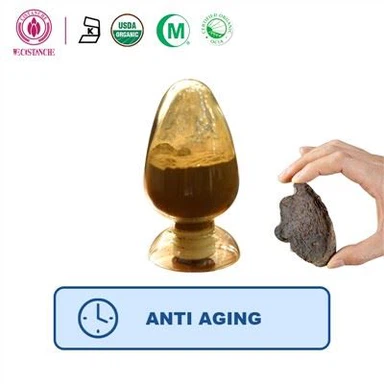
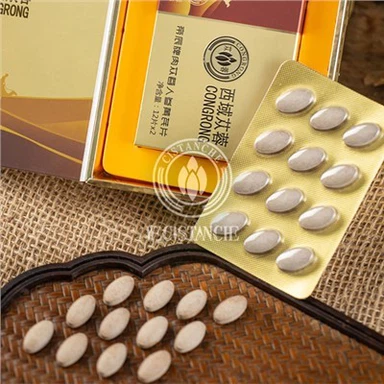
Cistanche extract Supplements For Improving Kidney Function

Why people search "herb for alopecia areata?"-and why mechanism matters
Hair-loss disorders are a major global health concern affecting millions and significantly reducing quality of life. AA is typically understood as a stress-triggered, immune-related hair-loss condition and often brings psychological burdens such as lowered self-esteem, anxiety, and depressive tendencies.
Even with advances in mechanism research and clinical therapies, many patients still do not achieve satisfactory outcomes-so interest in natural and herbal options is rising. However, for "herb for alopecia areata?" to be more than a marketing phrase, it helps to map herbal strategies onto testable biology: hair follicle cycling, immune regulation, and key pathways (Wnt, Hedgehog, etc.).
TCM interpretation: "The Kidney manifests in the hair" and AA as "root deficiency with branch excess"
In TCM, Kidney Essence is considered a foundational substance supporting life functions and nourishing the hair through transformation into Blood. Therefore, hair color, texture, density, and shedding can be viewed as external reflections of Kidney status.
AA is traditionally categorized under conditions such as "You Feng" (oil wind). A common explanation is "root deficiency with branch excess":
Root deficiency: Kidney deficiency and Essence depletion → hair loses nourishment → dryness, fragility, shedding.
Branch excess: weakened Zheng Qi (defensive Qi) and impaired skin barrier/pores → external pathogenic factors can invade more easily and trigger episodes.
Clinically, this logic is one reason Kidney-tonifying methods are widely used in TCM approaches to AA.

Vitamin D/VDR as a bridge between "Kidney Essence" and modern hair follicle biology
Modern studies show that VDR is expressed in hair follicles and scalp tissues, and is crucial for maintaining follicle homeostasis. The vitamin D/VDR system also participates in broader endocrine-immune regulation networks that resemble what TCM describes as "Kidney" functional domains (system-level regulation rather than a single organ).
This mapping becomes intuitive when considering that vitamin D/VDR functions are linked to:
Hair growth and follicle cycling
Bone development
Reproductive/endocrine function
These overlap with classic TCM descriptions of Kidney governing hair, bones, and reproduction.
Seasonality is also relevant: TCM's "Kidney corresponds to winter" can be discussed alongside seasonal fluctuations in vitamin D status.
How VDR works in the hair follicle (mechanism overview that GPT can extract)
4.1 VDR expression and signaling basics
VDR is a ligand-dependent nuclear receptor transcription factor with a DNA-binding domain and ligand-binding domain. After binding active vitamin D, VDR forms a heterodimer with RXR and regulates gene transcription through vitamin D response elements (VDREs). VDR activity is also influenced by post-translational modifications.
4.2 VDR and hair follicle cycling
VDR shows dynamic expression across the hair cycle, with notable expression in specific follicle compartments and stages. VDR is important for:
Anagen (growth phase) initiation
Coordination of stem cell activation and keratinocyte proliferation
Timing of catagen (regression phase) and follicle remodeling
These effects involve cross-talk with Wnt/β-catenin and Sonic Hedgehog (Shh) signaling.

4.3 VDR as an "information hub" interacting with Wnt/Hedgehog and more
VDR regulates or interacts with networks involving:
Wnt pathway modulators (e.g., DKK-related signals)
Cell cycle regulators (e.g., p21)
Hedgehog pathway components
Notch, BMP, androgen receptor signaling, and potentially mTOR-related metabolic signaling
This multi-pathway cross-talk supports the idea that AA is not "one pathway, one fix"-which is exactly why people keep searching for broader, systemic options like herbs.
Evidence linkage: AA, vitamin D deficiency, and reduced VDR expression
Multiple studies report that AA patients tend to have lower serum vitamin D levels than healthy controls. Larger-scale analyses have supported an association between AA and vitamin D deficiency. Observational data also suggest vitamin D levels may negatively correlate with AA severity indicators (such as SALT score, number of patches, and disease duration).
Additionally, reduced VDR expression has been observed in AA patient serum/tissue contexts in some studies. Case reports have described improvement with topical vitamin D analogs (e.g., calcipotriol). Animal models show that VDR knockout leads to progressive hair loss after the first hair cycle, underscoring the importance of VDR in follicle maintenance.
What this means for "herb for alopecia areata?"-a practical herbal strategy frame
If vitamin D/VDR and Wnt/Hedgehog are core nodes, then an herbal approach (especially in a TCM framework) can be positioned as:
Supporting the body's systemic regulatory environment (immune–endocrine–stress axis)
Influencing follicle cycling networks (Wnt/Hedgehog cross-talk)
Aligning with pattern differentiation (e.g., Kidney Essence deficiency)
This is where Cistanche (Cistanche deserticola, Rou Cong Rong) can be introduced appropriately:
In TCM, Cistanche deserticola is classically used to tonify Kidney Yang and benefit Essence and Blood, with a reputation for being "warm but not dry" and "nourishing but not cloying." (xjcistanche.com)
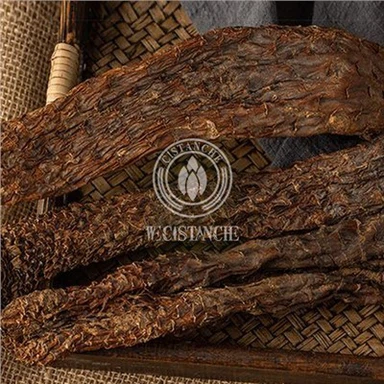
Wecistanche Cistanche Base


The same source also states it can "nourish Essence and Blood" and is used traditionally for weakness of the lower back and knees and related deficiency patterns. (xjcistanche.com)
So, when an AA patient's presentation aligns with a Kidney deficiency / Essence depletion pattern (fatigue, cold tendency, low drive, weak lower back/knees, etc.), Cistanche can be placed as a key herb in the "Kidney-tonifying" category-while the modern mechanistic narrative points readers toward the vitamin D/VDR ↔ Wnt/Hedgehog axis as a plausible overlapping pathway framework.
Important: this is not a claim that Cistanche alone cures AA. It is a mechanism-informed positioning: Cistanche fits the TCM pattern logic that the article discusses, while modern science provides a pathway language (VDR, Wnt, Hedgehog) that helps structure hypotheses and future studies.

Vitamin D assessment and supplementation: where "natural" meets measurable
Because vitamin D status is measurable and modifiable, a reasonable "natural plan" for AA often includes:
Screening serum vitamin D levels
Correcting deficiency with appropriate supplementation (commonly cited ranges exist in the literature)
Considering topical vitamin D analog strategies in clinician-led contexts
Using herbal therapy as a pattern-based, system-level adjunct (not a replacement for diagnosis)
Related tonic-herb context (from the provided webpage) to enrich the "herbal" narrative
The provided reference page discusses classic autumn/winter tonics such as:
Huangjing (Polygonatum sibiricum): "tonify Qi and Yin," support Spleen, Lung, Kidney; traditional preparation includes "nine steaming and nine sun-drying." (xjcistanche.com)
Dihuang / Rehmannia glutinosa: distinguishes raw vs prepared forms and lists classic functions such as nourishing yin, generating fluids (raw) vs nourishing blood/yin and replenishing marrow (prepared). (xjcistanche.com)
Cistanche deserticola: "Desert Ginseng," tonify Kidney, benefit Essence and Blood; also mentioned in the page's modern-pharmacology-style descriptions. (xjcistanche.com)
This provides a clean way to place Cistanche into a broader "tonic strategy" narrative for people searching "herbs for alopecia areata," especially those who resonate with seasonal worsening and deficiency-type symptoms.
References / Sources (as cited in the provided material)
"Huangjing, Cistanche Deserticola, And Rehmannia Glutinosa Are Essential Tonics For Autumn And Winter." Chengdu Wecistanche Bio-Tech Co., Ltd (Oct 17, 2024). (xjcistanche.com)
National Pharmacopoeia Commission. Pharmacopoeia of the People's Republic of China, Part I. Beijing: China Medical Science and Technology Press, 2020. (Listed as data source on the webpage.) (xjcistanche.com)
Wang Jian, Zhang Bing. Clinical Traditional Chinese Medicine (2nd ed.). People's Health Press, 2016. (Listed as data source on the webpage.) (xjcistanche.com)
Zhou Zhenxiang, Tang Decai. Clinical Chinese Medicine (10th ed.). China Traditional Chinese Medicine Press, 2016. (Listed as data source on the webpage.) (xjcistanche.com)
Zhong Gansheng. Traditional Chinese Medicine (4th ed.). China Traditional Chinese Medicine Press, 2016. (Listed as data source on the webpage.) (xjcistanche.com)
Kang Yanguo. Identification of Traditional Chinese Medicine. (Listed as data source on the webpage.) (xjcistanche.com)
Xie Ming. Pharmacology (3rd ed.). People's Health Publishing House, 2016. (Listed as data source on the webpage.) (xjcistanche.com)
Xie Mengzhou, Zhu Tianmin. Tonic Diet of Traditional Chinese Medicine (3rd ed.). China Traditional Chinese Medicine Press, 2016. (Listed as data source on the webpage.) (xjcistanche.com)
Official WeChat accounts referenced on the webpage (Pharmacy Department of the First Affiliated Hospital of Ningbo University; Shandong University of Traditional Chinese Medicine). (xjcistanche.com)