Research Progress And Application in Fingerprint Technology On Chinese Materia Medica Ⅲ
Sep 19, 2024
3 Fingerprint data evaluation method
3.1 Supervised chemical pattern recognition method
Supervised chemical pattern analysis requires inputting known category sample information into the computer as a discriminant model to identify unknown sample spectrum data, mainly including partial least variance discriminant analysis (PLS-DA), K-nearest neighbor method (KNN), cluster independent soft model method (SIMCA), linear discriminant analysis (LDA), etc.
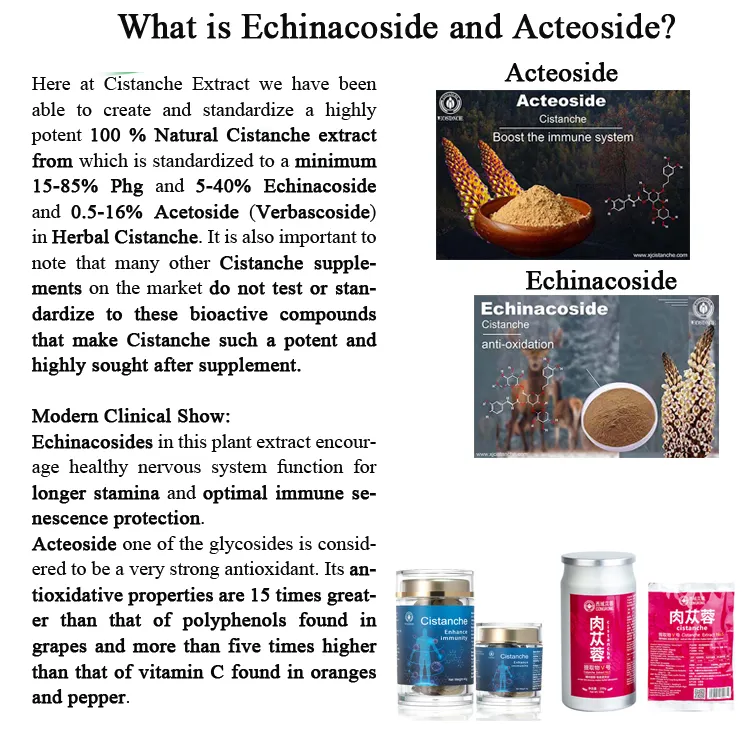
TRADITIONAL CHINESE HERB CISTANCHE ACTIVE INGREDIENT VS VITAMIN
3.1.1 PLS-DA
PLS-DA is a category determination analysis method based on the PLS method to obtain a regression model between sample classification variables and spectral features [66]. Ma et al. [67] used PLS-DA and PCA to accurately distinguish Gastrodia samples of different varieties and geographical origins. Huang Han et al. [68] used the HPLC fingerprint spectrum combined with the PLS-DA method to evaluate and classify the quality of snow chrysanthemum.
3.1.2 KM
KNN is an analytical method that takes k nearest neighbor samples of an unknown sample and classifies the samples by observing the k nearest neighbor samples according to the "closest" similarity of the fingerprint feature parameters[69]. Zheng Jian et al.[70] established a detection method for brown chestnuts based on infrared spectroscopy combined with KNN.
3.1.3 SIMCA
SIMCA is based on PCA. First, PCA is performed on the spectral data of each type of sample, and then a regression model is established for each type of sample[69]. Zheng Jian et al.[70] also established SIMCA.
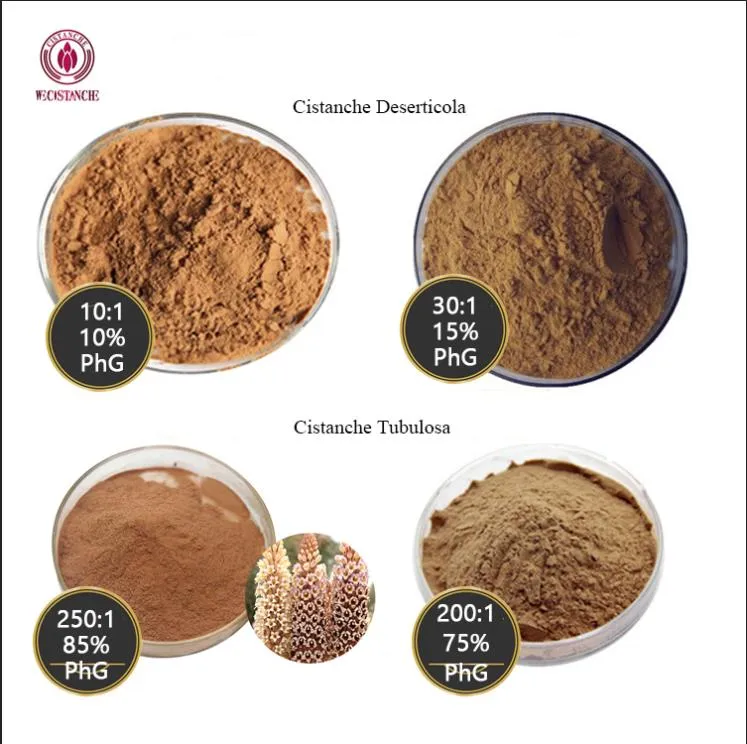
TRADITIONAL CHINESE HERBS CISTANCHE DIFFERENT SPECS BY HPLC
click for more details
3.1.4 LDA
LDA is a method that projects data into a low-dimensional space to obtain the projection line that can best separate the two types of samples and then uses the established discriminant function to classify the unknown samples[71]. Zhang Xinxin et al.[71] studied the application of PCA-LDA in the identification of Chinese medicine properties and determined that this method can provide a basis for clinical medication. Morlock et al. [72] used linear discriminant analysis to quickly and accurately classify different types of propolis.
3.2 Unsupervised Chemical Pattern Recognition Method
It is not necessary to input sample information of known categories. A group of pattern samples without marked categories are classified according to the degree of similarity between samples. Similar samples are classified into one category, and dissimilar samples are classified into another category. System analysis can be intuitively performed, mainly including PCA and cluster analysis (HCA).

3.2.1 PCA
PCA is a multivariate statistical analysis method that converts multiple variables into several representative variables through a linear transformation based on the contribution rate[73]. De Souza et al. [74] conducted PCA on the mineral components contained in breadfruit trees, indicating that furnace heating is more likely to lose trace elements than microwave heating. Zhang Yujiong et al. [75] used PCA and HCA to comprehensively evaluate the quality of three-leaf green medicinal materials. Han et al. [76] combined PCA and artificial neural network technology to find that 11 compounds in 5 varieties of chrysanthemums have potential anti-inflammatory effects.
3.2.2 HCA
HCA is an analytical method that classifies unknown samples into different categories. Hong-Bo et al. [77] used HCA to show that the origin has a great influence on the types and contents of chemical components in Euphorbia chamaejasme. Yi et al. [78] combined HCA and PCA to quickly and effectively classify 74 batches of green tea into 4 groups.
3.3 Similarity evaluation methods
Similarity evaluation methods include the vector cosine method, correlation coefficient method, relative entropy method (KLD), peak overlap method (Nei coefficient method), total quantum statistical moment similarity method, etc.
3.3.1 Cosine angle method
The cosine angle method is a method that reflects the similarity of samples by comparing the cosine values of the angles between vectors[79]. Zhang Qinglian et al.[80] used the cosine angle method to analyze the chromatograms of 5 batches of Danshen injections from different manufacturers and found that the similarity of Danshen injections from different manufacturers was poor.
3.3.2 Correlation coefficient method
The correlation coefficient method is a method that uses the correlation coefficient of two vectors to reflect the similarity between samples[79]. The near-infrared characteristic spectrum correlation coefficient method established by Huang Bisheng et al.[81] provides a basis for the rapid identification of dragon bones.
3.3.3 Relative entropy method
The relative entropy method is a method used to compare the differences between two probability distributions P and Q[82]. Wang Kang et al.[83] used the characteristics of dissimilarity value and used the relative entropy method to calculate the similarity of Chinese medicine fingerprints. This method has good results and low computational complexity.
3.3.4 Peak overlap method
The peak overlap method is an analytical method that reflects the similarity based on the number of common peaks between the sample to be tested and the reference. Gao Jing et al.[84] used the peak overlap method to calculate the similarity of CE fingerprints of rosemary from different origins, which provided a basis for the quality control of rosemary.
3.3.5 Total Statistical Moment Similarity Method
The total statistical moment method is an analytical method that uses the statistical moment principle to analyze the variable function curve and obtain the overall function moment
parameters[85]. Wang Yuanqing et al.[86] established a method for evaluating the consistency and difference of Polygonum cuspidatum decoction pieces by combining HPLC fingerprint with HCA, total statistical moment analysis, and PCA, which can be used as a quality standard for evaluating Polygonum cuspidatum.

TRADITIONAL CHINESE HERB CISTANCHE API
4 Outlook
Traditional Chinese medicine is a treasure of the Chinese nation. It has the advantages of treating both the symptoms and the root cause, being safe, and having few side effects. Therefore, traditional Chinese medicine plays a great role in treating human diseases. Due to its particularity, it is somewhat inaccurate to identify the authenticity and quality of traditional Chinese medicines only by appearance, smell, and microscopic observation. The chemical fingerprint of traditional Chinese medicine is equivalent to the chemical DNA map of traditional Chinese medicine and uses various spectral, chromatographic, and spectral analysis techniques to control the quality of the model. The fingerprint of traditional Chinese medicine has the characteristics of integrity, highlighting the complete appearance of traditional Chinese medicine. At the same time, the fingerprints of similar medicinal materials have the characteristics of similarity. Relying on this map, the comprehensive evaluation of the internal chemical components of traditional Chinese medicine and the comprehensive control of the overall quality are realized, so that traditional Chinese medicine can be used in the clinic in a controllable manner. However, the fingerprint of traditional Chinese medicine also has certain limitations: the biological fingerprint of traditional Chinese medicine studies the gene fragments of traditional Chinese medicine; the chemical fingerprint of traditional Chinese medicine generally studies small molecule compounds. Since most of the macromolecular compounds such as polysaccharides and peptides do not have ultraviolet absorption and have complex and diverse structures, the fingerprint of such compounds has been less studied. Therefore, the fingerprint of traditional Chinese medicine should pay more attention to this aspect so that the macromolecular compounds can be fully controlled in quality. At the same time, polysaccharides can be hydrolyzed into a variety of monosaccharides. Monosaccharides and polysaccharides are one of the biologically active components of traditional Chinese medicine. Therefore, the fingerprint of monosaccharides in traditional Chinese medicine should also be studied. Due to the particularity of traditional Chinese medicine, different origins, harvest seasons, and different medicinal parts of the same medicinal material will have a great impact on the effective ingredients it contains. In addition, these factors may also affect the amount of inorganic elements in traditional Chinese medicine. Therefore, the fingerprint of traditional Chinese medicine should also pay attention to this aspect. From the perspective of final use, fingerprints should not only play a role in the quality control of traditional Chinese medicine but also have further development in studying its efficacy, metabolic changes in the body, and clinical efficacy.
References
[1] Sumathy H, Sangeetha J, Vijayalakshmi K. Chromatographic fingerprint analysis of Ixora coccinea methanolic flower extract [J]. Int J Pharm Sci Drug Res, 2011, 3(4): 327-330.
[2] Li Qiang, Du Simiao, Zhang Zhongliang, et al. Advances in traditional Chinese medicine fingerprint technology and future development prospects [J]. Chinese Herbal Medicine, 2013, 44(22): 3095-3104.
[3] Sun Suqin. Rapid detection technology of food and traditional Chinese medicine by (mid) infrared spectroscopy [J]. Modern Scientific Instruments, 2013(4): 11-20.
[4] Wang Y, Wang P, Xu C, et al. Macro-fingerprint analysis-through-separation of licorice based on FT-IR and 2DCOS-IR [J]. J Mol Struct, 2014, 1070: 1-9.
[5] Ma F, Chen J, Wu X, et al. Rapid discrimination of Panax notogeinseng of different grades by FT-IR and 2DCOS-IR [J]. J Mol Struct, 2016, 1124: 131-137.
[6] Chen Long, Yuan Mingyang, Yu Chi, et al. Analysis of near-infrared spectral characteristics of 8 carbonate-containing mineral traditional Chinese medicines [J]. Journal of Pharmaceutical Analysis, 2015, 35(4): 654-658.
[7] Xu B, Zhang G, Xu C, et al. Analysis of fingerprint features of infrared spectra of various processed products of Coptidis Rhizoma and their different extracts [J]. J Mol Struct, 2015, 1096: 147-156.
[8] Yang Wenzhe, Gong Huili, Qin Yuhua, et al. Study on identification of common marine shellfish Chinese medicine pieces by near-infrared spectroscopy [J]. Chinese Journal of Traditional Chinese Medicine, 2014, 39(17): 3291-3294.
[9] Yan R, Chen J, Sun S, et al. Rapid identification of Lnicerae japonica Flos and Lonicerae Flos by Fourier transform infrared (FT-IR) spectroscopy and two-dimensional correlation analysis [J]. J Mol Struct, 2016, 1124: 110-116.
[10] Ning Zeqiong, Lu Yang, Zhao Liben. Application of ultraviolet spectroscopy in the identification of traditional Chinese medicine [J]. Private Science and Technology, 2014(9): 56.
[11] Huang Tao, Fu Zhijin, Chen Houjiang, et al. Dual index sequence analysis of common peak rate and variation peak rate of ultraviolet fingerprint spectrum of Pinellia ternata [J]. Journal of Dali University: Comprehensive Edition, 2014, 13(2): 20-25.
[12] Zhong Gui, Zhang Ji, Zhang Jinyu, et al. Identification of Panax notoginseng from different origins by UV fingerprint combined with PLS-DA [J]. Henan Agricultural Science, 2015, 44(9): 91-94.
[13] Zuo Xu, Huang Yanfei, Yang Zhengming, et al. Application of UV fingerprint in identification of adulterated buckwheat flour [J]. Food Industry, 2014, 35(2): 92-94.
[14] Huang Lilan, Cheng Wensheng, Chen Yaodi, et al. Research progress of ginseng fingerprint [J]. Chinese Herbal Medicine, 2013, 44(2): 241-246.
[15] Farag M A, Porzel A, Wessjohann L A. Unraveling the active hypoglycemic agent trigonelline in Balanites aegyptiaca date fruit using metabolite fingerprinting by NMR [J]. J Pharm Biomed Anal, 2015, 115: 383-387.