Master Of Traditional Chinese Medicine Wang Shimin: Clinical Experience In Treating Chronic Prostatitis
Apr 10, 2026
Wang Shimin (born July 1935) is a National TCM Master (Third Cohort), professor at Shanxi University of Chinese Medicine, chief physician, and PhD supervisor. He has long been engaged in clinical practice and research in Traditional Chinese Medicine (TCM), with extensive experience in male urogenital disorders. He is known for skillfully applying classical formulas without rigidly adhering to them. His approach to the diagnosis and treatment of chronic prostatitis is distinctive. Below is an overview of Professor Wang Shimin's clinical experience in treating chronic prostatitis for the benefit of fellow practitioners.
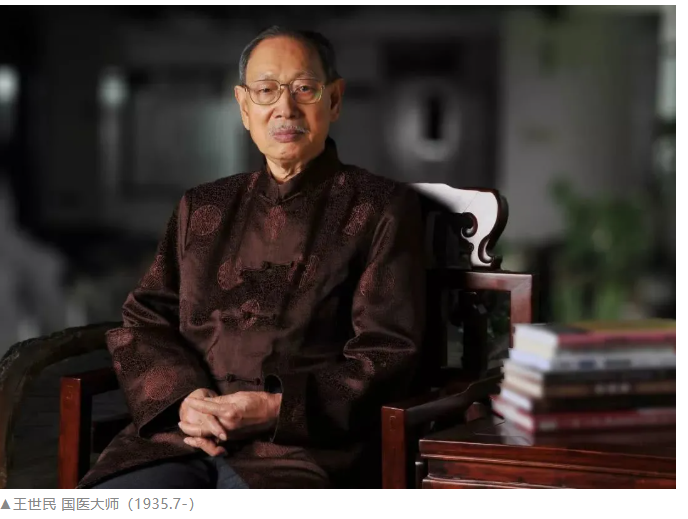
▲Wang Shimin, Master of Traditional Chinese Medicine (July 1935 -)
Chronic Prostatitis: Challenges in Conventional Care
Chronic prostatitis is a common urogenital condition in adult men. It is characterized by recurrence, difficulty in achieving lasting remission, and a prolonged, lingering course. In the NIH prostatitis classification, it largely corresponds to Category III (CP/CPPS, chronic prostatitis/chronic pelvic pain syndrome). Its pathogenesis is not fully understood and clinical manifestations are diverse. Reports suggest a domestic prevalence of 6.0%–32.9%, with 35%–40% occurring in men over 35 years old.
From a conventional Western medical standpoint, management commonly includes NSAIDs, α-blockers, antibiotics, and prostate massage, yet outcomes are often unsatisfactory, with notable concerns about side effects and recurrence. By contrast, TCM pattern-based treatment for prostatitis is often considered to have advantages including fewer adverse reactions, meaningful symptom relief, more stable outcomes, and a perceived tendency toward lower relapse when lifestyle and constitutional regulation are addressed.
Current TCM interventions broadly include:
Internal therapies: oral herbal medicine as the mainstay.
External therapies: acupuncture, microwave therapy, umbilical applications, herbal retention enemas, sitz baths, etc.
These approaches may help modulate inflammatory mediators, immune responses, sex hormone regulation, and oxidative stress, thereby helping prevent progression and supporting recovery.
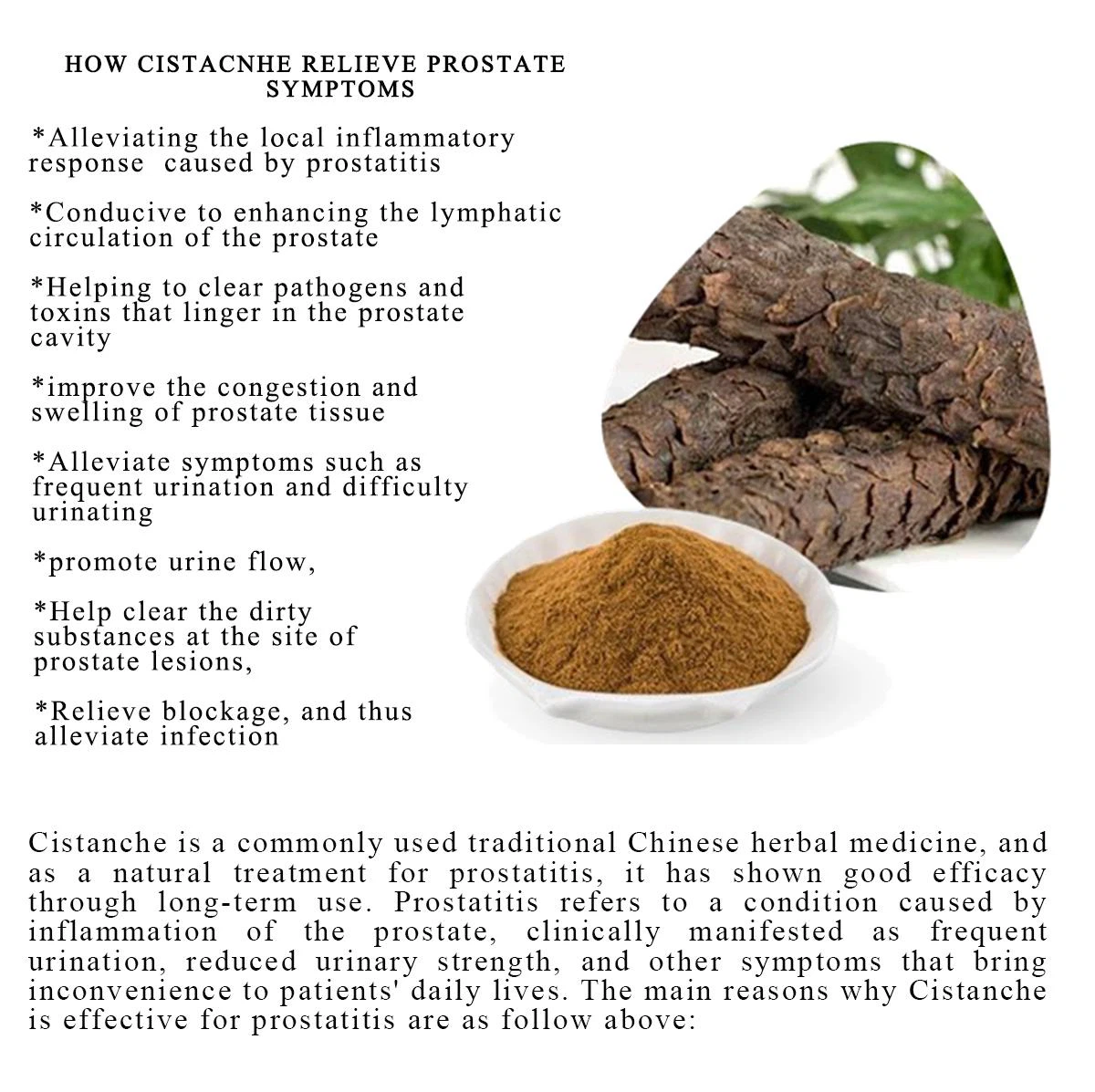
TCM HERB Cistanche Benefits On Kidney And Prostate Health
Common Clinical Presentations
Patients with chronic prostatitis often present with:
Lower urinary tract symptoms: frequency, weak stream, hesitancy, burning sensation in the urethra, incomplete emptying, "post-void dribbling," and "milky discharge at the end of urination."
Pelvic pain/discomfort: perineum, glans penis, testes, lower abdomen, pelvic heaviness or pressure.
Psychological symptoms: anxiety, insomnia, forgetfulness, depression.
Possible impact on fertility.
Although not typically life-threatening, chronic prostatitis can significantly impair work, daily functioning, physical comfort, and mental well-being. Research suggests that psychoneurological factors play a critical role in onset and persistence; more than 50% of refractory cases show evident psychological distress.


Supportive Service Of Wecistanche-For more details about cooperation
Email:wallence.suen@wecistanche.com
Etiology and Pathogenesis (TCM Perspective)
Based on clinical manifestations, chronic prostatitis can be categorized in TCM under conditions such as "jing zhuo" (turbid essence), "lao lin", low back pain, "bai yin", and "lin zhuo." The Plain Questions (Su Wen) states:
"Endless thoughts and unfulfilled desires, excessive sexual indulgence… lead to laxity of the governing sinews, resulting in sinew flaccidity and may also manifest as 'bai yin' (abnormal seminal/urethral discharge)."
Given its prolonged course and recurrence, patients often experience sustained financial and psychological stress. This can cause emotional constraint, impaired qi movement, and over time liver qi stagnation. Professor Wang Shimin believes liver qi stagnation runs through the entire course of chronic prostatitis, closely related to the Liver channel (Foot Jueyin). Classical texts describe the Liver channel as coursing through the genital region and lower abdomen, linking it to the anatomical and symptomatic distribution typical of this condition.
Modern lifestyle factors also contribute: high work pressure, excessive smoking and alcohol consumption may impair the Liver's regulatory function. Dietary irregularities may weaken the Spleen's transformative capacity, generating damp-heat, which can lodge in the "essence chamber." Over time, this may develop into qi stagnation and blood stasis, contributing to the condition.
How to use cistanche according to your situation
Pattern-Differentiation Strategy
Core Treatment Principle
Many patients show notable anxiety, tension, and depressive mood, alongside symptoms such as urinary hesitancy, weak stream, thin stream, painful urination, and split stream; scrotal dampness; and pain/discomfort in the perineum, testes, lower abdomen, and pubic region. With prolonged illness, sexual dysfunction (erectile dysfunction, premature ejaculation) may occur.
Professor Wang emphasizes that relieving agitation, depression, and emotional constraint is a key determinant of therapeutic success. His foundational strategy is:
Soothe the Liver and regulate qi
Restore free flow of qi dynamics
At the same time, he pays close attention to secondary pathological products-dampness, heat, and stasis-often combining:
Clear heat and drain dampness
Invigorate blood and resolve stasis
He created a formula known as "San He Tang" (Three-Pit Decoction / Three-Seed Decoction) for chronic prostatitis and stresses that formulas must match patterns. Clinically, he frequently selects herbs based not only on pattern differentiation but also on "symptoms" and the herb's properties (temperature, flavor, and indications).
San He Tang (Three-Pit Decoction): Clinical Application
Base Formula
Shanzha He (hawthorn pit/kernel) 20 g
Juhé (tangerine/orange pit) 20 g
Lizhihé (lychee pit) 20 g
Chuan Lian Zi 10 g
Mu Xiang 10 g
Gui Jian Yu 20 g
Yan Hu Suo 10 g
Xiao Hui Xiang 10 g
Yi Zhi Ren 10 g
Wu Yao 3 g
She Chuang Zi 10 g
Chai Hu 10 g
Gan Cao 8 g
Formula logic (TCM rationale):
The three "pits/kernels" (hawthorn, citrus, lychee) serve as chief herbs to move qi, disperse nodules, and relieve pain. Deputies such as Chuan Lian Zi, Mu Xiang, Gui Jian Yu, and Yan Hu Suo regulate qi, invigorate blood, unblock collaterals, resolve stasis, and relieve pain. Assistants (Xiao Hui Xiang, Yi Zhi Ren, Wu Yao) warm the Kidney, dispel cold, and support urinary control; given the long course and common sexual dysfunction, She Chuang Zi is added to warm Kidney yang and support sexual function. Chai Hu guides the formula into the Liver channel, while Gan Cao harmonizes.
This combination aims to achieve:
soothing the Liver and regulating qi + invigorating blood and resolving stasis + warming the Kidney and supporting yang.
The formula contains many warm and bitter herbs, primarily entering the Liver and Kidney channels. TCM theory holds that warm herbs can "warm and unblock, disperse masses, and restrain hyperplasia," while bitter herbs can "dry dampness and clear downward." This aligns with the common pathomechanism in chronic prostatitis.
Modifications by Presentation
Damp-heat signs (bitter taste, scrotal dampness, yellow greasy tongue coating, slippery rapid pulse): add Qin Pi 12 g, salt-processed Huang Bai 15 g, Zhi Mu 15 g, Che Qian Zi 10 g, Yi Yi Ren 10 g to clear heat, dry dampness, promote urination, and open strangury.
Qi stagnation and blood stasis (dysuria, thin/split stream, lingering dribbling, urethral discomfort; dark/purplish tongue, choppy pulse): add Shui Hong Hua Zi 15 g, Tu Bie Chong 10 g, Ji Xue Teng 15 g, Chuan Shan Long 10 g, Dan Shen 10 g to invigorate blood, unblock collaterals, and relieve pain.
Late-stage erectile dysfunction with Kidney yang deficiency: add Lu Jiao Jiao (deer antler gelatin; dissolve) 10 g, Yu Biao Jiao (fish maw gelatin; dissolve) 10 g, and Rou Cong Rong 10 g.
Kidney yin deficiency tendency: choose Nv Zhen Zi 15 g, Mo Han Lian 10 g, Tu Si Zi 10 g.
Severe burning pain on urination: add Hai Jin Sha 15 g, Bian Xu 10 g, Hua Shi 12 g, Sheng Gan Cao 10 g.
Poor sleep: add calcined Long Gu and calcined Mu Li 15 g each, Suan Zao Ren 15 g.
Weakened digestion after bitter-cold draining herbs: add Dang Shen 10 g, Shan Yao 10 g, Bai Zhu 10 g.
Professor Wang uses San He Tang as the base and adjusts it according to individual constitution, pattern type, and symptom profile-reflecting a highly individualized, patient-centered approach.
Spotlight: The Role of Rou Cong Rong in Late-Stage Cases (Why It Matters)
For many Western readers, one of the most practical frustrations in CP/CPPS is that pelvic symptoms may improve, yet sexual function, fatigue, and resilience remain impaired-or relapse occurs under stress, poor sleep, or prolonged sitting. Professor Wang's later-stage adjustments highlight a key TCM advantage: supporting recovery capacity while consolidating symptom relief.
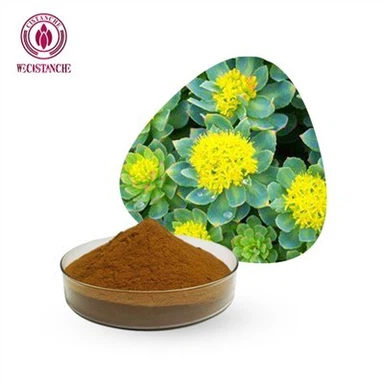
Rou Cong Rong (Cistanche) is emphasized in later-stage patients who trend toward Kidney yang deficiency-often reflected clinically by fatigue, cold limbs, diminished erectile rigidity, or reduced post-illness vitality. In Professor Wang's framework, Rou Cong Rong is used not simply as a "sexual-function herb," but as a broader constitutional support:
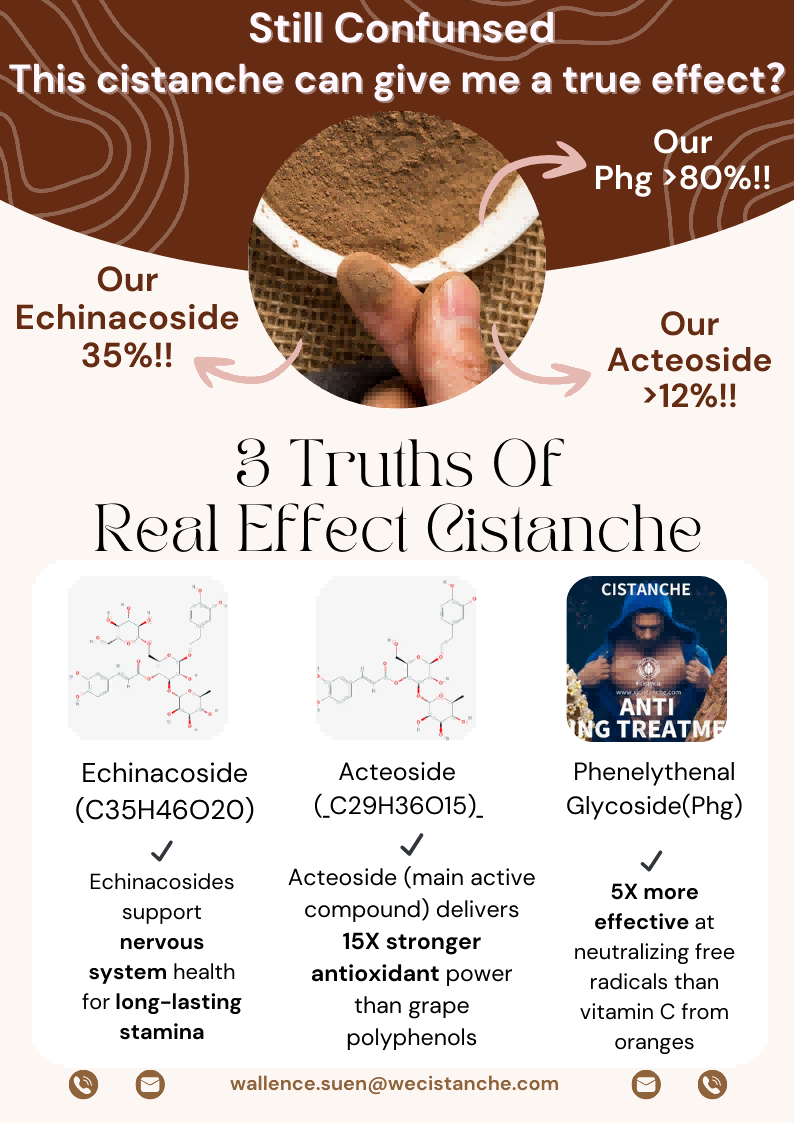
Cistanche Quality Standards
It is applied to support Kidney yang while also helping the patient regain drive, warmth, and functional stability after prolonged illness.
It is paired with agents like Lu Jiao Jiao and Yu Biao Jiao to reinforce rebuilding and consolidation when the acute obstructive factors (damp-heat, stasis, constrained qi) have been reduced.
Why this resonates with Western concerns about side effects
Conventional pharmacologic management for chronic prostatitis/CP/CPPS can be helpful, but many patients experience limitations:
NSAIDs may irritate the stomach or affect renal function with prolonged use.
α-blockers can cause dizziness, orthostatic hypotension, or ejaculatory changes in some patients.
Antibiotics may cause gastrointestinal upset and contribute to microbiome disruption; in CP/CPPS (NIH Category III), infection is often not clearly present, so repeated courses may offer diminishing returns.
Against that backdrop, Professor Wang's strategy aims to reduce symptom burden while improving the body's regulatory capacity, potentially supporting longer-term stability. The emphasis on Rou Cong Rong in the later phase reflects a "treating-before-illness" mindset: once pain and urinary irritation are controlled, the goal shifts to preventing relapse and restoring function by strengthening the underlying deficiency that predisposes to recurrence.
Representative Case Study
Patient: Mr. He, male, 45 years old
First visit: July 24, 2019
Chief complaint: urinary frequency, urgency, and incomplete emptying for 2 months; worsened for 4 days.
Four days earlier, symptoms worsened after excessive alcohol intake at a dinner.
History and Symptoms
Since March 2019, recurrent pelvic distension and pain; perineal, lower abdominal, and testicular dull pain/heaviness; post-void pain; dark-yellow urine.
At initial consultation: urinary frequency and urgency; lingering dribbling; post-void distension/pain; low mood; anxiety and tension; hypochondriac distension; occasional "white urethral discharge"; nocturia 5–6 times/night; low back soreness; soreness in both heels; pelvic distension; weak erections; penile pain after intercourse; scrotal dampness; fatigue; cold limbs; loose stools; no fever; sleep acceptable; appetite fair. Tongue coating: white greasy; pulse: wiry and thin. No significant chronic illness history; no allergies reported.
Examination
Scrotum and prostate ultrasound: prostate size 4.9 cm × 4.0 cm × 3.2 cm
Digital rectal exam: enlarged prostate
Expressed prostatic secretion: WBC 28; lecithin bodies (+)
Diagnosis
TCM: Jing Zhuo (turbid essence), qi stagnation and blood stasis pattern
Western: chronic prostatitis
Treatment Principle
Soothe the Liver, regulate qi, invigorate blood, relieve pain.
Prescription (Modified San He Tang)
Shanzha He 20 g, Juhé 20 g, Lizhihé 20 g, Chuan Lian Zi 10 g, Gui Jian Yu 20 g, Yan Hu Suo 10 g, Xiao Hui Xiang 10 g, Yi Zhi Ren 10 g, Wu Yao 3 g, Mu Xiang 10 g, She Chuang Zi 10 g, salt-processed Huang Bai 10 g, Qin Pi 10 g, Tu Bie Chong 10 g, Shui Hong Hua Zi 10 g, Wu Gong 2 (pieces), Hua Shi 12 g, Sheng Gan Cao 10 g.
Dispensing: 14 doses; one dose daily, water decoction, taken warm in two divided doses.
Lifestyle guidance: maintain emotional ease; avoid smoking and alcohol; reduce prolonged sitting; practice exercise such as Baduanjin and Tai Chi.
Second Visit (August 7, 2019)
After 14 doses: urinary frequency and post-void distension improved; pelvic distension reduced; hypochondriac distension, fatigue, cold limbs, urethral discharge, and scrotal dampness resolved; nocturia reduced to 3–4 times/night; still weak erections. Sleep and appetite good; stool normal. Tongue slightly red; coating thin white-greasy; pulse wiry.
Adjustment: Remove salt-processed Huang Bai and Qin Pi; add Bai Zhu; add Lu Jiao Jiao (dissolve) 10 g and Rou Cong Rong 10 g. Continue 14 doses.
Third Visit (August 21, 2019)
Symptoms greatly improved: urinary frequency, urgency, incomplete emptying, and pain markedly relieved; no perineal or lower abdominal discomfort; nocturia 1–2 times/night; still weak erections and penile pain after intercourse. Appetite and sleep good. Tongue pale-red; coating thin white; pulse wiry. Repeat prostatic fluid microscopy was normal.
Adjustment: Continue prior approach; remove Shui Hong Hua Zi, Hua Shi, Sheng Gan Cao; add Yin Yang Huo 10 g. 14 doses.
Fourth Visit (September 4, 2019)
Erectile function significantly improved; no pain after intercourse; no other discomfort. Appetite good; sleep stable; bowel movements normal. Tongue pale-red; coating thin white; pulse wiry.
Plan: Continue the formula for another 14 doses to consolidate outcomes.
Clinical Notes
The patient presented with classic urinary symptoms and supporting examination findings consistent with chronic prostatitis. Psychological factors (anxiety, tension, low mood) and alcohol-triggered aggravation were clear contributors. Based on tongue and pulse, the pattern was identified as qi stagnation and blood stasis with damp-heat obstruction. In this case, emotional constraint was central-"where there is obstruction, there is pain." Treatment prioritized regulating qi and invigorating blood to relieve pain, while also addressing the root.
When using San He Tang, it is important to recognize that the prostate favors free flow and unobstructed drainage; thus, the strategy of invigorating blood, resolving stasis, and draining damp-heat should run throughout. At the second visit, scrotal dampness had resolved; given the patient's relatively thin build and a tendency to deficiency, prolonged use of bitter-cold herbs was reduced to protect fluids. Because erectile weakness persisted, Lu Jiao Jiao and Rou Cong Rong were added to warm and support Kidney yang. By the third visit, most symptoms were controlled; to further address erectile function and post-intercourse pain, Yin Yang Huo was added. Ultimately, symptoms resolved and function improved with consolidation therapy.