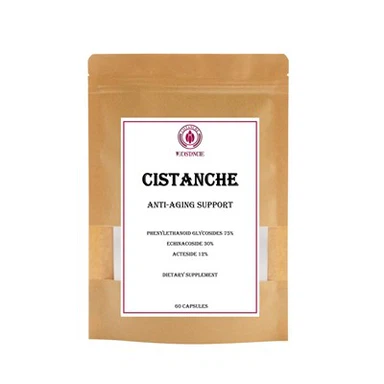
Cistanche And Aging: What The Latest Research Reveals About The Desert Ginseng
Oct 29, 2026
When a humble desert plant meets modern longevity science, the results are worth paying attention to.
Every culture has searched for the secret to a longer, healthier life. For thousands of years, one plant has quietly held a special place in that search - a golden-brown desert dweller known in Chinese tradition as the "desert ginseng." Its botanical name is Cistanche deserticola, and today it sits at the intersection of ancient herbal medicine and cutting-edge aging research.
This article explains what Cistanche is, why scientists are so interested in it, what a major recent study actually found, and - most importantly - what that means for you and your daily health. We'll keep the science honest and the jargon low, so you can decide for yourself whether this fascinating herb deserves a spot in your routine.
What Exactly Is Cistanche?
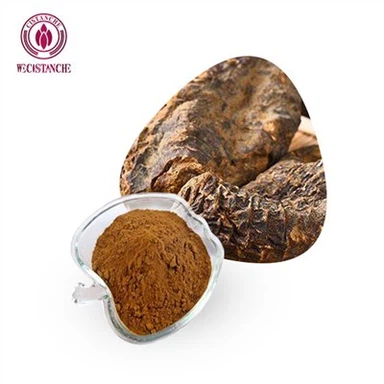
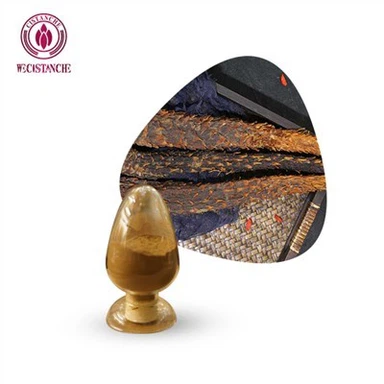
Cistanche (Cistanche deserticola) is a parasitic plant that grows in arid, sandy regions - most famously in the Taklamakan and Gobi deserts of northwestern China. It has no green leaves and no roots of its own; instead, it attaches itself to the roots of host shrubs like the desert-adapted Haloxylon (saxaul) tree, drawing water and nutrients from them while pushing a thick, fleshy, golden-yellow stem above the sand.
That stem is the treasure. Once dried, it becomes the medicinal herb prized in East Asian tradition for centuries. Because it can survive the harshest desert conditions and carries a remarkable range of bioactive compounds, it earned the poetic nickname "desert ginseng" - a hint of the respect it commands in herbal medicine.
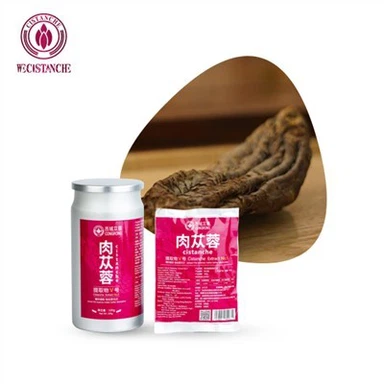
Interestingly, Cistanche is officially recognized in China both as a traditional medicinal herb and as a food ingredient. In 2018 it was added to the national catalog of substances that are safe to use both as food and as medicine, which opened the door to a new wave of health-food and supplement products built around it. Today you'll find Cistanche extracts in capsules, teas, powders, and functional drinks.

A Plant With Deep Roots in Traditional Medicine
To understand why scientists bother studying Cistanche, it helps to know what traditional medicine has said about it for generations.
In Traditional Chinese Medicine (TCM), Cistanche is described as sweet and slightly warm in nature, entering the kidney and large-intestine meridians. It has long been used to:
Nourish kidney yang - supporting energy, vitality, and stamina
Replenish essence and blood - which TCM connects to healthy aging
Moisten the intestines - to ease constipation
A striking historical note: among all the herbs used in traditional longevity and anti-aging formulas, Cistanche appears with the second-highest frequency - just behind ginseng. That's a powerful clue that, across centuries of empirical use, this plant was consistently associated with healthy aging.
Modern pharmacology has given those old beliefs a new kind of credibility. Studies have reported that Cistanche extracts show antioxidant, anti-fatigue, memory-supporting, and immune-modulating activity. The lingering question, though, has always been how it works - which compounds do the heavy lifting, and through what biological pathways. That is precisely the question the recent study set out to answer.
Why Researchers Study Aging With a Tiny Worm
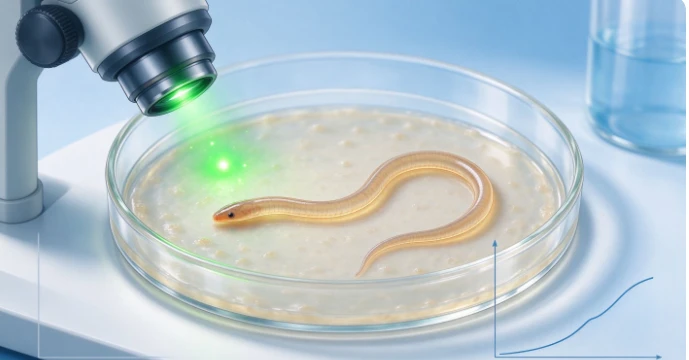
Before we dive into the findings, you need to meet the unlikely hero of this research: a microscopic roundworm called Caenorhabditis elegans, or C. elegans for short. It's about a millimeter long, transparent, and lives happily on a plate of bacteria in the lab. It doesn't look like much - but it has transformed aging research.
Why? Three reasons:
It ages fast. A worm's entire life lasts only about two to three weeks. Researchers can watch the complete aging process - from youth to old age - in a matter of days, rather than decades.
It shares a huge amount of biology with us. Roughly 60–80% of human genes have counterparts in the worm. The signaling pathways that control its aging are the same families of pathways that influence our own longevity.
It's easy to control. Because worms are transparent and genetically well-mapped, scientists can literally watch a fluorescent protein move inside a living worm, or test how a single gene affects lifespan.
When a plant extract extends a worm's life and improves its stress resistance, it's a strong early signal that the same extract may influence similar processes in humans. It's not proof - far from it - but it's a scientifically meaningful first step.
What the Latest Study Actually Did
A research team led by scientists in China wanted to pin down exactly which components of Cistanche matter for anti-aging and how they act. Their approach had two stages: a computer-based prediction phase and a live-animal verification phase.
Stage One: Mapping the Network in Silico
The first stage used "network pharmacology" - a sophisticated computational method that treats the body not as a list of isolated parts, but as a web of interconnected proteins and signaling pathways.
Here's what the team did:
They selected 12 major active compounds from Cistanche, including several phenylethanoid glycosides (echinacoside, acteoside, isoacteoside, and others), iridoid compounds, and lignan glycosides.
Using large public databases, they predicted which human proteins these compounds could bind to, and cross-referenced those targets against a database of aging-related genes.
They found 75 overlapping targets shared between Cistanche's active compounds and aging-related genes.
Through network analysis, they narrowed this down to 8 core target proteins - the "hubs" most likely to matter. These included HSP90AA1 (a heat-shock protein), ESR1 (estrogen receptor alpha), HRAS (a signaling protein), MMP2, hexokinase-2, and enzymes involved in digesting sugars.
Pathway analysis suggested Cistanche could influence 27 signaling pathways, including the insulin signaling pathway, estrogen signaling, and several cancer-related pathways.
In short: the computer analysis predicted that Cistanche's active compounds interact with a genuine anti-aging network, and it pointed a finger at a specific, well-known longevity pathway - the insulin/IGF-1 signaling pathway.
Stage Two: Putting the Prediction to the Test
Predictions are only as good as the evidence that backs them. So the team moved to living worms.
They grew populations of C. elegans, treated groups with different concentrations of a Cistanche water extract, and measured a battery of aging-related outcomes: lifespan, stress resistance, movement, reproduction, the buildup of aging pigment, antioxidant enzyme activity, and the expression of longevity-related genes.
It's worth pausing here: this is exactly the kind of careful, controlled experiment that turns a promising theory into something more solid.

The Key Findings: What the Worms Showed
The results painted a consistent and encouraging picture. Here are the highlights:
1. Cistanche Extended Lifespan - But Only at the Right Dose
Treating worms with moderate concentrations of the extract meaningfully extended their average, median, and maximum lifespan. A concentration of 75 µg/mL was the sweet spot, pushing average lifespan up significantly compared to untreated worms.
But there's an important catch: more is not always better. At very high concentrations, the extract actually became toxic and shortened lifespan. This "dose-response" pattern is completely normal for bioactive compounds, and it's a reminder that even beneficial herbs are about balance, not excess.
2. It Strengthened the Worms' Defenses Against Stress
Aging is tightly linked to how well an organism copes with stress. The researchers put treated worms under two kinds of pressure:
Oxidative stress (exposure to hydrogen peroxide, a source of damaging free radicals): treated worms survived significantly longer than controls - mean survival nearly doubled at the best dose.
Heat stress (exposure to high temperature): treated worms resisted heat shock better and lived longer.
In other words, Cistanche seemed to build resilience - helping the worms withstand exactly the kinds of cellular attacks that accelerate aging.
3. It Cleaned Up Cellular "Aging Pigment"
As organisms age, cells accumulate a yellowish-brown pigment called lipofuscin - a byproduct of oxidative damage. It's considered a reliable marker of biological aging. In this study, treated worms showed significantly less lipofuscin buildup than untreated worms, meaning their cells were aging "cleaner."
4. It Kept Aging Worms Moving
Treated worms maintained better movement in their later days - they performed more body-bends in a set time than their untreated counterparts. This matters because declining mobility is a hallmark of aging, and preserving it is a practical sign of healthier aging, not just a longer count of days.
5. It Did Not Rely on Calorie Restriction or Reproduction Costs
Two common ways that lifespan gets extended are eating less (calorie restriction) or suppressing reproduction. The study showed neither was happening: treated worms ate just as much as controls, and they produced just as many offspring. This means Cistanche's longevity effect was driven by something more interesting than simply "starving" or "sacrificing fertility."
6. It Boosted the Body's Own Antioxidant Machinery
This is arguably the most biologically meaningful result. Aging is driven in large part by oxidative stress - an overload of reactive oxygen species (ROS), the unstable molecules that damage our DNA, proteins, and cell membranes. The body fights back with its own antioxidant enzymes: superoxide dismutase (SOD), catalase (CAT), and glutathione peroxidase (GSH-Px).
In the treated worms:
Activity of SOD, CAT, and GSH-Px all rose significantly.
Levels of ROS dropped.
Levels of malondialdehyde (MDA) - a marker of lipid (fat) damage - fell at the higher doses.
So the extract appeared to strengthen the worms' natural antioxidant defense system while reducing the actual oxidative damage.

The Mechanism: A Longevity Pathway, Explained Simply
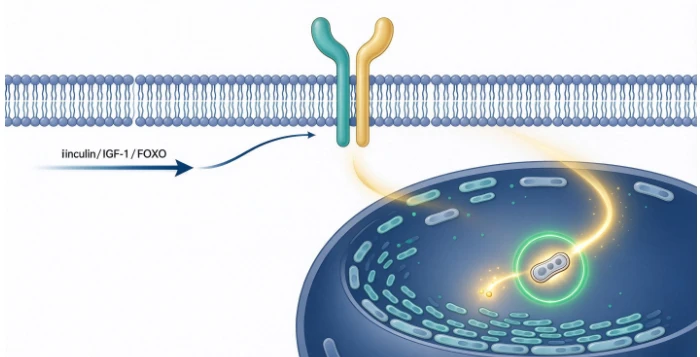
If you read the scientific paper, you'll see phrases like "insulin/IGF-1 signaling" and "DAF-16/FOXO." Let's translate that into plain English, because it's the heart of the story.
Inside the cells of the worm (and, importantly, of humans), there's a master switch that controls how the body responds to nutrients, stress, and aging. In worms, that switch involves a receptor called DAF-2. When the "growth and aging" signal is turned on through DAF-2, it sets off a chain reaction (through proteins called AGE-1 and AKT) that ultimately disables a crucial protective transcription factor called DAF-16 - the worm version of the human FOXO protein.
Here's the key idea: DAF-16/FOXO is a "longevity and defense" gene. When it's active, it turns on a whole suite of protective programs - antioxidant enzymes, stress-response proteins, and repair mechanisms. But when the insulin/IGF-1 signal is strong, DAF-16 is kept inactive, and those protective programs stay switched off.
This is the same pathway that underpins the famous finding that calorie restriction extends lifespan in many organisms - because reduced food intake lowers the "growth" signal and lets DAF-16/FOXO do its protective work.
The study found that Cistanche effectively does something similar:
It lowered the activity of the growth-signaling genes daf-2, age-1, and akt-1.
It activated daf-16 (the worm FOXO) and helped the DAF-16 protein move into the nucleus, where it can switch on protective genes.
It also activated skn-1 (the worm's Nrf2, another major antioxidant master-switch) and several heat-shock protein genes (hsf-1, hsp-16.1, hsp-16.2).
Downstream, it up-regulated antioxidant genes like sod-3, gst-4, ctl-1, ctl-2, and mtl-1 - the actual workers that neutralize free radicals.
When the researchers used mutant worms missing daf-16, skn-1, or hsf-1, Cistanche's longevity effect disappeared. That's strong evidence these genes are required for the effect - it's not coincidence; it's causation within the worm model.
In plain terms: Cistanche appears to gently dial back the body's "growth-and-aging" signaling, which frees up the master longevity switches (FOXO and Nrf2) to activate the body's own antioxidant and stress-defense programs. The result is a longer, more resilient life - at least in the worm.
A Closer Look at the Active Compounds
You might be wondering: which specific molecules are doing this? The study points to a family of compounds called phenylethanoid glycosides, which are abundant in Cistanche. The most notable members are:
Echinacoside - the flagship compound, which earlier research had already shown can extend worm lifespan and protect against stress.
Acteoside (verbascoside) - a potent antioxidant and anti-inflammatory compound.
Isoacteoside and 2'-acetylacteoside - close relatives with similar properties.
Cistanoside A and F - Cistanche-specific glycosides.
Alongside these are iridoid compounds (like 6-deoxycatalpol and geniposidic acid) and lignan glycosides (like pinoresinol glucoside). Together, this cocktail of compounds is what gives the whole extract its activity - another reason why whole-plant or standardized extracts are often studied rather than a single isolated molecule.
This matters practically: if you're choosing a Cistanche product, the concentration and quality of these phenylethanoid glycosides - especially echinacoside and acteoside - is a good indicator of potency. Look for standardized extracts that specify their glycoside content.
The Honest Caveats: What This Study Does Not Prove
It's easy to get carried away by exciting results, so let's be disciplined about what this research really tells us - and what it doesn't.
These results are from worms, not humans. C. elegans is a powerful model, and the pathways involved are highly conserved, but a worm is not a person. We cannot say from this study that Cistanche will extend human lifespan or reverse human aging. That would require clinical trials in people.
It's a single study. Solid science comes from consistent results across many independent experiments. This study is a valuable data point, but it joins a growing body of research rather than closing the question.
The "dose matters" lesson is real. The same extract that helped at moderate doses was harmful at high doses in the worms. This should discourage anyone from the "more is better" mindset. Follow recommended dosages.
Mechanism ≠ miracle. Even though the FOXO/Nrf2 pathway explanation is elegant and well-supported here, biology is messy. Other pathways and other effects are certainly at play.
What it does reasonably suggest: that Cistanche contains compounds with genuine antioxidant and stress-defense activity, that these act through evolutionarily conserved longevity pathways, and that the herb deserves serious, continued study - and responsible everyday use.
What This Means for You and Your Health
So, stepping back from the lab: should you care about Cistanche? Here's a balanced take.
The promising side:
It has a long, documented history of traditional use as a tonic and longevity herb.
Modern research consistently supports its antioxidant, anti-stress, and metabolic-supporting effects.
It's regarded as gentle and well-tolerated, with a tradition of use that spans centuries.
It may support the same "cellular defense" systems - FOXO and Nrf2 signaling - that are considered central to healthy aging across the animal kingdom.
The sensible side:
Think of it as support for healthy aging, not as an anti-aging drug or a fountain of youth.
If you're generally healthy, it's best viewed as part of a broader lifestyle - good sleep, balanced nutrition, regular movement, and stress management are still the foundations.
Individual results, if any, will vary. Herbal products affect different people differently.
A practical suggestion: Cistanche is often combined with a healthy routine as a daily supplement. If you're curious, the common forms are standardized extracts (capsules or powder), herbal teas, or tinctures. As with any supplement, quality and standardized active-compound content matter more than marketing claims.
Safety and Precautions
Because Cistanche is recognized in China as both a food and a medicinal substance, it's generally considered well-tolerated. Still, a few cautions apply:
Pregnant or breastfeeding women, and anyone with a known medical condition, should consult a healthcare professional before using concentrated extracts.
Watch the dose. As the worm study reminds us, benefit and harm are both dose-dependent. Stick to the amounts recommended on a quality product.
Check for allergies and interactions. If you take prescription medication - especially for blood sugar or blood pressure - discuss Cistanche with your doctor first, since its effects on metabolism and signaling could theoretically interact.
Buy from reputable sources that test for purity and clearly state active-compound levels. The desert-supply chain can be variable, so quality matters.
Where the Research Is Heading
The field of aging research is moving fast, and plants like Cistanche are being re-examined with modern tools - network pharmacology, "omics" technologies, and standardized animal models. The study we've discussed is part of this wave: instead of vague claims about "vitality," researchers are now able to name specific compounds, specific proteins, and specific pathways.
Looking ahead, the most exciting questions are:
Can these effects be confirmed in mammals (mice, and eventually humans)?
Which specific compound - or combination of compounds - is the most effective?
How does Cistanche interact with other longevity interventions, like exercise or metabolic control?
Could it help with age-related conditions beyond lifespan itself - cognition, mobility, metabolic health?
For now, the evidence is genuinely encouraging, and the herb's historical reputation is being slowly backed up by hard data.
The Bottom Line
Cistanche - the "desert ginseng" - is a remarkable plant with an extraordinary history. This latest research gives us a clearer picture than ever of how it might work: by gently modulating a master longevity signaling pathway and activating the body's own antioxidant defense systems.
The worm studies show real, measurable effects on lifespan, stress resistance, and cellular aging markers. Human translation is still to come, so a healthy dose of scientific humility is warranted. But for anyone interested in evidence-informed herbal wellness, Cistanche is a genuinely interesting plant worth knowing about - and, for many, a reasonable addition to a well-rounded approach to healthy aging.
Whether you try it or not, one takeaway applies to everyone: aging is a process we can influence, and nature - sometimes in the most unexpected places, like a golden stem buried in the desert sand - still has a lot to teach us.
This article is for general informational and educational purposes only and is not a substitute for professional medical advice, diagnosis, or treatment. Always seek the advice of your physician or another qualified health provider with any questions you may have regarding a medical condition. The research described was conducted in laboratory animals (nematode worms); findings do not confirm the same effects in humans.