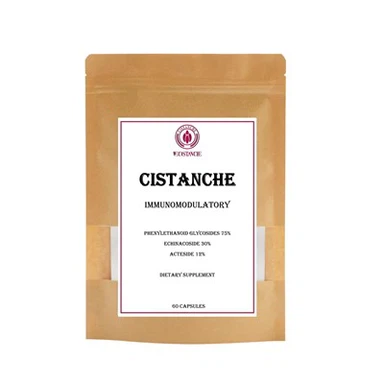
Cistanche Extract: The “Desert Ginseng” That Helps Keep Your Kidneys Younger
Oct 29, 2026
When people hear "kidney tonification," they often think of lower back pain, fatigue, or frequent nighttime urination. But in modern biology, a "young kidney" means something deeper: healthy glomerular filtration, efficient tubular energy metabolism, intact mitochondria, and a robust antioxidant defense system.
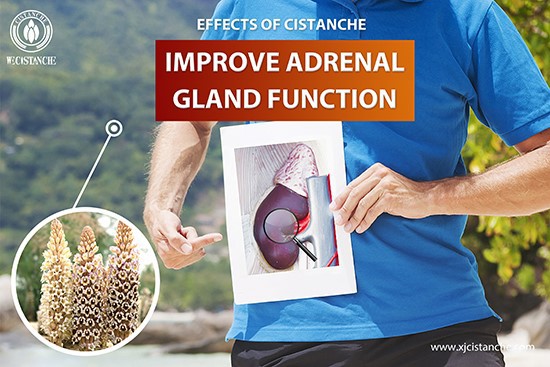
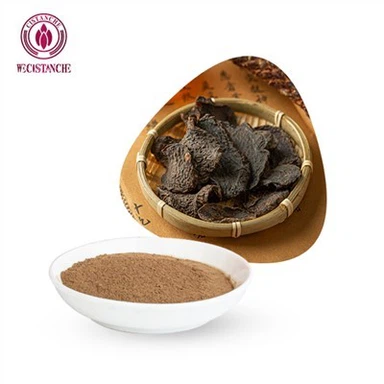
Cistanche tubulosa efficacy: Tonifying the kidney
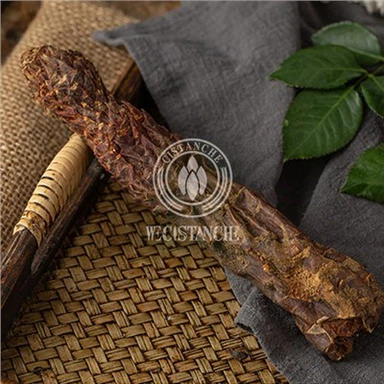
Cistanche - known in Traditional Chinese Medicine as "desert ginseng" - has long been used to "tonify kidney yang, replenish essence and blood, and moisten the intestines." Today, science is pointing its finger at one key fraction of this herb: phenylethanoid glycosides (PhGs).
It is not a magic aphrodisiac. But it may be one of the most underrated botanicals in the kidney-aging conversation.
1. What Actually Works Inside Cistanche?
Cistanche is a parasitic plant from arid regions of China. Its extract is not a single molecule but a synergy of compounds:
Phenylethanoid glycosides (core actives): echinacoside, acteoside (verbascoside), tubuloside B

Phenylethanol glycoside is the main active component of Cistanche tubulosa
Polysaccharides: immune and gut-microbiome modulation
Iridoids, lignans: auxiliary anti-inflammatory and antioxidant effects
Betaine, amino acids, trace polyphenols: metabolic support
Among these, echinacoside and acteoside are the best-studied benchmark compounds. Pharmacological work from Peking University and others shows that these glycosides are metabolized into neurotransmitter-like molecules and exert mitochondrial protection, antioxidant, and anti-inflammatory effects.
In short: the renal potential of Cistanche is largely carried by its phenylethanoid glycosides.
2. Why Do Kidneys Age So Fast?
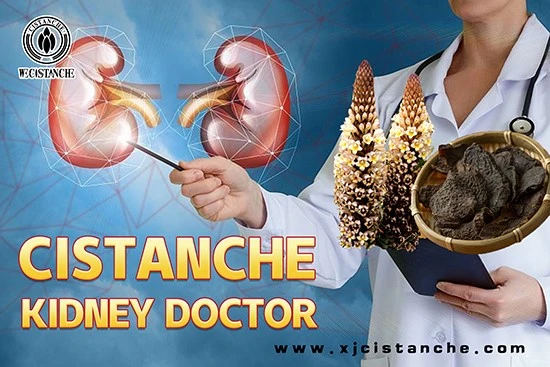
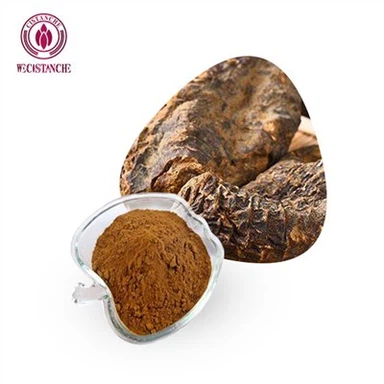
Effects of Cistanche: Improve Kidney Function
The kidney is one of the hardest-working filters in the body:
Receives 20%–25% of cardiac output
Filters roughly 180 liters of plasma daily
Renal tubular cells are packed with mitochondria and consume huge amounts of ATP
With age, kidneys enter a familiar decline cascade:
Oxidative stress rises: more ROS, weaker SOD and glutathione defenses
Mitochondria tire: lost membrane potential, less ATP, slower reabsorption
Chronic inflammation: NF-κB activation, elevated IL-6, TNF-α
Cellular senescence: p53/p21/p16 activation, more SA-β-gal-positive cells
Fibrosis: TGF-β1 up-regulation, collagen deposition, stiffening of renal interstitium
After age 40, eGFR often declines silently year by year - faster in people with diabetes or hypertension.
So "keeping the kidney young" really means breaking the chain: oxidation → inflammation → senescence → fibrosis.
3. How Cistanche Extract Protects the Aging Kidney
3.1 Activating Nrf2: Switching On the Kidney's Own Antioxidant System
Nrf2 is the master regulator of cellular antioxidant defense. Normally held in check by Keap1, it is released under stress, enters the nucleus, and turns on genes like HO-1, NQO1, SOD, and GPx.
A 2025 study in ischemic acute kidney injury models showed that Cistanche extract disrupts the Keap1–Nrf2 interaction, promotes Nrf2 nuclear translocation, inhibits ferroptosis (an iron-dependent lipid-peroxidation cell death), and reduces creatinine, BUN, NGAL, and KIM-1.
This matters because ferroptosis is exactly the kind of death that strikes renal tubules during ischemia, hypoxia, and reperfusion.

Effects of Cistanche: Improve Kidney Function
Click here to view Cistanche for Kidney disease products
【Ask for more】 Email:cindy.xue@wecistanche.com / WhatsApp: 0086 18599088692 / WeChat: 18599088692
3.2 Down-regulating p53/p21/p16: Fewer "Zombie" Kidney Cells
In D-galactose-induced renal aging models, Cistanche phenylethanoid glycosides (CPhGs) showed:
Lower serum creatinine, BUN, and cystatin C
Less tubular damage and collagen deposition
Fewer SA-β-gal-positive senescent cells
Up-regulated anti-aging protein Klotho
Reduced p53, p21, p16, and SASP factors (IL-6, TNF-α, TGF-β1)
Mechanistically, this maps to the STAT1, p53, and cGAS-STING pathways.
In plain language: it helps prevent kidney cells from collectively "retiring," keeping more functional tissue alive.
3.3 Protecting Mitochondria: Recharging the Tubules
Desert ginseng-Improve immunity
Renal tubules reclaim sodium, glucose, and amino acids from filtrate - all ATP-dependent. When ROS rises, mitochondrial membrane potential collapses and reabsorption fails.
PhGs help by:
Stabilizing mitochondrial membrane potential
Reducing mtDNA damage
Lowering ROS accumulation
Improving viability of HK-2 human tubular cells
This is also where "tonifying kidney yang" and "reducing fatigue" meet modern science: a healthy kidney is, partly, a well-powered kidney.
3.4 Anti-inflammation and Anti-fibrosis: Keeping the Kidney Soft

Benefits of Cistanche tubulosa: anti-inflammatory
Cistanche extract dampens the NF-κB inflammatory axis and blunts TGF-β1-driven collagen deposition, offering a buffer against early interstitial fibrosis. It is not a replacement for antifibrotic therapy, but it fits the logic of long-term renal support.
4. Connecting "Kidney Yang Tonification" With "Younger Kidneys"
In TCM, the "kidney" is not just an anatomical organ - it is the system that "stores essence, governs growth, and regulates water metabolism."
Cistanche is:
Sweet, salty, warm, and moist - tonifying without being harsh
Oriented toward kidney yang and essence-blood
Traditionally used for cold intolerance, sore knees, nocturia, essence deficiency, and elderly dry-intestine constipation
Modern translation might look like this:
TCM "tonify kidney and replenish essence"≈ modulate HPA/gonadal axis + antioxidant defense + mitochondrial protection + slowing Klotho decline
This is not "Western science proving TCM." It is two languages meeting at the level of cellular aging.

Effects of cistanche-improve kidney function
5. Evidence Level: What We Can and Cannot Say
✅ Relatively solid
Animal models: aging kidney, ischemia-reperfusion injury, drug-induced nephrotoxicity
Cell models: HK-2 antioxidant, anti-ferroptosis, senescence-gene regulation
Mechanism studies: Nrf2, p53, STAT1, cGAS-STING, NF-κB
⚠️ Not yet conclusive
Large-scale human trials are still limited
No definitive proof it changes long-term CKD outcomes, dialysis timing, or mortality
Different extracts (water-based, ethanol-based, total glycosides, single compounds) are not interchangeable
🚫 Do not claim
"Cures kidney failure"
"Replaces antihypertensives, glucose-lowering drugs, or dialysis"
"Works for everyone's kidney deficiency"
The honest positioning: a supportive nutraceutical or TCM-adjuvant ingredient, not an emergency drug.
6. How to Choose a Quality Extract Without Wasting Money
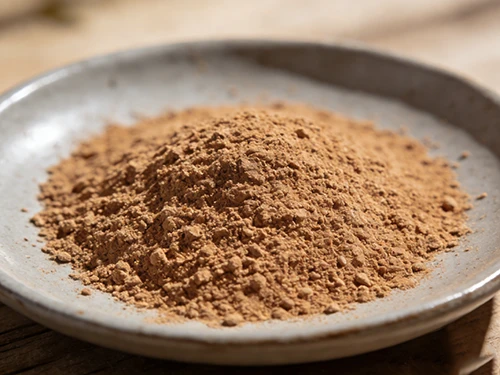
Cistanche tubulosa extract
Look for:
Standardized actives: total phenylethanoid glycosides, especially echinacoside and acteoside
Source clarity: C. deserticola leans more toward intestinal moisture; C. tubulosa is often more "kidney-tonic" oriented
Extraction method: ethanol extracts usually concentrate glycosides better; wine-processing may improve release of some actives
Smart combinations:
Renal aging: astragalus, goji, cordyceps mycelia (under TCM guidance)
Gut-kidney axis: prebiotics, oligosaccharides
Fatigue support: rhodiola, ginseng small molecules
Dosage: herbal crude dose is usually 6–10 g/day per pharmacopeia; for extracts, follow standardized ratios instead of chasing high doses
Safety: generally mild at normal doses, but not ideal for yin-deficiency heat, dry mouth with red tongue, diarrhea, or heat-type constipation. Pregnant or lactating women and advanced CKD patients should consult a doctor first.