Research Advances In Extraction, Separation, Chemical Composition, And Pharmacological Activities Of Phenylethanoid Glycosides From Cistanche Species
Jun 30, 2026
Abstract
Cistanche is a genus of parasitic medicinal plants widely used in Traditional Chinese Medicine (TCM). In classical TCM theory, Cistanche is best known for "tonifying Kidney Yang," "nourishing essence and blood," "strengthening tendons and bones," and "moistening the intestines to promote bowel movement." For modern readers, these traditional descriptions map to common, practical symptom-oriented needs, such as:
TCM herb for constipation (especially dryness-related constipation)
TCM herb for fatigue and low vitality
TCM herb for cognitive support (memory and aging-related decline)
TCM herb for bone health (osteoporosis-related support)
The primary active constituents of Cistanche are phenylethanoid glycosides (PhGs). Current PhG production and purification commonly rely on solvent extraction, macroporous resin enrichment, and high-performance liquid chromatography (HPLC). To date, 99 PhGs have been isolated and identified from Cistanche, and reported activities include neuroprotection (e.g., Alzheimer's and Parkinson's-related models), anti-osteoporosis effects, antioxidant activity, and anti-inflammatory effects.
This article reviews extraction and separation technologies, chemical composition, and pharmacological activities of Cistanche PhGs, and offers references for new drug development, functional ingredient development, and sustainable use of Cistanche resources.
Keywords: Cistanche; phenylethanoid glycosides; extraction and separation; chemical composition; pharmacological activity; TCM herb for constipation; TCM herb for fatigue; TCM herb for cognitive support; TCM herb for bone health

1. What is Cistanche (Rou Cong Rong) in TCM-and what does it mean in real life?
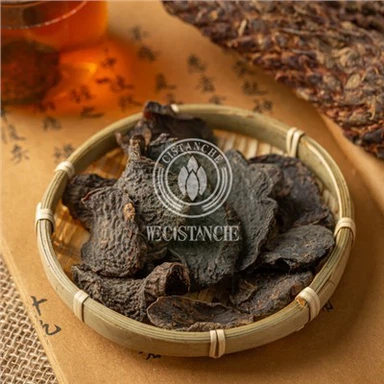
In the Chinese Pharmacopoeia, "Rou Cong Rong" refers mainly to the dried, fleshy stem (with scaly leaves) of:
Cistanche deserticola Y. C. Ma, or
Cistanche tubulosa (Schenk) Wight
Common Chinese aliases include "Di Jing," "Jin Sun," "Cong Rong," and "Da Yun."
1.1 Species distribution and why C. tubulosa matters for supply
In China, several Cistanche species are recorded, including C. deserticola, C. tubulosa, C. salsa, and C. sinensis. Among them, *C. tubulosa* has larger industrial output and is widely cultivated in Xinjiang's Tarim Basin, making it one of the most important sources for the commercial market.
For ingredient buyers in the U.S. and Europe, this matters because stable, scalable raw material supply is often the bottleneck in botanical products. A reliable supply base supports:
consistent quality control (marker compounds, batch-to-batch stability)
industrial-scale extraction
long-term pricing stability
traceability and compliance workflows
1.2TCM functions into Oversea consumers recognize
Classical texts describe Cistanche as sweet, salty, and warm in nature; it is traditionally associated with the Kidney and Large Intestine meridians, and used for patterns commonly described as Kidney Yang deficiency and dryness.
A practical translation for modern product communication:
TCM herb for constipation: traditionally "moistens the intestines" and supports bowel movement-especially when constipation is associated with dryness and low vitality
TCM herb for low energy / fatigue: traditionally "tonifies" and supports endurance
TCM herb for aging-related cognitive decline: traditionally used in formulas for "essence" support; modern studies focus on oxidative stress, inflammation, synaptic signaling, and amyloid-related pathways
TCM herb for bone and tendon support: "Kidney governs bones" in TCM; modern research discusses osteoblast/osteoclast balance and bone metabolism signaling
Important compliance note (for Western markets): when used for marketing, these statements should be framed as structure/function support (e.g., "supports cognitive health") rather than disease treatment claims, unless you have approved drug claims in the target jurisdiction.
2. Why phenylethanoid glycosides (PhGs) are the core actives
Cistanche contains multiple classes of constituents (PhGs, iridoids, lignans, polysaccharides, etc.), but PhGs are widely recognized as the key bioactives and are also used as marker compounds for identification and content determination.
Representative PhGs include:

Note: I. β-type phenylethanoid glycosides, in which the hydroxyl group is located at the β-position of the ethyl group; II. α-type phenylethanoid glycosides, in which the hydroxyl group is located at the α-position of the ethyl group; III. Bridged-ring phenylethanoid glycosides, in which intramolecular dehydration-cyclization occurs between the phenylethanol side chain and the central sugar ring, forming a characteristic rigid framework featuring a dioxa-ether (oxygen bridge) structure.

Click to WhatsApp the quotation of our cistanche with different specs
Supportive Service Of Wecistanche-For more details about cooperation
Email:wallence.suen@wecistanche.com
Echinacoside
Acteoside (Verbascoside)
Isoacteoside
Tubuloside A / B
Salidroside (reported among representative compounds in some profiling work)
For product developers, PhGs are attractive because they can serve as:
quality markers (HPLC/UPLC quantification)
mechanistic anchors (anti-oxidative, anti-inflammatory pathways)
standardization targets (e.g., total PhGs, or Echinacoside + Acteoside ≥ ?%")
This is exactly why industrial extraction focuses on maximizing PhG yield while preserving structure (heat, solvent polarity, water content, processing time all matter).
3. Extraction & separation: how modern Cistanche PhG ingredients are made (from raw herb to standardized extract)
PhG manufacturing usually includes pre-treatment, extraction, and separation/purification.
3.1 Pre-treatment: drying method affects active retention
Studies comparing freeze-drying and oven-drying show that freeze-drying can retain higher levels of certain PhGs, while 80°C oven drying may be preferred for scale due to cost-effectiveness and acceptable retention.
Practical takeaway for buyers: ask suppliers about:
raw material drying method
moisture limits
how they control enzymatic degradation and oxidation during processing
3.2 Extraction methods
3.2.1 Traditional extraction (industrial-friendly)
Heated reflux extraction: commonly optimized with aqueous ethanol. One reported optimal condition for extracting PhGs from C. tubulosa used 40% ethanol, 20× solvent, one extraction, 2 hours.
Soxhlet extraction: solvent recycling via reflux-condensation; often higher ethanol strengths used in some designs.
These methods are robust, equipment-compatible, and easier to scale.

3.2.2 Modern assisted extraction (higher efficiency, process innovation)
Ultrasound-assisted extraction (UAE): cavitation improves mass transfer at relatively lower temperatures. Some work suggests ultrasound plus short steam pre-treatment can increase PhG content and antioxidant activity in slices.
High hydrostatic pressure (HHP): can disrupt cells at low temperature, potentially preserving bioactivity. Optimization studies show pressure is a key factor and can yield high PhG levels under defined conditions.
3.2.3 "Green extraction" trend (NADES and sustainability)
Natural deep eutectic solvents (NADES) are low-toxicity, biodegradable solvent systems. Several studies report that NADES can extract echinacoside/acteoside more efficiently than conventional solvents under optimized ultrasound/temperature/water content conditions.
Industrial caveat: NADES can be very viscous, which can hinder mass transfer and complicate resin desorption and solvent recovery. Many NADES approaches remain in lab/pilot stages; conventional ethanol/water reflux remains dominant for large-scale production.
3.3 Separation and purification: from "active fraction" to "single compounds"
Separation is typically staged:
Primary enrichment:
liquid–liquid extraction (effective but solvent intensive)
macroporous adsorption resins (mainstream for industrial enrichment; scalable and cost-effective)
Studies show resins can dramatically increase the content of echinacoside/acteoside and raise total PhG fraction purity.
Fine purification (for reference standards, structure identification, pharma research):
preparative chromatography, Sephadex LH-20, ODS reversed-phase columns, etc.
PhGs contain multiple phenolic hydroxyls and may adsorb irreversibly on certain media, so process design matters for yield and solvent consumption.
4. Chemical composition: what makes Cistanche PhGs structurally special?
PhGs are glycosides with a phenethyl alcohol core; many feature:
sugar chains often involving glucose + rhamnose
aromatic acyl groups such as caffeoyl, feruloyl, or coumaroyl
sometimes acetylation, which can influence lipophilicity and tissue affinity
4.1 Analytical evolution: from HPLC to UPLC–MS/MS "chemical fingerprinting"
Earlier work often quantified a few high-abundance markers using HPLC. More recently, UPLC-QTOF-MS/MS and UPLC-Q-Trap-MS enable rapid profiling and targeted characterization of multiple representative PhGs within minutes.
For Western buyers, this is key: a strong supplier should be able to provide:
marker compound COAs (HPLC/UPLC)
chromatographic fingerprints
method validation references (LOD/LOQ, precision, repeatability)
contaminant tests relevant to the destination market

4.2 Total identified PhGs: 99 compounds
A reported total of 99 PhGs have been identified from Cistanche. They can be classified by sugar chain length:
monosaccharides (e.g., salidroside)
disaccharides (e.g., acteoside)
trisaccharides (e.g., echinacoside)
5. Pharmacological activities: turning "traditional efficacy" into modern mechanism language
Below is a practical map from TCM traditional use → symptom-oriented positioning → modern pathways.
5.1 Neuroprotection (cognitive aging support)
TCM herb for cognitive support / healthy aging:
Reported studies suggest PhGs may support neuronal survival and cognitive function through multi-pathway regulation, including oxidative stress reduction, inflammation modulation, autophagy-related clearance, and signaling pathways such as NF-κB and Nrf2-related mechanisms.
Models discussed include:
Alzheimer's-related mechanisms (Aβ deposition, microglia activation, neuroinflammation)
Parkinson's-related mechanisms (dopaminergic neuron survival; inflammatory signaling involvement)

5.2 Bone metabolism (anti-osteoporosis potential)
TCM herb for bone health / postmenopausal support:
Research describes "promote osteogenesis + inhibit osteoclastogenesis" dual action patterns. Signaling pathways frequently discussed include Wnt/β-catenin, NF-κB, PI3K/Akt, and RANKL/RANK/TRAF6 axes.
5.3 "Tonifying" and reproductive support (TCM interpretation)
Traditional use highlights vitality and reproductive function support. Modern reviews discuss mechanisms such as anti-oxidative, anti-apoptotic, and endocrine-related observations in models.
5.4 Cardiovascular support
Some studies describe lipid metabolism-related pathways and cholesterol handling (e.g., PPARγ-LXRα-ABCA1 signaling) that may connect to atherosclerosis-related endpoints in models.
5.5 Liver and kidney protection (organ support under inflammatory stress)
Echinacoside and related fractions are discussed in models of inflammatory liver injury and acute kidney injury, often involving TLR4/NF-κB-related signaling and inflammatory cytokine suppression.
5.6 Antioxidant & anti-aging positioning (a core functional narrative)
TCM herb for fatigue + oxidative stress support:
PhGs are recognized as strong natural antioxidants, acting via:
direct free radical scavenging
upregulation of endogenous antioxidant defense systems
A common mechanistic narrative is Keap1/Nrf2 activation and antioxidant enzyme support (e.g., SOD-related endpoints in models).
5.7 Skin tone / photoprotection (cosmetic ingredient angle)
Some studies discuss tyrosinase inhibition and pigmentation-related pathways (MITF, TYR, TRP-1/2), suggesting potential for cosmetic "brightening" or UVB-related pigmentation modulation-again, this must be marketed carefully depending on region.
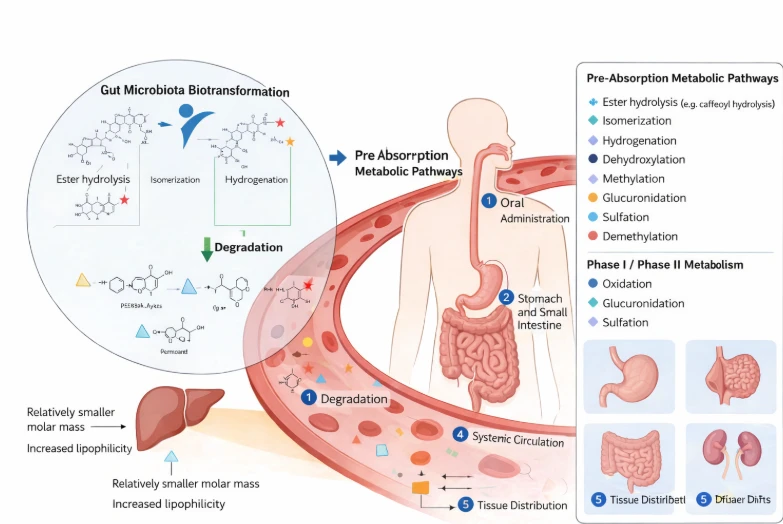
Figure 2. In vivo metabolic process of phenylethanoid glycosides from *Cistanche*.
6. Structure–activity, metabolism, and why "low bioavailability" does not mean "low value"
6.1 Structure–activity relationship (SAR)
More phenolic hydroxyl groups often correlate with stronger antioxidant/anti-inflammatory potential.
Sugar chain length affects polarity and membrane permeability; smaller structures may cross membranes more easily.
Acetylation can increase lipophilicity and may enhance tissue affinity.
6.2 Pharmacokinetics: gut microbiota transformation matters
Many PhGs show low oral bioavailability in reported studies due to high polarity and large molecular size. However, they can be transformed by gut microbiota into smaller active metabolites (e.g., hydroxytyrosol, caffeic acid-related metabolites), which may contribute to systemic effects.
6.3 Formulation direction for product developers
Because of stability and absorption constraints, research frequently explores:
liposomes
polymeric nanoparticles
microemulsions / lipid nanocarriers
targeted delivery or "bio-derivatization" strategies
7. Safety and toxicity:
Reported studies indicate relatively favorable safety profiles for acteoside-rich extracts and related PhG fractions in several acute/subacute/chronic toxicity and genotoxicity assays under tested conditions.
For B2B buyers, "safety" is not only literature-based-it also means supplier readiness for:
heavy metals / pesticide residues / microbial limits
solvent residues
adulteration controls
regional compliance documentation

8. Sustainability: why cultivation and alternative sources matter
As demand increases, sustainable supply requires:
standardized cultivation and industrialization
comparing cultivated vs wild material (often similar total active content, with differences in individual compounds)
exploring alternative botanical sources rich in PhGs (e.g., other herb species that contain acteoside)
Why choose a Cistanche tubulosa extract manufacturer (Tarim Basin, Xinjiang) for B2B supply?
For resellers and product developers, the real question is not "Is Cistanche interesting?"-it is "Can I source a consistent, standardized, scalable PhG-rich extract?"

Our positioning
Species focus: *Cistanche tubulosa* (a mainstream industrial source with strong cultivation base in Xinjiang)
Ingredient focus: PhG-rich extracts (especially key markers like echinacoside & acteoside)

B2B readiness: specifications designed for product development and resell channels
Story + science: an ingredient that connects TCM tradition with modern phytochemistry and pharmacology
If you're building products for Western consumers, you can position Cistanche as a:
TCM herb for constipation support (gut motility + moisture-oriented tradition)
TCM herb for fatigue and endurance support
TCM herb for cognitive support and healthy aging
TCM herb for bone health support
and back it with standardized PhG markers, extraction transparency, and test documentation.
(Factory introduction: see the "About Us" page at your provided site.)
Wecistanche Factory- Dichen

Optional: B2B CTA paragraph
If you are developing a new formula or looking for a reliable supplier to resell premium Cistanche extracts, we can provide PhG-rich Cistanche tubulosa extract with clear marker compound specifications, batch COAs, and scalable supply. Tell us your target application (capsules, tablets, drink mix, functional tea, tincture, etc.) and the marker level you want (e.g., total PhGs, echinacoside/acteoside), and we will recommend a suitable grade.