Navigating Menopause Naturally? How Cistanche Tubulosa Eases Hot Flashes, Mood Swings, And Fatigue
Jul 09, 2026
You wake up drenched in sweat at 3 a.m. Your patience, once reliable, now frays at the smallest trigger. You're tired, but sleep is elusive. Your body feels unfamiliar. Menopause is a natural life transition, not a disease-yet its symptoms can profoundly disrupt quality of life. Hot flashes, night sweats, emotional volatility, vaginal dryness, and a creeping fatigue affect an estimated 75% of women during the menopausal transition. While hormone replacement therapy (HRT) is effective for many, others seek natural alternatives due to medical contraindications, personal preference, or side effect concerns. One of the most intriguing botanicals gaining attention in this space is Cistanche tubulosa, an herb traditionally used for "nourishing the Kidney essence"-the very energetic foundation believed in East Asian medicine to govern the menopausal transition.

What Happens in the Body During Menopause
Menopause is defined by the permanent cessation of ovarian function. Estrogen and progesterone levels fall dramatically, but these hormones have receptors throughout the body-not just in the reproductive tract, but in the brain, bones, blood vessels, and skin. The withdrawal of estrogen triggers a cascade of changes:
In the hypothalamus, the thermoregulatory center becomes destabilized. Fluctuations in estrogen confuse the body's temperature set point, triggering the rapid heat dissipation response we experience as hot flashes and night sweats. In the brain, declining estrogen impacts serotonin, dopamine, and norepinephrine systems, contributing to mood swings, anxiety, and depressive symptoms. Estrogen also influences the sleep-wake cycle, and its loss is linked to the insomnia that plagues so many menopausal women.
In the bones, estrogen is a key regulator of the balance between bone-building osteoblasts and bone-resorbing osteoclasts. Its withdrawal shifts that balance toward resorption, accelerating bone loss. And systemically, the loss of estrogen's antioxidant effects exposes tissues-including blood vessels and skin-to increased oxidative stress, contributing to the aging acceleration many women feel during this time.
An ideal natural support for menopause would therefore be multi-targeted: it would offer gentle estrogenic support, calm the nervous system, protect bone, and combat oxidative stress. Cistanche tubulosa, with its unique phytochemical profile, addresses several of these needs simultaneously.
How Cistanche Tubulosa Supports Women Through Menopause
Cistanche tubulosa contains echinacoside, acteoside, and a range of polysaccharides that have shown relevant biological activities. First, these phenylethanoid glycosides have been reported to exhibit selective estrogen receptor modulating (SERM)-like activity. In vitro research has shown that acteoside can bind to estrogen receptors, particularly ER-β, and exert mild estrogenic effects in tissues where this is beneficial-such as bone and the central nervous system-without the strong stimulation of breast or uterine tissue that raises safety concerns with conventional HRT. This gentle, selective activity may explain the herb's traditional use for menopausal symptoms: it provides a modest estrogenic signal that helps stabilize the hypothalamus, reducing hot flash frequency and severity.
Second, Cistanche's adaptogenic properties help calm the overactive stress response. The menopausal transition is often accompanied by heightened sensitivity of the HPA axis, leading to elevated cortisol that worsens sleep disruption and mood swings. The acteoside in Cistanche has been shown in preclinical models to reduce stress-induced corticosterone levels, helping to restore a calmer neuroendocrine tone. (Frontiers in Pharmacology review on Cistanche tubulosa)
Third, Cistanche provides critical support for bone health-a major concern for postmenopausal women. As we have explored in detail in a previous article on skeletal strength, echinacoside has been shown in an ovariectomized rat model (the standard model for postmenopausal osteoporosis) to significantly increase bone mineral density by downregulating RANKL and upregulating osteoprotegerin, thereby inhibiting excessive osteoclast activity. This direct protection of bone during estrogen withdrawal is one of the most compelling reasons to consider Cistanche during and after menopause.
Fourth, the antioxidant activity of Cistanche's phenylethanoid glycosides helps compensate for the loss of estrogen's antioxidant functions. By upregulating the Nrf2 pathway, echinacoside boosts the body's internal antioxidant enzymes-SOD, glutathione peroxidase, heme oxygenase-1-that protect blood vessels, skin, and neurons from the oxidative damage that accelerates after menopause.

The Traditional Perspective on Women's "Second Spring"
In traditional Chinese medicine, menopause is understood as a natural shift in the balance of "Kidney essence" and the "Tian Gui" (reproductive fluid). The decline of Kidney Yin and Yang is seen as the root of menopausal symptoms. Cistanche, as a premier Kidney tonic that both nourishes Yin and warms Yang, has been prescribed for centuries to ease this transition. Classical texts describe its use for symptoms we now associate with menopause: "heat in the palms and soles," night sweating, irritability, weakness of the lower back, and a feeling of "heat rising upward." The herb was not viewed as a hormone replacement but as a deep tonic that supports the body's adaptation to a new physiological state. Modern endocrinology is now providing a framework-SERM-like activity, HPA modulation, and bone protection-that validates this ancient clinical wisdom.
How to Use Cistanche During Menopause
For women navigating the menopausal transition, a daily dose of 400–600 mg of a standardized Cistanche tubulosa extract is a typical recommendation. It can be taken in the morning with food. Because it is adaptogenic and non-stimulating, it will not worsen hot flashes or anxiety-common concerns with some other herbal supplements. Consistency over two to three months is recommended to feel the cumulative benefits, particularly for bone protection, which is a long-term process.
Cistanche pairs well with other evidence-based strategies for menopause: a diet rich in phytoestrogens (flaxseeds, soy), regular weight-bearing exercise to maintain bone density, and stress-reduction practices like yoga or meditation. It can be used alongside conventional HRT under the supervision of a physician, though careful monitoring is advised.
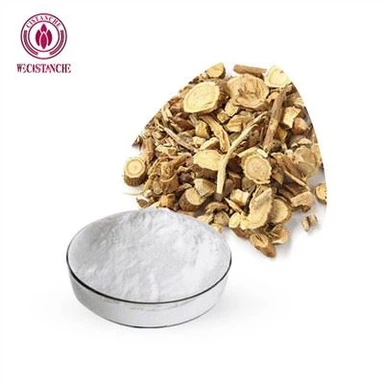
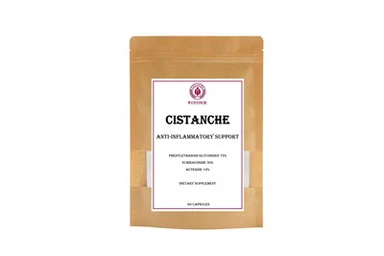
Our MenoCalm Cistanche Extract is sourced from authentic Cistanche tubulosa and standardized for a high concentration of the phenylethanoid glycosides that research associates with estrogenic modulation, bone protection, and adaptogenic stress relief. Each batch is third-party tested for purity and potency, because the menopausal transition deserves the cleanest support possible.

Safety and Medical Context
Cistanche tubulosa is well tolerated with a long history of food-grade use. Its SERM-like activity appears to be mild and tissue-selective, making it a gentler option than strong phytoestrogens like red clover or high-dose soy isoflavones. However, women with a history of estrogen-receptor-positive breast cancer, endometrial cancer, or other hormone-sensitive conditions should consult their oncologist before using any botanical with potential estrogenic activity. For the vast majority of women seeking natural support through one of life's most profound transitions, Cistanche tubulosa offers a bridge between ancient wisdom and modern science-a gentle ally for maintaining vitality, bone strength, and emotional equilibrium.
Supportive Service Of Wecistanche-For more details about cooperation
Business contact: goujinsong@wecistanche.com