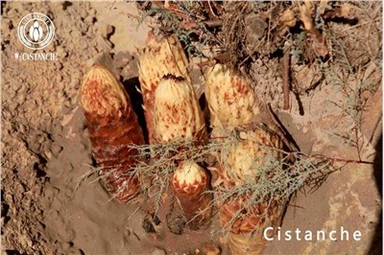
Sleeping But Not Resting? How Cistanche Tubulosa Restores Deep, Restorative Sleep
Jul 09, 2026
You fall asleep without a problem. You stay in bed for seven or eight hours. Yet morning comes, and you feel as if you've barely closed your eyes. Your body is heavy, your mind sluggish, and the day ahead feels like a mountain. This is not insomnia in the classic sense-you're not lying awake for hours. It's something equally debilitating: poor sleep quality, specifically a lack of deep, restorative sleep. And it's driving an epidemic of tired, foggy-headed days. While many people reach for melatonin or sedatives, a botanical adaptogen, Cistanche tubulosa, is showing promise for a different approach: not just inducing sleep, but restoring its natural, deeply restorative architecture.
Why You Can Sleep All Night and Still Wake Up Exhausted
Sleep is not a uniform state. It cycles through stages: light sleep (N1 and N2), deep slow-wave sleep (N3), and REM (rapid eye movement) sleep. Deep sleep is the most restorative phase. During N3, the brain clears metabolic waste, consolidates memories, and releases growth hormone for tissue repair. The body is truly restoring itself.
When sleep architecture is disrupted-specifically, when deep sleep is shortened or fragmented-you will log enough hours but miss the repair work. Two primary factors erode deep sleep: chronic stress and neurochemical imbalance.
Chronic stress keeps the hypothalamic-pituitary-adrenal (HPA) axis in a state of hyperarousal. Cortisol, which should drop to its lowest levels around midnight, remains elevated. This elevation fragments sleep, pulling you out of deep stages into lighter sleep, often without fully waking you. You don't remember the disruptions, but your body registers them.
Neurochemically, sleep depends on a smooth transition from excitatory signaling (driven by glutamate and norepinephrine) to inhibitory signaling (driven by GABA). Gamma-aminobutyric acid (GABA) is the brain's main calming neurotransmitter. It quiets the firing of neurons, allowing the brain to decelerate into deep sleep. When GABA signaling is weak-due to stress, genetics, or simply aging-the brain cannot sink into those deeper stages. You're left hovering near the surface, easily disturbed, and unrepaired.
Conventional sleep aids often worsen this. Benzodiazepines and Z-drugs force GABA receptors open but disrupt sleep architecture, frequently reducing deep sleep time. You sleep, but you don't restore. Antihistamines induce drowsiness but produce next-day grogginess. The goal should not be to be "knocked out" but to support the brain's own ability to cycle into deep sleep naturally.

How Cistanche Tubulosa Restores Deep Sleep Architecture
Cistanche tubulosa offers a multi-targeted approach that distinguishes it from sedatives. First, its phenylethanoid glycosides, particularly acteoside, have been shown in preclinical research to interact with the GABA-A receptor as a positive allosteric modulator. This means they enhance the receptor's response to the brain's own GABA, rather than forcing it open artificially. The result is a calming, sleep-promoting effect that respects the brain's natural rhythms. A study published in Planta Medica demonstrated acteoside's affinity for the GABA-A receptor, documenting a mechanism that supports relaxation without heavy sedation or next-day impairment. (Acteoside and GABA-A receptor study, Planta Medica)
Second, as an adaptogen, Cistanche helps normalize the overactive HPA axis. By dampening the exaggerated cortisol response to stress, it reduces the nighttime hyperarousal that fragments deep sleep. This upstream effect on cortisol is critical-it addresses the root cause of poor sleep architecture, not just a symptom. Over weeks of consistent use, the body can relearn its natural cortisol rhythm, peaking in the morning and bottoming out at night.
Third, the polysaccharides in Cistanche act as prebiotics, nourishing gut bacteria that play a role in sleep regulation via the gut-brain axis. Beneficial bacteria produce short-chain fatty acids and neurotransmitter precursors that influence serotonin and melatonin synthesis. This indirect support helps reinforce the body's own circadian machinery.
The 2022 Frontiers in Pharmacology review on Cistanche tubulosa notes its adaptogenic and neuroprotective properties, including the ability to reduce stress-induced hormonal disruptions. (Frontiers in Pharmacology review) This multi-level support-calming the brain through GABA modulation, quieting the stress axis, and nourishing the gut-brain connection-is precisely what fragmented sleep requires.
What Recovery Feels Like
Unlike a sleeping pill that delivers unconsciousness within 30 minutes, Cistanche works gradually. Users often report that after 10 to 14 days, they notice a shift: they wake up less during the night, their dreams feel less frantic, and-most tellingly-the morning alarm isn't a shock. They feel rested. This is the hallmark of restored deep sleep. It isn't a drugged sleep that leaves a hangover; it's a physiological sleep that leaves you genuinely restored.
How to Use Cistanche for Deep Sleep
Timing is critical. A dose of 400–600 mg of a standardized Cistanche tubulosa extract should be taken in the late afternoon or early evening, ideally 2–3 hours before bedtime. This allows the adaptogenic and GABA-modulating effects to align with the body's natural cortisol decline. The extract can be taken with or without food.
Because the mechanism is restorative rather than sedative, Cistanche does not cause dependency or rebound insomnia if discontinued. It works best as a consistent, long-term addition to good sleep hygiene: a cool, dark bedroom, reduced screen time before bed, and a regular sleep-wake schedule. It pairs well with magnesium glycinate, which also supports GABA function and muscle relaxation.
Our DeepRest Cistanche Extract is sourced from authentic Cistanche tubulosa and standardized to deliver the phenylethanoid glycosides that research associates with relaxation and cortisol balance. Each batch is independently tested, ensuring you are giving your brain the pure, consistent support it needs to rebuild its natural sleep architecture.

Safety and Medical Context
Cistanche tubulosa is well tolerated and has been used as a food-grade tonic for centuries. The Natural Medicines Database notes its favorable safety profile. It is not habit-forming. However, sleep disorders can sometimes signal underlying conditions like sleep apnea or clinical depression. If you snore loudly, stop breathing during sleep, or experience persistent low mood, a medical evaluation is essential. For those whose sleep is "quantity without quality," Cistanche offers a gentle, science-informed path to waking up truly restored.
Supportive Service Of Wecistanche-For more details about cooperation
Business contact: goujinsong@wecistanche.com