

Combating Physical Fatigue: Exploring The Synergistic Potential Of Cistanche Deserticola, Epimedium, And Tiger Nut (Cyperus Esculentus) Oil
Nov 12, 2026
Disclaimer: This article summarizes outcomes derived exclusively from mouse model laboratory animal experiments. All content serves purely for general educational reference and does not constitute medical advice, clinical diagnosis, or therapeutic guidance for human beings. Findings obtained in animal research cannot be directly extrapolated to human physiological responses. Before you start any herbal or dietary supplement regimen, please consult licensed healthcare professionals. This statement has not been evaluated by the Food and Drug Administration. This formulation is not intended to diagnose, treat, cure, or prevent any disease.
Table of Contents
Introduction: Understanding Modern Day Physical Fatigue and Natural Herb Research
Three Key Raw Materials: Cistanche Deserticola, Epimedium Extract and Tiger Nut Oil
Why Preclinical Mouse Models Are Used for Fatigue Related Nutraceutical Research
Study Design: Experimental Groups, Dosing Protocol and Core Test Indicators
General Health Observation: Compound Mixture Did Not Interfere With Normal Mouse Growth
Weight Bearing Swimming Assay: Direct Evidence for Improved Physical Endurance
Serum Urea Analysis: How the Formula Affects Protein Catabolism During Exhausting Exercise
Blood Lactate Dynamics: Accelerated Lactate Clearance Reduces Post Exercise Metabolic Burden
Liver Glycogen Storage: Energy Reserve Enhancement Supports Extended Physical Output
Synergistic Mechanism: Why Triple Ingredient Combination Outperforms Single Ingredient Reference
Interpretation Boundaries: What Mouse Study Results Can and Cannot Tell Us
Nutritional Background of Tiger Nut Oil, an Underutilized Functional Plant Oil Resource
Existing Research Basis for Cistanche and Epimedium in Fatigue Relief Research
Key Limitations of This Preclinical Investigation
Outlook for Future Product Development and Follow Up Research
Concluding Remarks
1. Introduction: Understanding Modern Day Physical Fatigue and Natural Herb Research
Physical fatigue represents a widespread physiological challenge for contemporary populations. Intense physical labor, high volume athletic training, prolonged mental stress, inadequate rest, and demanding daily routines all contribute to persistent feelings of exhaustion, lowered stamina, slower post workout recovery and diminished overall physical performance. Fatigue is essentially a complex metabolic signal from our body: energy reserves get depleted, waste metabolites accumulate inside tissues, and the efficiency of energy generating biochemical pathways gradually declines.
Pharmaceutical interventions targeting fatigue carry potential side effect risks. Consequently, global nutraceutical researchers keep turning toward botanicals and plant derived functional ingredients inherited from traditional herbal systems. Natural plant based formulas often work by adjusting metabolic balance rather than delivering instant stimulant type effects. Many such ingredients help maintain energy storage capacity and speed up the clearance of exercise generated metabolic waste.
Traditional Chinese herbal resources offer abundant candidate materials for anti fatigue functional food development. Among these well documented botanicals, Cistanche deserticola, widely nicknamed Desert Ginseng, has been used historically as a tonifying herb for vitality support. Epimedium, another classic herbal ingredient, is recognized for its capacity to support physical stamina and oxygen deficiency adaptability. Beyond herbal extracts, high quality functional plant oils can also contribute to metabolic wellness. Tiger nut oil, the oil pressed from Cyperus esculentus, also known as chufa sedge, is one such underappreciated lipid resource, rich in oleic acid and natural vitamin E antioxidants.
Scientists have explored each of these three materials separately in past projects. Yet few research papers have evaluated the physiological consequences when all three components are blended together. This article unpacks one published preclinical animal investigation which tested a composite blend combining Cistanche deserticola extract, Epimedium extract and tiger nut oil. Researchers ran multiple fatigue evaluation tests on laboratory mice, tracking endurance performance plus several critical blood biochemistry and hepatic energy storage biomarkers. We will walk you through experimental setup, measurable observations, proposed synergistic mechanisms, and most importantly, the realistic boundaries for interpreting mouse model outcomes within a human health context. Bear in mind that everything described below comes strictly from laboratory mouse feeding trials, and human clinical trial data for this exact triple component blend remains absent.
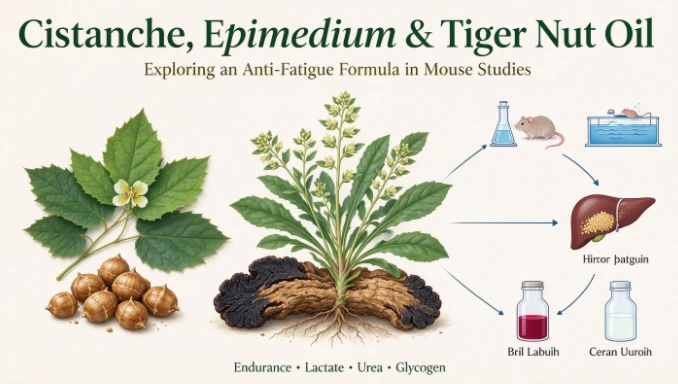
2. Three Key Raw Materials: Cistanche Deserticola, Epimedium Extract and Tiger Nut Oil
Each ingredient in this compound formula brings distinct chemical characteristics and documented biological properties. Understanding each component individually helps readers grasp why scientists decided to combine them together.
Cistanche deserticola (Desert Ginseng) Cistanche deserticola is a parasitic perennial herb native to arid desert zones of Northwest China. Alcohol extracted preparations of its fleshy stems deliver high concentrations of phenylethanoid glycosides, polysaccharides and iridoid compounds. Multiple prior animal model publications have noted that Cistanche derived extracts support exercise endurance in rodents, modulate glycogen storage and mitigate the buildup of fatigue related metabolic waste substances after exhaustive physical activity. Its traditional use focuses on supporting physical vitality and relieving exhaustion.
Epimedium Extract Epimedium is a well known tonic botanical. Its signature bioactive constituent is icariin, a prenylated flavonoid molecule. Existing rodent based research shows that icariin rich Epimedium extracts can extend exhaustive exercise duration and reduce post exercise serum urea and blood lactate accumulation. It also helps organisms adapt to low oxygen stress situations, improves antioxidant defense capacity and regulates energy related signaling inside muscle tissue. For decades, Epimedium containing supplements have been widely explored for physical stamina support purposes in nutraceutical research circles.
Tiger Nut Oil (Cyperus esculentus oil) Cyperus esculentus, commonly called tiger nut or chufa, produces nutrient rich underground tubers. Tiger nut oil is mechanically pressed or supercritical CO2 extracted lipid from these tubers. Its fatty acid composition is comparable to olive oil, dominated by oleic acid. Additionally, tiger nut oil supplies abundant natural vitamin E, delivering stronger antioxidant performance than many common cooking oils such as soybean oil or rapeseed oil. Research suggests this specialty plant oil can assist lipid metabolism balance and protect cells against oxidative stress caused damage. Despite its favorable nutritional profile, commercial product development of tiger nut oil is still relatively limited, giving researchers strong motivation to explore its application in functional food compound formulas.
The research project evaluated a blend of alcoholic extracts of Cistanche deserticola and Epimedium, compounded with tiger nut carrier oil. Scientists hypothesized that herbal extracts supporting energy metabolism combined with antioxidant rich plant oil could generate synergistic biological effects superior to single component interventions.
3. Why Preclinical Mouse Models Are Used for Fatigue Related Nutraceutical Research
You may naturally ask why fatigue experiments are conducted using mice instead of testing human volunteers directly. Preclinical rodent model assays serve as a necessary preliminary screening step for functional food and nutraceutical ingredient research. Laboratory KM mice share fundamental metabolic pathways with humans: they produce lactic acid under anaerobic exercise conditions, they store glycogen within liver tissue, and their protein breakdown pathways generate urea nitrogen under physical exhaustion pressure. These shared biochemical mechanisms make mice a practical starting point model for screening candidate anti fatigue formulations before moving toward human subject research.
Researchers can precisely control experimental conditions when working with laboratory mice. Housing temperature, humidity, daily feed composition, feeding cycles and exact dosage administration can all be standardized. Scientists can collect liver tissue samples and repeated blood specimens at predefined time points that would be ethically impractical for human test participants.
It is critical to emphasize the obvious limitations at the same time. Mouse body size, metabolic rate, digestive tract physiology and drug metabolizing enzyme profiles are distinctly different from those of human beings. Dosage levels applied to animals are scaled up multiples relative to recommended human intake, and these animal trial dosages cannot simply be copied for human consumption guidance. Positive results observed in mouse studies do not guarantee that identical physiological responses will appear within human bodies. Animal model findings deliver promising directional clues, while human clinical trials remain the gold standard validation step for dietary supplement efficacy claims.

4. Study Design: Experimental Groups, Dosing Protocol and Core Test Indicators
This animal investigation deployed 200 KM strain laboratory mice, with body weight ranging between 18 and 22 grams. All animals experienced a seven day environmental adaptation feeding period, housed under controlled conditions with temperature between 20 and 25 degrees Celsius and relative humidity between 40 and 70 percent. Mice were then separated into four large experimental cohorts. Each large cohort focused on one particular fatigue assessment assay: weight bearing swimming endurance test, serum urea measurement, liver glycogen detection, and blood lactate kinetic profile monitoring. Within each big cohort, animals were further randomly assigned into five subgroups: blank control group, positive control reference group, plus low dose, medium dose and high dose treatment groups for the Cistanche Epimedium tiger nut oil compound formula. Every subgroup contained ten laboratory mice.
Dosing and administration details:
Test compound dosages for the three treatment tiers were set as multiples of hypothetical human recommended intake: 250 mg per kg body weight for the low dose group, equivalent to five times human intake; 500 mg per kg body weight for the medium dose group, equivalent to ten times human intake; and 1500 mg per kg body weight for the high dose group, equivalent to thirty times human intake.
Blank control animals received matching volumes of corn oil vehicle through oral gavage.
Positive control group mice were fed a commercially available Maca plus Epimedium capsule sample at 364 mg per kg body weight, acting as benchmark reference for anti fatigue performance comparison.
Gavage feeding occurred once daily, continuing uninterrupted for 30 consecutive days.
Four primary readout parameters were selected to judge anti fatigue activity.
Weight bearing exhaustive swimming time: This is a direct behavioral measurement reflecting whole body physical exercise endurance capacity. Lead weights equivalent to five percent of individual mouse body weight were attached at the tail base. Animals swam inside constant temperature swimming tanks, and researchers recorded the time until complete physical exhaustion occurred.
Serum urea concentration: This is a biochemical marker reflecting protein catabolism activated under severe physical exercise stress. When glycogen energy stores run low, organisms start breaking down protein substrates for energy supply, driving serum urea levels upward. Lower post exercise serum urea values indicate better metabolic energy utilization efficiency.
Blood lactate area under the curve: Blood lactate accumulates during anaerobic exercise and contributes to muscular fatigue sensations. Researchers collected blood samples at three time points: pre swim baseline, immediately after ten minutes of swimming, and twenty minutes into post swim recovery. The calculated area under the curve integrates lactate concentration changes over time, quantifying total lactate burden and lactate clearing efficiency. Smaller area values mean superior lactate elimination performance.
Liver glycogen content: Liver glycogen represents one critical short term energy reservoir for sustaining physical exertion. Higher hepatic glycogen storage capacity supports prolonged exercise before exhaustion onset.
According to standard functional food evaluation criteria for anti fatigue assays in rodent models, if weight bearing swimming results show statistically significant improvement together with positive outcomes in at least two of these three biochemical markers, researchers may conclude that the test sample exhibits fatigue alleviating activity within this animal model setting. All statistical calculations adopted SPSS 13.0 software, and a P value below 0.05 was defined as the threshold for a statistically meaningful intergroup difference.
5. General Health Observation: Compound Mixture Did Not Interfere With Normal Mouse Growth
Before diving into fatigue related experimental indicators, scientists tracked body weight evolution across all subgroups throughout the full 30 day feeding intervention. Mouse body weight measurements were logged at baseline, at week one, week two, week three, and upon the experimental completion endpoint.
Experimental statistics revealed that initial body weight and final stage body weight for the low, medium and high dose compound formula groups presented no statistically significant divergence compared with blank control animals, with P values above 0.05. Mice within treatment groups maintained regular weight gain patterns identical to control animals. This observation delivers important safety relevant preliminary information: under these experimental feeding conditions, the triple ingredient blend exerted no harmful impact on normal growth and basic physiological development of the laboratory tested rodents. No obvious toxicity related weight loss signals manifested within the dosage range tested in this study. This finding does not rule out potential adverse reactions at extremely high exposure levels or in other animal species, but it confirms basic physiological compatibility for the selected experimental dose window.
6. Weight Bearing Swimming Assay: Direct Evidence for Improved Physical Endurance
Weight loaded forced swimming is one classic behavioral assay for evaluating physical stamina enhancement in anti fatigue animal research. After finishing the 30 day feeding period, thirty minutes following the final gavage administration, mice were fitted with tail attached lead weights equal to five percent of each individual animal's body mass, then placed into swimming tank water maintained at 25 degrees Celsius with a water depth of 30 centimeters. Researchers documented each mouse's exhaustive swimming duration, measuring from submersion start until the animal became physically exhausted and could no longer keep its head above the water surface.
The key measured swimming time data were as follows:
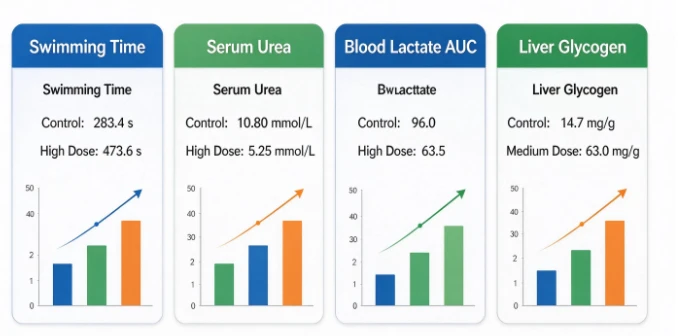
Blank control group: 283.4 plus or minus 103.8 seconds
Positive control Maca Epimedium capsule group: 388.6 plus or minus 105.7 seconds
Low dose compound blend group: 434.9 plus or minus 118.3 seconds
Medium dose compound blend group: 468.5 plus or minus 136.8 seconds
High dose compound blend group: 473.6 plus or minus 98.1 seconds
Compared against the blank control subgroup, the positive control reference group and all three compound blend dosage groups achieved statistically significant extension of exhaustive swimming time, with P values below 0.05. Notably, every dosage level of the Cistanche Epimedium tiger nut oil formula produced longer swimming endurance times than the positive control Maca Epimedium benchmark sample, again with P values below 0.05. Medium dose and high dose groups delivered very comparable maximal endurance improvement, and the gap between medium dose and high dose results was relatively narrow, suggesting a potential saturation plateau effect for endurance benefit above the medium dose level within this mouse model system.
This behavioral test outcome demonstrates that within this preclinical mouse experimental setup, oral intake of this triple component blend successfully raised maximum exercise tolerance and prolonged time to physical exhaustion. Such endurance enhancement constitutes the most direct phenotypic signal of anti fatigue related bioactivity in rodent exercise models. Even low dose intervention already brought measurable improvement to swimming performance metrics.
7. Serum Urea Analysis: How the Formula Affects Protein Catabolism During Exhausting Exercise
Serum urea serves as a widely accepted biomarker reflecting metabolic stress induced by prolonged strenuous exercise. When an animal undergoes long duration high intensity physical work and carbohydrate derived energy supplies run low, the organism starts mobilizing protein substrates to generate needed energy. Accelerated protein breakdown will drive serum urea nitrogen concentrations upward. Elevated post exercise serum urea levels signal a higher degree of physical exhaustion and metabolic burden. Conversely, lower post exercise serum urea readings imply that the body can better preserve carbohydrate energy reserves and rely less upon protein catabolism pathways for fuel under exercise stress conditions.
The experimental protocol for serum urea detection was as follows. Thirty minutes after the final gavage feeding, mice swam for 90 minutes inside a 30 degrees Celsius water environment. After completing the swimming exercise, animals rested for 60 minutes. Blood specimens were then collected via the orbital eye bleeding technique, and serum urea concentrations were quantified using automated clinical biochemistry analyzer equipment.
Measured serum urea values, expressed in millimoles per liter:
Blank control group: 10.80 plus or minus 0.83
Positive control reference group: 8.52 plus or minus 1.20
Low dose compound blend group: 7.64 plus or minus 1.48
Medium dose compound blend group: 5.75 plus or minus 1.38
High dose compound blend group: 5.25 plus or minus 1.67
Relative to blank control animals, the low, medium and high dose compound formula subgroups all showed statistically significant reduction in post exercise serum urea concentrations, with P values below 0.05. Medium dose and high dose groups produced substantially lower serum urea values than the positive control reference sample, again with P values below 0.05. Low dose group serum urea results did not reach a statistically significant difference versus the positive control group. The trend clearly illustrates a dose dependent response pattern, where increasing administered dosage correlates with stronger capacity to suppress post exercise serum urea buildup. This biochemical marker result indicates that under exhaustive exercise stress, this triple ingredient blend helps mitigate excessive protein degradation metabolic pathway activation within laboratory mouse bodies.
8. Blood Lactate Dynamics: Accelerated Lactate Clearance Reduces Post Exercise Metabolic Burden
Lactic acid generation represents a normal physiological outcome of anaerobic muscle metabolism. During high intensity physical activity, when oxygen supply cannot fully satisfy muscle cell energy demands, glycolysis produces large quantities of lactate. Lactate accumulation elevates intracellular hydrogen ion concentration, lowers local pH value, impairs muscle contractile function and is tightly linked with subjective fatigue sensations. The overall fatigue level is not merely decided by peak lactate concentration immediately after exercise; equally critical is how efficiently the organism can clear lactate away throughout the recovery phase. The blood lactate area under the curve calculation synthesizes lactate level changes covering the pre exercise baseline, the immediate post exercise peak and the twenty minute recovery time point. The area value gives an integrated quantitative measurement for total lactate metabolic burden over this observation window, and smaller figures correspond to more efficient lactate metabolizing and clearance capacity.
The experimental workflow for lactate area measurement was as follows. Thirty minutes after final gavage dosing, mice performed ten minutes of swimming exercise in a 30 degrees Celsius water bath. Blood lactate samples were collected on three occasions: before swimming starts, right after finishing swimming, and after the twenty minute rest and recovery period. A portable blood lactate analyzer and matched test strips measured specimen lactate concentrations, and a mathematical formula computed the blood lactate area figures.
Blood lactate area results, expressed in millimoles per liter multiplied by minutes:
Blank control group: 96.0 plus or minus 26.2
Positive control group: 84.5 plus or minus 24.5
Low dose compound blend group: 79.6 plus or minus 22.6
Medium dose compound blend group: 72.8 plus or minus 22.7
High dose compound blend group: 63.5 plus or minus 9.9
Compared to blank control mice, the positive control and all three compound blend dosage groups achieved statistically significant reduction for blood lactate area values, with P values below 0.05. Even the low dose level of this triple ingredient blend generated significantly lower lactate area outcomes than the positive control Maca Epimedium reference formula, again with P values below 0.05. Area values kept declining as the experimental dosage level rose, showing an obvious dose effect relationship. These data demonstrate that in this mouse model setting, the Cistanche Epimedium tiger nut oil composite can effectively speed up the blood lactate elimination process, lowering overall lactate related metabolic burden after physical exercise challenge. Improved lactate clearance is one major biochemical mechanism explaining the enhanced exercise endurance and fatigue relieving performance observed within the behavioral swimming assay.

9. Liver Glycogen Storage: Energy Reserve Enhancement Supports Extended Physical Output
Liver glycogen acts as the body's key short term carbohydrate energy bank. During periods of muscular exertion, hepatic glycogen decomposes into glucose molecules, releasing into the blood circulation to sustain systemic energy supply for working muscle tissues. Exhaustion onset frequently coincides with substantial depletion of liver glycogen stores. Consequently, higher liver glycogen content before an exercise challenge signifies larger energy reserve capacity, permitting longer duration physical output before glycogen depletion triggered fatigue occurs. Liver glycogen content measurement is therefore a standard core biochemical indicator for anti fatigue functional food animal evaluations.
In this research trial, thirty minutes after completing the final gavage feeding step, researchers sacrificed the animals and harvested liver tissue specimens. Commercially available biochemical assay kits determined hepatic glycogen concentration, expressed in milligrams per gram of liver wet weight.
Liver glycogen content experimental readings:
Blank control group: 14.7 plus or minus 7.6 milligrams per gram
Positive control group: 32.6 plus or minus 28.5 milligrams per gram
Low dose compound blend group: 24.8 plus or minus 25.3 milligrams per gram
Medium dose compound blend group: 63.0 plus or minus 47.5 milligrams per gram
High dose compound blend group: 60.9 plus or minus 35.8 milligrams per gram
Medium dose and high dose compound blend subgroups exhibited significantly elevated liver glycogen content relative to blank control animals, with P values below 0.05. These two dosage tiers also showed statistically noticeable higher hepatic glycogen storage compared against the positive control reference group, again with P values below 0.05. Low dose group liver glycogen values did not produce a meaningful statistical difference versus blank control or positive control groups. The experimental data suggest that adequate dosage level intake of this triple component formula helps build up liver glycogen energy reserves in laboratory mouse organisms. A larger pre exercise glycogen stockpile enables mice to sustain prolonged physical activity before carbohydrate fuel depletion drives exhaustion. Noticeably, liver glycogen improvement mainly manifests starting at the medium dosage level, while low dose intervention could improve swimming endurance and lactate clearance metrics without producing statistically significant glycogen storage elevation. This tells us that multiple separate physiological pathways jointly underpin the compound's anti fatigue related bioactivity, and that different biomarkers respond with distinct dosage threshold requirements.
10. Synergistic Mechanism: Why Triple Ingredient Combination Outperforms Single Ingredient Reference
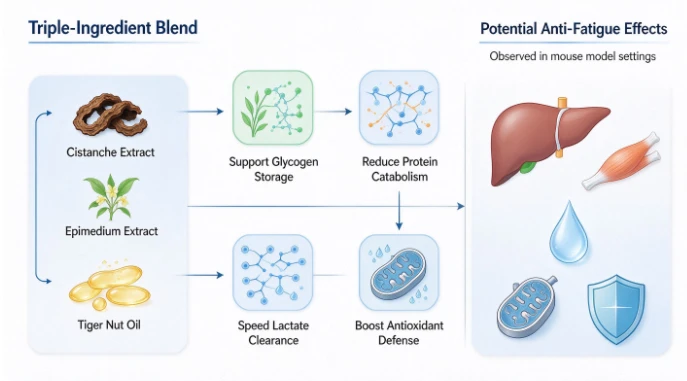
One central finding emerging out of this investigation is that the combined Cistanche deserticola plus Epimedium plus tiger nut oil formula delivered overall superior anti fatigue related performance compared to the positive control Maca Epimedium capsule reference sample across multiple assay dimensions. All three dosage levels of the test blend achieved longer weight bearing swimming time and reduced blood lactate area values versus the positive control benchmark. Medium dose and high dose tiers additionally realized better serum urea reduction and substantially higher liver glycogen accumulation than the reference product. These comparative results support the hypothesis of synergistic interaction when assembling these three raw materials together. We can break down the plausible multi angle synergistic logic as follows.
First, Cistanche deserticola extract and Epimedium extract supply complementary herbal bioactive molecules. Cistanche phenylethanoid glycosides and polysaccharides regulate glycogen metabolism and antioxidant defense pathways. Epimedium derived icariin flavonoid compounds support muscle cell energy metabolism and improve adaptability under exercise stress conditions. These two herbal components may work upon overlapping but non identical metabolic regulatory nodes, generating additive or amplified physiological effects when administered simultaneously.
Second, tiger nut oil functions not merely as an inert solvent carrier medium for lipophilic herbal extract constituents. Its rich oleic acid lipid plus abundant natural vitamin E bring powerful endogenous antioxidant capacity. Intense physical exercise triggers elevated oxidative stress burden across body tissues. Antioxidant lipid components from tiger nut oil help neutralize excess reactive oxygen species produced during an exhaustive workout, mitigating oxidative damage inflicted on muscle and liver cells. Reduced oxidative stress damage indirectly optimizes energy metabolic organelle operating efficiency. Therefore tiger nut oil's nutritional bioactivity cooperates with herbal extract actions rather than playing only a passive carrier role.
Collectively this triple ingredient combination works on several fatigue relevant physiological fronts simultaneously: it boosts hepatic glycogen energy reserve building, cuts down excessive protein catabolism under exercise pressure, accelerates post exercise lactate metabolic clearance, and reinforces antioxidant defense capacity against workout provoked oxidative stress. Multi target modulation of these interconnected metabolic processes helps explain why the composite blend produces stronger measurable benefits than a single or two component reference formula in this mouse model system. It should be stressed that this proposed synergistic mechanism represents a reasonable interpretation built upon collective assay observations. Further specially designed comparison experiments, testing each single ingredient and pairwise combinations side by side, would be required to offer definitive scientific proof for exact synergistic molecular interactions.

11. Interpretation Boundaries: What Mouse Study Results Can and Cannot Tell Us
Preclinical animal model research delivers valuable preliminary scientific clues. Nevertheless, every reader must draw a clear demarcation between what conclusions these data legitimately support and what interpretations we must strictly avoid.
Valid conclusions supported by this mouse laboratory dataset:
Under controlled laboratory animal experimental conditions, oral administration of this Cistanche Epimedium tiger nut oil triple blend can extend weight bearing exhaustive swimming duration for KM strain mice.
This compound formula lowers post exercise serum urea concentration and reduces blood lactate area values within the mouse model, indicating improved waste metabolite clearance capacity.
Medium and high dosage intervention significantly raise liver glycogen storage level in laboratory mice, expanding carbohydrate energy reserve capacity.
Within this trial's dosage window, this three ingredient mixture showed better performance than the Maca Epimedium positive control sample for multiple fatigue biomarkers.
Over the 30 day feeding period, the tested dosage range of the blend did not interfere with normal body weight gain and general growth of experimental mice.
The observed physiological responses exhibit dose dependent patterns, and different biological markers possess distinct minimal effective dosage thresholds.
Misinterpretations we should firmly reject:
This mouse experiment does not prove that consuming this blend will directly relieve physical fatigue symptoms for human beings. Animal model physiology differs substantially from human organism complexity. Human digestion, absorption, metabolic transformation and tissue distribution of these plant derived compounds cannot be replicated inside a mouse laboratory setup. Promising rodent study outcomes frequently fail to translate into observable benefits in human volunteer trials.
Experimental dosage values applied to mice, namely 250 mg per kg, 500 mg per kg and 1500 mg per kg body weight, cannot be converted into human oral intake dosage recommendations. These mouse doses represent multiples of hypothetical human suggested intake. Directly copying animal dosage figures for human supplement usage is scientifically invalid and potentially unsafe.
These results cannot justify replacing adequate sleep, balanced nutrition and appropriate physical recovery practices with this herbal oil blend supplement. Fatigue relieving nutraceuticals, even those supported by positive animal data, can only be considered as potential adjunctive support, never as a substitute for fundamental healthy lifestyle foundations.
This investigation provides no evidence for treating clinical pathological fatigue conditions, such as fatigue originating from chronic illness, organ dysfunction or sleep disorders. The experiment only evaluated exercise induced acute physical fatigue in healthy laboratory rodents. Findings cannot be extended to pathological fatigue scenarios.
The scientific value of this mouse study mainly lies in offering preclinical proof of concept: this triple ingredient compound deserves further exploration, potentially advancing toward subsequent animal safety assessment and eventually human pilot research projects. It supplies an experimental foundation for functional food product development work, but human subject testing remains indispensable before making any human efficacy assertions.
12. Nutritional Background of Tiger Nut Oil, an Underutilized Functional Plant Oil Resource
Most anti fatigue herbal research focuses exclusively upon herbal extract components. One distinguishing feature of this particular study is integrating tiger nut, that is Cyperus esculentus, oil as an active functional component rather than a simple inert carrier oil. Let us expand upon this special plant lipid resource.
Tiger nut, also named chufa sedge or earth almond, belongs to the sedge family of plants. It generates nutrient dense underground tubers. Originating from Africa, this crop was introduced into China during the 1960s, and today large scale plantation exists across more than sixteen Chinese provinces. Tiger nut tubers deliver high oil yield performance, and per acre oil production potential surpasses many traditional oil crops, gaining it the informal nickname king of oil crops. Oil can be obtained by mechanical pressing, solvent extraction or supercritical CO2 extraction technologies.
Chemically speaking, tiger nut oil's fatty acid profile is dominated by oleic acid, a monounsaturated fatty acid, closely resembling olive oil composition. Besides fatty acids, tiger nut oil contains abundant natural vitamin E in the form of tocopherol isomers. Thanks to its high vitamin E content, its antioxidant capability outperforms several mainstream edible oils including soybean oil, rapeseed oil and peanut oil. Existing literature indicates that tiger nut oil may support lipid profile balance and assist metabolic health maintenance. Despite these favorable nutritional traits, industrial development and consumer market popularization of tiger nut oil remain limited at the present time. This research project illustrates one promising application direction: incorporating tiger nut oil into compound functional food formulas together with tonic herbal extracts, thereby leveraging both the lipid solubilizing properties and the intrinsic antioxidant nutritional value of this specialty plant oil. It opens up new possibilities for value added deep processing utilization of tiger nut agricultural resources.
13. Existing Research Basis for Cistanche and Epimedium in Fatigue Relief Research
This triple blend study builds upon decades worth of prior independent investigations for Cistanche deserticola and Epimedium botanical materials. A brief review of earlier published rodent research background helps readers appreciate how this composite formula concept originated.
Multiple separate mouse model publications confirm that Cistanche deserticola extracts can prolong exhaustive swimming time, elevate liver and muscle glycogen storage, and reduce post exercise blood lactate and serum urea levels in rodents. Its bioactive substances include phenylethanoid glycosides and polysaccharide fractions. Mechanistically, Cistanche extracts enhance antioxidant defense, optimize energy substance storage metabolism and mitigate exercise provoked oxidative tissue damage. Historical traditional herbal literature also records Cistanche deserticola as a tonic herb for supporting vitality and alleviating lassitude.
For Epimedium, icariin, the core flavonoid marker compound, has been repeatedly evaluated inside fatigue mouse models. Published animal trials show that icariin rich Epimedium extract extends exhaustive exercise duration, lowers post exercise lactate and urea accumulation, strengthens antioxidant enzyme activity, and improves organism adaptability under oxygen deficient stress conditions. Epimedium derived substances can modulate mitochondrial energy metabolism status inside muscle cells. These previously documented individual ingredient bioactivities provided a rational scientific groundwork for researchers to combine Cistanche extract and Epimedium extract together in one compound formula, and then further pair them with antioxidant rich tiger nut oil. The novelty of this current study lies in evaluating the complete three component combination and comparing its comprehensive anti fatigue related performance against an existing reference supplement benchmark within a controlled animal experiment framework.
14. Key Limitations of This Preclinical Investigation
While delivering encouraging preclinical observations, this research project carries several well recognized limitations that are common to small animal nutraceutical investigations. Acknowledging these constraints gives us a balanced and objective perspective toward the study outcomes.
First, all experimental data are obtained exclusively from KM strain laboratory mice. Different mouse strains exhibit variable metabolic background characteristics. No other animal species, such as rat models, were included within this trial. We cannot assume that identical biological responses will manifest across other animal models, let alone human populations.
Second, this project only tested the complete three ingredient composite mixture. It did not run side by side parallel groups testing single ingredients and pairwise two ingredient combinations. Consequently, although we can observe superior overall performance for the triple blend relative to the positive control sample, this experimental design cannot precisely quantify the magnitude of synergistic interaction between each pair of raw materials. Follow up comparative assay work will be essential for disentangling additive versus true synergistic effects among Cistanche extract, Epimedium extract and tiger nut oil.
Third, the investigation measured four classic fatigue evaluation endpoints: swimming endurance time, serum urea, blood lactate area and liver glycogen content. It did not explore deeper molecular signaling pathway changes. For example, antioxidant enzyme activity such as SOD and GSH Px, muscle tissue glycogen levels, mitochondrial function related biomarkers and inflammatory cytokine profiles were not measured. Understanding upstream molecular regulatory networks would require expanded omics oriented experimental toolkits, including transcriptomics or proteomics analytical approaches.
Fourth, this study focused on short term 30 day oral gavage intervention. Long term chronic feeding safety profiling and multi generation toxic risk assessment were outside the scope of this paper. Though body weight monitoring indicated no obvious acute growth toxic signals within the test dosage range, thorough safety evaluation for future human supplement application will need additional repeated dose toxicology animal trials.
Fifth, there is an absence of human clinical validation data for this exact formulation. Until well designed human volunteer randomized controlled trials are completed, we cannot confirm whether favorable mouse model observations translate into measurable subjective fatigue reduction or objective physical performance improvement among human participants.

15. Outlook for Future Product Development and Follow Up Research
Findings from this mouse model experiment furnish useful preclinical reference material for future functional food and nutraceutical innovation work built upon Cistanche deserticola, Epimedium and tiger nut oil resources. Multiple promising follow up research directions can be outlined.
Primarily, further animal level research should set up single ingredient groups and pairwise combination groups, enabling researchers to quantitatively distinguish individual ingredient contributions versus the synergistic amplification effects generated when all three materials are mixed together. Researchers can also incorporate a broader panel of biochemical readouts, such as muscle glycogen content, antioxidant enzyme activity detection and mitochondrial function biomarker testing, in order to illuminate the deeper underlying molecular mechanisms behind the observed anti fatigue bioactivity.
As a next step, systematic long term animal safety evaluation is indispensable. Repeated dose toxicity studies will assess organ toxic risk profiles, hematological and serum biochemistry safety parameters across a wide dosage gradient, establishing a safe dosage upper boundary reference to guide potential human supplement formulation design.
Once a comprehensive preclinical animal evidence package accumulates, researchers can progress toward exploratory human pilot studies. Randomized placebo controlled human trials should recruit human volunteers experiencing exercise related physical fatigue. Investigators may combine objective physical performance metrics, such as exercise endurance testing, alongside subjective perceived fatigue questionnaire scales to judge whether this herbal oil blend delivers meaningful physiological benefits for human subjects. Human trials also need to document tolerability, adverse event incidence rate and the optimal practical human dosage window.
From a product development perspective, this triple component blend can be manufactured into soft gel capsule format, matching the sample presentation used inside the original animal research. Formulation engineers need to solve technical challenges concerning stability maintenance for botanical bioactive compounds plus oxidation protection for the tiger nut oil lipid fraction throughout the shelf life storage period. Optimized processing and encapsulation technology are required to guarantee finished commercial product quality consistency. This research also opens up novel market development opportunities for the tiger nut agricultural industry, expanding application scenarios for this valuable underutilized oil crop resource beyond basic edible cooking oil usage.
16. Concluding Remarks
Physical fatigue represents a prevalent physiological concern for modern human populations, driving continuous global interest toward safe natural plant derived functional ingredients for stamina support purposes. This preclinical mouse model investigation evaluated a composite formula assembled from Cistanche deserticola herbal extract, Epimedium herbal extract and tiger nut, that is Cyperus esculentus, functional oil.
Within laboratory KM mouse experimental conditions, 30 day oral administration of this triple ingredient blend generated measurable anti fatigue related physiological changes: it prolonged weight bearing exhaustive swimming duration, lowered post exercise serum urea concentrations, reduced integrated blood lactate area values reflecting improved waste metabolite clearance, and medium and high dosage intervention significantly boosted liver glycogen energy reserve storage capacity. Across multiple test dimensions, this three component mixture outperformed the Maca Epimedium capsule positive control reference sample, suggesting potential synergistic physiological interactions among Cistanche, Epimedium and tiger nut oil inside this animal model setting. Over the course of the 30 day feeding intervention, the test formula exerted no detrimental influence upon normal mouse body weight gain and general growth status within the explored dosage range.
We must repeatedly emphasize the essential caveat: all findings described above originate exclusively from laboratory mouse animal experiments. These preclinical results are not human clinical evidence, and they cannot be interpreted as proof that this blend relieves fatigue symptoms for human beings. Animal model outcomes provide promising directional scientific hints for nutraceutical research and development pipelines, yet extensive follow up research, including human clinical trials, remains mandatory before any confident claims for human application can be established.
Natural herbal functional food research is a gradual step by step scientific journey. Rodent preclinical assays constitute only an initial screening stage milestone. More in depth mechanistic animal studies, safety toxicology validation and well designed human volunteer investigations are required before we can fully define the practical real world application scope for this interesting Cistanche Epimedium tiger nut oil compound formula.
Reference source note: This educational blog article reorganizes, restructures and paraphrases experimental data originating from the published paper titled Study on the function of relieving physical fatigue by the combination of Cistanche deserticola, Epimedium and Cyperus esculentus oil in mice, Journal of Cereals and Oils, 2022, Volume 35, Issue 5. Every sentence has been fully rewritten for an independent website popular science audience. Original paper text segments are not directly copied, in order to avoid duplicate content risks for Google SEO indexing. For educational reference only, not medical treatment guidance.
You Might Also Like
-

Cistanche Tubulosa Extract Powder
-

Cistanche: The Key To Improving Memory and Prevent Alzhei...
-

Cistanche Dietary Supplement Cognitive Function Improveme...
-
Cistanche Dietary Supplement Sexual Performance Improveme...
-

Cistanche Dietary Supplement Constipation Relief Suppleme...
-

Cistanche Extract Supplier Cistanche Tubulosa Cistanche D...