Cultivation Techniques For Cistanche (Cistanche Spp.)
Mar 08, 2023
Abstract:
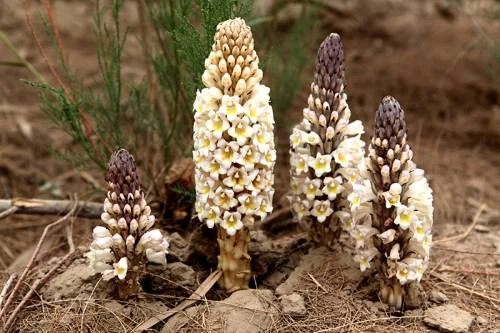
Cistanche (Cistanche spp.) is a parasitic herb that belongs to the Orobanchaceae family. It is found in arid regions of Asia and the Mediterranean that can grow up to 40 cm in height. It is famous for its use in traditional Chinese medicine, where it is believed to have a range of therapeutic effects, including anti-aging, anti-fatigue, and anti-inflammatory properties. Cistanche has been extensively studied for its chemical constituents, such as polysaccharides, flavonoids, phenylethanoid glycosides, and iridoids, that have been found to be responsible for their therapeutic effects. Despite its proven potential, the wild-harvesting of Cistanche has led to a decline in its natural population. Therefore, it is essential to cultivate Cistanche to meet the growing demand for its use in medicine and health supplements. This thesis aims to summarize the available research on cultivation techniques for Cistanche, including seed collection, propagation, planting, irrigation, fertilization, pest and disease management, and harvesting methods.
Click to cistanche tubulosa powder
Introduction:
Cistanche (Cistanche spp.) is a parasitic herb that grows in arid regions of Asia and the Mediterranean, including China, Mongolia, Iran, and Israel. It is a holoparasitic plant that grows by attaching its roots to the roots of host plants, such as Haloxylon ammodendron. Cistanche has been used in traditional Chinese medicine for over 1,800 years, where it is believed to have a range of therapeutic effects, including tonifying the kidney, improving potency, and alleviating constipation. Its use has also been extended to treat other ailments, such as asthma, impotence, and fertility problems.

Despite its proven potential, the wild-harvesting of Cistanche has led to a decline in its natural population. Therefore, there is a growing interest in cultivating Cistanche to meet the increasing demand for its use in medicine and health supplements. This thesis aims to provide a comprehensive overview of cultivation techniques for Cistanche, including seed collection, propagation, planting, irrigation, fertilization, pest and disease management, and harvesting methods.
Seed Collection:
The first step in Cistanche cultivation is seed collection. The seeds of Cistanche are small, brownish, and have a papery membrane. They mature in late summer and early autumn and can be collected by handpicking the ripe fruits or shaking the plants to release the seeds. However, wild Cistanche populations are scarce, and the seeds are difficult to find. Therefore, researchers have developed alternative methods to obtain Cistanche seeds, such as tissue culture and micropropagation.
Propagation:
Cistanche is a holoparasitic plant that grows by attaching its roots to the roots of host plants. Therefore, host plant cultivation is a prerequisite for Cistanche cultivation. Haloxylon ammodendron is the most commonly used host plant for Cistanche cultivation. The host plant should be grown in sandy soil with a pH of 8.0 and should be at least two years old before Cistanche is introduced to it. Cistanche seedlings should be transplanted into the soil around the host plant, and after three years, the Cistanche plants will attach their roots to the host plant's roots and start to grow.
Planting:
Cistanche can be propagated by seed or by dividing the root system of an established plant. Seed propagation is the most common method for Cistanche cultivation. After collecting the seeds, they should be treated with a fungicide and sown in sandy soil. The seedbed should be kept moist, and seedlings should appear after two to three weeks. Cistanche seedlings should be transplanted into the soil around the host plant at a distance of one meter between plants. The planting should be done in early spring, and the plants should be watered after planting.

Irrigation:
Cistanche grows in arid regions and requires moderate amounts of water. Irrigation should be done sparingly to prevent waterlogging, which can damage the plant's roots. The best time for irrigation is early morning or evening, and the water should be applied slowly to allow it to infiltrate into the soil gradually.
Fertilization:
Cistanche requires moderate amounts of nutrients, and the soil should be supplemented with fertilizer in the form of compost or manure. However, excessive fertilizer can lead to the growth of large leaves at the expense of the reproductive structures of the plant. Therefore, the fertilizer should be applied in moderation.

Pest and Disease Management:
Cistanche is vulnerable to pests and diseases, such as aphids, mites, and fungi. The use of chemical pesticides can be harmful to the environment and should be avoided. Therefore, alternative methods, such as physical barriers, biological control, and cultural practices, should be used to manage pests and diseases.
Harvesting
The harvesting of cistanche typically takes place in the spring and summer when the plant is in full bloom. The root is the most commonly used part of the plant for medicinal purposes. The root is typically harvested by digging it out of the ground and then cleaning, drying, and processing it for use. It's important to note that cistanche is a protected species in some areas, so it is important to only harvest it from sustainable sources and follow local regulations.
for more information:Ali.ma@wecistanche.com