Desert Cistanche: One Hundred Million Red Willows Light Up The Western Region
Aug 24, 2026
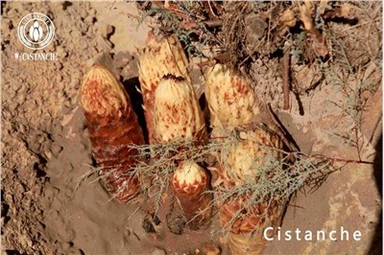
On the southern edge of the Taklamakan Desert, a green revolution is quietly taking place. In the scorching June, standing on the observation deck of the Cistanche tubulosa planting demonstration base in Qiamuguruk Village, Yingairike Township, Hotan County, the dense red willows look like a green city wall, firmly pinning the flowing dunes in place, and almost no yellow sand is exposed. The red willows locked in the sand, and the great clouds gave birth to gold. "Abudukahar Kaiyumu, the deputy head of Yingairike Township, crouched down and dug open a clump of sand near the roots of the red willows, revealing the milky white parasitic Cistanche tubulosa under them one by one.
A few years ago, this place was in a different situation. The seedlings that have just sprouted in the field will disappear in a sandstorm. In the era of sandstorms, crops are often uprooted, and after a year of hard work, there will be no harvest. Today, the planting area of Cistanche tubulosa in the entire township has expanded from 200 acres to 22900 acres, with 409 participating households, including 257 poverty-stricken households. This change stems from a grand vision - to plant 100 million red willows and rebuild the green ecological barrier in the western region.

1, Getting to know Cistanche tubulosa and Red Willow: the 'golden partners' in the desert
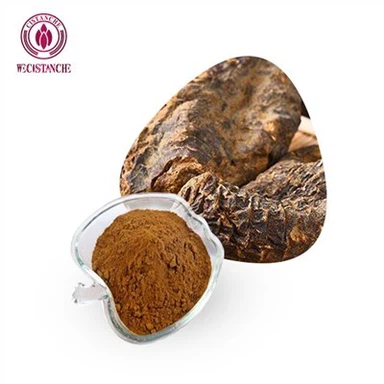
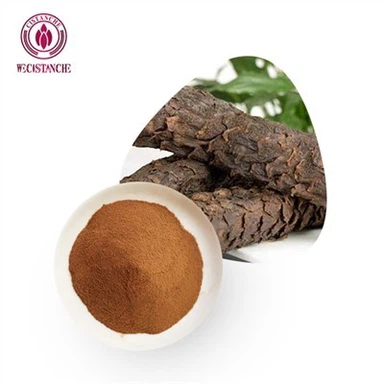
Cistanche tubulosa, known as the "Desert Ginseng", is a precious Chinese medicinal herb listed as a top-grade herb in the "Shennong Bencao Jing" and is renowned as one of the "Nine Great Immortal Herbs of China". Modern pharmacological research shows that Cistanche tubulosa has multiple effects such as tonifying kidney yang, nourishing kidney yin, enriching blood essence, moistening intestines and relieving constipation, and has significant effects in improving sexual function, anti-aging, preventing and treating Alzheimer's disease and Parkinson's disease, antidepressant, regulating immune function, and protecting the liver. It is widely used in clinical Chinese medicine, traditional Chinese patent medicines and simple preparations, and health care products.
Cistanche tubulosa is a unique parasitic plant that has no root system and must rely on the roots of other plants to grow. It is mainly divided into two types: desert Cistanche, which parasitizes the roots of red willow trees; Guanhua Cistanche is parasitic on the roots of red willow (tamarisk). Among them, Cistanche tubulosa is only distributed around the Taklamakan Desert in southern Xinjiang, and the Hotan area is its authentic land.

The villagers of Hotan Village in Xinjiang are digging and harvesting Cistanche tubulosa
Red willow, scientific name tamarisk, commonly known as "red willow", is an extremely tenacious sand-growing shrub. It is resistant to drought, salt alkali, wind erosion, and sand burial, and its roots can penetrate several meters underground, firmly locking in quicksand. Even rarer is that red willows can improve soil structure, increase soil organic content, and enhance soil fertility. Red willows can thrive in harsh environments such as saline alkali land, dry river sand, and desert beaches, making them the preferred plant for desertification control in southern Xinjiang.
The relationship between Cistanche tubulosa and Red Willow can be regarded as an ingenious design of nature. The ovules of Cistanche tubulosa can induce the roots of the host red willow to approach it. When the distance is about 0.5 centimeters, the seeds are stimulated to release suction and attach to the surface of the red willow roots. Then, a cluster of hairy tissue germinates and penetrates into the host root, establishing a nutrient absorption channel. Interestingly, the parasitism of Cistanche tubulosa does not affect the normal growth of red willows. The two root systems coexist and benefit each other - red willows fix sand and protect the ecology, while Cistanche tubulosa creates economic value. The two complement each other.

Host of Cistanche tubulosa- Red Willow
2, One Hundred Million Red Willow Plan: A Grand Blueprint for Desertification Control with Technology
Nurture red willows first, then plant Cistanche. Windbreak and sand fixation benefit future generations. "This is not just a slogan, but also an ecological project that has lasted for more than ten years.
The One Hundred Million Red Willow Desertification Prevention and Control Project is jointly promoted by Hetian Teichen Pharmaceutical Biotechnology Co., Ltd. and local farmers and herdsmen. The project plans to plant 1 million acres of Cistanche tubulosa and its host plant, Salix chinensis, over a period of 10 years to restore desert vegetation dominated by Salix chinensis and rebuild the ecological barrier of Salix chinensis forests. One million acres of red willows, about one hundred million trees, is a feat that can change the regional ecological pattern.
Behind this plan stands a scientist known as the "father of Cistanche tubulosa" - Professor Tu Pengfei from the School of Pharmacy at Peking University. In the early 1990s, Dr. Tu Pengfei chose Cistanche tubulosa as his research topic after graduation and went deep into the Taklamakan Desert for more than 20 years. He took the green train to Urumqi for three or four days, then traveled for five or six days to Yutian County, and stayed in the desert hinterland for more than twenty days. At that time, wild Cistanche tubulosa was being illegally harvested and rampant. The poachers ignored the parasitic discs and did not fill the pits, resulting in the death of large areas of the red willow forest. After reading it, Tu Pengfei felt deeply regretful and determined to solve the problem of artificial cultivation of Cistanche tubulosa.
Starting from 1985, the artificial cultivation research of Cistanche tubulosa was officially launched, and by 2002, the planting technology had basically matured. After long-term research, Tu Pengfei uncovered the secret of parasitic Cistanche tubulosa and found that "you don't have to go to so much trouble finding roots, just sprinkle the seeds nearby". He organized research institutions such as Peking University, China Agricultural University, and Xinjiang Institute of Ecology and Geography of the Chinese Academy of Sciences to break through multiple key technologies for artificial planting of parasitic plants and establish a standardized high-yield and stable production technology system for Cistanche tubulosa. In 2004, under the promotion of Tu Pengfei, Cistanche tubulosa was officially included in the Chinese Pharmacopoeia, clearing obstacles for its industrial development.
The power of technology not only solves the problem of whether it can be planted, but also constantly breaks through the bottleneck of how to plant better. In recent years, the research team of the Chinese Academy of Forestry, in collaboration with the Xinjiang Academy of Forestry, has promoted the improvement and demonstration of mechanized planting of Cistanche tubulosa in the Hotan area. Through the Beidou navigation positioning technology, the machine accurately planted red willows according to the set trajectory, achieving full mechanization of host planting and inoculation of Cistanche tubulosa. At the same time, researchers screened excellent individual plants- multi-branch tamarisk - from the tamarisk germplasm resource garden. After inoculation, not only did the yield increase, but it could also sustain high yields for many years.

3, From 200 acres to 22900 acres: A green breakthrough for a small border township
Yingairike Township is adjacent to the Taklamakan Desert. In the early years, sandstorms were rampant, with an average of 42 days of sandstorms per year and a vegetation coverage rate of only 8.7%. It is on this seemingly hopeless land that red willows and Cistanche tubulosa have created a green miracle.
In 2012, 55-year-old Abuliken Abuduquran contracted 100 acres of wasteland to plant red willows. The following year, he attempted to graft Cistanche tubulosa onto the roots of the red willows and tasted the sweetness in the third year. Since then, he has continuously expanded his planting and has now planted 3500 acres of red willows, establishing the Didar Farmers' Professional Cooperative in Hotan County. From the initial observer to the current leader, his experience is a microcosm of the local farmers changing their mindset.
The iteration of technology has significantly shortened the profit cycle. Initially, it took three to four years to harvest Cistanche tubulosa; Later, through technological improvements, the planting cycle was compressed to two years; In 2024, the "one-year effective model" experiment was successful - planting red willow seedlings and sowing Cistanche tubulosa seeds in March each year, and harvesting them in October of the same year. At the same time, the yield per mu of Cistanche tubulosa gradually increased from the initial 200 kilograms to 500 kilograms or even 700 kilograms.

Chinese herb cistanche
The ecological benefits of large-scale planting are also significant. According to monitoring data from the Forestry and Grassland Bureau and Meteorological Bureau of Hotan County, Yingairike Township experienced an average of 42 days of sandstorms in the past year, with a vegetation coverage rate of only 8.7%; Nowadays, the average number of sandstorm days per year has dropped to 18 days, the vegetation coverage rate has increased to 42.3%, and the desertification land has decreased for four consecutive years. The once barren land filled with yellow sand has turned into a vibrant oasis.
The planting area of Cistanche tubulosa in the whole township has expanded from 200 acres to 22900 acres, with 409 participating farmers. I used to think that sandy land was harmful, but now I think sandy land is a treasure. This sentence reflects the change in the voices of local farmers.
4, Ecological benefits: Building a green Great Wall in the western region
The significance of the One Hundred Million Red Willow Plan goes far beyond the changes in a single township. It is building a solid ecological barrier for the entire western region.
The root system of red willow can penetrate several meters underground, forming a dense root network that firmly fixes the flowing dunes. After large-scale planting of sand plants such as red willows, red willows, and four-winged quinoa, the spread of drifting sand and the occurrence of sandstorms have been effectively curbed. When a sandstorm strikes, there is only wind and no sand at a distance of 18 kilometers along the route.

cistanche benefits for men
Click here to view Cistanche Enhance Immunity products
【Ask for more】 Email:cindy.xue@wecistanche.com / WhatsApp: 0086 18599088692 / WeChat: 18599088692
Data is the most persuasive. Two-thirds of the area in Qiemo County is desertified land. By developing the inoculation of Cistanche tubulosa under the red willow forest, the total area of windbreak and sand forest control in the county is about 170000 mu, and the inoculation area of Cistanche tubulosa under the red willow forest is about 80000 mu. The average number of sandstorm days in the local area has decreased from around 16 days in the 1980s to 11 days in recent years, and the average number of floating dust days has decreased from 128 days to 98 days in recent years. Since the large-scale planting of Cistanche tubulosa in Yutian County, the number of sandstorms per year has decreased by more than 30 days compared to before.
What is even more exciting is that by the end of 2024, the 3046-kilometer-long green sand barrier surrounding the edge of the Taklamakan Desert will be fully locked in place. In the construction process of this "green scarf", the biological desertification control model of Cistanche tubulosa, which uses red willows and red willows as hosts, played an important role. It is estimated that the cultivation of Cistanche tubulosa has been promoted to over 6 million acres in provinces and regions such as Xinjiang, Gansu, and Qinghai, saving the country more than 12 billion yuan in desertification control funds.
Professor Tu Pengfei said, "After planting red willows on sandy land like this for five years, it can be transformed into fertile land." From desert to fertile land, from desert to oasis, one hundred million red willows are gradually turning this seemingly impossible vision into reality.

The villagers of Hetian Village in Xinjiang are digging and harvesting Cistanche tubulosa
5, Economic benefits: Let the desert produce 'golden sand'
Cistanche is not only an ecological guardian, but also a "green bank" for farmers.
At present, the average annual income per mu of Cistanche tubulosa in Yingairike Township is 2600 yuan, which is a stable and considerable income for ordinary farmers. In some well-managed bases, the yield of Cistanche tubulosa per mu for 5-year-old red willows can reach about 700 kilograms. Calculated at a wholesale market price of 6 yuan/kg, the output value per mu exceeds 4000 yuan. Moreover, planting Cistanche tubulosa once can last for three years or even longer, and one planting can benefit for many years.
For impoverished households, the Cistanche tubulosa industry is an opportunity to change their destiny. Abduwekli Maimaiti Ming used to have a single income in his family, with frequent sandstorms and a tight schedule. Now he not only undertakes the cultivation of Cistanche tubulosa in sandy land, but also works in a cooperative to increase income, and the family's annual income is steadily increasing. In 2014, the fresh production of Cistanche tubulosa in Tian County alone exceeded 10000 tons, with a direct economic benefit of over 80 million yuan and an average annual income increase of 26700 yuan per household. Some large-scale growers had an annual income of several hundred thousand yuan.
The extension of the industrial chain has further amplified economic benefits. At present, Yutian County has introduced leading enterprises such as Xinqikang Pharmaceutical and Shenhua Technology, and jointly developed more than 20 types of Cistanche products with universities and research and development platforms, including health wine, Cistanche decoction pieces, active ingredient extract capsules, skincare products, etc., with an annual output value of nearly 400 million yuan. Shaya County has introduced 13 sand control enterprises and 2 Cistanche tubulosa processing enterprises, with an annual output of over 10000 tons of Cistanche tubulosa. It is expected that the industrial output value will reach over 100 million yuan this year. Experts predict that by 2026, the Cistanche tubulosa industry is expected to exceed a scale of 50 billion yuan.
The employment driving effect is also significant. During the harvest season of Cistanche tubulosa, the labor force for harvesting and digging reaches 500 people, requiring one to two hundred people per day. By participating in planting, management, and harvesting, more than 200 people have achieved stable employment in the local area, and more than 10000 people have increased their per capita income by over 10000 yuan through seasonal employment. New formats, such as live-streaming sales, have also opened up a broader market for Cistanche tubulosa, with online and offline sales totaling nearly 10 million yuan.

Cistanche tubulosa - a bumper harvest for farmers
6, Social benefits: the path to wealth through sand mining
The social value of the Cistanche tubulosa industry is reflected on multiple levels.
Firstly, poverty alleviation and wealth creation. The main production areas of Cistanche tubulosa are mostly border ethnic areas with fragile ecological environment and lagging economic development. The development of the Cistanche tubulosa industry has provided a sustainable path for local people to become prosperous. As of now, more than 6300 farmers and herdsmen have been trained, helping more than 200000 people in the desert areas to lift themselves out of poverty and become prosperous. In November 2019, the National Health Commission included Cistanche tubulosa in the list of pilot varieties of edible and medicinal Chinese medicinal materials, providing new opportunities for further development of the industry.
Secondly, stable employment. The Cistanche tubulosa industry has formed a complete industrial chain from planting, management, harvesting to processing and sales, creating a large number of job opportunities for the local area. From individual farmers to industrial workers, from odd jobs to a fixed income of 3500 yuan per month, the identity of farmers is quietly changing.
The third is technological empowerment. Professor Tu Pengfei not only led the research team to overcome technical difficulties, but also actively promoted talent training. In 2012, he applied for funding to benefit the people through science and technology, inviting Yu Tian, a forest ranger, and farmers and herdsmen to Beijing University for training on red willow, red willow maintenance, and Cistanche tubulosa planting techniques. The farmers and herdsmen who have never flown before are very happy to come to Beijing for a meeting. This deep connection between technology and the people has injected lasting development momentum into the western desert areas.
The fourth is border stability. The Cistanche tubulosa industry has played an important role in maintaining social stability and long-term peace in border ethnic areas. By enabling residents to increase their income and become prosperous at their doorstep, we have fundamentally reduced the social problems caused by poverty and achieved a win-win situation for ecological governance and improvement of people's livelihoods.

Harvest of Cistanche tubulosa
7, Challenge and Future: The Road to Sustainable Desert Governance
Despite remarkable achievements, the Cistanche tubulosa industry still faces some challenges.
One is the uneven popularization of technology. Although the planting technology in the core production areas has matured, in some remote areas, farmers still use extensive planting methods, resulting in low and unstable yields of Cistanche tubulosa. Promoting full mechanization and intelligent planting is still an important direction for the future.
The second is water resource constraints. The average annual precipitation in the Taklamakan Desert does not exceed 100 millimeters, with a minimum of 4.5 millimeters. Although red willows are drought-tolerant, the large-scale cultivation of Cistanche tubulosa still requires reasonable irrigation. How to balance ecological water use and agricultural water use is a long-term exploration topic.
Thirdly, the industrial chain needs to be improved. At present, the products of Cistanche tubulosa are mainly processed at the primary level, and the proportion of high-value-added products is not high. Strengthening the research and development of new drugs, functional foods, and international market expansion is the key to the industry's growth and strength. At present, Cistanche tubulosa has been exported to Japan, South Korea, Taiwan, China, and other markets for many years in a row, and has passed OCIA and NOP organic certification. The product quality has reached the international level.
Looking ahead, with the green development of the "Belt and Road", the international cooperation space of the Cistanche tubulosa industry is broad. Jointly building a green "the Belt and Road" and sharing the desert economy is the common expectation of countries along the route. The future direction of efforts is to utilize plants with strong salt and drought resistance and high economic value, such as red willows, to establish a scientific and efficient ecological planting model that balances economic and ecological benefits.

Old Man and Cistanche tubulosa
Every red willow is a lamp
Looking from the southern edge of the Taklamakan Desert, one hundred million red willows are lighting up the west in the simplest way possible. They are not neon lights, but more moving than any other light - every red willow is a green light, illuminating the retreat of desertification, the way for farmers to increase income, and also the path of ecological civilization construction in the western region.
Red willows lock the sand, and great clouds give birth to gold. These eight words embody the highest level of Chinese wisdom in combating desertification - not simply confronting the desert, but coexisting with it, allowing the desert to create value for humanity. From 200 acres to 22900 acres, from Hetian to over 6 million acres in multiple provinces and regions such as Xinjiang and Gansu, from a yield of 200 kilograms per acre to 700 kilograms, and from an annual output value of less than 1 billion yuan to over 20 billion yuan - behind these numbers lies the perseverance and dedication of countless desertification control personnel.
Professor Tu Pengfei said, "The area of Cistanche tubulosa and red willows has grown to 12 million acres, making them the main force in sand prevention and control." When we stand on the observation deck in Yingairike Township, looking at the endless red willow forest and listening to the rustling sound of the wind blowing through the branches, perhaps we can better understand the meaning of this sentence: the desert is not the end, but the starting point. Under the protection of one hundred million red willows, the future of the West will surely be lush and vibrant with greenery.