Desert Ginseng, Cistanche Tubulosa, Nourishing Treasures in The Desert
May 06, 2026
In the vast and boundless northwest desert, there grows a peculiar plant that has no emerald green leaves or gorgeous flowers. However, with its tenacious vitality and excellent nourishing value, it has won the reputation of "desert ginseng". It is Cistanche tubulosa, a precious medicinal herb that roots in the desert and nourishes life. With a silent posture, it interprets the natural miracle of "rare treasures in desperate situations". Many people's understanding of Cistanche only stays at the label of "precious medicinal herb", but they don't know why it can be on par with ginseng and become a unique nourishing holy product in the desert. Today, let's break down one by one, unveil the mysterious veil of Cistanche tubulosa, and understand the deep meaning behind its title of "desert ginseng".

Desert ginseng
Cistanche tubulosa: a parasitic plant in the desert
Cistanche tubulosa, belonging to the genus Cistanche in the family Liliaceae, is a perennial carnivorous parasitic herbaceous plant, also known as Rousongrong, Dayun, Heichengling, etc. It also has an important medicinal position in Uyghur medicine. Its growth habits are extremely unique, unlike ordinary plants that rely on photosynthesis for self-sufficiency. Cistanche tubulosa is a typical obligate root parasitic plant that relies on its host for survival throughout its life. Its main hosts are drought tolerant plants unique to the desert, such as red willows and white willows, which mostly grow in areas such as red willows desert sand dunes and dry old riverbeds at an altitude of 225 to 1150 meters. In China, it is mainly distributed in northwest desert areas such as Xinjiang, Gansu, and Ningxia, where the climate is dry, rainfall is low, evaporation is high, and the temperature difference between day and night is significant. However, these areas provide unique environmental conditions for the growth of Cistanche tubulosa.

desert ginseng
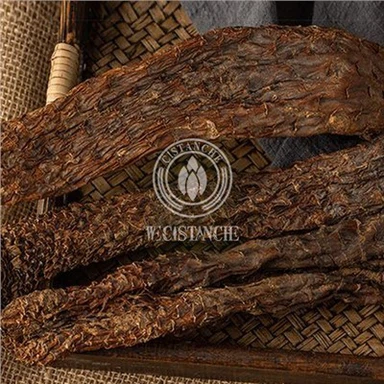
From a morphological perspective, most of the plants of Cistanche tubulosa grow underground, with the aboveground part only exposed to the ground during the flowering period. The plant height can reach 0.4 to 1.6 meters, and the fleshy stem is thick and robust, forming a flattened cylindrical or cylindrical shape. The surface is covered with brown or gray brown scales and leaves, and the texture is hard and tough. Light brown point like vascular bundles can be seen on the cross section, arranged in wavy rings, with a slight odor and a sweet and slightly bitter taste. Its growth cycle is long, from seed germination to fleshy stem maturity, usually taking 2 to 3 years, and even up to 5 to 6 years. The entire nutritional growth stage is completed underground, with only a brief reproductive growth stage (flowering and fruiting) exposed to the ground. This "hidden" growth characteristic also makes it particularly precious.
It is worth noting that due to excessive excavation and weak natural reproduction ability, wild Cistanche tubulosa is in a precarious situation. In 2021, it was listed as a second-class key protected wild plant in China and also included in the International Convention on Endangered Species of Wild Fauna and Flora. Nowadays, most of the Cistanche tubulosa on the market is an artificially cultivated species, which not only protects wild resources but also allows this desert treasure to enter more people's lives.

superman herbs cistanche
Desert ginseng: why can it be on par with ginseng?
Ginseng, as a representative of nourishing medicinal herbs, has always been regarded as the "number one tonic". The title of "desert ginseng" for Cistanche tubulosa is not accidental, but rather due to its similar nourishing effects to ginseng, scarce growth characteristics, and unique value in desert environments. This can be explained from the following three core dimensions.
(1) Similar nourishing effects, warm and nourishing comparable to ginseng
The core value of ginseng lies in nourishing qi, nourishing blood, and nourishing vitality, while the core efficacy of Cistanche tubulosa is to nourish kidney yang, nourish essence and blood, and moisten intestines and promote bowel movements. Although the two focus on different aspects, they both belong to the top grade of "warm and nourishing", without the dryness or coldness of tonifying, suitable for long-term regulation, which is also one of the core reasons why it is called "ginseng".
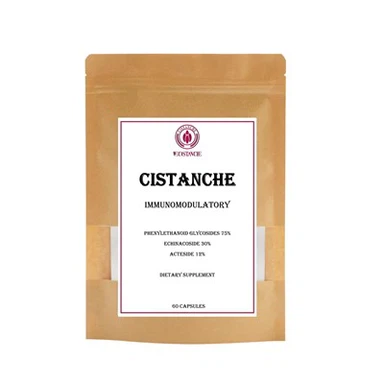
From the perspective of traditional Chinese medicine, Cistanche tubulosa has a sweet and salty taste, a warm nature, and belongs to the kidney and large intestine meridians. It was first recorded in the "Shennong Bencao Jing" and is listed as a top-grade product. The book records that it "mainly works on the five labor and seven injuries, replenishes the middle, nourishes the five organs, strengthens yin, and benefits essence and qi". Medical practitioners throughout history have also highly praised its nourishing effects. The "Bencao Huiyan" even refers to it as a "medicine that nourishes the gate of life, nourishes kidney qi, and replenishes essence and blood", emphasizing its characteristics of warmth but not heat, tonifying but not stiffness, warmth but not dryness, and smoothness but not leakage. It is suitable for regulating people with insufficient kidney yang and deficiency of essence and blood. Modern research has also confirmed that Cistanche tubulosa is rich in phenylethanolic glycosides (such as echinacroside and verbascoside), polysaccharides, alkaloids, amino acids, and various trace elements. These active ingredients have multiple effects such as regulating endocrine function, enhancing immunity, anti fatigue, antioxidant, and neuroprotection, which are similar to the nourishing mechanism of ginseng - both can improve weak constitution and nourish the body and mind by regulating human functions. However, ginseng focuses on nourishing qi, while Cistanche tubulosa focuses on nourishing yang and nourishing essence and blood.

cistanche tubulosa
In addition, the nourishing properties of Cistanche tubulosa are extremely versatile. It can not only improve male impotence and infertility caused by kidney yang deficiency, but also regulate menstrual disorders and amenorrhea infertility caused by female Chong Ren imbalance. At the same time, it has significant effects on intestinal dryness and constipation in the elderly or those with weak constitution. This comprehensive nourishing effect further establishes its position as a "desert ginseng" and is known as one of the three treasures for nourishing kidney yang, along with ginseng and deer antler.
(2) Growing in harsh environments, scarcity highlights its preciousness
Ginseng mostly grows in the humid and shady environment of temperate coniferous and broad-leaved mixed forests, with strict growth conditions. However, the growth environment of Cistanche tubulosa is even more extreme - it roots in the desert with drought, little rain, and sandstorms, where the soil has high salt content, scarce water, and a huge temperature difference between day and night. Being able to survive and mature in such a desperate situation is a miracle in itself, and its scarcity doubles its value, comparable to the preciousness of ginseng.
More specifically, the growth of Cistanche tubulosa relies on host plants such as red willows. It is connected to the root system of the host through suckers and obtains all the nutrients and water needed for growth from the host. This symbiotic parasitic relationship limits its growth to a dual purpose: it depends on the growth status of the host and adapts to the extreme environment of the desert. Once the host withers or the desert environment is damaged, Cistanche tubulosa cannot survive. Moreover, the growth cycle of Cistanche tubulosa is long, and it is difficult to cultivate artificially. It requires the cultivation of red willow forests before inoculation, which is time-consuming and labor-intensive. This further enhances its scarcity, which is highly consistent with the characteristic of ginseng that "rarity is precious". It has become a rare treasure in the desert, and there is even a legend in the folk that "Cistanche tubulosa came first and then the desert", which shows people's appreciation for it.

Effects of Cistanche: Improve kidney function
Click here to view Cistanche for Kidney disease products
【Ask for more】 Email:cindy.xue@wecistanche.com / WhatsApp: 0086 18599088692 / Wechat: 18599088692
(3) The dual treasures of ecology and economy in the desert
The value of ginseng mainly focuses on medicinal and nourishing fields, while Cistanche tubulosa not only has extremely high medicinal value, but also carries important ecological value. This is its unique "desert characteristic" that distinguishes it from ginseng, and it is also another connotation of the title "Desert Ginseng".
In desert ecosystems, host plants such as Cistanche tubulosa and Salix matsudana are interdependent. Salix matsudana is the core plant for windbreak and sand fixation in deserts, and the growth of Cistanche tubulosa not only does not damage Salix matsudana, but also promotes the growth of its root system, enhances its windbreak and sand fixation ability, helps improve the desert ecological environment, and curb land desertification. In recent years, with the maturity of artificial cultivation technology, planting red willows and inoculating Cistanche tubulosa in areas such as Ulan Buh and deserts has not only achieved desert control, but also driven local economic development, making "desert treasures" an important force for ecological protection and rural revitalization. This dual value of "ecology+economy" is not possessed by ginseng, and it also gives more weight to the title of "desert ginseng".