Ecological Protection Of Desert From The Perspective Of Cistanche Tubulosa: The Symbiotic Wisdom And Guarding Path Of A Fairy Grass
Apr 21, 2026
In the vast and boundless northwest desert, there grows a rare traditional Chinese medicine called "desert ginseng" - Cistanche tubulosa. It has no straight branches or lush green leaves, and is hidden under sandy soil year-round. However, with its unique survival wisdom, it has rooted itself in the desert and become an important link between traditional Chinese medicine culture and desert ecology. The rise and fall of Cistanche not only concern the survival of a traditional Chinese medicine but also reflect the fragility and resilience of desert ecosystems, offering a valuable perspective for exploring desert ecological protection.

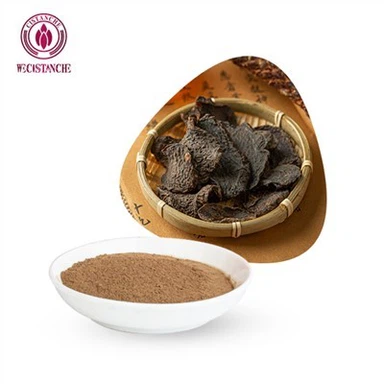
desert ginseng
Symbiotic Code: The Two-Way Journey between Cistanche tubulosa and Desert Ecology
The survival code of Cistanche tubulosa is essentially a vivid manifestation of the symbiotic relationship of desert ecosystems. As a perennial obligate root parasitic herbaceous plant of the Cistanche genus in the family Loricaceae, it cannot produce nutrients independently through photosynthesis and needs to rely on the roots of sand plants such as Haloxylon ammodendron and Salix matsudana for survival throughout its life. It establishes connections with its host through a special suction structure and absorbs the water and nutrients needed for growth. This seemingly "dependent" relationship is actually a mutually beneficial symbiosis: the parasitism of Cistanche not only does not cause serious damage to the host, but may also promote the development of the host's root system and enhance its drought resistance by secreting special substances, while hosts such as Haloxylon ammodendron and Salix provide the foundation for the survival of Cistanche.
More importantly, Cistanche tubulosa and its host plants jointly construct a "protective barrier" for desert ecology. As the "king of desert vegetation", the main roots of Haloxylon ammodendron can penetrate more than 5 meters underground, and the lateral roots extend widely. The root system of an adult Haloxylon ammodendron can hold about 5-8 cubic meters of sandy soil, effectively anchoring dunes and resisting wind erosion. The growth of Cistanche tubulosa requires a stable sand layer environment, which indirectly promotes the fixation of dunes and further strengthens the sand fixation system. Every spring, the flower clusters of Cistanche tubulosa that emerge from the ground become a rare honey source in the desert, attracting a large number of pollinating insects and injecting vitality into the biodiversity of the desert. After the seeds are dispersed, they can also form new parasitic relationships, giving this ecosystem the ability to sustain and expand on its own. As a relic plant of the ancient Mediterranean, Cistanche tubulosa also has important scientific value for studying the flora of desert plants in Asia.

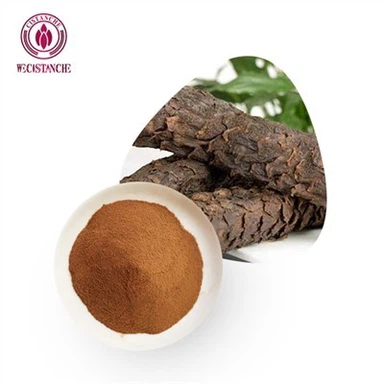
Desert living cistanche
Survival Crisis: Ecological Imbalance Under Human Activities
However, the survival status of this desert fairy grass has been in crisis due to human intervention, which has also exposed the urgency of desert ecological protection. As a traditional Chinese medicine, Cistanche tubulosa has the effects of nourishing essence and blood, moistening intestines, and promoting bowel movements. It is known as a "treasure among medicines" and has been widely used in the field of traditional Chinese medicine for more than two thousand years. The huge market demand has given rise to excessive digging behavior, coupled with insufficient understanding of its growth patterns and extensive digging methods, which not only leads to the depletion of wild Cistanche resources, but also destroys its parasitic relationship with Haloxylon ammodendron and Salix matsudana, resulting in the degradation of desert vegetation and the intensification of soil desertification, forming a vicious cycle of "digging vegetation destruction desertification intensification". According to statistics, the wild Cistanche tubulosa, which was still widely seen in the early stages of reform and opening up, was on the brink of depletion by 2011. In 2021, it was officially listed as a second-class protected wild plant in China, and in 2019, it was included in the International Convention on Endangered Species of Wild Fauna and Flora.

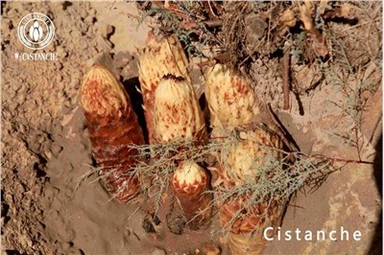
superman herbs cistanche
The Road of Protection: From Plundering and Utilization to Sustainable Development
Through the conservation practice of Cistanche tubulosa, we have gradually explored a desert ecological protection path that prioritizes ecology while considering development, achieving a transition from "exploitative utilization" to "sustainable conservation". Firstly, by legislating and regulating, we can establish a solid protection bottom line, strictly prohibit the illegal mining and sale of wild Cistanche tubulosa, standardize the artificial planting and processing process, and promote alternative medicinal materials such as Cynomorium songaricum and Morinda officinalis to reduce dependence on wild resources. Secondly, technology empowers us to solve the difficulties of artificial planting. Researchers have overcome a series of technical bottlenecks, such as seed germination, artificial inoculation, and pest control of Cistanche tubulosa, and pioneered a high-yield and stable cultivation technology system. The growth cycle of 3-5 years under natural conditions has been shortened to 18-24 months, with an inoculation rate of over 60%. It has been widely promoted in Xinjiang, Gansu, Inner Mongolia, and other places.

The villagers of Hetian Village in Xinjiang are digging and harvesting Cistanche tubulosa
Win win approach: a virtuous cycle of ecological protection and economic development
More significantly, the protection of Cistanche tubulosa has promoted the formation of a win-win model of "ecology+economy", providing a sustainable endogenous driving force for desert ecological protection. In the Hotan area of Xinjiang, a composite planting system of "Haloxylon ammodendron Cistanche" and "Red Willow Cistanche" has been established through scientific planning. As of the end of 2015, the planting area of Cistanche in Hotan has reached more than 500000 mu, driving thousands of farmers to increase their income. Some large-scale growers can earn tens of thousands of yuan annually. In Alxa, Inner Mongolia, a million-acre forest and sand industry base for Cistanche tubulosa has been formed. Cistanche tubulosa is processed into slices, pastes, tea drinks, and other products, which not only extends the industrial chain but also drives the development of ecotourism, turning the former desert into a "treasure trove". This model not only protects the resources of Cistanche tubulosa and desert ecology but also drives local people to increase income, achieving a virtuous cycle of ecological protection and economic development.

Cistanche tubulosa - a bumper harvest for farmers
Click here to view Cistanche for Kidney disease products
【Ask for more】 Email:cindy.xue@wecistanche.com / WhatsApp: 0086 18599088692 / Wechat: 18599088692
Outlook for the future: Long-lasting efforts to protect the vitality of the desert
Nowadays, with the implementation of national standards such as the "Technical Regulations for Cultivating Cistanche tubulosa" and the promotion of multiple Cistanche tubulosa industry research and development projects, Xinjiang and other regions are focusing on breaking through the shortcomings of deep processing, establishing seed gene banks, and promoting the development of the Cistanche tubulosa industry towards standardization, scale, and high quality, making "desert gold" truly a characteristic industry for enriching the people and promoting desertification. But we should also be aware that the restoration of desert ecosystems is a long-term project, and the protection of Cistanche tubulosa still faces problems such as uneven seed quality, insufficient deep processing capacity, and scarcity of leading enterprises, which require continuous efforts and long-term efforts.

Planting of Cistanche tubulosa
A Cistanche tubulosa plant carries the ecological code of the desert and witnesses the transformation of the way humans interact with nature. It tells us that the desert is not a 'forbidden zone for life', and every species is maintaining ecological balance in its own way; Desert ecological protection is not a one-size-fits-all ban on development, but rather a balance between ecological protection and resource utilization, so that every rare species can survive and the desert can radiate lasting vitality. Starting from Cistanche tubulosa, what we see is not only the path of protecting a traditional Chinese medicine, but also a vivid practice of human reverence for nature, compliance with nature, and protection of nature. Only by respecting the laws of biological symbiosis and adhering to the concept of sustainable development can the desert no longer be barren, the fragrance of "desert ginseng" continue to spread, and the green barrier of the northwest land become stronger.