Effect Of Cistanche Phenylethanol Glycoside Intestinal Barrier And Gut Microbiota in Micealcoholic Liver Disease
Mar 18, 2024
Abstract:
Objective: The mouse model of alcoholic liver disease (ALD) was established by Lieber-Decarli alcohol liquid feed, and the effects of Cistanche phenylethanoid glycosides (CPhGs) on intestinal barrier and gut microbiota composition of ALD mice had been discussed.
Method: The 36 C57BL/6N female mice were randomly divided normal group, CPhGs normal group, model group, and CPhGs low, medium, and high dose groups (175 mg·kg-1, 350 mg·kg-1 and 700 mg·kg-1 ), with 6 mice. Establishment of ALD mouse model using Lieber-Decarli alcohol liquid feed. The CPhGs dose group and the CPhGs normal group were given CPhGs by gavage daily at the appropriate doses. An automatic biochemical analyzer detected Serum ALT, AST, TG, and TC levels. Serum TNF-α, IL-1β, LPS, LBP, D-LA, DAO, and LBP of the liver were detected by ELISA. The levels of TG and TC in liver homogenate samples were detected by colorimetry. Liver tissue was stained with oil red O and HE staining. The intestinal tissues were stained with HE and AB-PAS staining, and Muc2 immunohistochemistry. The intestinal contents of the normal group, CPhGs normal group, model group, and CPhGs high dose group were collected, and the gut microbiota was sequenced.
Result: The ALD model was established successfully. Compared with the normal group, the levels of serum ALT, AST, and TG, and the levels of liver TG and TC in the model group were significantly increased (P<0.05). Histopathology showed that compared with the normal group, the liver cells in the model group showed obvious steatosis. Compared with the model group, the levels of serum TG liver TG, and TC in the CPhGs dose group decreased significantly (P<0.05). The serum ALT, AST, TNF-α, IL-1β, LPS, and LBP in the CPhGs high dose group were also significantly decreased (P<0.05). Compared with the model group, the number of fatty liver cells in the CPhGs high dose group was significantly reduced, the microvilli structure of jejunum epithelial cells was intact, and the expression of Muc2 was reduced in the colon.Compared with the model group, the flora of the CPhGs high dose group changed significantly (P<0.05). Compared with the normal group, the Allobaculum was significantly up-regulated in the model group (P<0.05). Compared with the model group, the abundance of Akkermansia in the CPhGs high dose group was significantly increased (P<0.01). Akkermansia was negatively correlated with Allobaculum (r = -0.701, P<0.01).
Conclusion: CPhGs can reduce the intestinal barrier injury caused by ALD, which may play a protective role by regulating the abundance and structure of Akkermansia and Allobaculum, and affecting the mucus layer homeostasis of the intestinal mucosal barrier.
Keywords:CPhGs; alcoholic liver disease; intestinal barrier; gut microbiota

NATURAL ORGANIC CISTANCHE EXTRACT WITH 40% ECHINACOSIDE AND 16% ACTEOSIDE FOR

Supportive Service Of Wecistanche-The largest cistanche exporter in the China:
Email:wallence.suen@wecistanche.com
Whatsapp/Tel:+86 15292862950
Shop For More Specifications Details:
https://www.xjcistanche.com/cistanche-shop
Alcohol has become one of the important risk factors for chronic diseases worldwide. The "Global Report on Alcohol and Health 2018" released by the World Health Organization shows that approximately 3 million people died due to excessive use of alcohol worldwide in 2016, accounting for 5.3% of the total [1]. In our country, liver diseases caused by alcohol are increasing year by year and are the second largest cause of liver cirrhosis [2], which has become a serious public health problem. The mechanisms of the onset and progression of alcoholic liver disease (ALD) are complex and numerous, mainly the liver damage mechanism of ethanol metabolite acetaldehyde and reactive oxygen species [3]. Among them, the role of the "gut-liver axis" in the progression of ALD has been It has attracted considerable attention [4-5]. The liver is the main site for the oxidative metabolism of alcohol. Long-term heavy drinking can directly damage the liver, leading to the occurrence of ALD [6]. Hepatic steatosis is an early reaction after drinking alcohol. The human gut microbiota (GM) is estimated to number 10 trillion [ 7 ]. A microecological balance composed of intestinal flora, viruses, fungi, and metabolites.
Balance, that is, intestinal microecology, is closely linked to the progression of ALD through the "gut-liver axis", but the relevant mechanisms are still unclear [8-9]. The intestinal barrier and flora dominate the "gut-liver axis", and GM dysregulation and overexpression of inflammatory factors play an important role in the occurrence and development of ALD [10-11].

Studies have found that severe GM dysregulation and overexpression of inflammatory factors occur during the occurrence and development of ALD [12]. Long-term chronic intake or short-term intake of large amounts of alcohol will change intestinal permeability, causing intestinal LPS to enter the portal circulation, inducing an inflammatory response and aggravating liver damage [12-13].
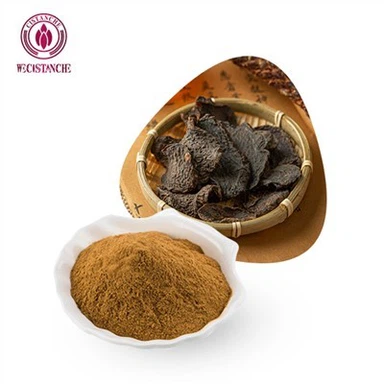
Cistanche , as a characteristic Chinese medicinal material in Xinjiang, has been recorded in Wu Pu's Materia Medica of the Wei and Jin Dynasties, "Compendium of Materia Medica" of the Song Dynasty, and "Compendium of Materia Medica" of the Ming Dynasty [14]. Modern pharmacological research has found that Cistanche phenylethanoid glycosides (CPhGs) play an important role in anti-inflammation and anti-hepatic fibrosis [15-16]. However, there is currently a lack of research on whether CPhGs can regulate the intestinal barrier function or intestinal flora in ALD and exert a hepatoprotective effect.
This study used Lieber-Decarli alcohol liquid feed to establish the National Institute on Alcohol Abuse and Alcoholism (NIAAA) [17] short-term alcoholic liver injury mouse model to explore the effect of CPhGs on the intestinal microecology of ALD. Influence. Special attention was paid to the effects of CPhGs on intestinal barrier function and intestinal microbiota homeostasis in ALD model mice. This helps to reveal the hepatoprotective mechanism of CPhGs from the perspective of intestinal microecology and provides an experimental reference for drug development.
1. Materials
1.1 Animals
SPF grade C57BL/6N female mice, 17~20 g, were purchased from Beijing Vitong Lihua Experimental Animal Technology Co., Ltd., certificate number SCXK (Beijing) 2021-0006. Animals were raised and experiments were conducted in the SPF environment of the Animal Experiment Center of Xinjiang Medical University (SYXK (new) 2022-0003). strict
Comply with the animal welfare and ethical requirements of the Experimental Animal Ethics Committee of Xinjiang Medical University (IACUC-20220127-4).
1.2 Reagents
Absolute ethanol, isopropyl alcohol (Tianjin Damao Chemical Reagent Factory, batch numbers 20230201 and 20190103 respectively); Lieber-Decarli control liquid feed, Lieber-Decarli alcohol liquid feed (Daitz Biotechnology (Wuxi) Co., Ltd., batch numbers respectively for 710027 and 710260);
Paraformaldehyde fixative, Carnoy's fixative and electron microscope fixative (Wuhan Sevier Biotechnology Co., Ltd., batch numbers CR2208028, CR2305094 and CR2210001 respectively); LBP enzyme-linked immunosorbent assay (ELISA) kit, TNF-α ELISA kit, IL-1β
ELISA kit, D-LA ELISA kit, DAO ELISA kit, TG colorimetric test kit and TC colorimetric test kit (Wuhan Yilerite Biotechnology Co., Ltd., batch numbers are CV072V649815, CV112VX05028, CV106T8F3303, GY00L4423397) ,
GY010XN08244, GY03P04Z5104 and GY02DHB82603); LPS ELISA kit (Wuhan Fein Biotechnology Co., Ltd., batch number U3126I069T); ALT assay kit, AST assay kit, TG assay kit and TC assay kit (Shenzhen Mindray Biomedical Electronics Co., Ltd. Co., Ltd., batch numbers are 140122014, 140223002, 141722001 and 141622017); HE staining solution, saturated Oil Red O staining solution, AB-PAS staining solution; Muc2 primary antibody, goat anti-mouse secondary antibody (Wuhan Sevier Biotechnology Co., Ltd. , the batch numbers are G1005, G1015, G1049, GB11344 and GB23301 respectively).
1.3 Drugs
Cistanche extract was purchased from Xinjiang Hotan Dichen Pharmaceutical and Biological Co., Ltd. (echinaceaside ≥ 40%, verbascoside ≥ 16%, phenylethanoid glycoside ≥ 85%, batch number 20230103).

1.4 Instruments
BS-240VET automatic biochemical analyzer (Shenzhen Mindray Biomedical Electronics Co., Ltd.); HT7800 transmission electron microscope (Hitachi Manufacturing Co., Ltd., Japan).
2. Method
2.1 Grouping and animal model establishment
36 mice were randomly divided into normal group, normal administration group, model group and CPhGs low, medium and high dose groups (175 mg·kg-1, 350mg·kg-1 and 700 mg·kg-1), each Group of 6. All mice were first given Lieber-Decarli control liquid feed and adapted to feed for 3 days. normal
The control group and the normal dosage group were fed Lieber-Decarli control liquid feed; the model group and the CPhGs low, medium and high dose groups were fed LieberDecarli alcohol liquid feed. Starting from the 4th day of the experiment, the model group and the CPhGs low, medium and high dose groups gradually increased the alcohol concentration of the alcohol feed from 0% to 5%, and maintained the 5% alcohol feed until the end of the experiment, and pressed 9 hours before collecting materials. 0.2 mL·10 g-1 was administered into the stomach with 30% ethanol.
All feed is prepared and used now, and fresh feed is replaced every day from 17:00 to 19:00. Observe the mice's eating, activity, and mental state every day. When the mice in the model group appear in a drunken state such as listlessness, reduced activity, and reduced food intake, it indicates that the modeling is successful [17]. When the CPhGs low, medium and high dose groups and the normal administration group started feeding alcoholic feed, CPhGs solution of corresponding concentration was gavaged every day for a total of 14 days, and normal saline was gavaged for the rest.
2.2 General observation
The mice's eating, activity, mental state and excretion were observed every day; during the modeling and drug administration, the death situation and the weight of the mice were recorded. Organ coefficient = organ mass/(body mass/100)×100%.
2.3 Selection of experimental animals
After being deprived of food and water for 12 h, the mice were anesthetized, their eyeballs were removed, and blood was collected before they were sacrificed. The liver tissue from the largest lobe was fixed in a paraformaldehyde solution. The jejunal tissue was quickly separated on ice and fixed in an electron microscope fixative; 3 cm of jejunal and colon tissue (without flushing the contents) was separated and fixed in Carnoy's fixative. Another 3 cm of the jejunum and colon tissue (contents rinsed with physiological saline) were fixed in a paraformaldehyde solution. The contents of all intestinal segments were collected into sterile enzyme-free cryovials, quickly frozen in liquid nitrogen, and then transferred to a -80°C refrigerator for storage.
2.4 ELISA and colorimetric detection of serum and liver tissue homogenate indicators
The automatic biochemical instrument was used to detect serum ALT, AST, TG and TC levels; the ELISA method was used to detect serum TNF-α, IL-1β, LPS, LBP, DAO and D-LA levels, and liver LBP levels. Operate according to the instructions. To homogenize liver tissue, take 0.05~1.00 g of fresh liver tissue, add isopropyl alcohol at 2~8°C according to the ratio of weight (g): volume (mL) = 1:9, grind to homogenate, and centrifuge at 20000g·min-1 15 min, take the supernatant and place it on ice for testing, and operate according to the instructions. Colorimetric detection of TG and TC levels in liver tissue homogenate samples.
2.5 HE and Oil Red O staining to detect liver tissue pathology
For hematoxylin-eosin staining (HE), the fixed liver tissue was removed, paraffin sectioned, HE stained, and dehydrated and mounted. The fixed liver tissue was taken out, frozen sectioned, washed with isopropyl alcohol, stained with Oil Red O, sealed, and observed under a light microscope.

2.6 HE and AB-PSA staining to detect intestinal tissue pathological observation
Jejunal tissue was removed and fixed in paraformaldehyde solution for HE staining; colon tissue was removed and fixed in Carnoy's fixative for AB-PAS staining. Immunohistochemistry steps: Dehydrate paraffin sections, antigen retrieval, block endogenous peroxidase, serum blocking, add primary antibody, add secondary antibody, counterstain cell nuclei after color development, dehydrate and mount, and observe under light microscope. The jejunal tissue was removed, cut into 1 mm × 1 mm × 1 mm small pieces, fixed premenstrually, post-fixed, dehydrated, embedded, polymerized, and ultrathinly sectioned. The microvilli changes of jejunal epithelial cells in each group were observed under a transmission electron microscope.
2.7 Sequencing and analysis of intestinal flora using 16S method
Intestinal contents of the normal group, normal dosing group, model group and CPhGs high-dose group, based on V3-V4 region 341F (5'-CCTAYGGGRBGCASCAG-3') and 806R (5'-GGACTACNNNGGGTATCTAAT-3'), using 16S rDNA high-throughput sequencing technology for bacterial community sequencing. The sequencing experiment in this study was completed by Shenzhen Microtech Technology Group Co., Ltd. The gut microbiota sequencing data in this study have been uploaded to the National Center for Biotechnology Information under project number PRJNA1006676.
Based on the analysis results of amplicon sequence variants (ASVs), Alpha diversity, Beta diversity analysis, species classification annotation and difference analysis are performed. Among them, Alpha diversity index mainly includes the Shannon index and the Chao1 index, and the statistical test uses the Wilcoxon test; PCoA
Principal coordinate analysis (PCoA) was performed using Anosim to analyze differences between groups; LEfSe was used to analyze LEfSe) to obtain species with significant differences between groups. Bioinformatics analysis was performed using Microtech Alliance's Bioincloud Platform (https://www.bioincloud.tech) tools.
2.8 Statistical analysis
All measurement data are described as igh̅± 𝑠. For data that obeys the normal distribution and satisfies the homogeneity of variance test, one-factor analysis of variance is used. Otherwise, the non-parametric test is used. The data is statistically analyzed using SPSS 24.0. P<0.05 means the difference is statistically significant.