Effects Of BushenJiangu Decoction On Renal Osteopathy And Serum Klotho Protein Level In Maintenance Hemodialysis Patients: Clinical Findings And Herbal Extract Development Opportunities For CKD-MBD
Apr 14, 2026
Abstract
Objective: To evaluate the clinical efficacy of BushenJiangu Decoction as an adjunct therapy for renal osteopathy in maintenance hemodialysis (MHD) patients, and to assess its influence on serum calcium (Ca), phosphorus (P), parathyroid hormone (PTH), serum Klotho protein, and sclerostin.
Methods: Sixty MHD patients were enrolled (January–December 2019) and randomized into a treatment group and a control group (30 per group). Both groups received standard care including adequate dialysis, phosphorus reduction, calcium maintenance, and PTH control. On top of this baseline regimen, the treatment group received BushenJiangu Decoction for 4 weeks. Outcomes included clinical efficacy (pain relief response), bone pain scores, and laboratory indices (Ca, P, PTH, Klotho, sclerostin) before and after treatment.
Results: Twenty-five patients in the treatment group and twenty-eight in the control group completed the study. The total effective rate in the treatment group was 72%, higher than 50% in the control group (P<0.05P<0.05P<0.05). Pain scores decreased in both groups (P<0.01P<0.01P<0.01), with greater improvement in the treatment group (P<0.01P<0.01P<0.01). Serum Ca increased in both groups (P<0.01P<0.01P<0.01) with no significant between-group difference. Serum P decreased in both groups (P<0.01P<0.01P<0.01), and the treatment group showed a greater reduction than controls (P<0.01P<0.01P<0.01). PTH decreased in both groups (P<0.01P<0.01P<0.01) without significant between-group difference. Serum Klotho increased significantly in the treatment group (P<0.01P<0.01P<0.01) and was higher than the control group after treatment (P<0.01P<0.01P<0.01). Sclerostin decreased in both groups, but no significant between-group difference was observed.
Conclusion: As an adjunct to standard therapy, oral BushenJiangu Decoction improved bone pain and phosphorus control in MHD patients with renal osteopathy and was associated with an increase in serum Klotho. These findings highlight herbal formula-based adjunct strategies and support further translational research into herb extracts for CKD-MBD support.
Keywords: maintenance hemodialysis; renal osteopathy; CKD-MBD; herbal medicine; BushenJiangu Decoction; Klotho; sclerostin; serum phosphorus; parathyroid hormone; herb extract for chronic kidney disease-mineral and bone disorder.
Cistanche Benefits For Improving Kidney Function

1. Background: Why CKD-MBD and Renal Osteopathy Matter in the Dialysis Population
Chronic kidney disease–mineral and bone disorder (CKD-MBD) is a common complication of CKD and is particularly prevalent among maintenance hemodialysis (MHD) patients. Beyond pain and skeletal changes, CKD-MBD is strongly linked to long-term prognosis and cardiovascular risk, making comprehensive management of Ca, P, and PTH a clinical priority. The KDIGO 2017 update emphasizes that calcium, phosphorus, and PTH control are all key targets in CKD-MBD care. (Ref. [2])
From a product-development perspective, CKD-MBD represents a persistent unmet need where adjunctive approaches (e.g., standardized botanical extracts) are being actively explored-especially those that may support phosphorus management, inflammation/oxidative stress balance, and bone-related signaling pathways.
Cistanche Benefits For Improving Kidney Function

Cistanche Extract Supplements Sale In China

Supportive Service Of Wecistanche-For more details about cooperation
Email:wallence.suen@wecistanche.com
2. Study Design and Methods (Clinical Trial Summary)
2.1 Participants
Setting: First Affiliated Hospital of Heilongjiang University of Chinese Medicine
Period: January 2019 to December 2019
Sample size: 60 MHD patients randomized to two groups (30 each)
Completion: 25 in treatment group; 28 in control group
Baseline demographics (sex, age, dialysis vintage) showed no statistically significant differences (P>0.05P>0.05P>0.05), indicating comparability.
2.2 Diagnostic Criteria (Western Medicine)
Diagnosis of CKD-MBD/renal osteopathy referenced Chinese guidance and nephrology textbooks, including:
MHD status
skeletal pain
skeletal deformity (optional manifestations)
X-ray changes (≥1 of: osteitis fibrosa, osteosclerosis, osteoporosis, osteomalacia)
(Refs. [3], [4])
2.3 TCM Pattern Criteria
Given the lack of unified TCM pattern classification for CKD-MBD in MHD, criteria were aligned with "kidney essence deficiency" pattern guidance. (Ref. [5])
2.4 Inclusion and Exclusion Criteria
Key inclusion criteria included:
MHD ≥ 6 months
Age 18–65
bone pain meeting diagnostic criteria
ability to adhere to medication and fluid/diet management
Exclusions included severe comorbidities, recent fractures, GI bleeding, recent anti-osteoporosis drug use, persistently very high PTH (e.g., >1000 pg/mL or PTX indications), and primary osteoporosis.
2.5 Treatments
Both groups received baseline management:
High-flux hemodialysis 3×/week, 4 h/session, blood flow 250–320 mL/min
Phosphate control and calcium maintenance via dialysate calcium adjustment
Sevelamer carbonate for hyperphosphatemia (0.8–1.6 g, three times daily with meals)
Calcitriol for secondary hyperparathyroidism (0.25–0.5 μg daily)
Treatment group (additional):
BushenJiangu Decoction as a prepared decoction (150 mL per bag), 1 bag twice daily for 4 weeks.
Formula composition: salt-processed Eucommia (盐杜仲), Psoralea (补骨脂), Epimedium (淫羊藿), wine-processed rhubarb (酒大黄), ground beetle (土鳖虫), raw oyster shell (生牡蛎).
2.6 Outcome Measures
Pain measured with a simplified line-based pain scale (0–10 cm), averaged over two measurements.
Clinical response: markedly effective / effective / ineffective.
Laboratory indices: serum Ca, P, PTH; serum stored for ELISA testing of Klotho and sclerostin.
2.7 Statistics
SPSS 25.0; ttt-test and χ2\chi^2χ2-test; P<0.05P<0.05P<0.05 significance threshold.

3. Results
3.1 Clinical Efficacy
Total effective rate: 72% (treatment) vs 50% (control), P<0.05P<0.05P<0.05
3.2 Pain
Both groups improved after 4 weeks (P<0.01P<0.01P<0.01)
Treatment group pain score lower than control (P<0.01P<0.01P<0.01)
3.3 Calcium, Phosphorus, and PTH
Calcium: increased in both groups (P<0.01P<0.01P<0.01); no significant between-group difference
Phosphorus: decreased in both groups (P<0.01P<0.01P<0.01); treatment group lower than control (P<0.01P<0.01P<0.01)
PTH: decreased in both groups (P<0.01P<0.01P<0.01); no significant between-group difference
3.4 Klotho and Sclerostin
Klotho: increased significantly in the treatment group and was higher than control after treatment (P<0.01P<0.01P<0.01)
Sclerostin: decreased in both groups; no significant between-group difference
Interpretation for developers: The most commercially interesting signal is the superior phosphorus reduction plus improvement in patient-reported pain. The Klotho pathway is also increasingly viewed as relevant to CKD progression and mineral metabolism regulation, creating a mechanistic narrative that can support further R&D hypotheses (with careful regulatory wording).

4. Discussion: Mechanistic Rationale and Translational Value
4.1 CKD-MBD Management Requires Multidimensional Control
CKD-MBD includes abnormalities in bone turnover, mineralization, and bone volume, often presenting clinically with pain and increased fracture risk. KDIGO 2017 highlights Ca, P, and PTH as parallel priorities in clinical management. (Ref. [2])
4.2 Why Klotho Matters in CKD-MBD Narratives
Klotho is expressed mainly in the kidney and parathyroid and acts with FGF23 to regulate phosphate handling and vitamin D metabolism, making it highly relevant to phosphorus balance in CKD. Evidence indicates Klotho levels tend to decline with reduced renal function and may correlate with osteoporosis severity in renal osteopathy. (Refs. [11], [12])
4.3 Sclerostin as a Bone–Vascular Axis Marker
Sclerostin is linked to bone metabolism and may also participate in vascular calcification signaling. Some studies suggest sclerostin could be associated with clinical outcomes in CKD, and it may correlate with P and PTH in MHD patients. (Refs. [14], [16], [17])
4.4 Formulation Considerations and Patient Adherence (A Key Commercial Insight)
A practical limitation observed was treatment discontinuation due to the inconvenience of decoction intake. This is directly relevant for developers: converting classical formulas into standardized extracts, granules, tablets, or capsules may materially improve adherence and enable longer trials.
5. Product Development Opportunity: "Herb Extract for CKD-MBD Support" and Where Cistanche Fits
5.1 Why Adjunct Botanical Extracts Are Being Considered
Even with dialysis optimization and standard phosphorus/PTH management, many MHD patients continue to experience symptoms (e.g., bone pain) and persistent biochemical challenges. This creates a market opportunity for adjunctive, standardized botanical solutions that can be positioned for:
"mineral metabolism support"
"bone comfort support"
"oxidative stress balance"
"kidney health support for dialysis wellness programs"
(Claims must be adapted to local regulatory rules.)

5.2 Strategic Link to Cistanche (Cistanche tubulosa) Extract
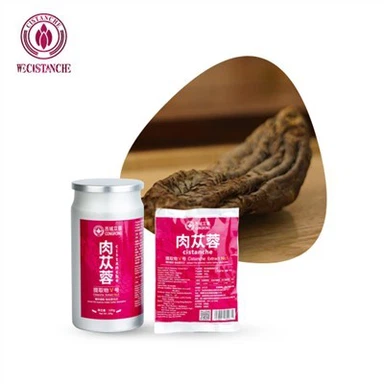
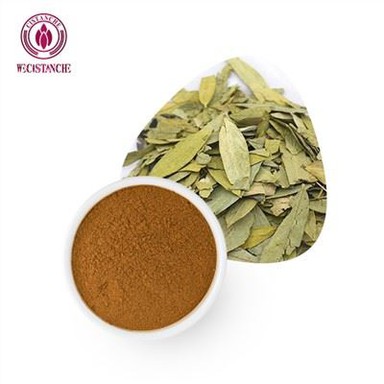
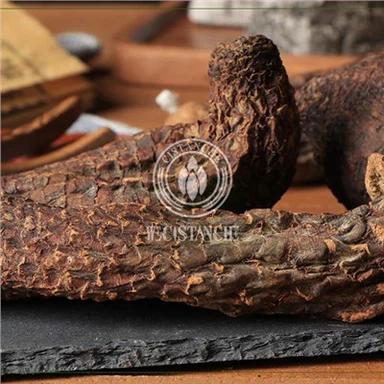
Cistanche is widely marketed as a "kidney-tonifying" botanical in traditional contexts and is commonly standardized around phenylethanoid glycosides such as echinacoside and verbascoside/acteoside in commercial specifications.
A relevant supplier-facing product page describes Cistanche tubulosa powder for kidney-related positioning, lists key actives (echinacoside, verbascoside, total phenylethanoid glycosides, flavonoids), and provides suggested usage and dosage guidance as a product specification reference. (Ref. [20])
Cistanche link (provided by you):

5.3 How to Connect the Study to Cistanche Without Over-claiming
This study evaluates BushenJiangu Decoction, not Cistanche. However, for opportunity scouting, developers can legitimately frame Cistanche as:
a candidate ingredient for kidney-support herbal extract portfolios that target CKD-adjacent wellness needs,
an ingredient with antioxidant-oriented positioning, which is frequently part of CKD-MBD adjunct narratives,
a standardized extract component that can be evaluated in future MHD/CKD-MBD observational studies (e.g., QoL, fatigue, comfort, and mineral balance markers).
To remain evidence-aligned:
Cite this study for formula-based adjunct benefit in pain/phosphorus and Klotho change.
Cite the Cistanche product/spec page only for ingredient composition and commercial form factors, not clinical CKD-MBD efficacy.
References (Citable Sources)
Hao M, Yu J. Understanding and reflections on TCM research regarding calcium/phosphorus metabolism disorders in chronic renal failure. 中华中医药学刊. 2017;35(3):741–744.
KDIGO CKD-MBD Update Work Group. KDIGO 2017 clinical practice guideline update for the diagnosis, evaluation, prevention, and treatment of chronic kidney disease–mineral and bone disorder (CKD-MBD). Kidney International Supplements. 2017;7(1):1–59.
National Clinical Research Center of Kidney Diseases. China guideline summary for diagnosis and treatment of CKD-MBD. 肾脏病与透析肾移植杂志. 2019;28(1):52–57.
Liu F, Sun L. 临床肾脏病学. Beijing: People's Medical Publishing House; 2019:637–647.
Liu H, Xiong W, Zhong L, et al. Distribution characteristics of TCM syndromes and related factors in CKD-MBD. 中华中医药杂志. 2019;34(8):3700–3704.
Chen J, Liu B. 肾脏病学进展. Beijing: China Medical Electronic Audio-Visual Press; 2020:481–491.
Zhou L, Fu P. Interpretation of KDIGO 2017 CKD-MBD guideline. 中国循证医学杂志. 2017;17(8):869–875.
Zhang H, Shu B, Li X, et al. Discussion on TCM theory "kidney governs bone" and renal osteopathy. 上海中医药大学学报. 2017;34(6):81–87.
Yu S, Pei C, Dai L, et al. Clinical observation of BushenJiangu formula improving Ca/P metabolism disorder and quality of life in renal osteopathy. 湖北中医杂志. 2016;38(1):1–4.
Yu S, Pei C, Dai L, et al. Clinical observation: BushenJiangu formula for CKD-MBD (35 cases). 中医药信息. 2015;32(6):77–79.
Yan J, Hao L, Zhang L. Role of α-Klotho in renal secondary hyperparathyroidism. 安徽医科大学学报. 2014;49(6):859–862.
Dong Y, Sun Y, Ji Z, et al. Correlation of bone mineral density with Klotho protein expression in renal osteopathy. 中国现代药物应用. 2018;12(24):56–57.
Zhang L, Wang N. Relationship between plasma FGF23 and cardiovascular disease in CKD. 肾脏病与透析肾移植杂志. 2015;24(4):365–369.
Zeng C, Guo C, Cai J, et al. Serum sclerostin in vascular calcification and clinical outcome in chronic kidney disease. Diabetes & Vascular Disease Research. 2018;15(2):99–105.
Zhu D, Mackenzie NC, Millán JL, et al. Osteocyte marker expression during calcification of vascular smooth muscle cells. PLoS One. 2011;6(5):e19595.
Kanbay M, Solak Y, Siriopol D, et al. Sclerostin, cardiovascular disease and mortality: systematic review and meta-analysis. International Urology and Nephrology. 2016;48(12):2029–2042.
Peng Q, Xie S, Ma N, et al. Association between serum sclerostin and vascular calcification in uremic patients. 中国血液净化. 2020;19(5):289–293.
Xu Q, Qin J, Cong Y. Progress in modern clinical experimental research of oyster meat (marine TCM). 现代生物医学进展. 2012;12(32):6398–6400.
Yu S, Pei C, Dai L, et al. Effects of BushenJiangu formula on Ca/P metabolism disorder and femoral BMD in renal osteopathy model rats. 中国临床保健杂志. 2016;19(1):78–81.
WECISTANCHE. China Cistanche for Kidney disease Suppliers, Manufacturers, Factory - Wholesale Price - WECISTANCHE (product specification and ingredient overview page). Available at: https://www.xjcistanche.com/cistanche-extract-product/cistanche-for-nourishing-kidney.html (accessed by user-provided content).